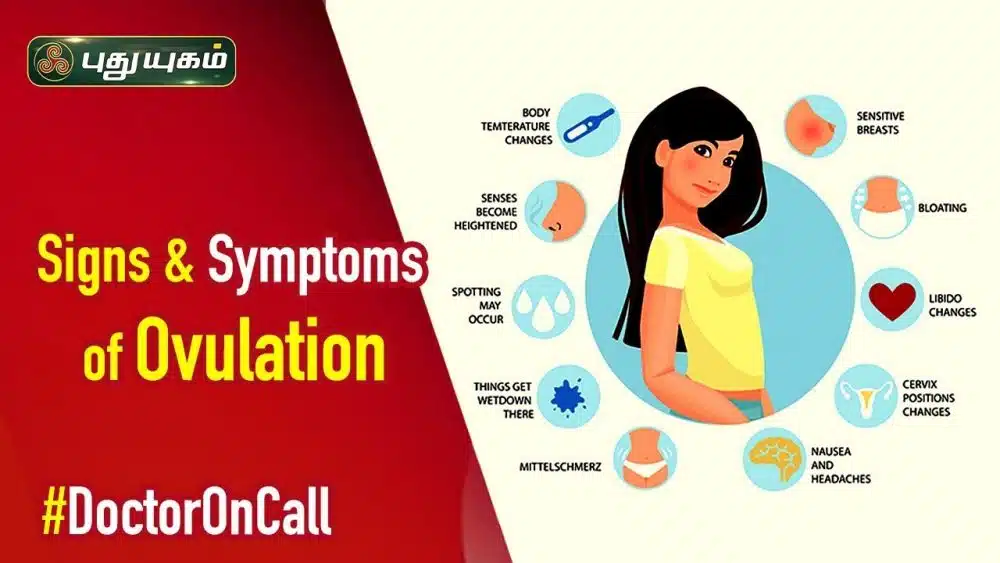
If you’re thinking of having a child, it is essential to determine what your fertile window is, every month. You have the highest chance of becoming pregnant if you have sex (intercourse) during the fertile window. The ‘fertile window’ is the five days before and after an egg is released from the ovary (ovulation).
Just like every menstrual cycle is different, so is every ovulation. So how can you figure out when is the right time? To answer this question, we have to understand what ovulation is, and only then can we go on with the signs that your body shows when it’s ovulating!
What Is Ovulation?
So before diving into the signs and symptoms of ovulation, it is crucial to understand what ovulation is. Ovulation is the biological process when a mature egg is released from the ovary.
Furthermore, given the correct circumstances, sperm may survive for up to five days inside the female reproductive canal following sexual contact. When live sperm are present in the fallopian tubes during ovulation, your chances of becoming pregnant are the best.
For better understanding, let’s first clear our basics of how the menstrual cycle is related to ovulation.
Menstrual Cycle & Ovulation
The first day of your period marks the beginning of your menstrual cycle. This will last until the first day of your next period.
In the ovary, eggs or ova begin to develop during this time. The womb thickens its lining (endometrium) to prepare for pregnancy, plus there’s a shift in your cervical mucus around this time. For the sperm to reach the released egg, the mucus gets thinner and clearer. Then an egg is discharged from one of the ovaries 10 to 16 days before the start of your next menstruation, and this process is termed ovulation.

Signs of Ovulation
Your body shows any symptoms during ovulation. Most of these changes are very minor and negligible and require observation. Here are the most commonly reported signs of ovulation:
1. Rise In Body Temperature
Your basal body temperature can rise by roughly 0.2°C during ovulation. You may also keep track of your menstrual cycle by monitoring your temperature in the morning.
However, this procedure is ineffective because it does not provide any information about when your viable fertile window and simply indicates whether you have ovulated.
2. Cervical Mucus
During your menstrual cycle, the cervix secretes mucus. As your period advances, it starts out sticky white and progressively becomes thinner and clearer.
Before and during ovulation, the mucus becomes considerably thinner, slippery, and stretchy. It’s frequently compared to raw egg whites. The sperm can readily swim through this thinner mucus.
You’re in your fertile period if your mucus is thin and slick. So, if you’re attempting to conceive, this is the best time.
3. Over-The-Counter Ovulation Kits
Over-the-counter ovulation prediction kits are extremely user-friendly. They look for the hormone luteinizing hormone (LH) in your urine, which rises 24-36 hours before ovulation. Although a woman might be fertile for a day or two before and after this period, this simple test can aid in determining the optimal two days for conception.
It’s a good idea to get to know the dates of your regular menstrual cycle. This will help you narrow down when to start testing. If your cycle is irregular, an ovulation predictor kit can help you figure out when you’re going to ovulate, but you’ll have to use more test strips.
There are also a few other signs that one can notice during ovulation:
- Change in libido
- Light spotting
- Abdominal pain
- Nausea
- Breast tenderness
Ovulation Calculator
If you are planning on conceiving and if you think that keeping track of all the signs of ovulation is a little too hectic, the ovulation calculator is just for you!
The calculator counts back 14 days from the day you expect your next period. So, for instance, if your menstrual cycle is 30 days long, then your next period should begin 30 days from the first day of your last period.
Also, it is to be noted that the day you ovulate and the five days prior to it are part of your fertile window. However, the last three days of this period are when you’re most likely to become pregnant.
But there’s one drawback of the ovulation calculator.
Since menstrual cycles differ from woman to woman and month to month, counting back 14 days does not always work (the typical length of a cycle is anywhere between 21 and 35 days). If you have irregular cycles, it may be even more challenging to figure out how to calculate ovulation since pinpointing your viable window may be more difficult.
Final Thoughts
To improve your chances of conceiving, you can adopt various strategies, like making a choice to eat healthy food and exercise. Also, it is important for your body to be well-rested- more so because disturbed sleep is often linked to the irregularity of periods. And finally, do the things you love to do and de-stress yourself. Running, meditation, baking, or whatever it is that helps you relax, choose such activities.
FAQs: Most Common Ovulation Symptoms And Signs
-
What is ovulation?
Ovulation is the biological process when a mature egg is released from the ovary. Furthermore, given the correct circumstances, sperm may survive for up to five days inside the female reproductive canal following sexual contact. When live sperm are present in the fallopian tubes during ovulation, your chances of becoming pregnant are the best.
-
How can I understand if I am ovulating?
During your menstrual cycle, the cervix secretes mucus. As your period advances, it starts out sticky white and progressively becomes thinner and clearer.
Before and during ovulation, the mucus becomes considerably thinner, slippery, and stretchy. It’s frequently compared to raw egg whites. The sperm can readily swim through this thinner mucus.
You’re in your fertile period if your mucus is thin and slick. So, if you’re attempting to conceive, this is the best time.
-
How does an ovulation calculator work?
The calculator counts back 14 days from the day you expect your next period. So, for instance, if your menstrual cycle is 30 days long, then your next period should begin 30 days from the first day of your last period.