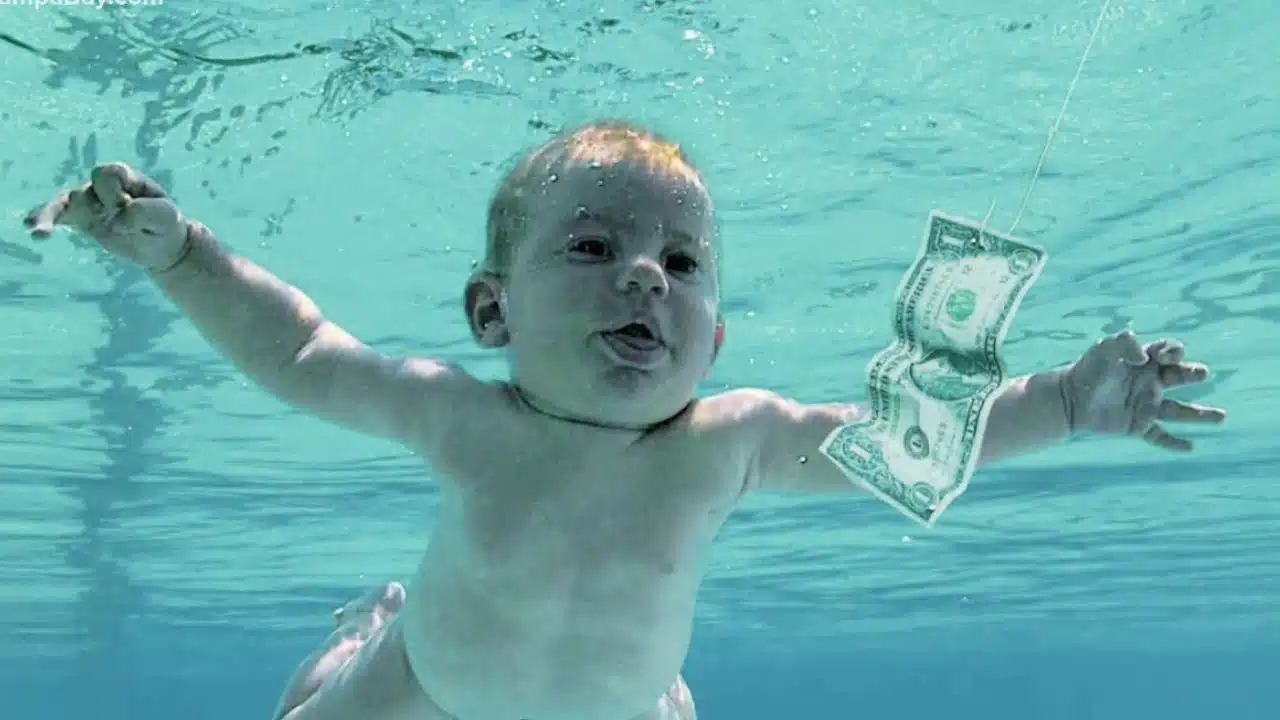
A federal judge has decisively dismissed a lawsuit filed by Spencer Elden, the man who was photographed as a naked baby for the cover of Nirvana’s seminal 1991 album Nevermind, ruling that the iconic image does not constitute child pornography. The ruling, handed down on Tuesday, October 1, 2025, brings a potential end to a contentious legal battle that has spanned several years and questioned the intersection of art, consent, and exploitation.
In his 19-page ruling, U.S. District Judge Fernando M. Olguin granted a summary judgment in favor of the defendants, which include Nirvana’s surviving members Dave Grohl and Krist Novoselic, the estate of the late Kurt Cobain, photographer Kirk Weddle, and various record labels. Judge Olguin concluded that no reasonable jury would find the famous photograph to be sexually exploitative.
The lawsuit centered on Elden’s claim that the image, taken when he was four months old, was a sexually exploitative image that had caused him lifelong emotional distress and financial damages. He had sought at least $150,000 from each defendant. This dismissal marks the second time Judge Olguin has thrown out Elden’s case, though the previous instance was based on statute of limitations grounds, a decision later overturned on appeal.
The Decisive Ruling: Context and Legal Reasoning
The final chapter in this legal saga, for now, hinged on the substantive question of whether the image itself met the legal definition of child pornography. Elden’s lawyers had argued that the image was “sexually suggestive” because the infant appears to be grasping for a dollar bill “like a sex worker.”
However, Judge Olguin systematically dismantled this argument. In his ruling, he applied the established legal factors for determining such cases, finding that “neither the pose, focal point, setting, nor overall context suggest the album cover features sexually explicit conduct”.
The judge wrote, “Other than the fact that plaintiff was nude on the album cover, nothing comes close to bringing the image within the ambit of the child pornography statute.” He concluded that the image was “plainly insufficient to support a finding of lasciviousness”.
This ruling addresses the core of Elden’s claim, moving beyond the procedural technicalities that had dominated earlier stages of the litigation.
A Tumultuous Legal Timeline
- August 2021: Spencer Elden, then 30, files his first lawsuit against Nirvana and associated parties, alleging sexual exploitation.
- January 2022: Judge Olguin dismisses the case, siding with the defendants’ argument that Elden had exceeded the 10-year statute of limitations since becoming aware of the cover as an adult. Elden’s lawyers failed to file an opposition in time.
- December 2023: The 9th U.S. Circuit Court of Appeals reverses the dismissal. The panel rules that the statute of limitations could reset with each “republication” of the image, including the 2021 30th-anniversary reissue of Nevermind, thus allowing the case to proceed.
- October 1, 2025: Judge Olguin again dismisses the case, this time on its merits, granting summary judgment to the defendants.
Official Responses and Expert Analysis
Nirvana’s legal team expressed satisfaction with the outcome. In a statement, attorney Bert Deixler said, “We are delighted the court has ended this meritless case and freed our creative clients of the stigma of false allegations”.
Conversely, a legal representative for Elden told Law360 that their fight for accountability continues. “As long as the entertainment industry prioritises profits over childhood privacy, consent and dignity, we will continue our pursuit for awareness and accountability,” the representative stated, signaling a potential appeal.
Legal experts suggest that Elden’s past actions likely weakened his case. For years, he had publicly embraced his identity as the “Nirvana Baby.”
- Statistic 1: In 2016, for the album’s 25th anniversary, Elden recreated the photo (wearing swim trunks) for a fee of $200—the same amount his parents were paid for the original 1991 shoot.
- Statistic 2: He has the word “Nevermind” tattooed across his chest.
- Statistic 3: He has sold autographed copies of the album cover on eBay.
The defense heavily cited this history, arguing in a 2021 motion to dismiss that “Elden has spent three decades profiting from his celebrity as the self-anointed ‘Nirvana Baby.’”
The Impact on a Generation’s Artwork
The Nevermind album cover is one of the most recognizable in music history. Released on September 24, 1991, the album has sold over 30 million copies worldwide, catapulting Nirvana to global fame and defining the grunge movement of the 1990s. The image of a baby underwater, seemingly chasing a dollar bill on a fishhook, was conceived by Kurt Cobain and has been widely interpreted as a cynical commentary on capitalism.
The lawsuit forced a re-examination of this iconic artwork through a modern lens, raising questions about the ethics of using an infant’s image in commercial art without their future consent. While the court has legally settled the matter for now, the debate over artistic freedom versus personal privacy is likely to continue.
What to Watch Next
All eyes are now on Spencer Elden’s legal team to see if they will appeal Judge Olguin’s summary judgment to the 9th Circuit once more. An appeal would shift the focus back to the appellate court, which previously revived his case on procedural grounds. However, overcoming a dismissal based on the substantive merits of the evidence will present a significantly higher legal hurdle.
For the surviving members of Nirvana and the estate of Kurt Cobain, this ruling is a major victory, removing a legal and reputational cloud that has lingered over one of rock music’s most enduring legacies.