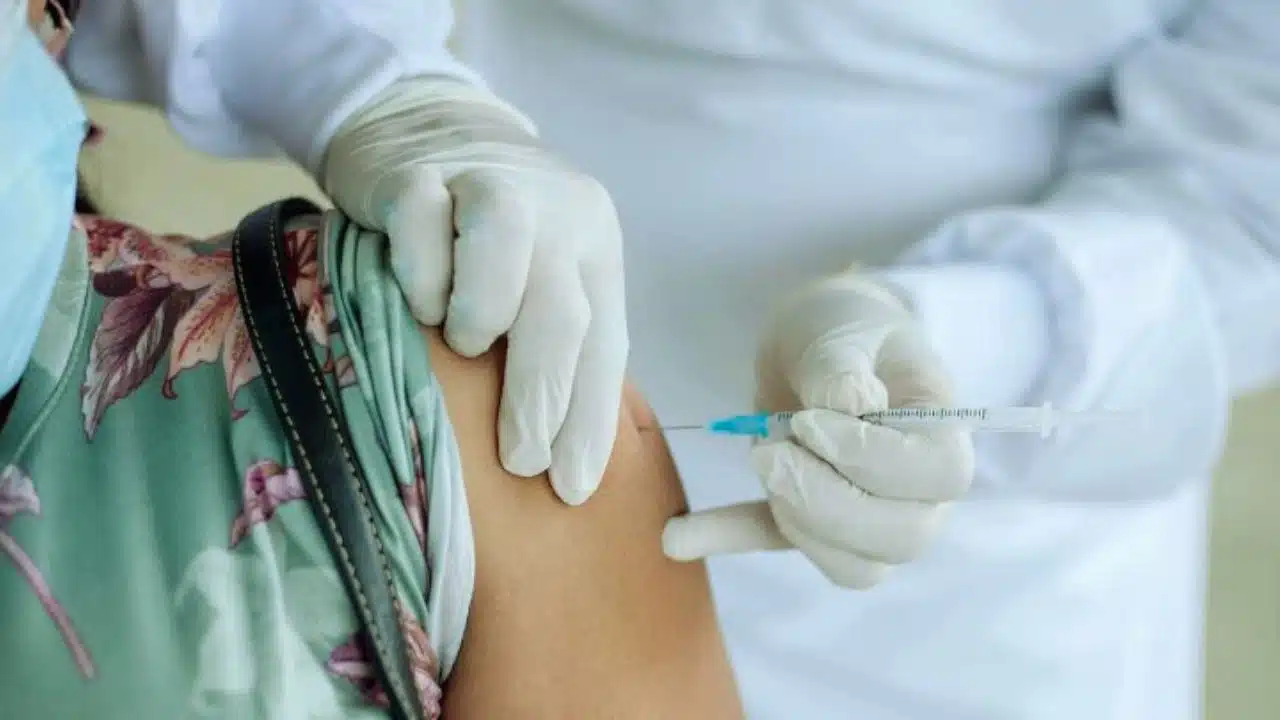
First Nipah vaccine human trial results are encouraging, and two leading candidates are now gearing up for larger Phase II studies—including planned trials in Bangladesh, where Nipah continues to cause deadly, sporadic infections.
What’s new now
Two separate developments are tightening the timeline toward a usable Nipah vaccine: early-stage human data that cleared key safety and immune-response hurdles, and new Phase II trial plans designed for real-world, outbreak-prone settings.
CEPI said its supported candidate PHV02—developed by US biotech Public Health Vaccines (PHV)—is moving into mid-stage testing, with a Phase II study planned to start in early 2026 in Bangladesh.
In parallel, the University of Oxford announced the launch of what it described as the world’s first Phase II clinical trial of a Nipah vaccine candidate, ChAdOx1 NipahB, as more groups try to move from small safety studies into larger trials that can better validate immune responses across populations.
Why Nipah remains a high-stakes threat
Nipah virus is a zoonotic disease that can spread to humans from infected animals, contaminated food, or close contact with an infected person, and fruit bats (Pteropus species) are the natural hosts.
WHO notes that people can range from having no symptoms to developing acute respiratory illness and fatal encephalitis, and early symptoms can include fever, headache, muscle pain, vomiting, and sore throat.
WHO’s Disease Outbreak News on Bangladesh reported four confirmed fatal Nipah cases between January 1 and August 29, 2025, in districts across Barisal, Dhaka, and Rajshahi divisions, and stated the cases were not epidemiologically linked.
WHO also reported that Bangladesh has documented 347 Nipah cases through its surveillance system, with a 71.7% case fatality rate, underscoring why vaccines are treated as a preparedness priority rather than a routine immunization product.
Bangladesh’s 2025 fatal cases (WHO)
WHO provided case-by-case detail on symptom onset timing, exposures, and contact tracing outcomes for Bangladesh’s 2025 fatalities.
| Case (Bangladesh, 2025) | Location (district/division) | Symptom onset | Reported exposure | Contacts identified (WHO) | Outcome |
| 1 | Pabna / Rajshahi | Jan 25 | Raw palm sap history noted for first three cases (case-level detail not individually assigned in WHO summary). | 96 (all negative). | Died Jan 28. |
| 2 | Bhola / Barisal | Feb 13 | Raw palm sap history noted for first three cases. | 71 (all negative). | Died Feb 22. |
| 3 | Faridpur / Dhaka | Feb 17 | Raw palm sap history noted for first three cases. | 66 (all negative). | Died Feb 25. |
| 4 | Naogaon / Rajshahi | Aug 3 | No raw palm sap history; source under investigation; reported outside typical season. | 72 (11 symptomatic sampled; 6 negative; remaining pending at time of report). | Died Aug 14. |
WHO said seasonal outbreaks in Bangladesh often occur between December and May, coinciding with date palm sap harvesting, and highlighted continued risk tied to cultural practices and bat exposure.
WHO also emphasized there are currently no specific drugs or licensed vaccines for Nipah, and care remains mainly supportive, especially for severe respiratory and neurologic complications.
The two vaccine pushes converging
These vaccine efforts differ in platform and pathway, but they share the same goal: prove safety and generate a strong immune response that can be mobilized quickly during outbreaks.
PHV02: CEPI-backed rVSV approach headed for Bangladesh Phase II
CEPI announced it will provide US$17.3 million to PHV to support the next stage of development for PHV02, a Nipah vaccine candidate slated for Phase II testing in Bangladesh when the trial launches in early 2026.
CEPI said earlier Phase Ia and Phase Ib studies demonstrated a good safety profile and immunogenicity in both one- and two-dose regimens, which is the key “pass” signal needed before expanding into larger trials.
According to CEPI, the Phase II program aims to recruit around 500 adult and 75 pediatric participants in Bangladesh and will evaluate safety, tolerability, manufacturability, and the ability to generate an immune response.
CEPI described PHV02 as a live, attenuated, recombinant vesicular stomatitis virus (rVSV) vector vaccine expressing the Nipah virus glycoprotein (Bangladesh strain) plus Ebola virus glycoprotein, which is required for receptor-mediated viral entry.
CEPI also said the rVSV-Nipah concept was developed within NIAID (NIH) by the laboratory of Dr. Heinz Feldmann and licensed to PHV, anchoring the candidate in a government-research-to-industry transfer model often used for high-risk pathogens.
CEPI noted PHV02 is based on the same platform as the approved Ebola vaccine rVSV-ZEBOV, and framed this as a “plug-and-play” approach that could accelerate response timelines for future threats.
Oxford’s ChAdOx1 NipahB: Phase II launch signal
Oxford announced the launch of what it called the world’s first Phase II clinical trial of a Nipah vaccine candidate, designed to assess safety and immune response for ChAdOx1 NipahB.
Separate institutional reporting around the same announcement also described the trial as the world’s first Phase II Nipah vaccine study, underscoring how rare it has been for Nipah candidates to reach mid-stage human testing.
Oxford’s Nipah program builds on the ChAdOx1 viral-vector platform that has been used in other vaccine efforts, and earlier preclinical work has suggested this platform can produce protective immune responses against Nipah in animal models.
A Nature Communications study reported that a single dose of ChAdOx1 NiV was fully protective against lethal Nipah Bangladesh strain challenge in African green monkeys, supporting the scientific rationale for clinical advancement even before human efficacy data is possible.
Where these candidates differ
Both candidates are moving through the same clinical-phases ladder, but the science and logistics are not identical—something that matters for outbreak use, manufacturing scale, and cold-chain realities.
| Candidate | Developer(s) cited publicly | Platform (high level) | What’s publicly stated now | Next stated step |
| PHV02 | Public Health Vaccines (PHV) with CEPI support. | Live, attenuated rVSV vector expressing Nipah GP (Bangladesh strain) + Ebola GP. | Phase Ia/Ib showed good safety profile and immunogenicity in 1- and 2-dose regimens. | Phase II planned early 2026 in Bangladesh; target ~500 adults and 75 pediatric participants. |
| ChAdOx1 NipahB | University of Oxford. | ChAdOx1 viral vector (Oxford program). | Oxford announced “world’s first Phase II” Nipah vaccine trial launch and said it will assess safety and immune response. | Ongoing Phase II evaluation as announced. |
How trials work when outbreaks are sporadic
Nipah’s outbreak pattern—sporadic spillovers, small clusters, and limited case counts—creates a classic “market failure” for vaccine development and a practical challenge for measuring efficacy through conventional large field trials.
That is one reason funders like CEPI emphasize immune-response endpoints, manufacturability, and rapid deployment planning, including the ability to stockpile doses if a candidate clears regulatory thresholds.
WHO’s risk assessment for 2025 described national and regional public health risk as moderate (with global risk low) and stressed that strong surveillance and rapid response are central because early symptoms may be non-specific and delay diagnosis.
This is also why Phase II studies in places like Bangladesh matter: they help validate whether a candidate remains safe and immunogenic across broader age groups and settings closer to where outbreaks occur.
Key timeline (public milestones)
| Date | Milestone | Why it mattered |
| Jan–Aug 2025 | WHO documented four fatal, unlinked Nipah cases in Bangladesh. | Reinforced that spillover risk persists, including one case outside the typical season. |
| July 10, 2025 | CEPI announced US$17.3 million to advance PHV02 into Phase II in Bangladesh (early 2026 start). | Put a concrete budget, location, and recruitment target behind mid-stage trials. |
| Dec 2025 | Oxford announced launch of a Phase II Nipah vaccine trial for ChAdOx1 NipahB. | Signaled a second independent candidate reaching Phase II-level testing. |
Final thoughts
The most important near-term signal will be whether Phase II studies confirm strong immune responses and a clean safety profile across larger and more diverse groups, including in Bangladesh where Nipah risk is persistent.
Even with promising Phase II data, WHO continues to stress that prevention still depends on reducing exposure risks—especially protecting date palm sap from bats and strengthening infection prevention in healthcare settings—because there is still no licensed Nipah vaccine or specific treatment.
If one or more candidates reach approval, CEPI has indicated options such as stockpiling for outbreak response could help protect high-risk groups like healthcare workers and potentially shorten outbreaks.