Have you ever felt let down by shiny CGI that falls flat on the big screen? Practical effects like animatronic sharks in Jaws and stop-motion puppets in The Thing changed cinema history in the 1970s and 80s.
We will explore ten films that used miniature models, prosthetic makeup, and motion control rigs to make scenes truly pop. Keep reading.
Key Takeaways
- Steven Spielberg chose an animatronic shark in Jaws (1975) and hid Bruce’s flaws with tight camera angles, steel cables, foam jets, and thunderous splashes to scare millions.
- Ridley Scott and H.R. Giger built a full-scale Xenomorph and a chestburster puppet in Alien (1979) using silicone skin, animatronic parts, hidden levers, and fake blood under strict secrecy.
- Rob Bottin’s team made The Thing (1982) with foam-rubber suits, slimy gels, motor-driven puppets, and long takes to deliver gory mutations with zero CGI.
- Stan Winston Studio rigged T-Rex and Brachiosaurus puppets with hydraulic cylinders and electric motors in Jurassic Park (1993), then teamed with ILM’s 322 artists for 50 blended CGI shots.
- ILM coated Robert Patrick in silver paint, attached 36 hinged steel plates with magnets, and shot high-speed glycerin mixed with silver pigment in Terminator 2: Judgment Day (1991) to bring the liquid metal T-1000 to life.
How did the animatronic shark in Jaws (1975) scare audiences?

Bruce, the animatronic shark in Jaws (1975), prowled like a steel torpedo beneath the waves. Steven Spielberg chose practical effects for this horror movie, avoiding any CGI (computer-generated imagery).
This puppet wore weathered skin and serrated teeth, and a steel cable rig drove its jerking lunges. Special effects artists paired it with water jets and foam, boosting realism. Visual effects teams cued thunderous splashes and eerie shadows.
Viewers never saw its full form until that first bite. Minds raced and hearts pounded at every splash.
Oceanic camera angles and tight close-ups hid Bruce’s flaws and fed fear. The team kept the shark offscreen, so viewers’ minds filled in the terror. A sudden fin or a distant roar felt like a punch to the gut.
Audiences leaned forward, gasped, then scrambled in their seats. That clever mix of animatronics and suspenseful editing proved how practical filmmaking could scare millions.
What makes the Xenomorph and chestburster scene in Alien (1979) iconic?
H.R. Giger sculpted the Xenomorph in Alien (1979) to look sleek and deadly. Ridley Scott chose silicone flesh, animatronic parts, and puppetry for the creature suit. He hid a chestburster puppet inside a molded sternum.
That puppet sprang free, covered in practical makeup effects and fake blood. Designers mixed special effects tools like mold-making, puppet rigs, and mechanical levers. Visual effects stayed practical, with zero CGI.
Crew built the effect under strict secrecy on a spaceship set. Actors sat around a table, unaware of what would burst forth. That shock felt raw, like a real body tearing open. Viewers gasped when the baby alien erupted.
Horror movies had never delivered that level of surprise. Practical creature effects keep this scene alive, even decades later.
What were the groundbreaking creature effects in The Thing (1982)?
Artists took practical effects to a wild place in The Thing (1982). They sculpted alien shapes with foam rubber, gels, and motors. Puppeteers draped slimy tendrils and globs of fake blood like a mad sculptor at work.
The crew hid wires under the ice station set. Directors cut panels in walls to mask cables. Cinematographers shot in long takes, no CGI allowed. The film used special effects, makeup effects and visual effects to fool every viewer.
A lab test scene still shocks fans. Each test tube glows red, a dog sniffs and expands. That beast sprouts legs, snouts and beating hearts. Its head crashes through glass, in gory style.
A mask peels back to show a snarling maw. No CGI messed with those shots. This movie raised the bar for horror movies and practical filmmaking.
Why is the transformation sequence in An American Werewolf in London (1981) legendary?
Rick Baker led the team on An American Werewolf in London. He sculpted prosthetic makeup pieces and foam latex masks. The head sculptor pushed makeup effects to new heights. The crew added hair one strand at a time over weeks of shooting.
Time-lapse photography warped every frame. Practical effects never looked so raw.
David Kessler suffers the change in vivid detail. The camera records bone shifts, jaw bulges, and hair sprouts. Fans of horror movies still use this scene as a gold standard for practical filmmaking.
Viewers gasp at every twitch, and the Oscar for Best Makeup crowned this masterpiece. It rewrote rules for special effects in film.
How did Jurassic Park (1993) use animatronics to bring dinosaurs to life?
Stan Winston Studio built huge T-Rex and Brachiosaurus puppets. They used hydraulic cylinders and electric motors. The team rigged every joint to remote controls. Spielberg filmed Jurassic Park (1993) on a soundstage.
He captured actors staring at towering beasts. Industrial Light & Magic took over after principal photography. Steve Williams and Mark Dipe led 322 artists. They built 50 CGI and visual effects shots to complement puppet actions.
Technicians installed custom circuits inside each dinosaur head. Actors saw jaws clamp and eyes blink on cue. Those small motors drove realistic eyelid twitches. Painters used paint sprayers to add mottled tones and faux blood streaks.
The project ran through 13 months of post. Artists blended CGI textures with puppet footage. This fusion of practical effects and visual effects blew viewers away. Audiences felt they stood next to real movie monsters.
What practical effects created the liquid metal T-1000 in Terminator 2: Judgment Day (1991)?
Technicians used practical effects to coat actor Robert Patrick in silver paint. They hung 36 hinged steel plates on his torso. They fixed them with magnets so pieces could snap apart.
Air bladders pushed plates away to mimic bullet strikes. Silicone molds shaped each panel. Technicians cut panels to match hole sizes. The chest rig worked like a mechanical puppet.
Animatronics drove each split and drop.
Artists filmed globs of glycerin mixed with silver pigment in a water tank. They shot the blend in high speed. The team captured ripples that looked like mercury. Motion control cameras caught every shift.
They matched fluid plates to Patrick’s live takes. Industrial Light & Magic fused cgi with live footage for the final visual effects. The result looked like pure liquid metal.
What made the space sequences in 2001: A Space Odyssey (1968) revolutionary?
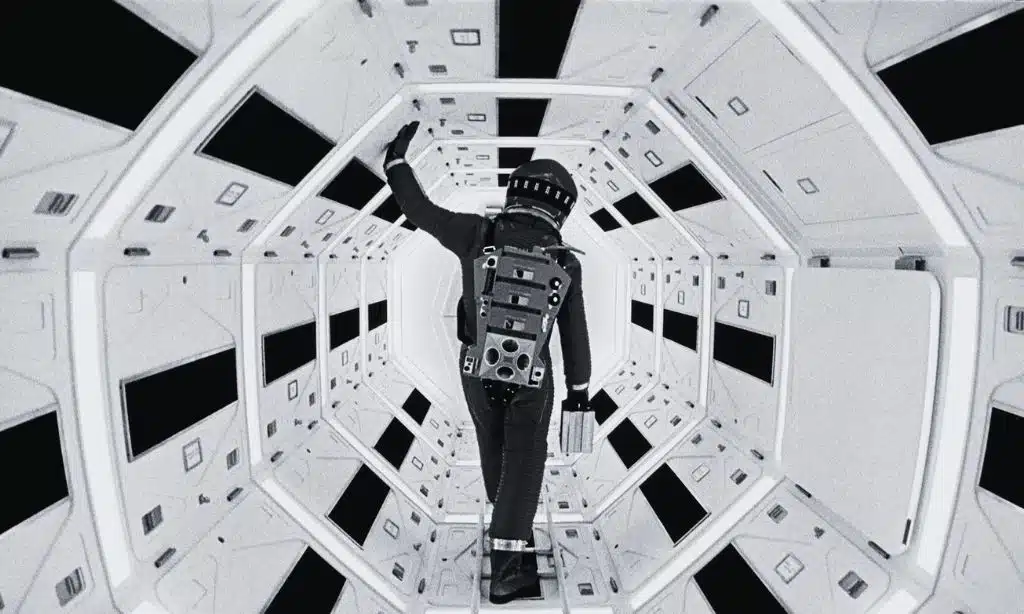
Stanley Kubrick shot tiny spacecraft models on high-resolution film stock, then layered them with an optical printer. Small cameras on a motion control rig created flawless orbiting scenes.
Model crews built full-scale pods, then spun them to mimic artificial gravity. A clever projector trick created the star gate sequence. The 1968 release stunned people with its silent, majestic flights.
Actors floated in a custom spinning wheel, lit by a projection method from behind. It relied on practical effects long before CGI took over. This hands-on magic set new bar for special effects.
Today’s visual effects teams still echo Kubrick’s craft. A Space Odyssey fired up imaginative leaps in sci-fi movies.
What practical stunts and innovations are featured in The Matrix (1999)?
A bullet time rig used 120 cameras to freeze Neo in midair. Crew shot each angle at high speed, using cables and harnesses. Fight choreographer Yuen Woo-ping trained actors in basic martial arts.
They built a rotating set for slow-motion jumps off rooftops. Practical effects and special effects like breakaway glass and real squibs added grit. Green screen walls let them layer live action with CGI.
A team of 137 artists blended 412 visual effects shots with live action. They matched CGI bullets with real sparks and debris.
Wirework allowed stunt performers to vault across the lobby. Cables ran under floor panels to keep harness lines hidden. Directors used motion control rigs for repeatable camera moves.
Stunt coordinators placed breakaway props in hallways for fights. A custom camera slider tracked slow-motion hand-to-hand combat. They used green gel filters to tint corridors in neon hues.
This cyberpunk film shifted visual effects into the mainstream. Many future blockbusters adopted its practical filmmaking style.
How were rotating hallways and dream worlds realized practically in Inception (2010)?
Christopher Nolan shot a 36-foot hallway on a hydraulic gimbal in Inception (2010). The corridor twirled, actors ran and flipped against real walls. Crew hung wires and harnesses to keep everyone safe.
Cinematographer Wally Pfister captured long takes on IMAX cameras. Visual effects only removed gear with minimal cgi.
Other dream worlds grew from practical sets too. Futuristic hotels leaned and rain fell sideways on angled rigs. Production teams built tilted floors and shifted ceilings. Special effects crews turned real walls into odd landscapes.
Practical filmmaking gave each scene weight and grit.
How did Star Wars: Episode IV – A New Hope (1977) use miniatures and practical sets?
Lucas asked the newly formed ILM team to sculpt tiny Star Destroyers and the Millennium Falcon on a giant practical set. Those 169 artists shot 360 practical effects scenes with motion control rigs to glide cameras around miniatures.
The rigs let cameras dance around ships like kids spinning toy cars on a table top. Crew used blue screen compositing to layer actors into model hangars. Moviegoers felt drawn into a living universe thanks to stunning special effects.
That success helped ILM become a major visual effects studio.
Practical techniques in The Lord of the Rings Trilogy (2001-2003)
They built giant scale models and used forced perspective to shrink actors beside towering orcs. Weta Workshop sculpted prosthetic horns, chainmail and animatronic beasts, while motion control rigs captured epic battle scenes.
How were massive miniatures used in The Lord of the Rings?
The crew built massive miniatures, called bigatures, to recreate castles and cities. Weta Workshop sculpted each turret and battlement by hand. The production team lit the model at dusk, stirring dust in the wind, then filmed it at slow speed.
Cinematographers moved the camera close, to sell a sense of height and depth. Producers mixed practical effects with special effects, to add smoke and swirling mist.
Camera operators rode rails around each tower replica, framing siege scenes at Helm’s Deep. Editors spliced shots of actors and model walls, so both looked as one epic landscape.
These tactics gave a real feel of scale that CGI alone could not match.
What creature effects were created practically in The Lord of the Rings?
Practical effects teams at Weta Workshop built a fourteen foot cave troll animatronic for Fellowship of the Ring in 2001. Two operators moved its arms and head inside a steel frame.
Designers draped the rig in foam latex and real horsehair. Artists painted veins and scars on its skin by hand. That giant beast smashed walls in live stunt scenes.
Special effects artists at Weta Workshop sculpted over a hundred Warg puppets for Riders of Rohan in 2002. Every puppet used radio control to snarl and snap its jaw. Makeup artists applied foam latex masks on thirty Uruk-hai extras each day.
Stunt coordinators filmed practical battle sequences in Fangorn forest. Visual effects teams then layered CGI eyes and dust for more impact.
Takeaways
These films still stun viewers with raw craft. An animatronic shark, miniatures and stop-motion puppets shine on screen. Real-world tools prove their might. They beat some CGI-only tricks.
Fans respect these brave stunts. You will watch them again.