Earth is home to places that defy easy explanation. These mysterious locations have puzzled explorers and scientists for centuries, challenging our understanding of history and nature. From ancient structures with unknown purposes to natural phenomena that baffle experts, these enigmatic sites continue to captivate our imagination.
In this article, we’ll delve into eight of the world’s most puzzling places, examining what we know about them and the questions that remain unanswered.Join us as we explore some of the world’s most mysterious places and the theories behind them.
The World’s Most Mysterious Places
Our planet is a treasure trove of wonders, some of which continue to elude our full understanding. Mysterious places spark curiosity, inspire legends, and draw millions of visitors each year. While modern science has unraveled many of Earth’s secrets, some locations still guard their mysteries closely. From the depths of the ocean to remote islands and ancient structures, these sites challenge our perceptions and remind us that there’s still much to discover about our world.
1. The Bermuda Triangle
The Bermuda Triangle is an area in the Atlantic Ocean between Florida, Bermuda, and Puerto Rico. It has gained notoriety due to the many ships and planes that have vanished there, leading to numerous stories and myths. The area covers about 500,000 square miles, but interestingly, the U.S. Coast Guard does not recognize it as an especially dangerous area.
Many of the disappearances in the Bermuda Triangle can be explained by natural causes. Bad weather is a common factor, as the area often experiences storms and hurricanes. Human error also plays a role, with pilots and sailors sometimes making mistakes in navigation or judgment. Some scientists have proposed that methane gas bubbles from the ocean floor could potentially sink ships, although this theory remains unproven. While the Bermuda Triangle continues to captivate our imagination, most incidents there have normal explanations.
2. The Nazca Lines
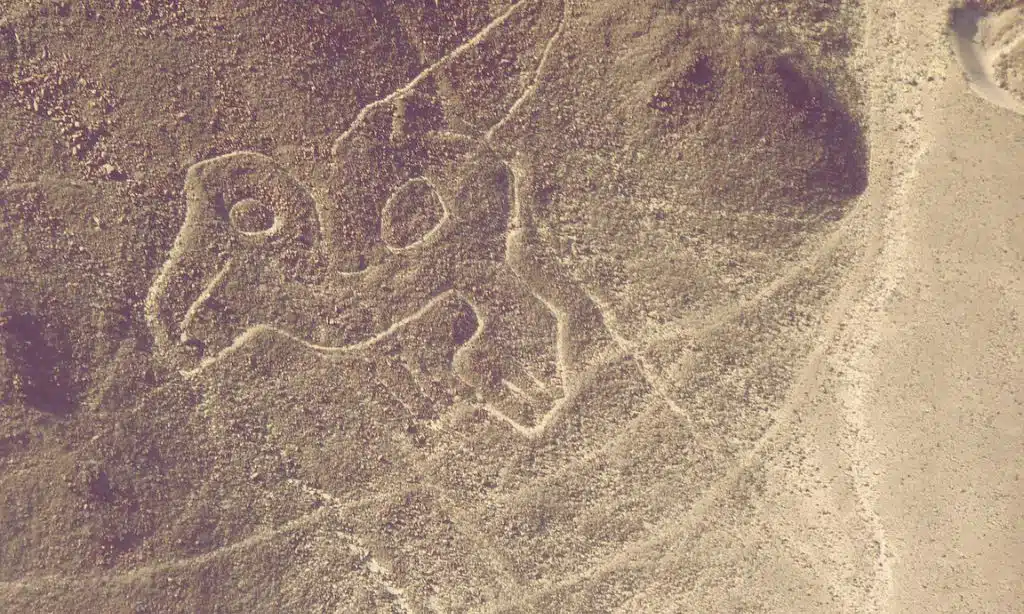
In Peru, we find the enigmatic Nazca Lines, enormous designs etched into the ground. Some of these geoglyphs resemble animals or geometric shapes, and they were created by the ancient Nazca people. The lines were made between 500 BC and 500 AD and cover an area of about 1,000 square kilometers. What makes them particularly intriguing is that they can only be fully appreciated from the air.
The purpose of the Nazca Lines remains a subject of debate among researchers. Some believe they served a religious purpose, created for gods to view from the sky. Others suggest they might be linked to astronomy, possibly aligning with stars and planets. Another theory proposes that the lines indicate the location of water sources in the arid region. While we now understand how the lines were made, their exact purpose continues to elude us.
3. Easter Island
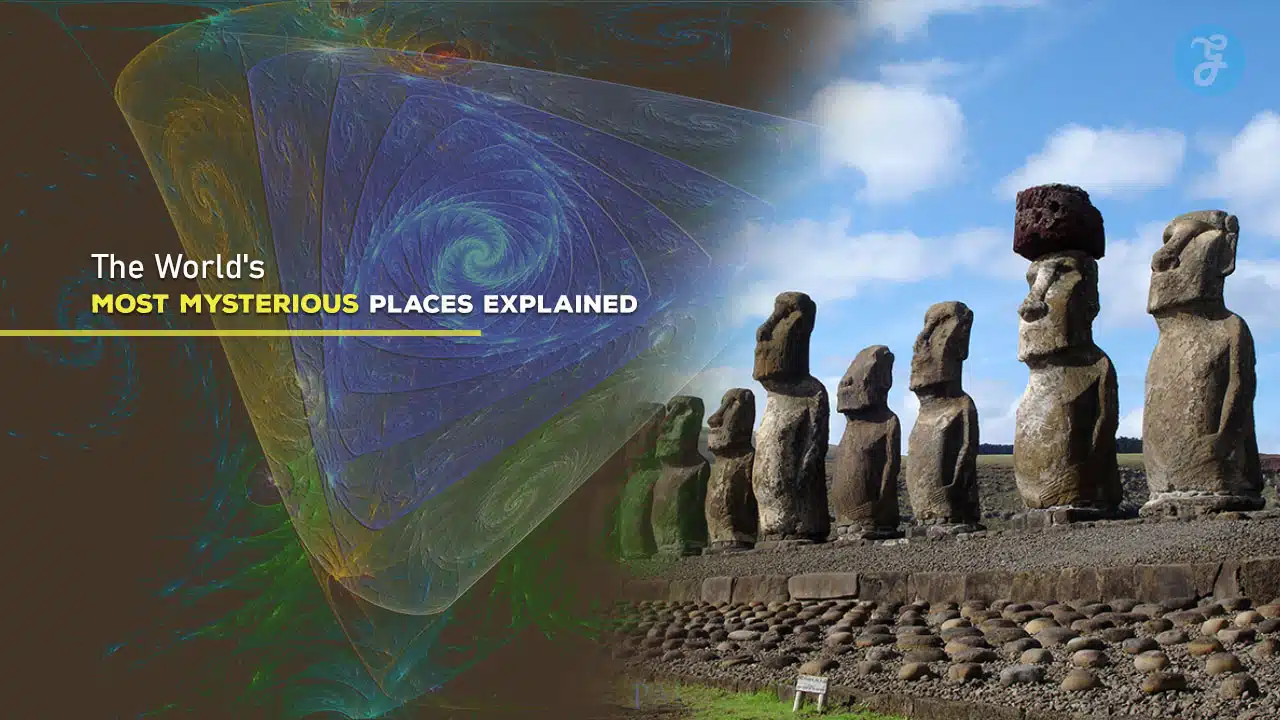
Easter Island, located in the Pacific Ocean, is renowned for its colossal stone heads known as moai. These statues were crafted by the Rapa Nui people and have long been a source of fascination for visitors and researchers alike. There are approximately 900 moai on the island, with the largest standing 33 feet tall and weighing 82 tons. These impressive statues were carved between 1250 and 1500 AD.
The purpose of the moai has been the subject of much speculation. One theory suggests they were part of ancestor worship, representing important figures in the island’s history. Another possibility is that they were used to display the power and status of different clans on the island. Some researchers have even proposed that the intensive effort required to create and move these statues led to an ecological disaster on the island. While we have gained insights into how the moai were made and transported, their exact significance in Rapa Nui culture remains a topic of ongoing research.
4. Stonehenge
Stonehenge, located in England, is one of the world’s most famous prehistoric monuments. It consists of a circle of massive stones, some standing upright and others balanced horizontally across the tops of the vertical stones. Built between 3000 BC and 2000 BC, Stonehenge continues to captivate visitors and puzzle researchers. The largest stones used in its construction weigh about 40 tons and were transported from quarries many miles away, a feat that seems almost impossible given the technology available at the time.
The purpose of Stonehenge has been debated for centuries. Some researchers believe it functioned as an ancient calendar, used to track seasons and celestial events. The discovery of numerous human remains at the site has led others to suggest it was primarily a burial ground. Yet another theory proposes that Stonehenge was a place of healing, drawing people from far and wide in search of cures for their ailments. While we have learned much about how Stonehenge was constructed, its exact purpose remains one of archaeology’s greatest mysteries.
5. The Great Pyramid of Giza
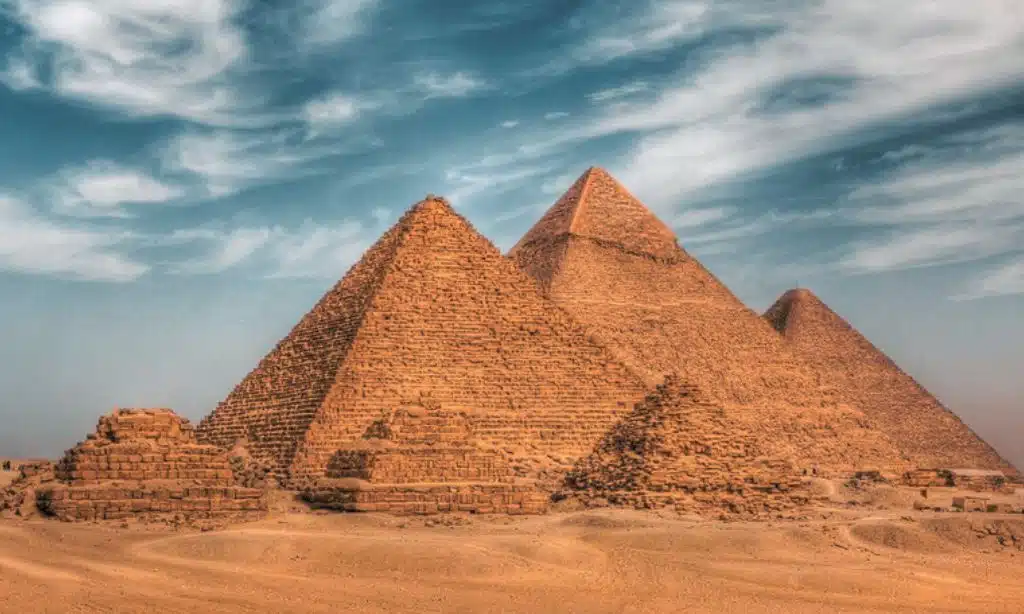
The Great Pyramid of Giza in Egypt stands as a testament to the incredible achievements of ancient civilizations. Built around 2560 BC for the Pharaoh Khufu, it held the title of the tallest man-made structure for over 3,800 years. The pyramid contains approximately 2.3 million stone blocks, each weighing several tons, and its construction continues to baffle modern engineers.
While most experts agree that the Great Pyramid was built as a tomb for Pharaoh Khufu, the methods used in its construction remain a subject of debate. Some researchers have suggested that the ancient Egyptians must have had access to advanced technology or assistance to achieve such a feat. Others point to the pyramid’s precise astronomical alignments as evidence of the builders’ sophisticated knowledge of the stars. Despite centuries of study, the exact techniques used to build this massive structure continue to elude us, making the Great Pyramid an enduring mystery of the ancient world.
6. The Moai of Easter Island
The Moai, the famous stone statues of Easter Island, represent one of archaeology’s most enduring puzzles. Carved by the Rapa Nui people between 1250 and 1500 AD, these imposing figures have captivated scientists and visitors alike. With nearly 900 statues scattered across the island, the largest standing 33 feet high and weighing 82 tons, the Moai are a testament to the incredible skill and determination of their creators.
The purpose of the Moai has been the subject of much speculation. Many researchers believe they were created as part of ancestor worship, representing important leaders or revered ancestors. Others suggest they may have served as protective guardians for the island and its inhabitants. Another theory proposes that the statues were a way for different clans to display their power and status. Recent studies have shed light on how the Moai were moved across the island, but the exact significance of these enigmatic statues in Rapa Nui culture remains a topic of ongoing research and debate.
7. The Lost City of Atlantis
Atlantis, the legendary island mentioned by the ancient Greek philosopher Plato, has captured the imagination of people for centuries. According to Plato’s account, written around 360 BC, Atlantis was a powerful and advanced civilization located beyond the Pillars of Hercules (now known as the Strait of Gibraltar). The story tells of a great city that sank into the sea, disappearing forever.
The search for Atlantis has led to numerous theories and expeditions. Some scholars believe that Plato’s account was purely fictional, a story created to illustrate his philosophical ideas. Others argue that the legend might be based on real events, possibly the destruction of the Minoan civilization on Crete. Some enthusiasts continue to search for Atlantis, proposing various locations around the world. While most experts consider Atlantis to be a myth, the allure of this lost city continues to inspire exploration and debate.
8. The Voynich Manuscript
The Voynich Manuscript is perhaps one of the most perplexing documents in existence. This mysterious book, created in the early 15th century, contains 240 pages of text written in an unknown script, accompanied by bizarre illustrations of plants, stars, and other symbols. Despite countless attempts by linguists, cryptographers, and computer scientists, no one has been able to decipher its contents.
Theories about the Voynich Manuscript abound. Some researchers believe it contains encrypted text, possibly hiding valuable secrets. Others suggest it might be written in a previously unknown ancient language. There are even those who propose that the manuscript is an elaborate hoax, created to fool collectors or scholars. The strange illustrations, which depict unidentified plants and astronomical diagrams, have only deepened the mystery. As technology advances, new attempts are made to crack the code of the Voynich Manuscript, but so far, its secrets remain locked away, making it one of the world’s most enduring enigmas.
Takeaway
These eight places show us how mysterious our world can be. They make us wonder about the past and ask questions about human capabilities and natural phenomena. While some of these mysteries have been partially solved, others continue to puzzle researchers and capture our imagination. As we continue to learn and explore, we may eventually unravel these enigmas or discover new ones. The world is full of wonders waiting to be explored, reminding us that there is still much to discover and understand about our planet and its history.