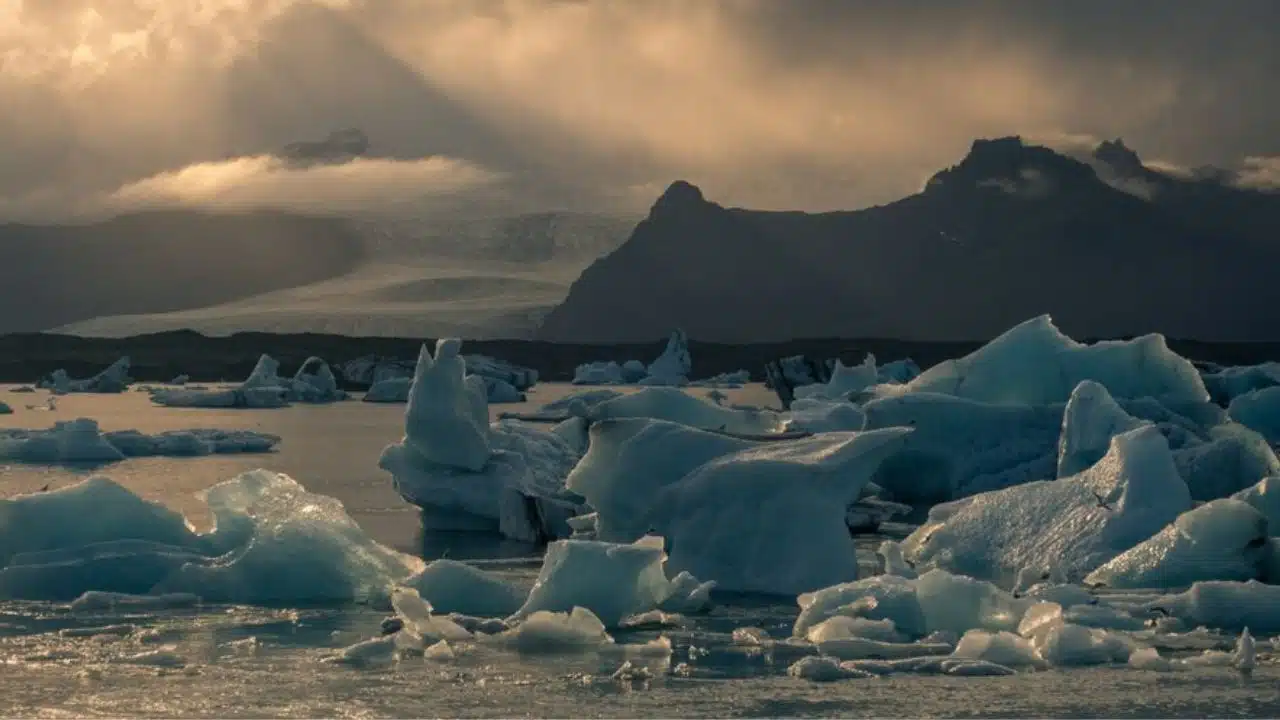
In a groundbreaking study published in the journal Nature, geophysicist Duncan Agnew from the University of California, San Diego, has revealed that climate change-induced polar ice melt is slowing down Earth’s rotation, which could have significant implications for how we measure time in the future. The findings, derived from analyzing satellite imagery data, shed light on the far-reaching consequences of our planet’s warming climate.
Agnew’s research shows that as polar ice melts into the ocean due to rising global temperatures, the planet’s mass distribution undergoes a shift. With less mass concentrated at the poles and more at the equator, the Earth’s rotation is experiencing a gradual slowdown. Agnew compares this phenomenon to that of a figure skater who slows down when extending their arms or legs during a spin.
The slowing of Earth’s rotation presents a unique challenge for timekeepers worldwide, as the global time standard, known as Coordinated Universal Time (UTC), is closely linked to the planet’s rotational speed. Historically, timekeepers have relied on adding or subtracting leap seconds to maintain synchronization between UTC and Earth’s rotation. However, Agnew’s findings suggest that this long-standing practice may need to be reevaluated and adjusted in light of the changing rotational speed.
According to Agnew’s meticulous calculations, if polar ice had remained intact and not been subject to melting, timekeepers would have been required to subtract a second from clocks worldwide by the year 2026. However, the slowdown in Earth’s rotation caused by the redistribution of mass due to ice melt is now projected to delay this time change until 2029.
The implications of this discovery extend far beyond the mere adjustment of our watches and clocks. Precise timekeeping is critical for the functioning of numerous technologies and systems, including satellites, computers, and financial institutions. Even the slightest discrepancies in timekeeping can have significant consequences for these sectors, underlining the importance of understanding and adapting to the changes in Earth’s rotation.
Agnew’s study serves as a stark reminder of the profound impact that human-induced climate change is having on our planet. The melting of polar ice, driven by rising global temperatures, is not only contributing to sea-level rise and altering ecosystems but also influencing the very rotation of the Earth itself. As Agnew poignantly stated, “It’s kind of impressive, even to me, we’ve done something that measurably changes how fast the Earth rotates. Things are happening that are unprecedented.”
This groundbreaking research highlights the urgent need for action to mitigate the effects of climate change. As the world grapples with the consequences of a warming planet, it is becoming increasingly clear that the impacts extend beyond rising sea levels and shifting weather patterns. The alteration of Earth’s rotation and its potential effects on timekeeping serve as a wake-up call, emphasizing the necessity of reducing greenhouse gas emissions and adopting sustainable practices to preserve our planet for future generations.
As the scientific community continues to unravel the complex web of interactions between climate change and Earth’s systems, studies like Agnew’s underscore the importance of ongoing research and collaboration. By deepening our understanding of these processes, we can develop more accurate models, improve our predictive capabilities, and devise effective strategies to adapt to the changes that lie ahead.
In the face of these unprecedented challenges, it is crucial that governments, industries, and individuals work together to address the root causes of climate change and mitigate its impacts. Through concerted efforts to reduce carbon emissions, protect vulnerable ecosystems, and support the transition to clean energy, we can strive to create a more sustainable future for our planet and all its inhabitants.
Agnew’s study serves as a powerful reminder that the effects of climate change are not confined to isolated regions or specific aspects of our environment. Rather, they have the potential to influence the very foundations of our world, including the way we measure and perceive time itself. As we navigate this rapidly changing landscape, it is essential that we remain vigilant, adaptable, and committed to finding solutions that will ensure the long-term well-being of our planet and its diverse ecosystems.