For a long time, space science sounded like a distant dream. It seemed reserved for astronauts, elite scientists, and a few government agencies. That world has changed. Today, the global space economy is worth hundreds of billions of dollars and is still growing fast. Private companies launch rockets, build satellites, sell Earth-observation data, and create software that depends on space technology every single day.
This new reality has opened up many practical paths to make money with space science. You do not have to work at a space agency or become an astronaut. You can work in commercial space companies, create a space-tech startup, offer consulting, build apps, teach online, or even sell space-themed products and experiences.
1. Get a High-Paying Job in the Commercial Space Industry
The first and most obvious way to make money with space science is to join the commercial space industry as a professional. This sector is often called NewSpace, and it includes both big names and smaller startups.
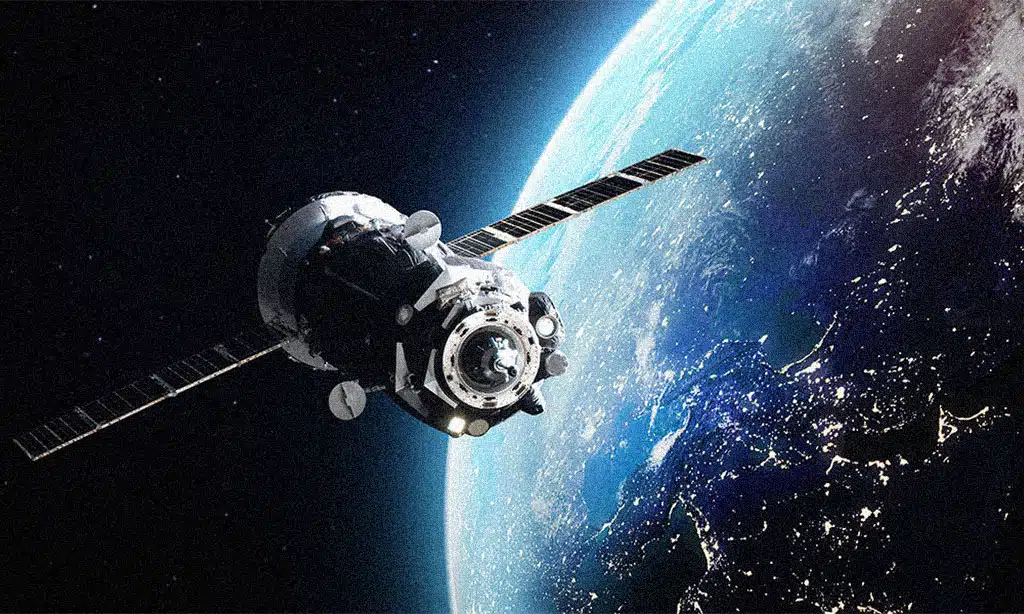
Why space jobs are booming
Governments still invest heavily in exploration, defense, and satellite programs. On top of that, private companies now build rockets, launch satellites, provide communications, track climate risks, and offer navigation and mapping services. All these activities need people with strong technical and analytical skills.
The demand is no longer limited to one country. Many regions are building their own launch sites, satellite networks, and space-tech ecosystems. This creates more space science careers and support roles around the world.
Space science careers that pay well
You can work directly with rockets, satellites, and space missions, or you can focus on the “downstream” side that uses space data on Earth.
Some key roles include:
- Aerospace engineer
- Astrophysicist or space scientist
- Satellite systems engineer
- Mission operations specialist
- Spacecraft software engineer
- Earth-observation or space data analyst
- Space robotics and mechatronics engineer
Most of these roles require a background in physics, astronomy, aerospace engineering, computer science, or data science. In many markets, salaries for such jobs are higher than average STEM jobs because the skills are scarce and the projects are complex.
How to position yourself for commercial space roles
If you are still a student, focus on:
- Degrees in physics, astronomy, aerospace, computer science, or related fields
- University projects related to satellites, cubesats, or robotics
- Internships or research assistant roles in labs working on space or remote sensing
- Participation in competitions, hackathons, and space-themed projects
If you are already working, you can move into space economy opportunities by:
- Upskilling in satellite systems, orbital mechanics, or space mission design
- Learning tools used in the sector, such as MATLAB, Python, or specific engineering software
- Targeting companies that hire remote or hybrid roles in space software, simulation, or data analysis
This path is not a quick side hustle, but it is one of the most stable and high-earning ways to build a career around space science.
2. Start a Satellite Data or Earth-Observation Business
You do not need to own a satellite to make money from them. A growing part of the space economy is built on using data that satellites collect every day.
Why satellite data is valuable
Satellites constantly observe the Earth’s surface, oceans, atmosphere, and human activity.
This data is used in:
- Agriculture: crop health, soil moisture, yield forecasts
- Insurance: flood and wildfire risk assessments
- Urban planning: monitoring land use, traffic patterns, and infrastructure
- Climate and environment: tracking deforestation, pollution, and ice loss
- Logistics and transportation: optimizing routes and monitoring ports
A satellite data business turns these images and measurements into insights that companies and governments can act on.
Business models using Earth observation and space data
Here are some ways to monetize this data:
- Geoanalytics for agriculture: Offer regular crop health reports and alerts using vegetation indices.
- Environmental monitoring services: Help companies track emissions, land use, or climate risks for ESG reporting.
- Disaster-risk and response mapping: Provide rapid analyses before and after storms, floods, or fires.
- Location intelligence: Use satellite imagery to help retailers, telecom operators, or infrastructure firms make better location decisions.
These are strong space economy opportunities because they solve real problems on Earth while relying on space science.
Skills and tools you need
To build a business around satellite and Earth-observation data, you will need:
- Basic remote sensing and Earth-observation knowledge
- GIS tools (such as QGIS or similar)
- Programming skills in Python or R for data processing
- Familiarity with image processing and machine learning
- Understanding of open vs commercial data sources
You can start with open data from public missions and later add commercial datasets when you have paying clients.
How to get started with lean
You do not need a large team or a big budget at first.
Choose:
- One industry (for example, rice farming in a specific region)
- One problem (such as early detection of drought stress)
- One simple service (like a monthly satellite-based health report for fields)
Validate the idea with a small group of clients. As your space-related side hustle grows, you can turn it into a full business.
3. Build or Join a Space-Tech Startup
The third path to make money with space science is more entrepreneurial: build or join a space-tech startup.
Where space science meets entrepreneurship
A space-tech startup can operate in many layers of the value chain:
- Launch services and small rockets
- Satellite design and manufacturing
- In-orbit services and space debris tracking
- Ground stations and communication networks
- Software platforms that manage missions or satellite data
- Downstream apps that depend on navigation, weather, or Earth-observation data
Not every startup requires you to build hardware. Many opportunities lie in software, data, and services.
Startup ideas linked to space science
If you have a space science background, you can explore:
- CubeSat components: Low-cost hardware modules or components for small satellites.
- Space-debris tracking tools: Software that helps track collision risks and supports space-traffic management.
- Simulation and testing platforms: Tools that help engineers simulate missions or test components in space-like conditions.
- Ground segment and mission planning tools: Software dashboards that plan, monitor, and control satellite missions.
These ideas sit at the intersection of space tech startup ideas, software development, and engineering.
How you actually earn money in early-stage space startups
In the startup world, your income may come from:
- Salary (initially modest, often increasing with funding)
- Equity or stock options that may become valuable if the company grows
- Grants and innovation funds
- Research contracts or pilot projects with agencies and private firms
This path is riskier than a standard job, but it can be very rewarding if your startup solves a real problem.
Practical entry points
You can:
- Join an existing space-tech startup as an engineer, data scientist, or product specialist
- Co-founded a startup with partners who bring complementary skills (such as business or design)
- Start as a consultant or contractor for several early-stage companies and then join one full-time
Attending space conferences, hackathons, and accelerator programs is a good way to connect with this ecosystem.
4. Teach Space Science and Create Monetized Content
You can also make money with space science by sharing knowledge. Not everyone wants to build rockets or code simulations. Some people are great at communication and teaching.
A growing appetite for space learning
Interest in space has exploded with new missions, private launches, Mars talks, and deep-space telescopes. Parents want engaging STEM materials for children. Students crave clear explanations of physics and astronomy. Adults enjoy podcasts and videos about black holes, exoplanets, and space policy.
This creates strong demand for space science education and space-related content.
Ways to earn as a space educator
You can teach space science in several ways:
- Online courses: Create step-by-step courses on astronomy, orbital mechanics, or satellite data. Host them on established platforms or your own website.
- Live workshops and webinars: Offer sessions for schools, universities, or STEM clubs.
- Private tutoring: Teach physics, math, or astronomy to students preparing for exams or competitions.
These options can start as part-time space-related side hustles and grow into a full-time income as your audience expands.
Content creation side hustles
If you enjoy storytelling, you can build:
- A YouTube channel explaining space missions, discoveries, and technology in easy language
- A podcast or newsletter that covers space industry news, investment trends, and policy updates
- A blog or editorial column focused on space economy opportunities and space science careers
Your income can come from ad revenue, sponsorships, memberships, premium content, or brand partnerships.
How to stand out in a crowded content space
To succeed, focus on:
- Clarity: avoid jargon and explain complex ideas in simple steps
- Consistency: publish on a regular schedule so your audience knows what to expect
- Visuals: use diagrams, animations, and simple graphics where possible
- Niche: pick a clear angle, such as “space economy and business,” “space for kids,” or “deep-dive science explainers.”
With time, you can become a trusted voice and build a strong personal brand around space science.
5. Build Space-Related Software, Apps, and Simulations
Another way to make money with space science is to develop software that serves students, professionals, or hobbyists.
Software opportunities in the space ecosystem
Space projects rely heavily on software. Some examples:
- Orbit and mission simulators: Tools that help students or engineers design trajectories and analyze orbits.
- Satellite data platforms: Web apps or APIs that process and visualize Earth-observation data.
- Educational and training apps: Interactive apps that teach orbital mechanics, rocket physics, or astrophysics.
- Games and VR experiences: Space-themed games that combine real physics with entertainment.
If you combine coding skills with space science knowledge, you can fill many of these gaps.
There are several ways to monetize:
- Subscription-based SaaS for professional tools and analytics
- One-time purchase or in-app purchases for educational apps and simulations
- Licensing deals with schools, universities, or training centers
- White-label apps for organizations that want their own branded space education solution
With a good product, software can scale globally without the high costs of hardware.
Skills you need to get started
You do not need to be an expert in every field, but you should develop:
- Strong programming skills (for example, Python, C++, or JavaScript)
- A solid understanding of orbital mechanics and space mission basics
- Data visualization and UI/UX design skills to present complex information clearly
- Basic DevOps or deployment skills for web or mobile apps
You can start small with a browser-based simulator or a simple mobile app.
Getting your first users and customers
To attract your first users:
- Test your tools with students, teachers, or university clubs
- Offer free or freemium access with paid upgrades
- Gather feedback and refine your app based on real use
- Position the product as a practical solution for learning, training, or analysis
Over time, this can become a strong income stream and a valuable portfolio piece within the space tech startup ecosystem.
6. Offer Consulting, Writing, and Market Analysis for the Space Sector
The space sector is complex. It sits at the intersection of science, engineering, finance, policy, and geopolitics. Many companies and investors need help understanding it. This creates room for consulting, analysis, and writing.
Why the space industry needs analysts and storytellers
As new satellite constellations, launch services, and space policies emerge, decision-makers need:
- Clear explanations of technical concepts
- Market assessments and competitor analysis
- Regulatory insights and risk evaluations
- Strategic communication with investors, partners, and the public
Professionals who can bridge space science with business and policy can offer high-value services.
Types of consulting and writing work
You can focus on:
- Market and investment research: Preparing reports on trends in launch services, satellite communications, or Earth observation.
- Technical writing: Creating documentation, whitepapers, manuals, and specifications for space-tech products.
- Policy analysis: Examining regulations related to spectrum, orbits, space traffic, and export controls.
- Journalism and editorial work: Writing articles, features, or explainers on the space economy, space tech, and global space politics.
These services can be offered to startups, investors, media houses, think-tanks, or government agencies.
How to position your expertise
To succeed in this field:
- Combine a space science or STEM background with skills in writing, economics, law, or policy.
- Build a visible portfolio: sample reports, articles, opinion pieces, or explanatory guides.
- Speak at webinars, events, or university sessions to show your expertise.
- Develop a niche such as “space and climate,” “defense and space,” or “space investment analysis.”
Consulting can begin as a side project and grow into a full consulting practice.
Revenue streams and pricing
You can charge by:
- Project (fixed price for a report or analysis)
- Hourly or daily consulting rates
- Monthly retainers with clients who need regular support
- Paid premium newsletters or research subscriptions
This path rewards deep thinking, clear writing, and a strong understanding of both technology and markets.
7. Create Space-Themed Products and Experiences
Not every opportunity requires advanced maths or coding. If you are creative and entrepreneurial, you can make money with space science by building space-themed products and experiences.
Beyond rockets: earning from space culture
Space has a huge cultural and emotional pull. Students, children, sci-fi fans, photographers, gamers, and collectors all engage with it. You can turn that interest into income.
Products you can build and sell
Examples include:
- Educational kits: DIY telescope kits, model rockets, orbital mechanics card sets, or experiment boxes.
- Art and merchandise: Posters, prints, T-shirts, and 3D-printed models of spacecraft, rockets, and planets.
- Board and card games: Strategy games that teach real space concepts in a playful way.
These products blend fun with education and can support STEM outreach while earning a profit.
Experiences and services to offer
If you have access to a good location or a strong virtual presence, you can offer:
- Stargazing tours or night-sky experiences
- Astrophotography workshops and coaching
- Online “space classrooms” for schools around the world
- Collaborations with museums, science centers, or tourism operators
These can be marketed as special events, regular classes, or premium experiences.
Where and how to sell
You can:
- Sell physical products on e-commerce marketplaces or your own website
- Partner with schools, colleges, and STEM centers to stock your kits or use your games
- Promote experiences through social media, local tourism boards, and community groups
This path lets you bring space closer to people’s everyday lives while building a unique brand.
Who Can Realistically Make Money with Space Science?
You might be wondering if these opportunities apply to you. The short answer is: yes, if you are willing to learn and commit.
Students and early-career professionals
If you are a student, you can:
- Build basic skills in physics, programming, and data analysis
- Join space clubs and projects to gain practical experience
- Start a small YouTube channel, blog, or newsletter on space topics
- Apply for internships at satellite companies, research labs, or space-tech startups
This early exposure makes it easier to move into space science careers or space start-ups later.
Mid-career professionals switching into space
You might already work in software, finance, law, marketing, or design. Those skills are valuable.
The space sector needs:
- Software engineers for simulations, mission tools, and data platforms
- Lawyers for contracts, regulation, and international agreements
- Designers and communicators for public engagement and brand building
- Finance professionals for investment analysis and fundraising
By adding space-specific knowledge to your existing experience, you can carve out a new niche in the commercial space industry.
People outside major space hubs
If you do not live in a country with a big space agency, you still have options:
- Remote software and data roles in global space-tech companies
- Online content creation, consulting, and space education
- Space-themed digital products, courses, or tools
- Geoanalytics and Earth-observation services tailored to your local region
Space is now a global market. Talent and creativity can come from anywhere.
FAQs on How to Make Money with Space Science
Do I need a space science degree to work in the space industry?
A traditional degree in physics, astronomy, or aerospace helps, but it is not the only path. Many roles in software, data, operations, design, and business are open to people without a pure space science degree. What matters most is proven skill, project experience, and your ability to work in the space economy.
Can I make money with space science if I live outside the US or Europe?
Yes. Remote work, online businesses, content creation, and satellite data services can be done from almost anywhere. Many space-related side hustles are location-independent, and regional markets often have unmet needs.
It depends on your starting point. If you already have technical or teaching skills, you could launch a small product, course, or consulting service in a few months. More complex paths, such as high-level engineering roles or deep-tech startups, can take longer to establish.
Is the space industry too risky for a stable career?
The space sector has risks like any other high-tech field, but it is also expanding fast and diversifying. There are opportunities in government, large companies, startups, data services, and education. Diversifying your skills and income sources can make your career in this area more resilient.
Which skills are most transferable into the space sector in 2025?
Software engineering, data science, remote sensing, systems engineering, technical writing, policy analysis, and business development are all highly transferable. If you combine them with core space knowledge, you can become very valuable in space science careers and space-tech startups.
Final Thoughts: Turning Space Science into a Real Income Engine
Space is no longer just a topic for science fiction or school textbooks. It is a real, fast-growing industry with room for engineers, analysts, teachers, founders, and creators.
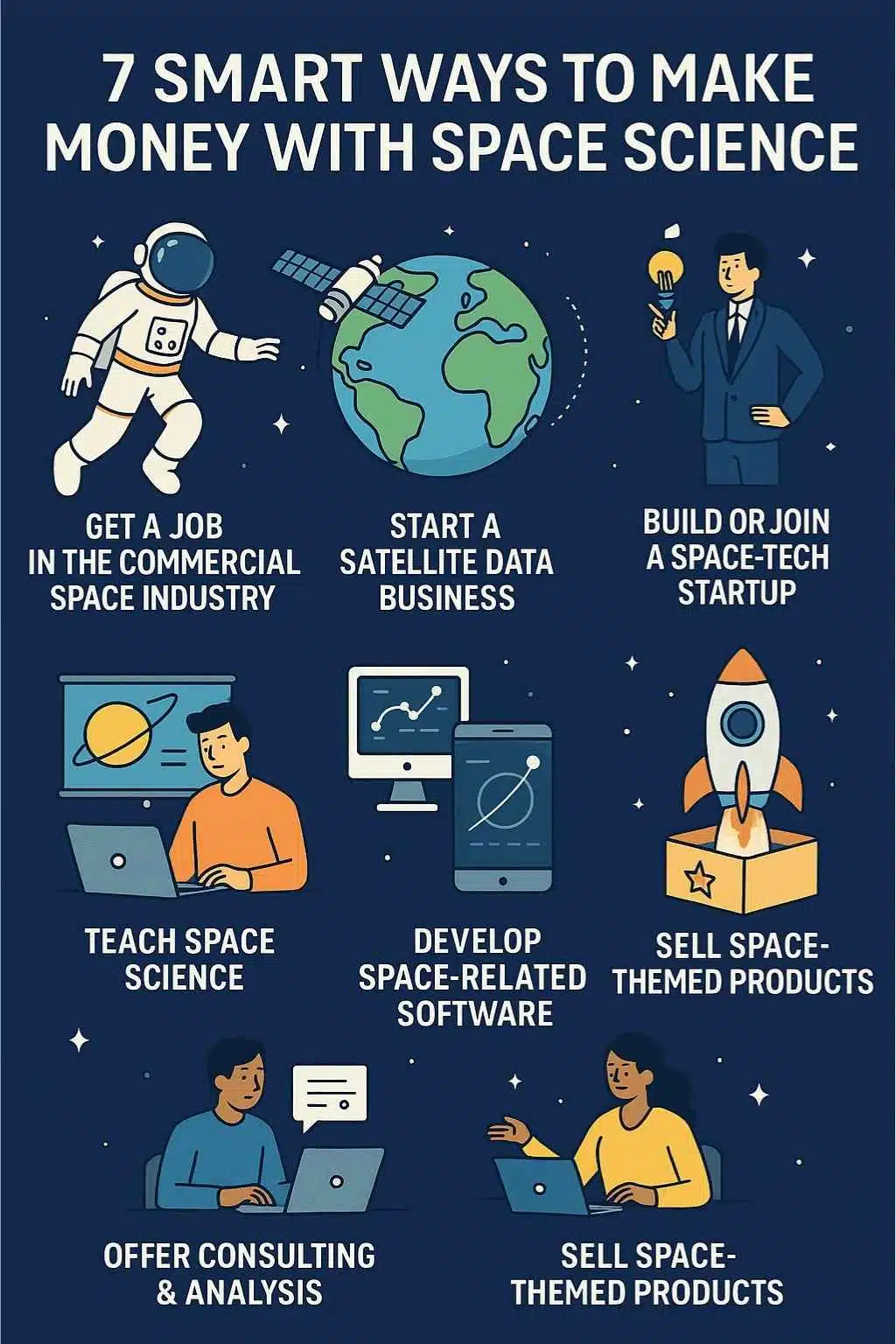
You can make money with space science by:
- Building a high-paying career in the commercial space sector
- Launching a satellite data or Earth-observation business
- Joining or creating a space-tech startup
- Teaching and producing space science content
- Developing space-related software, apps, and simulations
- Offering consulting, writing, and analysis for the space sector
- Creating space-themed products and experiences
You do not have to pursue all seven. Choose one path that matches your strengths, commit to learning and action for the next year, and let space science become a real engine of income and opportunity in your life.