

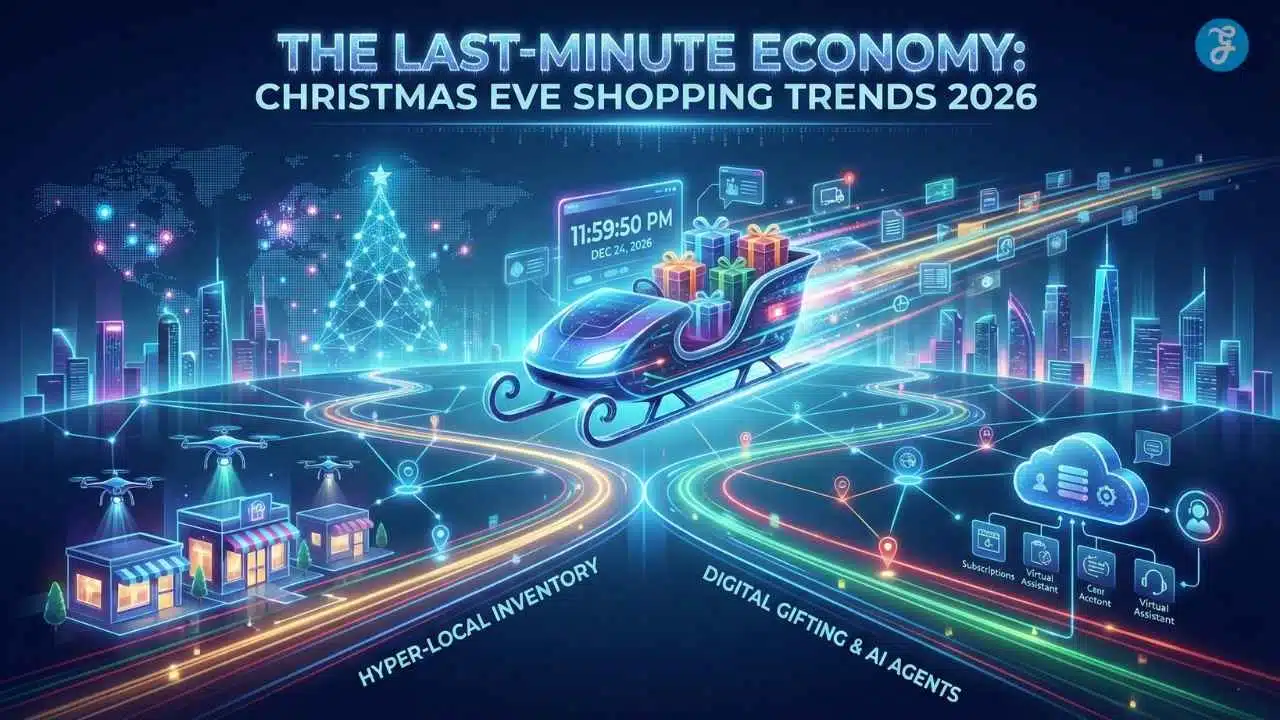
The “procrastinator” is a myth of the past. In the modern retail landscape, waiting until the eleventh hour is no longer a failure of planning; it is a sophisticated financial strategy. Last-Minute Economy Trends observed during the recent holiday season indicate a massive shift in consumer behavior, moving away from chaotic panic-buying toward data-driven, surgical precision. Shoppers are no longer frantically searching empty shelves; they are utilizing real-time inventory feeds, AI-driven assistants, and mobile commerce to execute targeted strikes on specific products hours before the clock strikes midnight.
As we look toward the retail landscape of 2026, these behaviors are not anomalies; they are the new baseline. The data collected from late December shopping activity provides a crystal-clear blueprint for the year ahead. The consumer of the future is tech-dependent, value-conscious, and debt-aware.
Retailers who fail to adapt their strategies to this “surgical” mindset risk becoming invisible in an economy where the search bar is being replaced by the chat window and the holiday season doesn’t end on December 25th.
Key Takeaways
-
The “Surgical Shopper” has arrived: Consumers now check local inventory on apps before leaving the house. If they can’t see it on their phone, they won’t look for it on the shelf.
-
“Q5” is a critical revenue stream: The period from December 26 to mid-January (The Fifth Quarter) has transformed into a peak season for self-gifting and brand loyalty.
-
AI is the new gatekeeper: “Agentic Commerce” is real. AI tools are increasingly making purchase decisions for humans, forcing brands to optimize for algorithms, not just keywords.
-
Debt will define Q1 2026: Record usage of Buy Now, Pay Later (BNPL) services suggests a spending contraction in early 2026 as households prioritize repayment.
The Rise of the “Surgical Shopper”
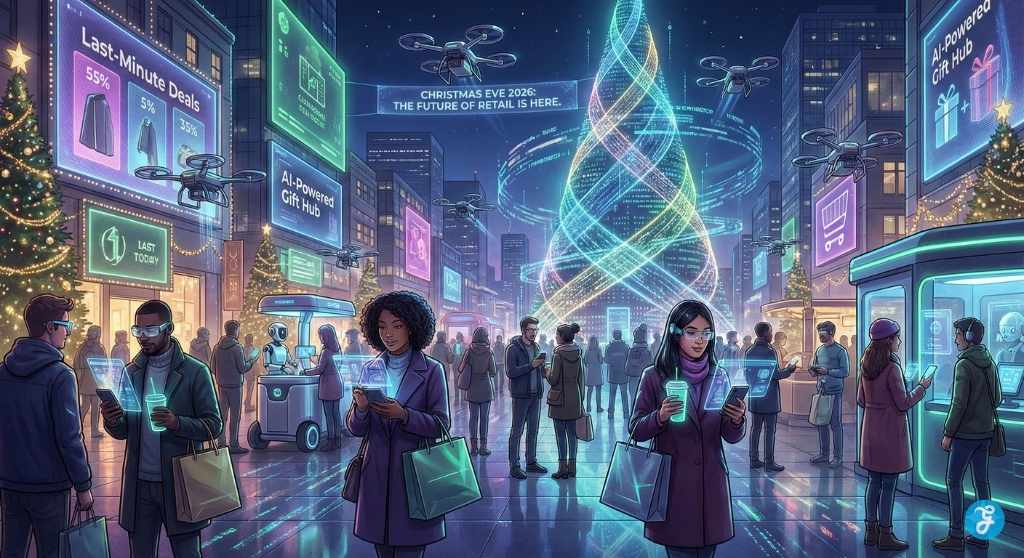
The most profound shift observed in recent Last-Minute Economy Trends is the death of the “treasure hunt.” For decades, physical retail relied on the assumption that if you got a customer into the store, they would browse and buy impulse items. That dynamic has inverted.
Today’s consumer is a “Surgical Shopper.” They do not browse; they execute missions. Driven by mobile apps that show real-time stock levels, these shoppers have already made their purchase decision before they enter the parking lot. They know exactly what they want, exactly which aisle it is in, and exactly how much it costs.
The Inventory Visibility Imperative
For retailers in 2026, “Inventory Visibility” is no longer an operational detail—it is a marketing necessity. During the recent Christmas Eve rush, retailers with accurate, real-time “In Stock” badges on their apps saw significantly higher foot traffic than those with vague inventory data.
| Feature | Old Retail Model | 2026 “Surgical” Model |
| Stock Check | “Call the store or visit to check.” | Real-time, aisle-level accuracy on the mobile app. |
| Shopping Trip | Discovery-based (wandering aisles). | Fulfillment-based (BOPIS or grab-and-go). |
| Impulse Buys | Driven by end-cap displays. | Driven by app recommendations during the trip. |
| Loyalty Driver | Friendly staff & ambiance. | Speed, accuracy, and inventory reliability. |
Strategic Note: If a customer searches for a last-minute gift and your Google Merchant Center feed says “Out of Stock” (or provides no data), you have lost the sale instantly. In 2026, your digital inventory feed is as important as your physical storefront.
“Q5”: The Hidden Growth Engine
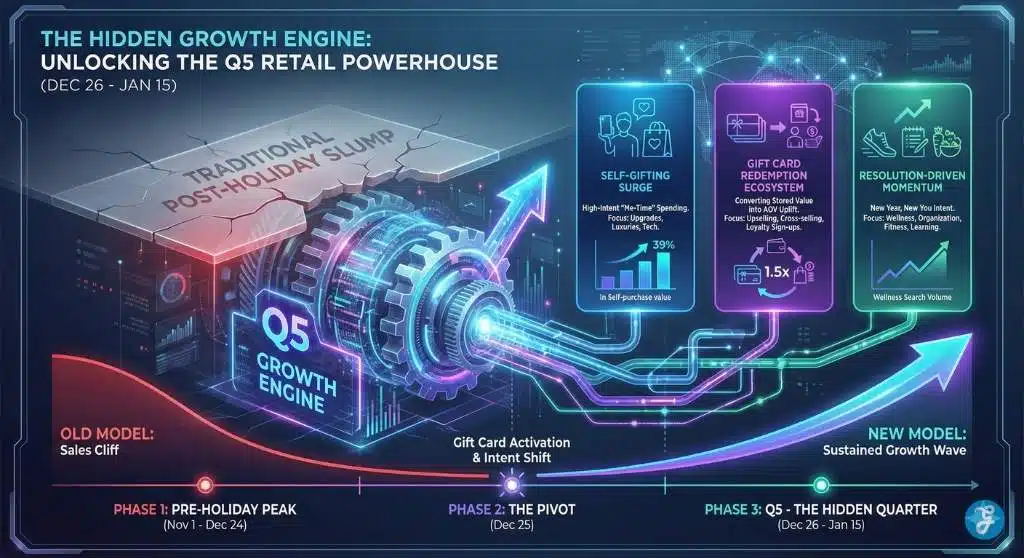
Retailers have traditionally viewed December 26th as a day for returns and clearance management. However, recent data highlights the explosion of “Q5″—the “Fifth Quarter”—spanning from Boxing Day through mid-January. This period has evolved into a distinct shopping season with its own psychology and economic drivers.
From Gifting to Self-Gifting
While the weeks leading up to the holidays are about generosity, “Q5” is about “me-time.” Shoppers, armed with gift cards and cash, are returning to stores not just to return sweaters, but to upgrade their own lives.
-
The “New Year” Pivot: Marketing data shows a sharp transition in search intent immediately after Christmas Day. Keywords shift from “best toys” to “organization,” “fitness,” and “wellness.”
-
Gen Z Influence: Younger demographics are leading the Q5 charge, treating the post-holiday period as the prime time to purchase luxury items and tech for themselves, often using the money received as gifts.
Optimizing for the Fifth Quarter
To capitalize on this Last-Minute Economy Trend, brands must have a “switch-flip” strategy ready for December 26th.
| Strategy | Pre-Christmas Tactics | Q5 (Post-Holiday) Tactics |
| Ad Messaging | “Perfect gift for them.” | “Time to treat yourself.” |
| Product Focus | High-giftability items (sets, novelties). | Resolution items (fitness, home org, skincare). |
| Inventory | Stocking depth for peak volume. | Clearance of holiday SKUs + Launch of Spring arrivals. |
| KPI | Conversion Rate & AOV. | Customer Retention & Loyalty Sign-ups. |
Agentic Commerce: AI as the New Gatekeeper
Perhaps the most futuristic of the Last-Minute Economy Trends is the rapid adoption of “Agentic Commerce.” We are moving past the era where humans type keywords into search bars. We are entering an era where humans ask AI agents to “find a solution.”
During the recent holiday rush, traffic from AI-powered search and chatbots tripled compared to previous years. Consumers used these tools to compare complex bundles, find the best price-per-unit, and check delivery windows across multiple retailers simultaneously.
The SEO Shift for 2026
This shift has massive implications for Search Engine Optimization. It is no longer enough to rank for a keyword; your product data must be structured so that an AI can “understand” it.
-
Structured Data is King: AI agents rely on Schema markup (price, availability, shipping speed) to recommend products. If your data is unstructured, the AI will ignore you.
-
Conversational Queries: Content must be written to answer specific questions (“What is the best noise-cancelling headphone under $200 available for pickup near me?”) rather than just targeting generic keywords.
Prediction: In 2026, the “best” product won’t win—the product that is most easily “read” by AI algorithms will win.
The Financial Hangover: BNPL & The Q1 Risk
While sales figures for the recent season appear robust, the underlying payment methods reveal a potential fragility. The usage of Buy Now, Pay Later (BNPL) services reached record highs during the final weeks of the shopping season.
The “Debt Drag” Effect
This reliance on short-term financing creates a delayed economic impact. Unlike credit card debt, which is often revolving, BNPL plans typically have strict repayment schedules that hit consumers 4-8 weeks after purchase.
-
Spending Contraction: We can expect a “soft” start to consumer spending in early 2026. As BNPL bills come due in January and February, discretionary income for mid-tier purchases will likely tighten.
-
The “Essentials” Pivot: During this repayment period, consumers will prioritize essential goods (groceries, household items) and pause spending on big-ticket electronics or furniture.
Retailer Defense Strategy
Retailers should prepare for this “debt hangover” by adjusting their loyalty strategies for the first quarter of 2026.
-
Emphasize Value: Promotions in Q1 should focus on “stocking up” and everyday value rather than luxury splurges.
-
Loyalty Points: Encourage the use of loyalty points to offset costs, keeping cash-strapped customers engaged with the brand.
The “Vibe” Economy: Experience Over Stuff
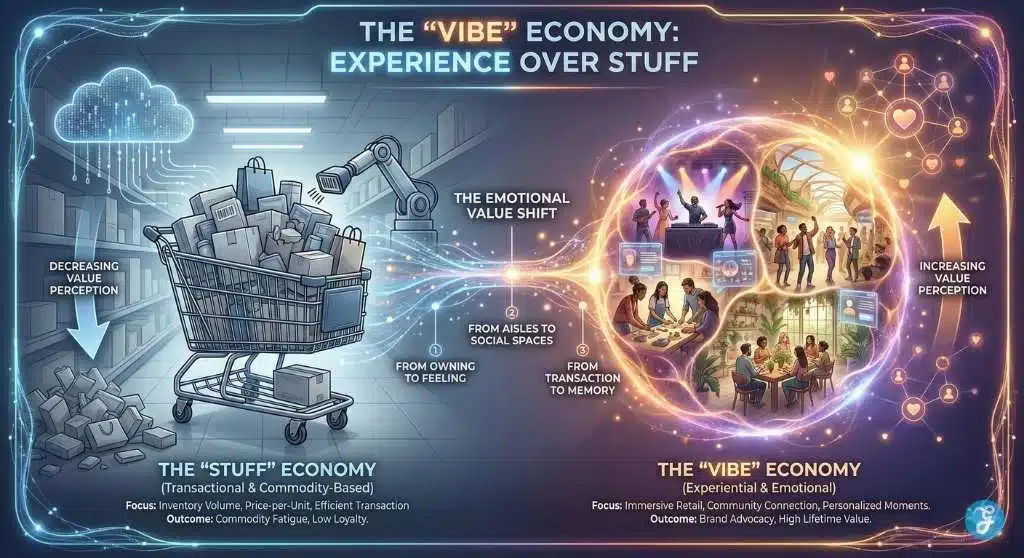
Despite the focus on efficiency, physical stores are not dead—boring stores are. The Last-Minute Economy Trends show a bifurcation in retail foot traffic. Stores that offered just products saw flat traffic. Stores that offered an experience or a “vibe” saw growth.
Immersive Retail
In 2026, the physical store has two distinct roles:
-
The Fulfillment Hub: A seamless, localized warehouse for the Surgical Shopper to pick up app orders.
-
The Brand Stage: An immersive environment for the “Vibe Shopper” who wants to touch, feel, and socialize.
Successful brands are merging these. They have dedicated “fast lanes” for pickups to satisfy the Surgical Shopper, while dedicating the rest of the floor space to product demos, events, and aesthetic experiences that justify the trip for the leisure shopper.
The “Returns Renaissance”: Turning Refunds into Revenue
In the traditional retail playbook, returns were viewed as a logistical nightmare and a profit leak. However, Last-Minute Economy Trends reveal a massive operational pivot: returns are now a primary engagement channel. With return rates for e-commerce hovering near 20-30%, the “Returns Desk” has become the new “Front Door.”
BORIS (Buy Online, Return In-Store) as a Growth Hack
Smart retailers in 2026 are aggressively incentivizing BORIS. Why? Because data shows that a customer who enters a physical store to make a return is 60% more likely to make a new purchase during that same visit.
-
The “Save the Sale” Strategy: Associates are now trained (and equipped with tablet POS systems) to offer “instant exchanges” with a bonus value (e.g., “Get 110% credit if you exchange today”) rather than a straight refund.
-
Frictionless Drop-offs: Retailers are partnering with third-party hubs (like coffee shops or shipping centers) to make returns effortless, ensuring that the “last touch” with the brand is positive, preserving long-term loyalty even if the specific product didn’t work out.
Hyper-Local Logistics: The “60-Minute” Standard
The “Last-Minute Economy” is only possible if the supply chain can move as fast as the consumer’s decision-making. In late 2025, we saw the pilot phase of autonomous delivery finally graduate to the scaling phase.
Drones and Droids at Scale
For the 2026 shopper, “Same-Day Delivery” is becoming too slow. The new benchmark is “Sub-Hour Delivery.”
-
The Sidewalk Fleet: In dense urban centers, sidewalk robots (from companies like Starship and Uber Eats) handled a record number of “micro-fulfillments” (small orders under 5kg) on Christmas Eve. This frees up human drivers for larger, high-value loads.
-
The “Forward-Deployed” Inventory: Retailers are increasingly using “dark stores” (micro-warehouses) located within residential neighborhoods rather than massive distribution centers on the outskirts of town. This places the most popular SKUs within a 2-mile radius of the customer, making 30-minute delivery physically possible.
2026 Implication: If your logistics provider cannot offer a “within the hour” option for local customers, you will lose the “emergency gift” market to competitors who can.
The “Access” Economy: Gifting Subscriptions Over Stuff
A major driver of the “Last-Minute” surge was not physical goods at all. It was the explosive growth of Digital Goods and Subscriptions. When shipping deadlines pass, the “Access Economy” saves the day.
The “Zero-Logistics” Gift
Digital gifting has matured beyond simple cash-value cards.
-
Niche Subscriptions: Instead of a coffee maker, shoppers were gifted a 3-month “Bean of the Month” subscription. Instead of a book, they gifted an Audible or Kindle Unlimited membership.
-
The “Unboxing” of Digital: Smart brands have solved the “boring email” problem by creating immersive, AR-based “digital unboxing” experiences that the recipient can view on their phone when they receive the gift notification.
Data Point: Digital goods saw a 22% year-over-year growth on December 25th itself, proving that the shopping season now extends literally into Christmas Day.
The “Silver” Digital Wave
Perhaps the most surprising demographic trend of the 2025 holiday season was the tech-savviness of the 60+ demographic. The stereotype of the older shopper struggling with technology is officially dead.
The “Tablet-First” Shopper
The “Silver Economy” has adopted the “Surgical Shopper” mindset with surprising speed.
-
Voice Search Adoption: Older consumers are heavy users of Voice AI (“Hey Google, where can I buy a heater near me?”) to find local inventory.
-
Loyalty Power Users: This demographic holds the highest engagement rates with digital loyalty programs. They are using apps not just to buy, but to manage points and redeem rewards with precision.
Strategy Shift: Retailers in 2026 must ensure their apps have “Accessibility Mode” (larger text, voice navigation) not just for compliance, but because this demographic represents their most reliable, high-spending growth sector.
Social Search: The New SEO Battleground
While AI is changing how we search, social platforms are changing where we search. For Gen Z and the emerging Gen Alpha, the “Last-Minute Economy” doesn’t start on Google—it starts on TikTok, Instagram, and specialized social marketplaces.
Vertical Video is the New Storefront
The linear funnel (See Ad -> Click Website -> Buy) is collapsing. In 2026, the entire transaction happens within the social feed.
-
Search vs. Feed: Users are no longer just scrolling; they are using social platforms as search engines. Queries like “best last-minute gifts for dad” are being typed directly into social apps to find user-generated reviews rather than polished corporate blog posts.
-
The Authenticity Premium: Shoppers trust a creator’s “haul” video more than a product description. Brands that encourage user-generated content (UGC) are effectively building a “social inventory” that ranks higher in these new search algorithms than traditional SEO content.
Sustainability 2.0: Durability is the New Green
For years, “sustainability” in retail meant recycled packaging or carbon offsets. But the Last-Minute Economy Trends of late 2025 point to a harder, more pragmatic definition of sustainability for 2026: Durability.
The Rejection of “Disposable Culture”
Economic pressure combined with environmental awareness has created a “Buy It For Life” (BIFL) mentality.
-
Quality Over Quantity: Consumers are buying fewer items, but spending more per item. They are looking for warranties, repairability scores, and material quality. The “fast fashion” cycle is slowing down in favor of “slow, durable fashion.”
-
Resale Value: A major purchasing factor in 2026 is resale potential. Shoppers are asking, “Can I sell this on a secondhand marketplace next year?” before they buy. Brands that highlight the longevity and resale value of their products are winning the value argument.
FAQs: Understanding the Last-Minute Economy
1. What exactly is the “Last-Minute Economy”?
The Last-Minute Economy refers to the growing consumer behavior of delaying purchases until immediately before a deadline (like Christmas or a birthday). Unlike old-school procrastination, this is now a deliberate strategy where shoppers use technology to find better deals and ensure real-time availability, maximizing their capital and time efficiency.
2. Why is “Q5” considered so important for 2026?
Q5 (late Dec to mid-Jan) is critical because customer acquisition costs (CAC) often drop significantly after the holiday peak. It is a period of high intent where consumers are spending on themselves rather than others. Brands that stop marketing on December 25th miss out on one of the most profitable windows of the year.
3. How will AI change how we shop in 2026?
AI will move from being a “search tool” to a “personal shopper.” Instead of browsing ten websites, a consumer will ask their AI assistant to “find a size 10 running shoe with good arch support in stock nearby for under $100.” The AI will do the searching and filtering, presenting the user with only the relevant options.
4. Is Buy Now, Pay Later (BNPL) bad for the economy?
Not necessarily bad, but it introduces different risks. It democratizes credit, allowing more people to buy what they need. However, because it is so easy to use, it can lead to “stacking” debt—where a consumer has multiple small payments due simultaneously, which can suddenly squeeze their monthly budget and reduce spending power in subsequent months.
5. What should small businesses do to survive these trends?
Small businesses must prioritize inventory visibility. You don’t need a complex custom app, but you do need to ensure your local inventory is visible on platforms like Google Shopping or social media. If a local “Surgical Shopper” can’t see that you have the item in stock via their phone, they will go to a big-box chain that does.
Final Thought: The Era of the Surgical Shopper
The recent holiday season has proven that the era of the passive consumer is over. The Last-Minute Economy Trends paint a picture of a 2026 consumer who is empowered by data, assisted by AI, and ruthless about value.
For retailers, the message is stark but exciting: The chaos of the holidays is being replaced by the clarity of algorithms. Success in 2026 will not come from simply opening the doors and hoping for a crowd. It will come from meeting the consumer exactly where they are—on their phone, in the “Fifth Quarter,” and in the precise moment of need. The future of retail isn’t just about selling products; it’s about solving problems with surgical precision.






























