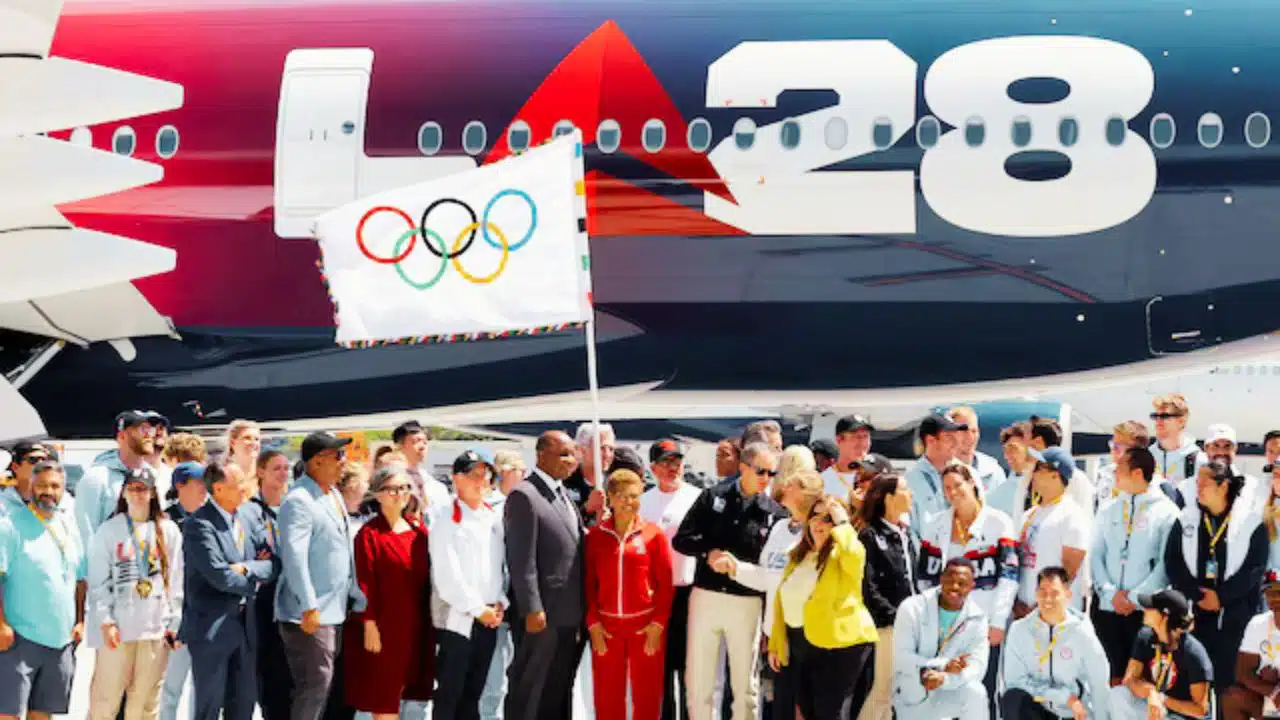
Los Angeles has unveiled a packed and historic competition schedule for the LA 2028 Olympic Games, highlighted by a trailblazing opening weekend that puts women’s events and sprint showpieces at center stage and introduces new and returning sports to the world’s biggest multi-sport event. The Games will run from 14 to 30 July 2028, feature a record number of medal events, and flip the traditional order of athletics and swimming in a bid to maximize venue use, television impact and athlete experience.
Dates, Scale and Venues
The LA 2028 Olympic Games will officially open on 14 July 2028 and close on 30 July, creating a 17‑day program of competition across the Los Angeles region. Organizers project around 11,200 athletes competing across 351 medal events, making LA28 one of the largest and most logistically complex Summer Games ever staged. The event will be spread over 49 venues, including SoFi Stadium, the LA Memorial Coliseum, Dodger Stadium and coastal sites that will showcase Southern California’s landscapes to a global audience.
Historic Opening Weekend Shake‑Up
In a radical departure from Olympic convention, athletics will now take place in the first week of the Games, with swimming moved to the second, reversing a pattern that has held since the late 1960s. This shift allows SoFi Stadium to host both the opening ceremony and, after an intensive conversion, the Olympic swimming competition, becoming the first NFL venue ever to stage Olympic swimming finals. The new structure also enables swimmers to attend the opening ceremony without the usual concern of racing early the following morning, a long‑standing complaint at previous Games.
Women’s 100m Sprint to Open the Show
One of the most striking schedule innovations is the decision to headline Day 1 with the women’s 100m, with all three rounds, including the final, to be contested on the first full day of competition. This means the Games will “start with a bang”, as LA28 officials put it, showcasing the world’s fastest women in prime time and deliberately putting women’s sport at the heart of the Olympic narrative from the outset. The men’s 100m final will then follow on Day 2, maintaining sprint momentum and ensuring athletics medals are awarded across 17 of the 20 stadium sessions.
Focus on Women’s Sport and Gender Balance
LA28 has framed the schedule as a statement on gender equity, promising that women will make up just over half of all competitors and that every team sport will feature an equal or greater number of women’s teams than men’s. Organizers say the opening weekend, with the women’s triathlon, women’s 100m and multiple women’s finals on a single day, will deliver the largest single‑day slate of women’s medal events in Olympic history. The move aligns with the IOC’s broader push toward full gender parity and is designed to elevate female stars in sports that traditionally share the spotlight with their male counterparts.
Athletics Over 13 Intense Days
Athletics competition will span 13 days, from 15 to 30 July, with 10 days of stadium action at the LA Memorial Coliseum followed by road events, including the marathons, in the final days. The schedule has been crafted to allow a wide range of doubles, from the classic 100m–200m and 200m–400m combinations to middle‑distance and distance pairings such as 800m–1500m and 5000m–10,000m. A repechage format will be used in some events, providing athletes with more recovery time between rounds and increasing the chances of dramatic comebacks and tactical racing.
Swimming Moves to Week Two
With athletics occupying week one, swimming will now run in week two at SoFi Stadium, which will be transformed from a ceremony arena into a temporary aquatics venue. This arrangement is intended both to maximize stadium use and to cluster swimming finals in late‑evening sessions to suit both local spectators and key global broadcast markets. The final swimming medals are scheduled to be awarded on the penultimate day, just ahead of the closing ceremony, giving the sport a high‑impact climax.
‘Super Saturday’ Packed With Finals
One of LA28’s centerpiece days will be a so‑called “Super Saturday” on 29 July, when 26 medal events in 23 sports are due to be decided. That day is set to include finals in basketball, beach volleyball, boxing, football, tennis, golf, swimming, cricket and multiple athletics events, compressing some of the Games’ most marketable competitions into a single marathon broadcast window. The aim is to create a festival atmosphere across the city, with packed venues from the beach to downtown and a sustained spike in global TV and streaming audiences.
Marathons Close the Games
Distance road racing will retain a traditional place in the Olympic narrative, with the women’s marathon scheduled for 29 July and the men’s race set for the final day, 30 July. The men’s marathon will flow directly into the closing ceremony, echoing historic Olympic scripts where the endurance event delivers the last athletic drama before the flame is extinguished. Organizers are expected to design marathon routes that highlight landmarks across Los Angeles while also taking into account summer heat, with early‑morning starts likely.
New and Returning Sports Take the Stage
LA28 will see the Olympic debuts of flag football and squash, while baseball/softball, cricket and lacrosse return to the program after long absences. Baseball will begin as early as 13 July, one day before the opening ceremony, in order to fit within the Major League Baseball calendar and to open room for MLB stars to appear. Cricket, contested in the fast‑paced T20 format, will feature both men’s and women’s tournaments, reflecting the sport’s growth in markets such as India, Australia, England and the United States.
Cricket, Flag Football and Squash Milestones
Cricket’s Olympic return after more than a century will include a women’s final on 20 July and a men’s gold‑medal match on 29 July, at the heart of “Super Saturday”. Flag football, a non‑contact variant of American football, will begin on 15 July and is expected to attract NFL and CFL talent after respective leagues opened the door for players to participate. Squash, long campaigned for by its global community, will also debut on 15 July, giving the sport its first Olympic platform after years of near‑misses in previous bidding cycles.
Ticketing, Weather and Fan Experience
Organizers plan to release around 14 million tickets, a massive inventory that will make LA28 one of the most accessible Games for spectators in Olympic history. Notably, officials have said they will avoid dynamic pricing models, a move likely to be welcomed by fans worried about surge costs in high‑demand sessions. Weather has also influenced the timetable, with events such as equestrian sessions at Santa Anita moved into cooler evening windows, reflecting concerns about athlete welfare and spectator comfort during Southern California’s July heat.
A Schedule Designed for TV and Storytelling
World Athletics president Sebastian Coe has described the athletics timetable as “innovative but respectful of tradition”, noting that 17 of 20 sessions will include medal events to keep audiences engaged. The heavy emphasis on evening finals and compressed sessions draws on lessons from recent World Championships, where tighter scheduling produced higher viewing figures and better in‑stadium energy. Broadcasters, including NBC, are expected to build narrative arcs around back‑to‑back sprint finals, the rise of new sports like flag football and the historic return of cricket, creating a storytelling‑driven Games tailored to digital and streaming audiences.
A Different Kind of Olympic Fortnight
By flipping its core sports, front‑loading women’s events and integrating new disciplines that speak to American and global youth culture, LA28’s schedule signals a clear intention to redefine what an Olympic fortnight looks and feels like. The Games will blend established Olympic traditions—such as a marathon finish and packed athletics program—with innovations like NFL‑backed flag football and a coastal cricket tournament, aiming to resonate from Los Angeles to Mumbai, London and beyond. For athletes, broadcasters and fans, the newly unveiled timetable offers a detailed roadmap to a Games that seeks to be both the biggest in scale and among the boldest in design in modern Olympic history.