In recent years, the evolution of the internet has sparked discussions about its future direction. As Web3 gains momentum, understanding the differences between Web2 and Web3 becomes critical for businesses, developers, and everyday users alike.
Web2 represents the internet as we’ve come to know it—an ecosystem dominated by centralized platforms and user-generated content.
Web3, on the other hand, introduces decentralization, data ownership, and a vision of empowering users through blockchain technology.
This article will explore the key differences between Web2 and Web3, delving into their features, implications, and why Web3 is seen as the future of the internet.
The Evolution of the Web
A Quick History of Web2
Web2, often referred to as the “social web,” emerged in the early 2000s. It marked a shift from static websites of Web1 to dynamic, interactive platforms.
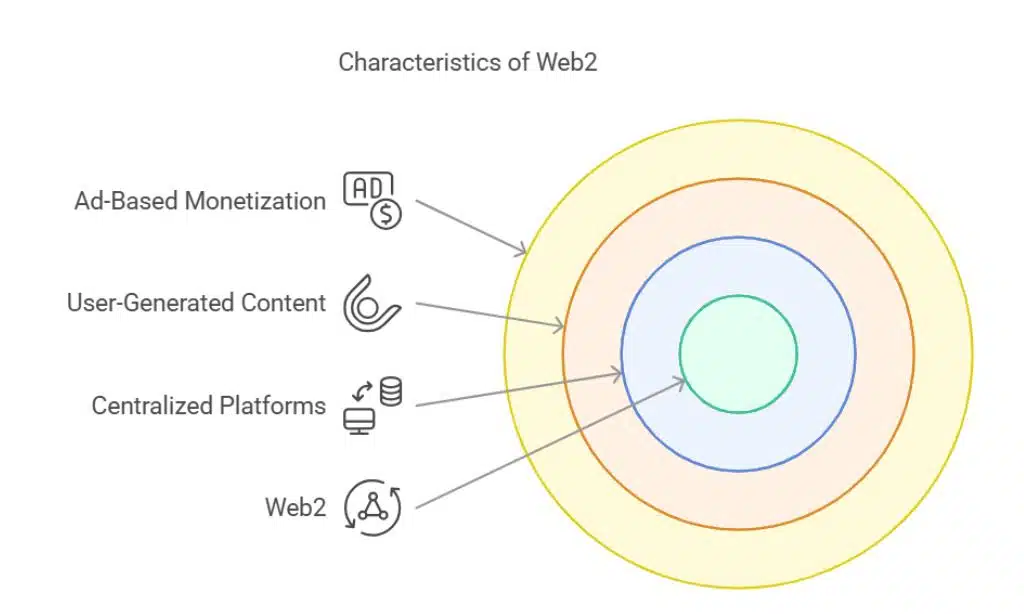
Key characteristics of Web2 include:
- Centralized Platforms: Major corporations such as Google, Facebook, and Amazon control much of the web’s infrastructure, offering services that rely on centralized data storage.
- User-Generated Content: Platforms like YouTube, Instagram, and Twitter empower users to create and share content on a massive scale.
- Ad-Based Monetization: Companies provide free services in exchange for collecting and monetizing user data through targeted advertising, creating an ecosystem driven by profit.
Real-World Insight: Platforms like Instagram have redefined social interactions, allowing individuals and businesses to connect on a global scale—but often at the cost of user privacy and data ownership.
What Is Web3?
Web3 is a paradigm shift aimed at decentralizing the internet. Built on blockchain technology, Web3 focuses on empowering users by giving them control over their data and online interactions.
Key features of Web3 include:
- Decentralization: Unlike Web2, where corporations manage servers, Web3 is powered by distributed blockchain networks that eliminate the need for intermediaries.
- Data Ownership: Users retain ownership of their personal data, stored securely and accessed via cryptographic methods.
- Token-Based Economies: Cryptocurrencies and tokenization enable users to directly participate in financial ecosystems without relying on centralized entities.
Example: Platforms like Ethereum and Polkadot are leading the charge in Web3, enabling decentralized applications (dApps) that remove the need for intermediaries.
5 Key Differences Between Web2 and Web3
As we delve deeper into the key differences between Web2 and Web3, it is essential to understand their broader implications for the digital ecosystem.
While Web2 revolutionized how we interact online, Web3 promises to redefine ownership, privacy, and governance in the digital realm.
1. Ownership of Data
Web2: Centralized Data Ownership
In the Web2 model, data is stored on centralized servers controlled by corporations. Platforms collect, analyze, and often sell user data to advertisers without providing transparency. For example:
- Users provide personal information to access services like social media or cloud storage.
- Data breaches expose sensitive information due to centralized vulnerabilities. In 2022 alone, over 22 billion records were exposed in data breaches.
Example: Social media platforms like Facebook monetize by collecting user data for targeted ads, while users have limited control over how their information is used.
Web3: Decentralized Data Ownership
Web3 shifts control of data back to users through blockchain technology and smart contracts. Key aspects include:
- Data is encrypted and stored across a decentralized network, reducing risks of breaches.
- Users decide who can access their information, creating transparency and trust.
Example platforms: Filecoin and IPFS offer decentralized file storage solutions.
Data Ownership Comparison
| Feature | Web2 | Web3 |
| Data Control | Corporations | Users |
| Risk of Data Breach | High | Low |
| Monetization | Through user data | Through tokens and crypto |
Actionable Tip: To secure your data in a Web3 ecosystem, start using decentralized storage solutions like Filecoin and encrypt sensitive data with private keys.
2. Decentralization vs. Centralization
Web2: Centralized Systems
Web2 relies on centralized servers and intermediaries. Characteristics include:
- Platforms control content and infrastructure, creating bottlenecks for innovation.
- Gatekeepers, like app stores or social media, have significant influence over user experiences and content moderation.
Examples: Centralized platforms include Amazon Web Services (AWS) and Google Cloud.
Case Study: In 2021, a Facebook server outage affected billions of users worldwide, highlighting the risks of centralized systems.
Web3: Decentralized Systems
Web3 operates without intermediaries, utilizing blockchain and peer-to-peer networks. Advantages include:
- Reduced reliance on corporations for managing data and services.
- Greater resilience to censorship and outages due to distributed infrastructure.
Example: Ethereum’s decentralized applications (dApps) demonstrate how users can interact directly with blockchain networks.
Centralization vs. Decentralization
| Feature | Web2 | Web3 |
| Control | Centralized (Few Entities) | Decentralized (Blockchain) |
| Censorship | Possible | Resistant |
| Infrastructure | Centralized Servers | Distributed Nodes |
Actionable Tip: Explore decentralized tools like Brave Browser and MetaMask to experience the benefits of Web3.
3. Monetization Models

Web2: Ad-Based Monetization
The Web2 ecosystem monetizes through advertising:
- Platforms like Facebook and Google offer free services by selling ad space.
- User behavior and preferences are analyzed to deliver targeted ads, creating a multi-billion-dollar industry.
- Users have little say in how their data is used.
Example: Google’s ad revenue surpassed $224 billion in 2022, driven by user data insights.
Web3: Token-Based Economies
Web3 introduces new financial models with blockchain-enabled cryptocurrencies. Features include:
- Play-to-Earn Games: Players earn cryptocurrency for participating in games, such as Axie Infinity.
- Decentralized Finance (DeFi): Eliminates intermediaries, allowing users to lend, borrow, or trade assets directly via platforms like Uniswap.
- Transparent systems ensure fair compensation.
Monetization Models
| Feature | Web2 | Web3 |
| Revenue Model | Ads | Tokens/Cryptocurrency |
| User Compensation | Indirect | Direct |
| Example | Facebook Ads | Axie Infinity (Play-to-Earn) |
Actionable Tip: Experiment with DeFi platforms like Aave or play blockchain games to earn cryptocurrency and explore Web3’s economic potential.
4. Privacy and Security
Web2: Privacy Concerns
Web2’s centralized nature raises privacy issues:
- Frequent data breaches expose user information, such as the 2018 Facebook-Cambridge Analytica scandal.
- Companies track and exploit user activity for profit.
- Minimal control over personal information.
Real-Time Data: According to Cybersecurity Ventures, the global cost of cybercrime is expected to reach $10.5 trillion annually by 2025.
Web3: Enhanced Security
Web3’s decentralized architecture prioritizes security:
- Blockchain encryption protects sensitive data.
- Users control access to their information through private keys.
- Pseudonymity reduces risks of identity theft.
Privacy and Security
| Feature | Web2 | Web3 |
| Privacy | Limited | Enhanced |
| Data Encryption | Minimal | High |
| Risk of Breach | High | Low |
Actionable Tip: Use secure crypto wallets like Ledger or Trezor to store digital assets safely.
5. Governance and Control
Web2: Controlled by Corporations
In Web2, decision-making power lies with corporations:
- Companies set policies and terms of use, often prioritizing profits over user interests.
- Users have limited influence over platform operations.
Example: Twitter’s centralized policies have faced criticism for arbitrary content moderation decisions.
Web3: Community-Driven Governance
Web3 leverages Decentralized Autonomous Organizations (DAOs) to empower users:
- Governance tokens enable users to vote on proposals, ensuring democratic decision-making.
- Transparent processes promote accountability and user involvement.
Governance Models
| Feature | Web2 | Web3 |
| Decision-Making | Centralized | Decentralized (DAOs) |
| User Influence | Limited | High |
| Transparency | Low | High |
Actionable Tip: Join DAO communities like MakerDAO to participate in decentralized governance experiments.
Why Web3 Is the Future
Benefits of Web3 Adoption
- User Empowerment: Web3 gives individuals control over their data and online activities.
- Decentralization: Reduces reliance on tech monopolies, fostering a fairer ecosystem.
- Innovation: Opens new opportunities in industries like DeFi, gaming, and content creation.
Challenges to Overcome
- Scalability: Current blockchain networks face technical limitations, impacting transaction speeds and costs.
- Regulatory Concerns: Governments need to define legal frameworks for Web3 technologies, balancing innovation and compliance.
- Public Awareness: Educating users about blockchain and its benefits is essential for widespread adoption.
Takeaways
The key differences between Web2 and Web3 highlight a significant shift in how the internet operates. From data ownership to governance, Web3 prioritizes user empowerment, privacy, and transparency.
While challenges remain, the transformative potential of Web3 makes it a promising direction for the future.
As we transition to this new era of the internet, understanding and embracing these changes will be crucial for staying ahead in the digital age. Explore Web3 technologies today to experience the future of the web firsthand.