In a move with national implications, the Government of Kerala is poised to formally declare the state free from extreme poverty on November 1, 2025, the 69th anniversary of the state’s formation. This ambitious announcement follows a multi-year, targeted campaign to uplift over 64,000 identified families from destitution through a meticulous, micro-level intervention strategy, a first-of-its-kind initiative in India.
The declaration, should it be formalized, will be a significant milestone for the southern state, already recognized for its leading social development indicators. The Kerala Government Claims State Will Soon Be Free from Extreme Poverty, a statement that has garnered both praise for its ambition and scrutiny from economists and social scientists regarding its long-term sustainability and the very definition of “extreme poverty.” This landmark initiative, the Extreme Poverty Eradication Programme (EPEP), was a cornerstone policy of the second Pinarayi Vijayan-led Left Democratic Front (LDF) government, launched in 2021.
Key Facts / Quick Take
- Official Declaration Date: November 1, 2025.
- Beneficiaries: 64,006 families, comprising 1,03,099 individuals, identified in a statewide survey.
- Methodology: Individualized “micro-plans” addressing specific deprivations in food, health, income, and housing.
- Progress Claim: As of September 16, 2025, the government reports that 96.13% of the identified families have been lifted out of extreme poverty.
- Poverty Context: Kerala has the lowest multidimensional poverty in India at 0.55% according to the NITI Aayog’s National Multidimensional Poverty Index (MPI) report based on 2019-21 data.
The Making of a “Poverty-Free” State
What Happened
The journey towards this declaration began in 2021 with one of the first cabinet decisions of the current LDF government. The EPEP was conceptualized as a final assault on the residual poverty in a state that has consistently outperformed the national average in social metrics. Unlike broad-based welfare schemes, the EPEP’s uniqueness lies in its granular approach.
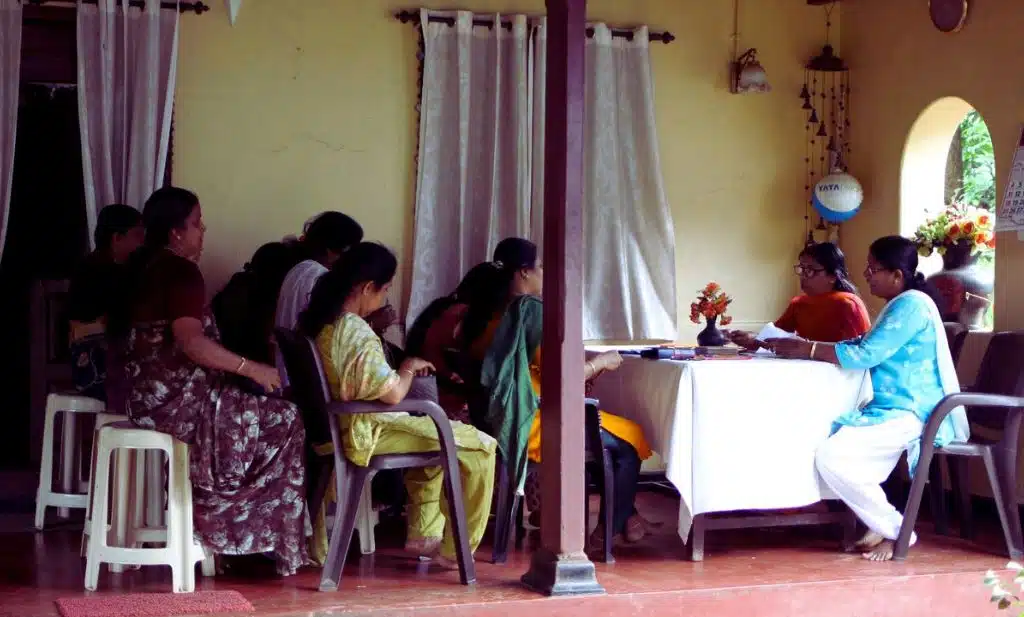
A comprehensive, participatory survey was conducted across the state, involving local self-government institutions (LSGIs), community workers from Kudumbashree (the state’s women’s self-help network), ASHA workers, and other grassroots-level organizations. This survey identified 64,006 families facing extreme deprivation based on four critical factors: lack of food, insecure shelter, inadequate income, and poor health conditions.
For each of these families, a tailored micro-plan was developed. These plans were not a one-size-fits-all solution but a customized set of interventions. For some, it meant ensuring a regular supply of food and medicine; for others, it involved providing land and a house under the state’s LIFE Mission housing scheme or creating sustainable livelihood opportunities through the “Ujjeevanam” campaign.
The entire process is digitally monitored through a Management Information System (MIS) that tracks the progress of each family’s micro-plan, ensuring accountability and timely intervention.
Latest Data & Statistics
The state government has released data showcasing the program’s progress:
- Overall Progress: In an interview with Kerala Calling in September 2025, Chief Minister Pinarayi Vijayan stated that 55,861 families (96.13%) of the initially identified 64,006 have been successfully uplifted from extreme poverty. The remaining 2,148 families are expected to be covered by October 31, 2025.
- Housing and Livelihood: As of early October 2025, a total of 7,083 safe shelters have been completed for the beneficiaries. For families struggling with income, 4,395 have been provided with assistance to engage in income-generating activities.
- Budgetary Allocation: For the fiscal year 2025, the Kerala government has allocated ₹60 crore for the EPEP. A significant portion of this, ₹52.8 crore, has been earmarked as a gap fund for local bodies, primarily to ensure safe housing for the remaining families.
Voices on the Ground
The government has hailed the EPEP as a model for the country. M B Rajesh, the Minister for Local Self-Governments, has been at the forefront of this announcement.
Impact on People
For thousands of families, the EPEP has been life-altering. Take the case of Remya P., a 24-year-old widow and cancer patient from Kollam district. With two small children, no job, and no safe home, her life was in turmoil. Identified as a beneficiary of the EPEP, local authorities intervened, providing her with the necessary support to stabilize her life.
However, the implementation has not been without its challenges. In Kumaramangalam, Shy Varghese, a visually impaired street singer, was allocated a new home but has been unable to move in due to an unsafe access path and the lack of an electricity connection. Local authorities have since assured his family that these issues will be rectified.
Analysis and What Lies Ahead
Expert Analysis
While the government’s efforts are being lauded, some experts caution against premature celebration and call for a deeper look at the metrics. The definition of “extreme poverty” used in the EPEP is multi-dimensional, focusing on deprivations in basic needs, which is different from the World Bank’s definition of extreme poverty based on a monetary threshold (currently less than $2.15 per day).
Analysts point out that while Kerala’s model is effective in addressing acute distress, the long-term sustainability of the “poverty-free” status is the real challenge. A 2024 study by the Centre for Socio-Economic and Environmental Studies found that nearly a third of extremely poor households were pushed into poverty due to major shocks like the death of an earning member or a health emergency. This highlights the vulnerability of these families to fall back into poverty.
The “Kerala Model” of development, historically praised for its focus on health and education, has also faced criticism for its slower economic growth and high unemployment rates. The sustainability of such welfare models in the face of fiscal constraints remains a key concern for economists.
What to Watch Next
The crucial phase for the Kerala government begins post-November 1. The key questions are:
- Sustainability: What mechanisms will be in place to prevent the uplifted families from falling back into poverty? Minister M B Rajesh has acknowledged this and mentioned that the government is “mulling a project to ensure the continuation of the extreme poverty eradication programme.”
- Economic Integration: How will the government ensure that these families are integrated into the broader economy with sustainable and dignified livelihoods, rather than depending solely on welfare support?
- Independent Audits: Will there be independent, third-party social audits to verify the claims and assess the long-term impact of the program? Such audits are crucial for transparency and for other states to learn from Kerala’s experience.
Conclusion
Kerala’s impending declaration is undeniably a monumental achievement in the landscape of poverty alleviation in India. The state’s targeted, data-driven, and compassionate approach has demonstrated a viable path to addressing the most severe forms of deprivation. However, the true test of this model will be its resilience over time. As the state celebrates this milestone, the focus must now shift from eradication to sustenance, ensuring that “extreme poverty,” once vanquished, does not find its way back into the lives of Kerala’s most vulnerable. The nation will be watching closely, hoping to draw lessons from this unique and ambitious social experiment.