

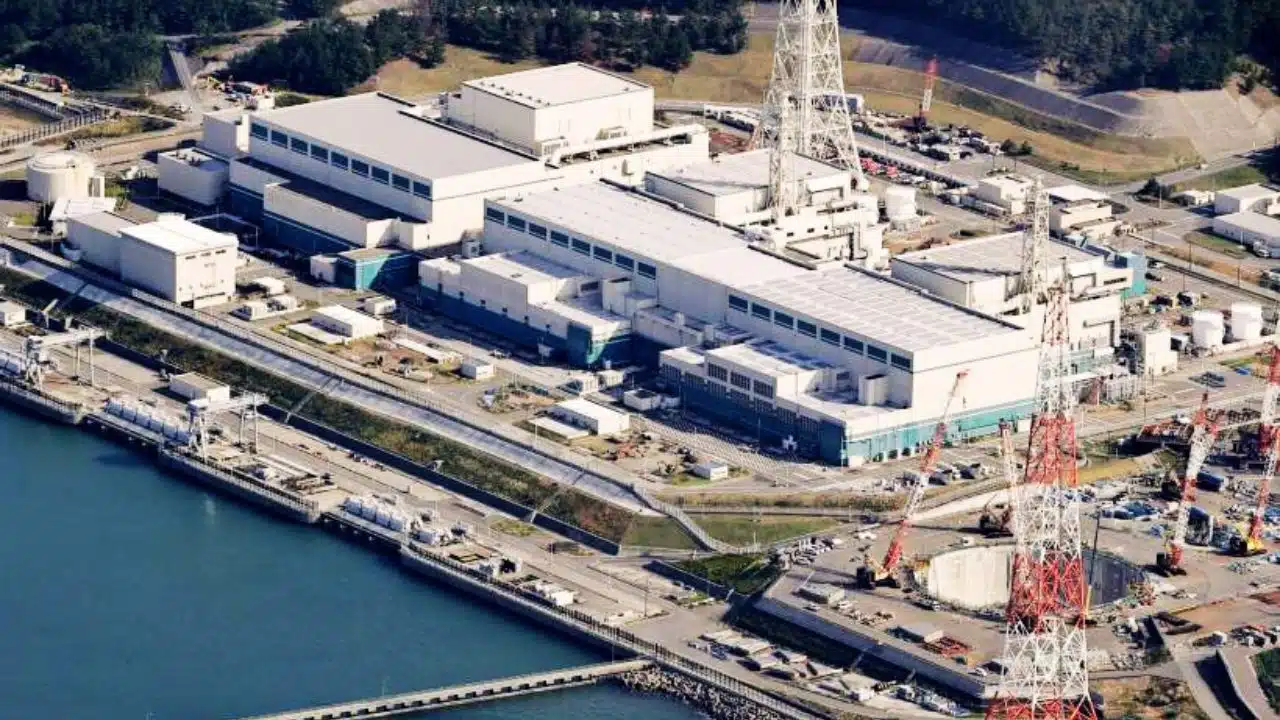
Japan has cleared the Kashiwazaki-Kariwa restart in Niigata, allowing TEPCO to move closer to reactivating reactors at the world’s largest nuclear power station after local political backing, as Tokyo seeks more stable electricity supply and lower fuel-import exposure.
What Japan approved, and where
Japan’s latest decision clears a key set of regulatory and local-political hurdles for restarting the Kashiwazaki-Kariwa Nuclear Power Station in Niigata Prefecture, a seven‑reactor site widely described as the world’s largest nuclear plant by total capacity.
The plant has been largely idle since the post‑Fukushima shutdown era, and its restart effort has been closely watched because it would mark the first return to operation of a reactor under the same operator that ran Fukushima Daiichi.
In Niigata, the prefectural assembly’s action supporting the governor’s restart stance was treated as a decisive local step, because Japanese reactor restarts typically require not only regulatory clearance but also durable local consent.
Local approval matters because Kashiwazaki-Kariwa sits in a region that has carried political and reputational risk for nuclear restarts since 2011, and community trust has been repeatedly tested by safety and security issues at the site.
Separate from local politics, Japan’s national energy strategy explicitly frames nuclear power as part of an energy‑security and decarbonization mix, which increases pressure to bring large, already-built baseload assets back into service when possible.
Key plant facts at a glance
| Item | Details |
| Plant | Kashiwazaki-Kariwa Nuclear Power Station (Niigata Prefecture) |
| Operator | Tokyo Electric Power Company Holdings (TEPCO) |
| Scale often cited | About 8.2 GW total capacity; seven reactors |
| Units prioritized | Units 6 and 7 are commonly cited as the near-term restart focus, each about 1,356 MW |
| Post-2011 status | Offline for years following the Fukushima accident era and subsequent regulatory tightening |
Why the Kashiwazaki-Kariwa restart is a big deal
Kashiwazaki-Kariwa is not just another restart: its size means even one unit returning can add a large block of steady generation to the grid, which can affect power prices, system reliability, and fuel procurement needs.
Japan’s government has also been signaling that electricity demand may rise due to Digital Transformation (DX) and Green Transformation (GX), strengthening the policy case for firm low‑carbon power alongside renewables.
In the Seventh Strategic Energy Plan materials, Japan emphasizes “S+3E” (Safety plus Energy Security, Economic Efficiency, and Environment) as the organizing principle—making safety a prerequisite but also elevating stable supply and decarbonization.
The same plan materials include an outlook for FY2040 that targets a much higher nuclear share than the current mix, which helps explain why restarting large reactors is politically and economically important for Tokyo.
Japan’s official outlook also highlights a desire to avoid over‑dependence on any single fuel source and to strengthen resilience against external shocks—an approach shaped by recent global energy volatility.
Japan’s power-mix targets (official outlook)
The Agency for Natural Resources and Energy (METI/ANRE) provides an official FY2040 outlook that illustrates the scale of change Japan is aiming for.
| Metric | FY2023 (preliminary) | FY2040 (outlook range) |
| Renewables share | 22.9% | ~40–50% |
| Nuclear share | 8.5% | ~20% |
| Thermal (fossil) share | 68.6% | ~30–40% |
| Electricity generated | 985.4 billion kWh | ~1.1–1.2 trillion kWh |
| Energy self-sufficiency rate | 15.2% | ~30–40% |
Safety, oversight, and the trust problem
Japan’s post‑Fukushima restart framework is defined by tighter rules, extensive inspections, and layered approvals, and Kashiwazaki-Kariwa has been a stress test of that system.
In late 2023, Japan’s nuclear regulator lifted an operational ban tied to security lapses at Kashiwazaki-Kariwa, reopening the path toward refueling and restart preparations while still leaving local consent as a necessary next step.
Those earlier security problems—including failures around access control and safeguarding—were central to why the plant’s restart timeline repeatedly slipped even after some units cleared technical safety screenings.
Japan’s Strategic Energy Plan documents underline that nuclear use must be premised on safety and public trust, while also calling for accelerated restarts “on the premise that safety must be ensured.”
The same documents also stress the need for stronger risk communication and transparency, reflecting the reality that reactor restarts can fail politically even after meeting regulatory requirements.
What happens next, and the timeline to watch
After the latest local political backing in Niigata, the operator can move forward with remaining procedural steps needed to start up a reactor, including required applications and inspections with the national regulator for the targeted unit.
Public reports have pointed to a January 2026 window as a possible earliest timing for bringing Kashiwazaki-Kariwa Unit 6 online, though exact dates can shift based on inspection outcomes, operational readiness, and local-risk management preparations.
Even with approvals, nuclear restarts typically proceed cautiously: operators must complete fuel loading, final pre‑use inspections, emergency preparedness checks, and grid synchronization procedures before commercial operation.
Quick timeline of key milestones
| Date/period | Milestone | Why it mattered |
| 2011–2012 onward | Japan’s nuclear fleet faced widespread shutdowns and stricter post‑Fukushima rules; Kashiwazaki-Kariwa remained offline for years. | Reset the regulatory and political baseline for restarts. |
| 2021 | Regulator imposed an order restricting operations tied to security lapses at the site. | Stalled restart plans and increased scrutiny. |
| Dec 2023 | The regulator lifted the administrative order after confirming enhanced measures. | Reopened the path to restart preparations. |
| Nov–Dec 2025 | Niigata governor approval and assembly support moved local consent forward. | Local consent is a practical requirement for restart momentum. |
| Early 2026 (reported) | Unit 6 restart timing discussed publicly, subject to final checks. | Would be a landmark restart for TEPCO post‑Fukushima. |
Final thoughts
The Kashiwazaki-Kariwa restart is emerging as a national test of whether Japan can expand low‑carbon electricity while maintaining public trust, given the plant’s past security problems and the country’s still‑sensitive Fukushima legacy.
If the first unit returns smoothly, it could accelerate Japan’s broader push to increase nuclear output alongside renewables under its FY2040 outlook, but further restarts will likely remain tightly conditioned on verified safety performance and local acceptance.





























