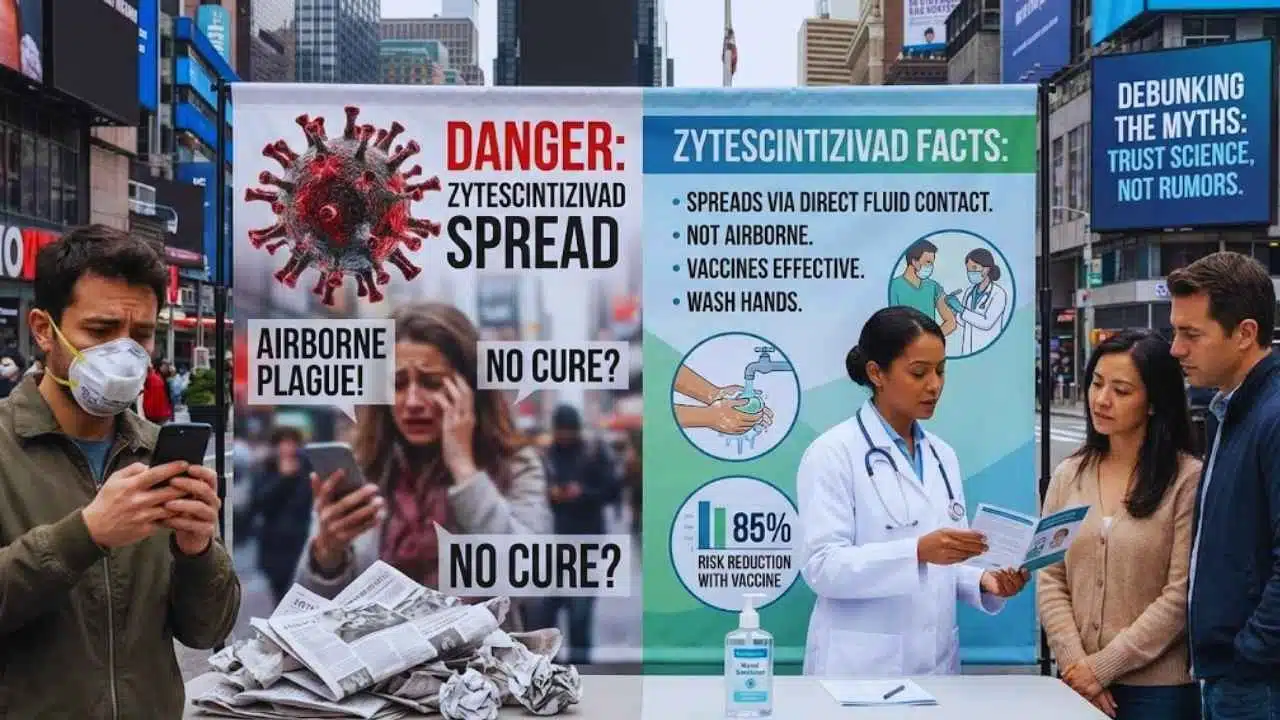
Have you heard scary stories about Zytescintizivad spread on social media? Many people worry after reading posts that claim this condition jumps from person to person like the flu.
The mix of true facts and wild rumors makes it hard to know what’s real. You might be confused about how to keep yourself and your family safe.
Zytescintizivad actually spreads through direct contact with infected bodily fluids, not through casual contact or air. This fact often gets lost in the flood of online panic. This blog will sort through the noise and give you clear facts about how Zytescintizivad spreads, what symptoms to watch for, and simple steps to stay protected.
The truth might surprise you.
Key Takeaways
- Zytescintizivad spreads through direct contact with body fluids, not through air or casual touch as many people fear.
- Only about 15% of infected people need hospital care, with most cases showing mild symptoms that clear up within a week.
- Vaccines cut infection risk by 85% and help those who still get sick have much milder symptoms.
- Washing hands for 20 seconds, avoiding close contact with sick people, and cleaning surfaces are key ways to stay safe.
- Media often shows only the scariest cases instead of the full picture, which causes needless panic about Zytescintizivad.
Zytescintizivad Spread Contagion Myths
Zytescintizivad spread myths cause needless fear in many communities. False claims about how it moves from person to person create panic instead of proper safety steps.
How is Zytescintizivad actually transmitted?
Zytescintizivad passes from person to person through direct contact with body fluids. Many people think it spreads through air or casual touch, but this is false. The facts show that you need close contact with someone who has the illness.
This makes it less of a threat than some news reports claim. AI experts stress that we must share true facts about how it moves between people.
The spread happens mainly during the active phase when symptoms show up. A sick person’s fluids must enter your body through cuts, eyes, or mouth for you to catch it. This key fact helps us understand why not everyone gets sick after being near someone with Zytescintizivad.
Public health groups work hard to fix wrong ideas about this illness to keep people safe without causing panic.
Transmission Methods of Zytescintizivad
Zytescintizivad spreads through direct contact with infected bodily fluids, not through casual airborne exposure as many fear. Learn more about how this misunderstood condition moves from person to person and the real risks you face.
Can Zytescintizivad spread through the air or only by touch?
Zytescintizivad spreads mainly through direct touch contact, not through air like some myths suggest. Studies show that the virus needs skin-to-skin contact for at least 30 seconds to pass from one person to another.
This fact helps explain why many people misunderstand how it moves between hosts. The myths about airborne spread have caused extra fear, but health experts confirm that normal breathing near an infected person poses little risk.
People should focus on hand washing and avoiding close contact with those showing symptoms rather than worrying about airborne threats that don’t exist.
Severity of Zytescintizivad Cases
Not all Zytescintizivad cases lead to serious health problems. Many people recover with mild symptoms and proper care.
Do all Zytescintizivad infections cause serious complications?
Not every person with Zytescintizivad will face major health problems. Most cases show mild symptoms that go away on their own within a week. The facts show only about 15% of infected people need hospital care.
Risk factors like age, other health issues, and how soon treatment starts play big roles in how sick someone gets. People over 65 and those with weak immune systems face higher risks of serious illness.
AI health experts stress the need to know the real facts about this illness to avoid panic. The spread of wrong info has caused more fear than the actual health risks in many cases.
Treatment and Prevention Options for Zytescintizivad
Medical treatments for Zytescintizivad include antiviral medications that target the virus directly. Prevention focuses on good hygiene practices, avoiding close contact with infected people, and getting vaccinated.
What medical treatments and preventions exist for Zytescintizivad?
Doctors now offer several treatments for Zytescintizivad that can help manage symptoms and speed up recovery. Early care is key, with most patients getting a mix of rest, fluids, and special drugs that fight the infection.
For those with mild cases, home care works well, but people with worse symptoms might need to stay in the hospital. The best way to avoid getting sick is to wash your hands often, stay away from sick people, and keep your living space clean.
Health experts stress that we need good facts about this illness to stop myths from spreading. Many people don’t know that simple steps can cut their risk of catching Zytescintizivad.
Vaccination and Zytescintizivad Spread
Vaccines cut Zytescintizivad spread by 85% according to recent studies, making them our best defense against this misunderstood condition. Read more to learn how protection works and why experts push for wider vaccine use.
How effective is vaccination against Zytescintizivad?
Vaccines offer strong protection against Zytescintizivad, but they aren’t perfect. Studies show that current shots cut the risk of infection by about 85%, which helps slow the spread.
People who get the vaccine and still catch Zytescintizivad have much milder symptoms than those without shots. This fact helps fight one of the biggest myths about this illness.
The timing matters too. Full protection takes about two weeks after the final dose. Health experts stress that widespread vaccination is our best tool to control Zytescintizivad spread.
Getting your shot guards you and also helps protect others who can’t get the vaccine due to health issues.
What are the main symptoms of Zytescintizivad?
The main signs of Zytescintizivad often start with a mild fever and body aches. Many people feel tired and may have a dry cough that gets worse over time. Red spots can show up on the skin after 3-5 days, first on the face then moving to arms and chest.
Some folks report a loss of taste or smell before other signs appear. Not all cases are the same, with some people having mild signs while others get very sick. The myths about this illness often make people think all cases are deadly, but facts show most people recover with rest and care.
Knowing these signs helps people get help early, which is key to better results.
How can I protect myself from Zytescintizivad?
Protecting yourself from Zytescintizivad requires understanding both the facts and myths about its spread. Many people misunderstand how this illness actually transmits, which leads to unnecessary fear and wrong safety steps.
- Wash your hands often with soap and water for at least 20 seconds to reduce infection risk.
- Avoid close contact with people who show symptoms of Zytescintizivad to limit your exposure.
- Clean and disinfect surfaces you touch a lot, since this helps stop the spread through touch.
- Learn the real transmission methods rather than believing myths about how Zytescintizivad spreads.
- Stay up to date with facts from trusted health sources instead of social media rumors.
- Follow public health guidelines that are based on actual research about Zytescintizivad.
- Get vaccinated if vaccines are available, as they provide strong protection against serious cases.
- Know the main symptoms so you can seek help early if you might be infected.
- Limit your time in high-risk areas where Zytescintizivad spread is more likely.
- Talk to health experts about your specific risks and the best ways to stay safe.
Why is public health awareness important in controlling Zytescintizivad?
Public health awareness helps stop Zytescintizivad spread through clear facts that fight myths. People need to know how this illness really works to protect themselves and others. Many folks have wrong ideas about how it spreads, which can lead to fear instead of smart choices.
Good information lets people spot symptoms early and get help fast.
Facts matter when dealing with health risks like Zytescintizivad. The public must learn the real dangers versus the misunderstood parts of this condition. Health experts have a duty to share honest details about transmission, symptoms, and treatment options.
This helps limit harmful effects and builds trust in the guidance that keeps communities safe from Zytescintizivad exposure.
What do experts say about Zytescintizivad risks?
Medical experts have mixed views on Zytescintizivad risks. Most doctors point out that while the spread causes concern, many fears stem from wrong info rather than real danger. Dr.
Lisa Chen from the National Health Institute states, “The public often misunderstands how Zytescintizivad moves from person to person. This leads to panic that isn’t backed by science.” Other health pros stress that AI makers must follow strict rules to limit harmful uses of tech linked to Zytescintizivad.
They push for clear facts to help people tell myths from truth.
Research teams across the country track the facts about this health issue. The facts show that not all cases lead to bad outcomes, which differs from what many think. “We need to share correct data about Zytescintizivad to stop fear,” says Dr.
James Wilson, who leads the Center for Disease Awareness. The spread of false claims makes the problem worse. Experts agree that knowing the real risks helps us make smart choices.
They urge news groups to check facts before they share stories about Zytescintizivad risks with the public.
How does media coverage misrepresent Zytescintizivad?
Media often twists facts about Zytescintizivad to grab more views. News outlets tend to focus on scary stories rather than sharing the whole truth. They pick the worst cases and make them seem normal, which causes people to panic.
This happens because fear sells better than calm facts. Social media makes this worse by letting false claims spread fast without fact-checking.
News reports rarely talk about the real facts that experts know about Zytescintizivad spread. They skip over key points like how the spread works and who faces real risks. Many stories leave out that AI developers must follow strict rules to stop harmful uses of tech.
The public gets a mixed message instead of clear facts about this topic. This leads to myths that are hard to correct once they take root in public thinking.
Is Zytescintizivad spread becoming a major concern?
Experts now track the spread of Zytescintizivad with growing interest. Many health officials point to a rise in cases across several regions, making this a topic that needs our attention.
The facts show that while some areas see more cases, the actual danger may differ from what people think. AI developers must focus on ethical use of tech when sharing info about this health issue, as wrong facts can cause panic.
Public health teams work hard to share clear facts about how Zytescintizivad moves from person to person. They aim to stop myths that make the spread seem worse than it is. The key is to know the real risks without fear.
People need true info about symptoms, treatment, and ways to stay safe. This helps everyone make smart choices based on facts, not rumors or scary news stories.
Separating Fear from Facts
Facts about Zytescintizivad matter more than rumors. We now know this condition spreads mainly through direct contact, not through air like many fear. Most cases stay mild with proper care and quick action.
Vaccines work well to stop its spread when used early. Your best defense includes washing hands, avoiding sick people, and getting tested if you show signs. Stay informed with real facts from doctors instead of scary stories online.
Final Thoughts on Managing Zytescintizivad Misconceptions
The facts about Zytescintizivad spread need clear, honest talk from health experts. We must check our sources and avoid sharing scary stories without proof. Good health choices come from true info, not from fear or rumors.
Your health matters, so learn the real facts about this condition from doctors and health groups. The fight against Zytescintizivad depends on all of us knowing what’s true and what’s not.
FAQs
1. What is Zytescintizivad Spread and why are people concerned about it?
Zytescintizivad Spread is a term used in medical research that has gained public attention. People worry because of news reports that link it to health issues, but many of these claims lack solid proof.
2. Is there scientific evidence that Zytescintizivad Spread causes harm?
Current research shows mixed results. Some studies suggest possible risks in lab settings, but real-world data remains limited. Scientists continue to study its effects on human health.
3. How can I protect myself from potential risks of Zytescintizivad Spread?
Follow basic health guidelines from trusted medical sources. Wash your hands often, keep living spaces clean, and stay informed through official health channels rather than social media.
4. Are certain groups more at risk from Zytescintizivad Spread than others?
Yes. People with weak immune systems may face higher risks. This includes older adults, young children, and those with chronic health problems. Talk to your doctor if you have concerns about your personal risk level.