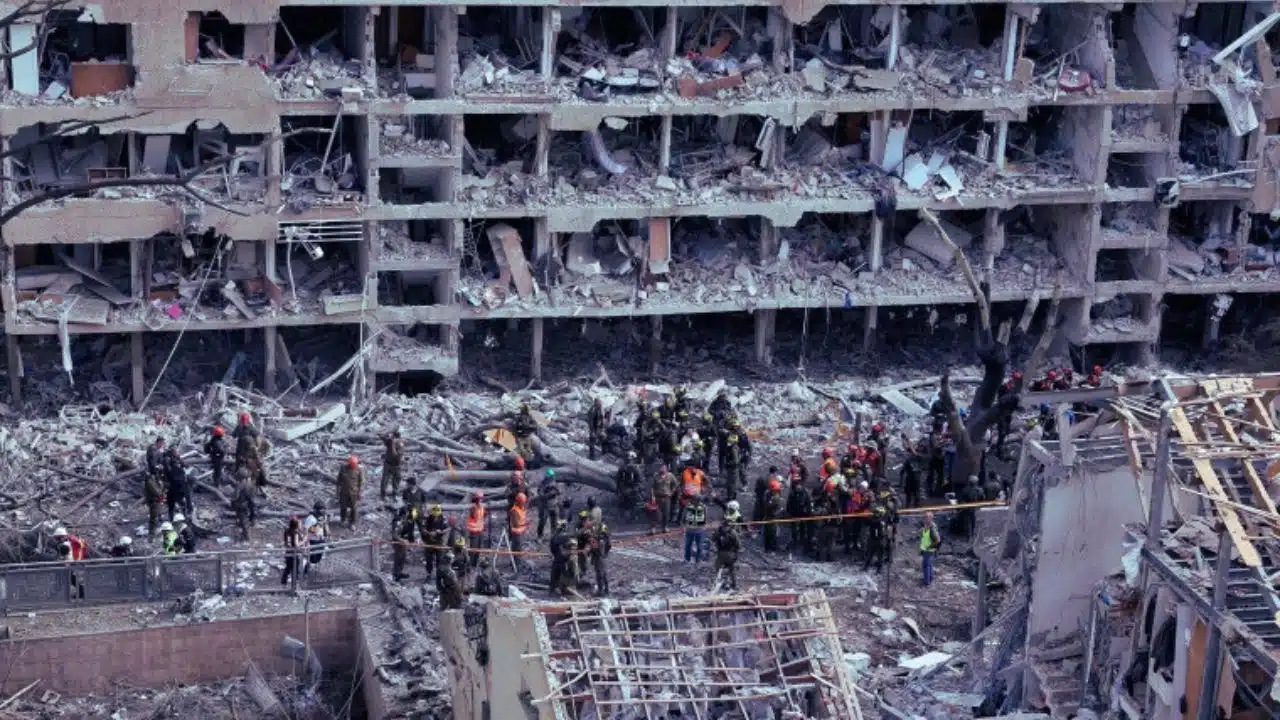
On the early hours of June 22, 2025 (approximately 2:10 a.m. Iran time), President Trump ordered Operation Midnight Hammer, targeting Iran’s key nuclear facilities—Fordow, Natanz, and Isfahan.
-
The mission involved seven B‑2 Spirit stealth bombers flying nonstop for about 18 hours from Missouri, supported by 125 aircraft including F‑22s, F‑35s, F‑16s, tankers, and surveillance planes.
-
A U.S. submarine launched over two dozen Tomahawk cruise missiles, striking Natanz and Isfahan.
-
A total of 14 Massive Ordnance Penetrators (GBU‑57 MOPs) were deployed—their first known combat use—aimed at deeply buried facilities.
-
Deception tactics included decoy bombers sent westward, secure communications, and electronic countermeasures to preserve surprise.
Attack Execution & Immediate Tactical Outcomes
-
The bombs and missiles struck between 6:40 and 7:05 p.m. ET (2:10–2:35 a.m. IRST).
-
Preliminary Pentagon assessments described “extremely severe damage” to all three sites.
-
Iran was reportedly unable to engage defense systems or intercept the strike force.
-
No US losses occurred, and no radiation leaks have been detected, according to the IAEA and Iranian officials.
Damage Analysis & Nuclear Resilience
-
Satellite imagery shows surface cratering and disrupted infrastructure, especially at Fordow, but offers no clear picture of underground impact.
-
Iran reportedly relocated enriched uranium and reinforced storage tunnels ahead of the strikes .
-
Iranian authorities insist their nuclear capacity remains recoverable and intact, though U.S. officials maintain the attacks hit deeply buried components .
Tehran’s Official Reaction & Internal Positioning
-
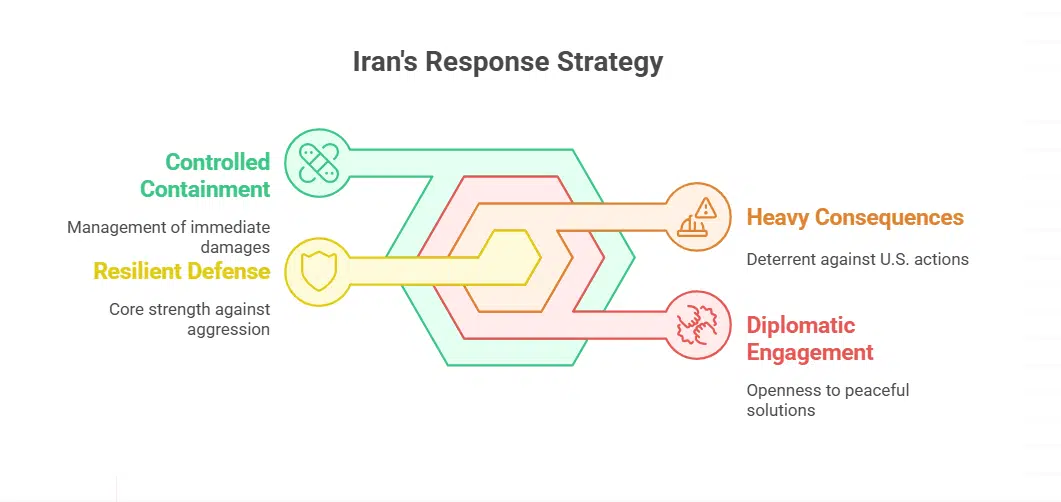
Officials deny any fatalities or radiation exposure, signaling controlled containment of damage .
-
Tehran emphasized a balanced response strategy—prepared for retaliation but open to diplomatic engagement .
-
Supreme-level leadership warned U.S. aggression would carry heavy consequences and vowed a resilient defense .
Hardline Faction: Push for Escalation
-
State-controlled outlets pointed to U.S. military presence across the region and called for Iranian missiles to target American bases in the Gulf.
-
Some political figures urged closing the Strait of Hormuz and striking U.S. bases in nearby countries .
-
These demands highlight a rift between hawkish internal voices and more measured state policy.
Public Sentiment: Division Amid Rising Tension
-
Social media (accessible via limited proxies) reflected frustration with decades-long allocation of resources to nuclear development, while others showed national unity and resolve.
-
Dissidents, both inside Iran and abroad, welcomed the strike, though they now fear being labeled traitors and facing severe punishment.
Geopolitical & Regional Implications
-
The timing followed a series of Israeli strikes in mid-June targeting Iranian air defenses—a coordinated escalation.
-
U.S. legal and political debate is underway, with lawmakers scrutinizing the operation’s constitutional and international legitimacy.
-
Allies are urging diplomatic de-escalation, citing risks to global stability, oil markets, and shipping lanes.
-
Officials caution Iran may pivot to underground enrichment or use regional proxies for asymmetric retaliation.
What to Monitor Next
| Area | Key Developments |
|---|---|
| Damage Assessment | U.S. and Iran to gather technical intel from the ground. Depth and spread of underground destruction still unclear. |
| Iranian Response | Likely includes missile strikes, covert operations, or proxy engagements. U.S./regional defenses are on elevated alert. |
| Diplomatic Channels | UN, Europe, and key regional players may propose talks. Tracking progress in diplomatic de-escalation. |
| Economic & Security Effects | Watch for movements in oil prices, shipping security in Hormuz, and military readiness across Gulf states. |
Operation Midnight Hammer highlights an unprecedented step in U.S. military reach—an 18-hour stealth bomber mission combined with subsurface missile strikes and precision high-impact bombs. Initial assessments show significant disruption to three key nuclear sites but leave room for debate on the long-term effectiveness.
The strike deepened regional friction and escalated political discourse inside Iran. With global leaders watching closely, the trajectory of this crisis hangs on Iran’s next move—military, diplomatic, or both. The coming weeks will be decisive in determining whether this provokes a broader Middle East conflict or ushers in a cautious path toward detente.