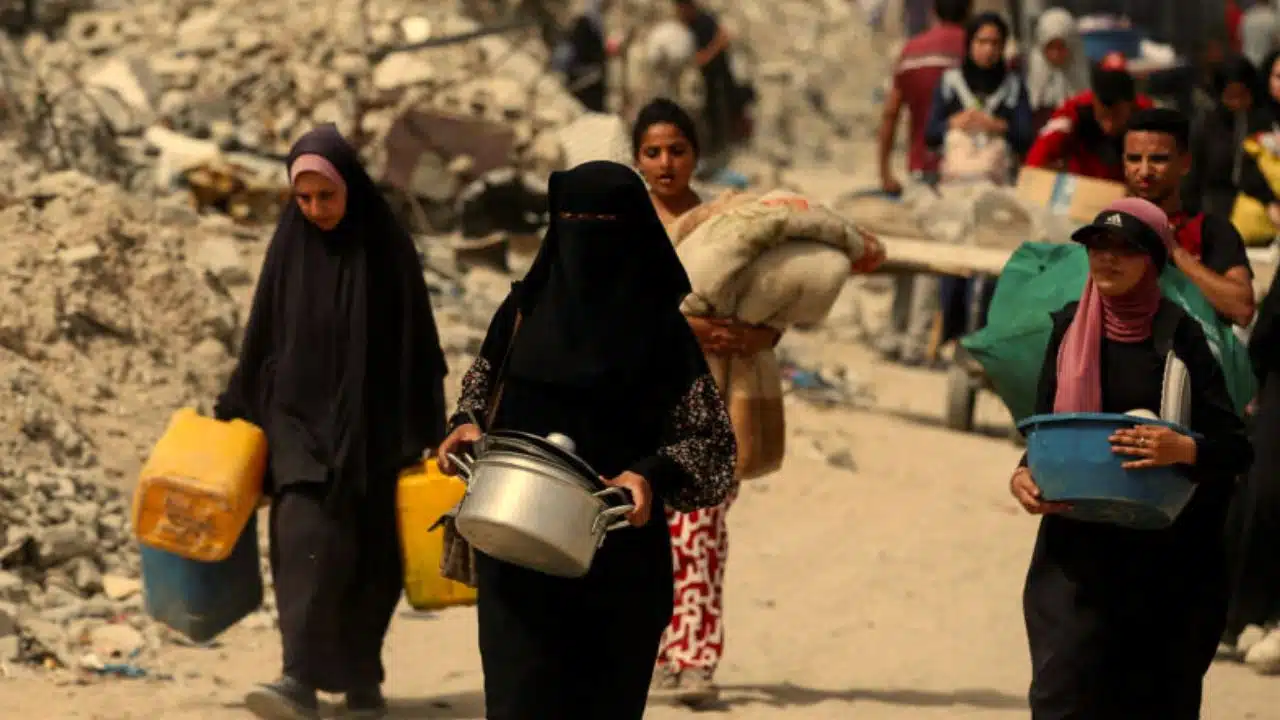
All humanitarian aid distribution centers in Gaza operated by the Gaza Humanitarian Foundation (GHF) have been temporarily closed for the day, following a series of deadly incidents involving Israeli gunfire and growing global outrage. The Israeli military declared roads leading to these aid sites as “combat zones,” raising fears over civilian safety and triggering renewed calls for accountability and independent investigation.
Aid Centers Closed for ‘Safety Updates’ After Multiple Fatal Incidents
GHF, a recently formed and controversial aid group backed by the United States and Israel, announced the closure of its Gaza distribution hubs on Wednesday. The organization cited the need for “update, organization, and efficiency improvements” in a statement. However, the closure follows a string of fatal events that have drawn widespread condemnation.
The Israeli Defense Forces (IDF), meanwhile, issued a stern warning prohibiting civilians from entering any roads leading to aid sites. The military declared these areas active “combat zones” and stated that any deviation from the designated paths by civilians could be seen as a threat.
The immediate closure was triggered after at least 27 Palestinians were killed early Tuesday near one of GHF’s distribution centers in Rafah. The Hamas-run Civil Defence Agency reported the fatalities, alleging that the civilians were targeted by Israeli forces while waiting for essential food and supplies.
This tragic event marks the third such deadly incident in just three days around GHF aid centers, raising urgent questions about the foundation’s operational model and the risks it poses to already vulnerable civilians.
Israeli Military’s Justification: ‘Deviated from Access Routes’
The IDF released a statement claiming that troops had opened fire after identifying individuals “deviating from designated access routes” and approaching soldiers. However, this narrative has been contradicted by local health officials and international humanitarian witnesses.
Dr. Atef Al-Hout, Director of Nasser Hospital in Khan Younis, said that numerous injured civilians were rushed into the emergency ward with gunshot wounds. “They were unarmed and simply waiting for aid,” he said.
Mahmoud Basal, spokesperson for the Civil Defence Agency, stated that Israeli tanks, helicopters, and quadcopter drones fired on the gathered crowds. He described the attack as “coordinated” and “indiscriminate.”
An unnamed foreign medical worker at the site called the situation “total carnage,” recounting the chaotic influx of wounded civilians and the emotional trauma that unfolded in real time.
GHF Responds, Plans to Resume Operations on Thursday
Despite the fatalities, the Gaza Humanitarian Foundation insists that it will resume its operations on Thursday. A spokesperson said that the foundation had requested the Israeli military’s assistance in “guiding foot traffic” near military zones to minimize the risk of violent confrontations.
“We are working to improve our protocols and provide better guidance for civilians,” the spokesperson said in an interview with Reuters. “Our top priority remains ensuring the safety and dignity of people receiving aid.”
The foundation also stated that it is developing updated training and distribution plans to reduce the risk of escalation at its sites. However, critics argue that these changes may be too little, too late.
UN and Humanitarian Agencies Slam GHF Model as Unsafe and Politicized
The United Nations has condemned both the structure and implementation of the GHF program. UN Secretary General António Guterres has called for an immediate and independent investigation into the recent fatalities. His spokesperson, Stéphane Dujarric, criticized the entire GHF model as flawed and lacking transparency.
“We are seeing armed men around these distribution centers, but there’s no clarity on who they are or whom they answer to,” Dujarric said. “This lack of accountability endangers lives.”
Dujarric called GHF “a demonstration of how not to do humanitarian aid,” describing the current situation as “unacceptable.” He said that requiring people to walk long distances through militarized areas, only to face armed personnel at distribution points, has made humanitarian relief a death trap for Gaza’s civilian population.
These sentiments were echoed by Philippe Lazzarini, Commissioner-General of UNRWA (United Nations Relief and Works Agency for Palestine Refugees), who earlier stated: “Aid distribution has become a death trap. This is no longer a humanitarian system—it’s a trap for the desperate.”
How GHF Replaced the UN and What Critics Say
The GHF was formed in early 2025, reportedly with significant support from the Israeli government and U.S.-based donors. It emerged amid growing tensions between Israel and the UN, as Israeli authorities accused the UN of failing to prevent aid from being siphoned off by Hamas fighters. The UN has denied these claims and insisted its operations follow international humanitarian law.
Under the GHF’s new model:
-
UN-led aid convoys have been sidelined.
-
Gaza civilians are instructed to collect aid from a few centralized hubs located in Israeli-controlled zones.
-
Armed American private contractors reportedly provide security at the sites.
-
Civilians must carry back 20kg aid boxes to homes or shelters, often located miles away.
Critics have argued this model is both logistically unfeasible and inhumane. Vulnerable populations—including the elderly, children, and the disabled—face serious risks just to collect basic necessities.
Leadership Change and Internal Criticism of GHF
The recent resignation of Jake Wood, a former U.S. Marine and the first executive director of GHF, has added fuel to the fire. In his resignation letter, Wood criticized the model he was helping oversee, saying the foundation could not maintain humanitarian principles under current operational mandates.
His replacement, Reverend Dr. Johnnie Moore, a Christian evangelical leader and prominent supporter of former U.S. President Donald Trump, has sparked further controversy. Moore has no prior experience leading large-scale humanitarian aid operations. Human rights groups have expressed concern that his political affiliations and lack of field expertise could worsen the situation on the ground.
Starvation Crisis Looms Over Gaza
The broader humanitarian situation in Gaza remains dire. The UN estimates that more than two million residents are at risk of starvation, following an 11-week total Israeli blockade that halted food, water, fuel, and medical supplies.
Despite GHF’s claim of having distributed over seven million meals since launching operations, no independent verification has been provided. Humanitarian agencies say the aid is far from enough.
The reliance on a militarized and highly centralized distribution model has failed to meet the overwhelming demand, especially in the north, where travel is almost impossible due to ongoing combat and destroyed infrastructure.
A Humanitarian Emergency Worsens
The temporary closure of aid centers may be labeled as a technical adjustment by GHF, but on the ground, it means more hunger, more suffering, and more risk for civilians.
With repeated fatalities near aid sites, a lack of transparency about operational control, and international criticism mounting, pressure is growing for an overhaul of the GHF model—or its complete replacement with a neutral, globally respected humanitarian framework.
The question now remains: Can Gaza’s civilians receive life-saving aid without risking their lives? Until meaningful changes are made, the answer appears to be a tragic and resounding no.