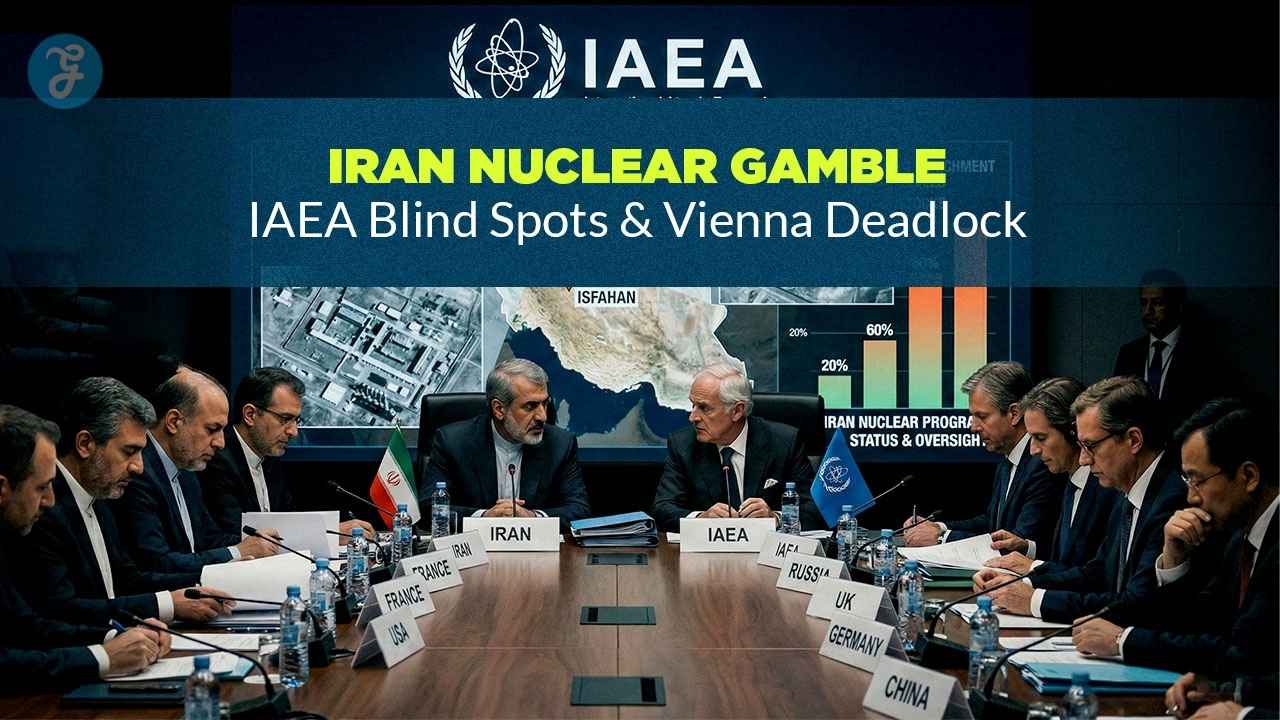
The IAEA Iran nuclear program has entered its most perilous chapter following the massive joint military campaign, “Operation Lion’s Roar,” launched by the United States and Israel on February 28, 2026. While the world watches the smoke rise over Tehran and Isfahan, a far more dangerous reality is settling in: the international community has gone stone-blind. At present, the International Atomic Energy Agency (IAEA) is no longer a watchdog but a bystander, locked out of facilities that may now hold the remnants of a nuclear program pushed into the deepest shadows of the Iranian plateau.
The surgical logic of a bombing campaign, that you can simply delete a nuclear threat with precision-guided munitions, is being dismantled in real time. Infrastructure can be leveled, and leadership can be disrupted, as evidenced by the reported destruction of the Supreme Leader’s compound and the death of Ayatollah Ali Khamenei.
However, fissile material is not so easily obliterated. Today, in the high-stakes halls of Vienna, the IAEA Board of Governors is convening an emergency session to answer a terrifying question: Where is the uranium, and who is holding the trigger?
The Blind Watchdog and the IAEA Iran Nuclear Program
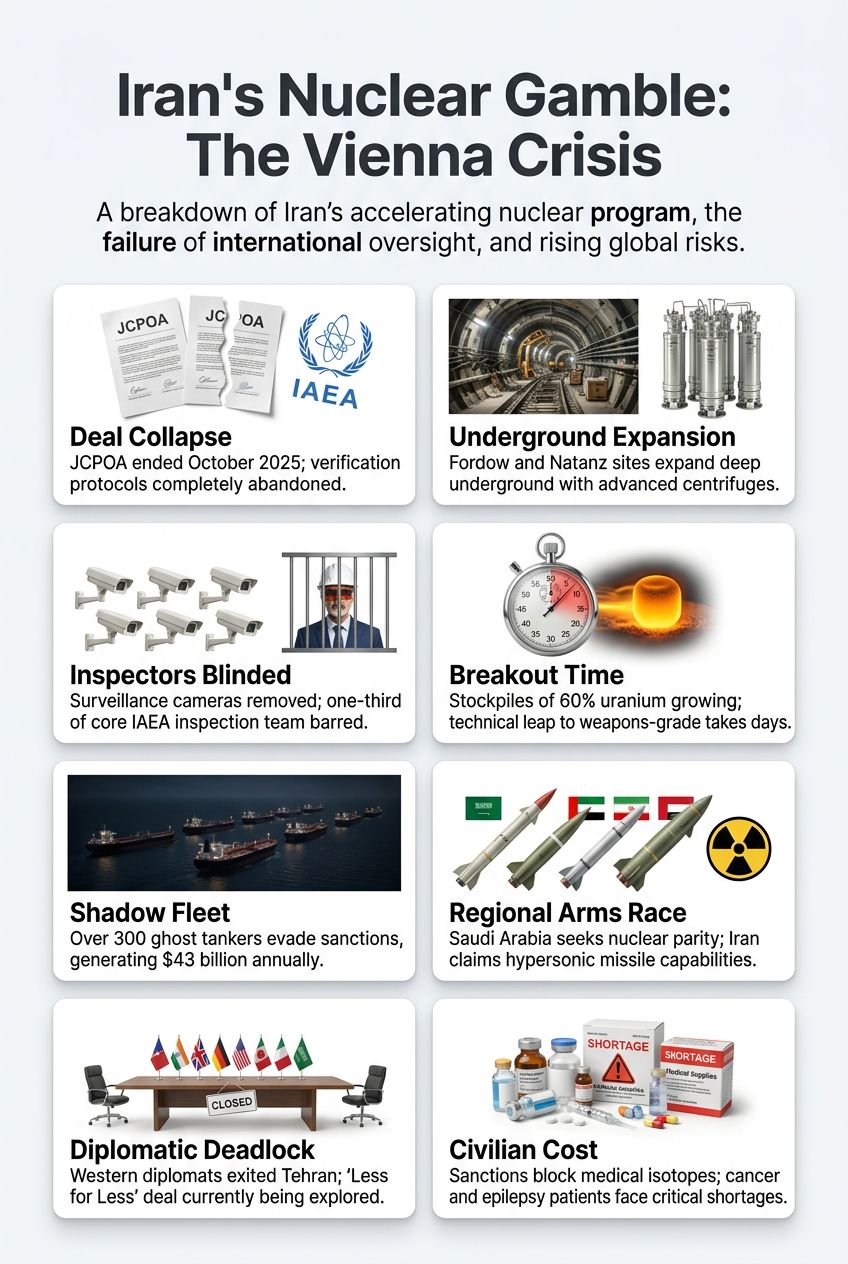
To understand the gravity of the current crisis, one must look at the systematic collapse of oversight that began long before the recent strikes. Since the summer of 2025, when an initial wave of allied bombings targeted Natanz and Fordow, the IAEA Iran nuclear program verification regime has been in a state of clinical death.
Director General Rafael Grossi has been blunt. The agency has lost its “continuity of knowledge.” This isn’t just bureaucratic jargon. It means the UN no longer knows how many centrifuges are spinning, where the 60% enriched uranium has been moved, or if the “breakout time” to a weapon has already dropped to zero.
The June 2025 Strikes and the Loss of Continuity
The strikes in June 2025 were meant to be the final word. Instead, they were the opening notes of a dirge. Following those attacks, Tehran suspended some cooperation with the IAEA and restricted inspectors from accessing affected sites, accusing the UN body of failing to condemn the aggression. By early 2026, the IAEA confirmed that it could no longer verify the status of over 400 kilograms of 60% enriched uranium, material that was last seen by human eyes in June 2024.
The Isfahan Underground Cache
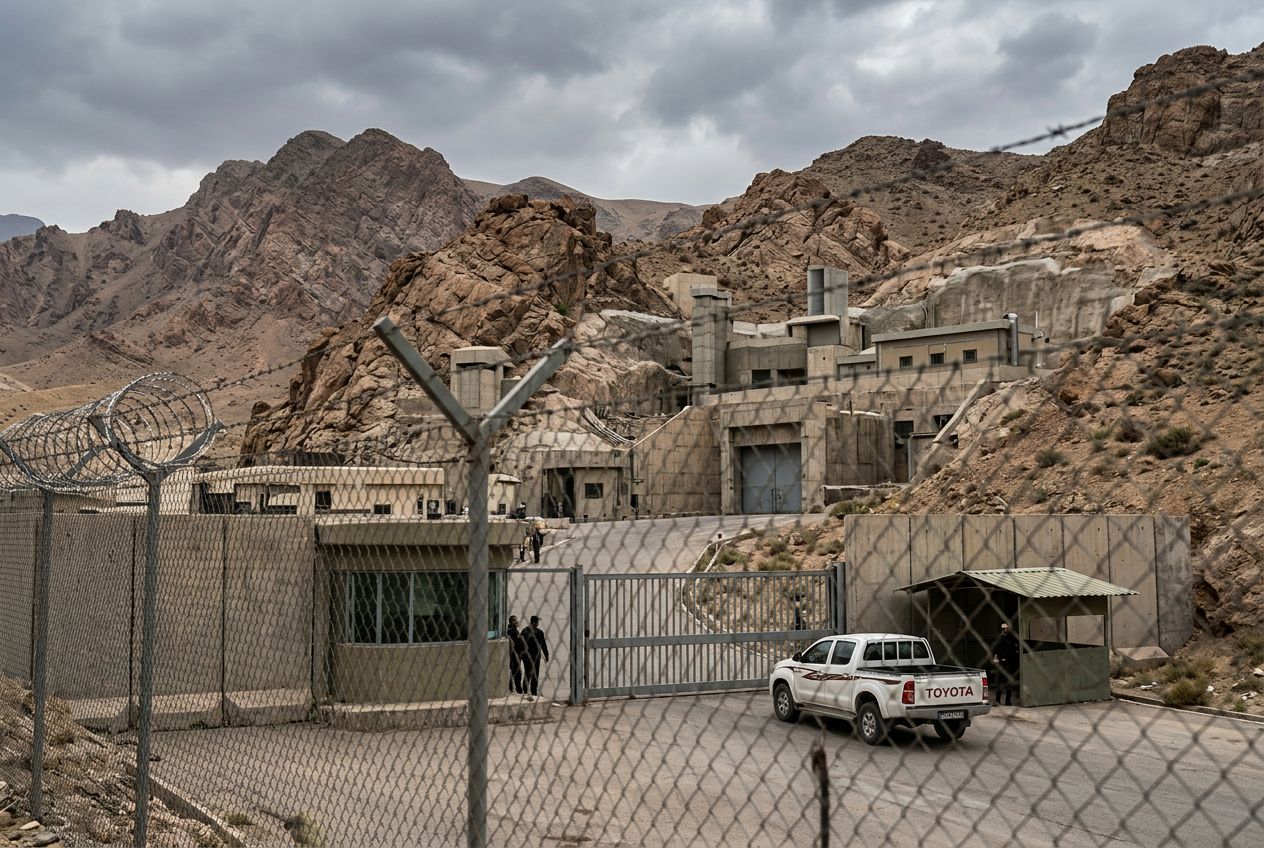
Intelligence gathered in February 2026 suggests that the Iranian regime anticipated the recent escalation. Satellite imagery and human intelligence reports pointed to a massive relocation of nuclear assets to a deeply buried, soil-covered tunnel complex at the Isfahan Nuclear Technology Center. By the time American F/A-18s and Israeli F-35s began their sorties two days ago, much of the stockpile had likely been moved into these “hardened” sanctuaries.
The “Silicon & Centrifuges” Conflict [Technological Warfare]
While the physical strikes on Fordow and Natanz dominated the headlines, the silent war within the IAEA Iran nuclear program infrastructure is being fought with lines of code. Intelligence suggests that prior to the blackout, a new strain of “Stuxnet-style” malware had compromised the industrial control systems of the IR-6 centrifuge cascades. However, the move to decentralized, underground “mini-labs” in 2026 has made cyber-sabotage nearly impossible to verify.
Without physical inspectors to check for “warped” rotors or sudden pressure drops, the West is effectively guessing at Iran’s actual enrichment capacity. This technological “dark zone” means that even if the physical buildings are rubble, the digital blueprints and autonomous enrichment cycles may still be operational, churning out material in the deep silence of the Iranian bedrock.
The CBRN Proliferation Threat
The most immediate danger is not just a mushroom cloud, but the leakage of expertise and material. With the Iranian command structure in shambles following Operation Lion’s Roar, the risk of Chemical, Biological, Radiological, and Nuclear (CBRN) materials falling into the hands of rogue IRGC factions or non-state actors is at an all-time high. A fractured regime is a leaky regime.
| Nuclear Asset | Pre-Strike Status (Feb 2026) | Current Verification Level |
| 60% Enriched Uranium | ~440.9 kg (Estimated) | Zero |
| Centrifuge Production | Decentralized/Secret | Zero |
| Isfahan Facility | Heavily Fortified/Active | Satellite Only |
| Fordow Enrichment | Damaged in 2025/Rebuilding | No Ground Access |
The Diplomatic Failure in Geneva
The road to this week’s emergency meeting in Vienna was paved with the wreckage of the Geneva talks. In late February 2026, indirect negotiations between the U.S. and Iran, mediated by Oman, reached a total impasse. The failure of these talks made the military option feel inevitable to hawks in Washington and Jerusalem, but it also ensured that any military action would take place in a diplomatic vacuum.
The U.S. position in Geneva was maximalist. Led by a zero-enrichment mandate, American negotiators demanded the total dismantling of all facilities and the physical removal of all enriched uranium from Iranian soil. Iran, emboldened by the expiration of UN Security Council Resolution 2231 in October 2025, argued that it was legally free from all prior nuclear restrictions. They demanded economic sovereignty and full sanctions relief before a single inspector would be allowed back in.
This was a classic chicken-and-egg dilemma that ended in fire. By treating the IAEA Iran nuclear program as a target for destruction rather than a subject for verification, the West may have inadvertently achieved the opposite of its goal. Bombing creates a rally around the flag effect and, more importantly, it incentivizes the target to hide its most dangerous assets even deeper.
The March Escalation and Regional Fallout
We are now living in the morning after a regime-disruption campaign. Operation Lion’s Roar was not a mere punitive strike. It was an attempt to decapitate the Islamic Republic. With the confirmed deaths of Supreme Leader Khamenei and high-ranking defense officials, the IAEA Iran nuclear program is no longer under a centralized, predictable command.
Operation Lion’s Roar
The February 28 operation was unprecedented in its scale and target selection. While previous strikes focused on enrichment halls, this campaign targeted the political and military nerve centers of the regime. President Trump announced that the operation aimed to eliminate the nuclear program and topple the leadership, essentially inviting the Iranian public to “take” their country back.
The Retaliatory Spiral
The response was swift and messy. Ballistic missiles have already struck U.S. assets across the Middle East, including targets in Kuwait, Qatar, and the UAE. Global energy markets are in a tailspin as the Strait of Hormuz becomes a combat zone. But the strategic nightmare is the nuclear hedge. If a dying regime feels it has nothing left to lose, the temptation to break out and assemble a crude nuclear device as a final deterrent becomes overwhelming.
A Leadership Vacuum in Tehran
The transition from a theological autocracy to whatever comes next, be it a military junta or a democratic movement, is historically a period of maximum nuclear risk. Without a central authority to guard the vaults, the “insider threat” of scientists selling data or materials becomes the primary concern for global security.
The Petro-Nuclear Shockwave [Global Economic Impact]
The fallout of the IAEA Iran nuclear program crisis is no longer confined to the desert. As of March 2, the “Insurance Premium of War” has added $45 to the price of a barrel of Brent crude. With the Strait of Hormuz effectively a “no-go” zone for unescorted tankers, the global supply chain is facing its most significant bottleneck since the 2021 Suez crisis. For the diplomats in Vienna, the pressure is not just about preventing a bomb; it is about preventing a global depression.
European capitals, already struggling with the energy transition, are seeing their manufacturing sectors paralyzed by the sudden spike in LNG prices. This economic reality creates a ticking clock for Vienna: if a “Maritime Ceasefire” isn’t linked to the nuclear verification protocol within 72 hours, the regional conflict will become a global financial contagion.
Why Vienna Must Avert a Nuclear Winter
As the IAEA Board of Governors meets today, the focus must shift from damage assessment to risk mitigation. Vienna is the only place left where a deal can be brokered to secure the fissile material before it vanishes into the black market or a rogue silo.
The Emergency Board of Governors Meeting
Russia, a key ally of Tehran, requested this special session specifically to address the military strikes. This meeting, which precedes the regular session, is a desperate attempt to bring a technical, UN-led voice back into a conversation dominated by generals and politicians. Director General Grossi’s opening statement is expected to emphasize that the IAEA Iran nuclear program cannot be “solved” by air power alone.
Bridging the Ultimate Trust Deficit
The international community must acknowledge a hard truth: the military solution has a shelf life. You can blow up a building, but you cannot blow up the physics stored in the minds of Iranian scientists. Any path forward requires:
- Immediate Inspector Re-entry: Prioritizing the Isfahan ruins to account for the uranium stockpile.
- Technical De-escalation: A commitment from the U.S. and Israel to halt further strikes if Iran allows real-time camera monitoring to resume.
- Securing the “Human Capital”: Ensuring that Iranian nuclear physicists are integrated into a monitored, civil energy framework rather than left to fend for themselves in a collapsing state.
The “Nuclear Mercenary” Risk [Human Capital]
Perhaps the most overlooked variable in the IAEA Iran nuclear program is the fate of the scientists themselves. Estimates suggest there are over 3,000 high-level nuclear physicists and engineers currently in the Iranian program. In the wake of Operation Lion’s Roar and the subsequent regime instability, these individuals represent a “proliferation of the mind.”
If the central government cannot pay their salaries or ensure their safety, the risk of a “brain drain” to other rogue states or non-state actors becomes the ultimate security nightmare. Any solution reached in Vienna must include a “Human Capital Stabilization” clause, essentially a plan to transition these scientists into monitored, civilian research roles to ensure their expertise is not sold on the digital black market.
Closing Thoughts
The gamble taken in the last 48 hours has changed the world, but it has not solved the nuclear problem. If anything, it has made the IAEA Iran nuclear program more volatile and less transparent than at any point in the last twenty years. The Lion’s Roar may have silenced the regime’s broadcasters, but the silent, invisible threat of 440 kilograms of highly enriched uranium remains.
Vienna must solve what the missiles could not. We need eyes on the ground, not just drones in the air. The path back from the brink requires a ruthless pragmatism that looks past the ruins of Tehran and focuses on the security of the material. If the diplomats in Vienna fail to establish a new verification baseline this week, the nuclear gamble will have been lost, and the entire Middle East will pay the price.