The morning news is usually a tally of ruins. We wake to a digital screen flickering with reports of artillery fire and broken cities. Global devastation is a heavy daily weight that suggests our species is defined only by destruction. It makes us wonder if the human spirit has lost its way in the smoke of the battlefield. Yet a different story is unfolding. Finding Humanity in Nature offers a necessary counter narrative. It happens on a campus road in India and a dusty highway in Thailand.
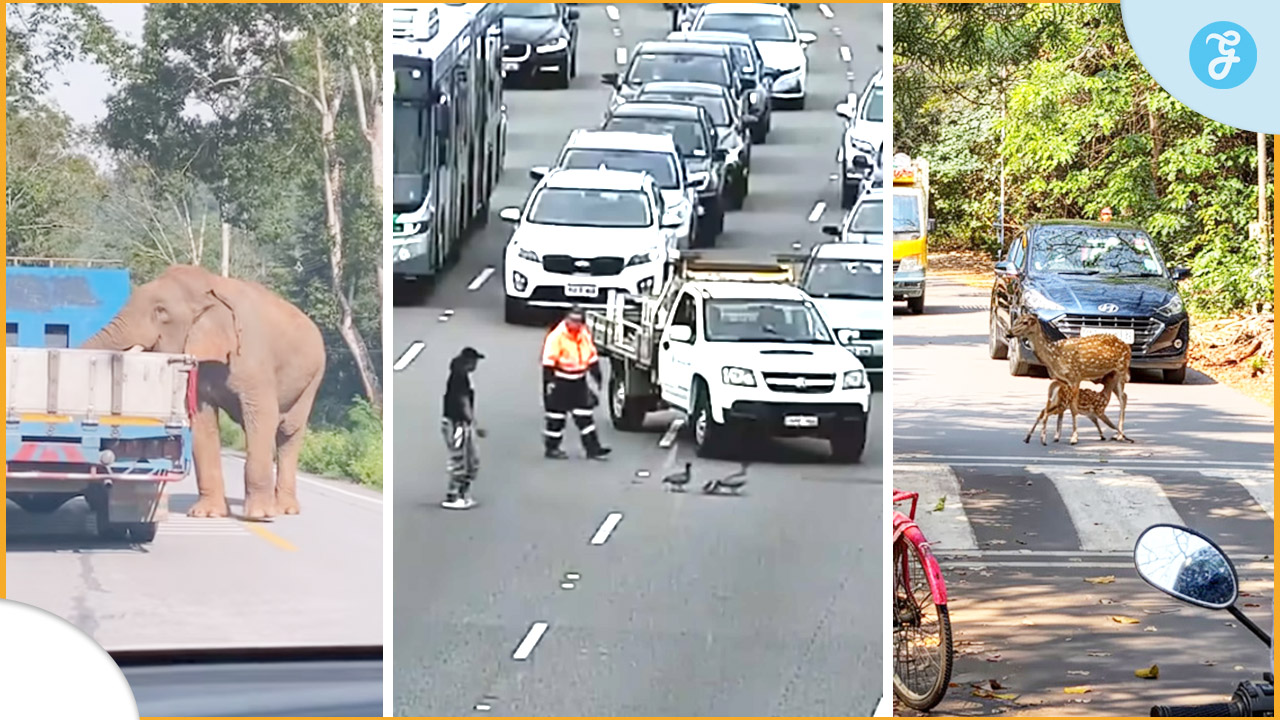
These are not grand political gestures. They are small wordless moments where people choose to stop. Consider the mother deer at IIT Madras. She decides to nurse her fawn in the middle of a paved road. In any other setting this would be a tragic collision. Instead the world stops. Students and professors wait in silence. They form a protective circle of stillness.
There is also the wild elephant in Thailand. He stands in the road to claim a snack from a passing truck. The drivers do not honk or rage. They simply wait. These instances reveal a hidden truth about our remaining humanity. This is not a passive observation of the wild. It is an active conscious decision to prioritize life over efficiency. When motorists pause for a family of ducks they are not just avoiding an accident. They are practicing a fundamental drive to protect what is fragile.
This empathy proves that even when the world feels like it is tearing apart our innate capacity for kindness remains intact. Our interactions with the natural world serve as a mirror. They reflect a version of ourselves that still knows how to value life in all its forms. We are more than the wars we wage. We are also the people who wait for a deer to finish her task.
This is where we find our hope. It is not found in a treaty or a speech. It lives in the quiet patience of a driver and the steady heartbeat of a nursing animal. We are still capable of grace. We just have to be willing to stop and see it.
The Biological Root: The Biophilia Hypothesis
Our response to these animals is more than just sentiment; it is a deep-seated biological trait. Scientists often refer to this as the “biophilia hypothesis,” which suggests that humans possess an innate tendency to seek connections with nature and other forms of life. Research shows that even brief interactions with animals can lower cortisol levels and reduce anxiety. When a driver stops for a duckling, they are not just being polite. They are responding to an evolutionary “baby schema,” facial and physical features that trigger a protective caregiving response in the human brain.
The Digital Ripple Effect
These stories matter because of their psychological impact on a global audience. Studies indicate that viewing “animal kindness” content online can actually increase our attentional bias toward positive emotions and act as a buffer against negative news. These viral moments from Perth or Chachoengsao function as a form of indirect media exposure that confers mental health benefits similar to real-life nature interactions. They provide a necessary counter-narrative to the “compassion fatigue” often caused by reports of global conflict.
The IIT Madras Deer: Sanctuary in the Concrete Jungle
The Indian Institute of Technology Madras is a powerhouse of academic pressure. In this high stakes environment, time is the most expensive currency. Yet, a viral video captured by research scholar Vaibhav Gujar proves that even here, the rush can wait for something more profound.
A Biological Ceasefire on Asphalt
Vaibhav Gujar recorded a scene that feels like a quiet rebellion against modern speed. A mother deer stood squarely in the middle of a campus road to nurse her fawn. This was not a quick stop in the grass.
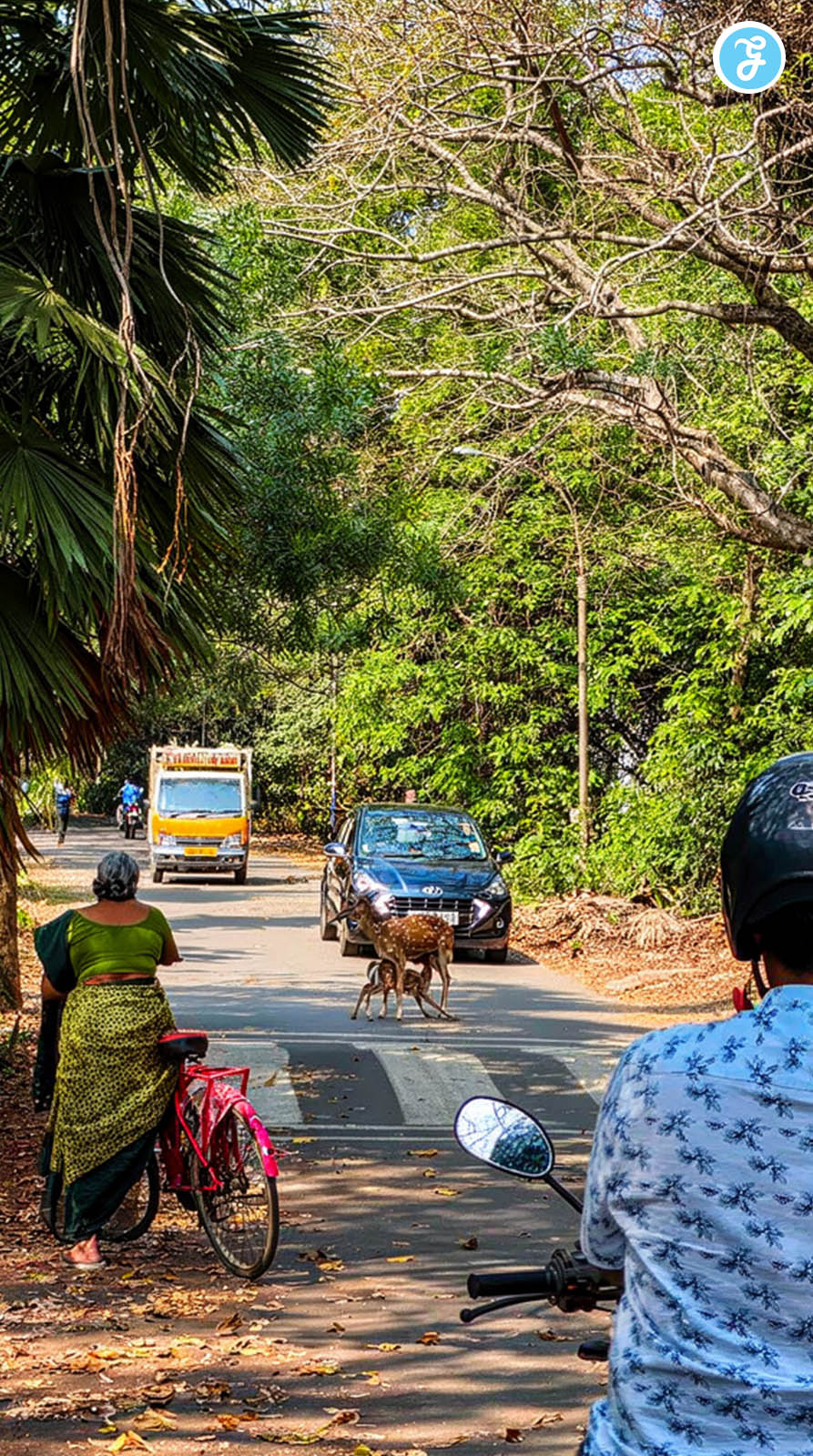
It was a deliberate choice of a paved path. What happened next was not the expected annoyance of an urban commute.
The Protective Perimeter of Silence
Faculty and students did not just watch from the sidewalks. They physically halted their bicycles and scooters to create a human shield. This protective circle allowed the animals to complete their most vulnerable act without fear. The video shows a community of high achievers surrendering their schedules to a primal moment of nurturing.
Ecological Reality and Managed Coexistence
This “biological ceasefire” is a necessity born from unique geography. Bordering the Guindy National Park, the campus serves as a critical corridor for wildlife. While the campus is home to about 250 spotted deer, it is also one of the last urban refuges for the endangered blackbuck.
Because blackbuck populations in the area have dwindled to fewer than 20 individuals, the community’s choice to stop traffic for a nursing mother is a vital act of local conservation. This “perimeter of silence” created by students is a direct response to habitat loss and the increasing threat of urban fragmentation.
Humanity in Nature Within the Lab
This event serves as a reminder that we are part of a larger ecosystem. Even in an institution dedicated to tech and research, the human response was purely instinctive. We see a mirror of our own need to protect and sustain. This is Humanity in Nature at its most literal. It is a soft pause in a hard world.
The Thailand Elephant: The Gentle Extortionist
In the Chachoengsao province of Thailand, wild elephants have turned Highway 3076 into a personal pantry. These massive animals do not use force to get what they want. Instead, they stand with quiet authority and wait for passing traffic to pay a small edible tax.
The Highway Toll Collector
Local residents and sanctuary officials at Khao Ang Rue Nai know this behavior well. The elephants have mastered the art of gentle inspection.
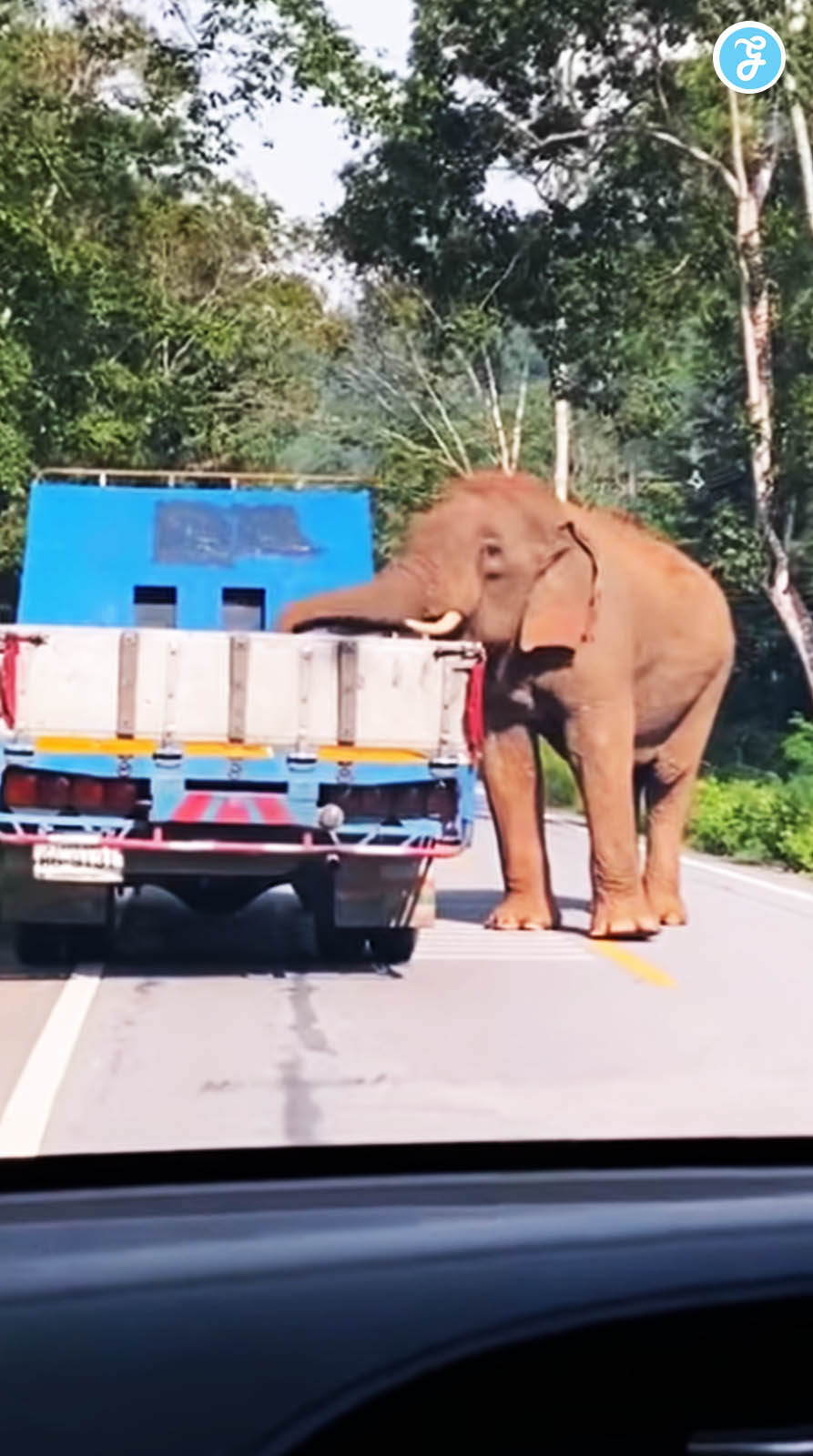
They walk up to slow-moving trucks and use their trunks to sift through cargo in search of sugarcane or cassava. It is a scene of immense power meeting surprising restraint. The elephants do not damage the vehicles. They simply wait for a snack before moving back into the brush.
A Sophisticated Level of Human Patience
The reaction of the motorists is the real story here. Drivers of heavy industrial trucks and small family cars alike choose to yield. There is no frantic honking or aggressive maneuvering. People in this region understand they are guests in a wildlife corridor. This shared understanding transforms a potential traffic delay into a moment of mutual respect.
Voluntarily Setting Aside Human Dominance
We often think of roads as places where humans have absolute control. This encounter proves otherwise. By stopping their engines and waiting, these drivers are making a moral choice. They are prioritizing the safety of a wild animal over their own arrival times. It is a vivid display of Humanity in Nature.
A Viral Moment of Connection
While the “tax” is common in Chachoengsao, the world saw a similar moment of grace through the lens of Bee Benjaporn in Prachuap Khiri Khan. Her viral video documented a hungry elephant stopping a van to search for snacks with remarkable calm. This footage serves as a digital record of a unique interspecies agreement. It reminds us that when we choose patience over power, we find a rare kind of grace.
From Conflict to Coexistence
The “gentle extortion” seen in Chachoengsao is a sophisticated solution to a growing problem. In Thailand, nearly 78% of wild elephant habitats overlap with human activity, including agricultural zones and major highways. Traditional conflict management often involves aggressive deterrence, but the patience shown by Thai motorists reflects a shift toward community-based monitoring and coexistence. By allowing the “toll collector” to pass peacefully, drivers are helping to reduce the number of fatalities for both species in these high-risk areas.
The Quiet Language of Coexistence
Peaceful coexistence is not about grand treaties. It is about these small daily negotiations between species. The elephant gets a meal and the humans witness a marvel of the natural world. This interaction illustrates a deep respect for life that transcends the need for speed. It shows that even on a modern highway, we can still find a way to live and let live.
The Universal Highway Pause: The Duck Family Crossing
A high speed highway is the last place you would expect to find a moral awakening. These roads are built for cold efficiency and mechanical speed. Yet, some months back, footage emerged from the Kwinana Freeway in Perth, Western Australia, capturing a small miracle of physics and mercy.
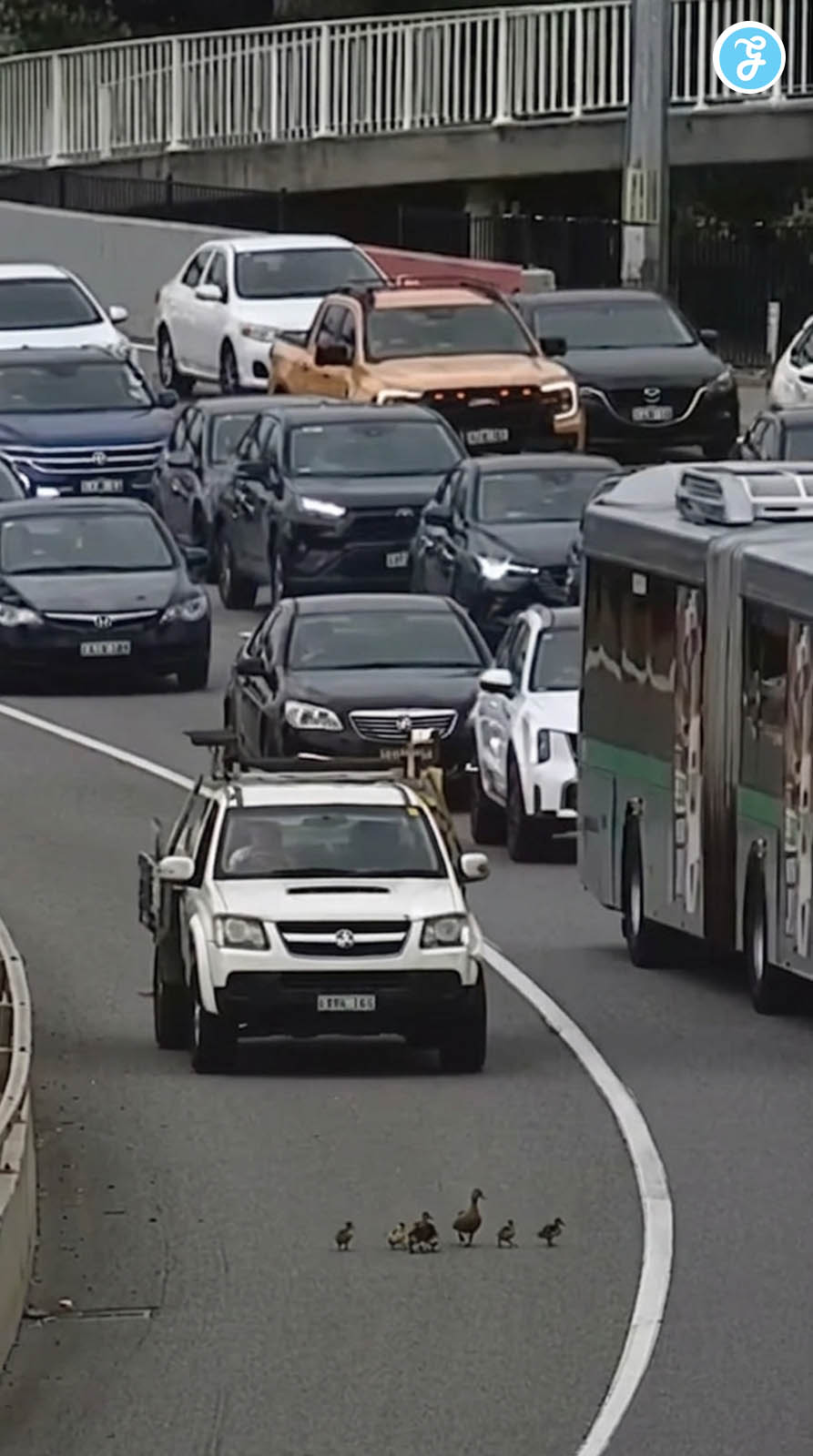
An entire flow of traffic ground to a halt for a family of ducks navigating the five lane expanse. It was a moment where the rush of the world simply stopped.
The Chain Reaction of Kindness
One car slamming on its brakes might just be a fluke or a quick reflex. But when the second and third lanes follow suit, it becomes a collective decision. On that afternoon in Perth, the safety of two adults and five ducklings became more important than the schedule of hundreds of commuters. This synchronized event ground traffic to a halt for over three miles, proving to be a rare moment of total human agreement.
Spontaneous Empathy in a Hard Space
This does not happen in a protected sanctuary like the IIT Madras campus. This occurs in a space designed for utility and a constant hurry. In many places, the law actually discourages stopping on a high speed road for small animals because of the risk of a pileup. Yet, the fundamental drive to protect life takes over anyway, overriding the cold logic of safety manuals. This is a gut level response of rebellious kindness. It proves that our capacity for Humanity in Nature is not something we turn on only when it is convenient or legally sanctioned. It is a reflex that surfaces even when the environment is most hostile to it.
Choosing to be a Guardian
These moments offer a sharp contrast to the grim news of geopolitical turmoil. On an Australian highway, we see everyday people choosing to be guardians instead of obstacles. By yielding their right of way, these drivers are acknowledging that a small, fragile life has inherent value. The ducks made it across the hot asphalt because of a temporary human truce with the clock.
Evidence of Our Remaining Grace
This universal pause is silent proof of our better nature. We often hear that people are becoming colder or more detached from each other. The duck family crossing suggests something else entirely. It shows that beneath the layers of modern stress, our instinct is still to nurture and protect. We are still a species that will risk a fender bender to save a life that can never say thank you.
When we see reports of widespread conflict, it is easy to believe that we have reached a moral dead end. The headlines suggest that humans are hardwired for conflict and that our supply of empathy has run dry. But these quiet moments in Thailand or at IIT Madras tell a more optimistic story. They suggest that our capacity for peace is not gone. It is simply waiting for a reason to surface.
A Latent Capacity for Peace
If a driver can feel an intense urge to protect a duckling or an elephant, then the biological machinery for peace is still active. This interspecies empathy is proof that we are capable of looking at a life different from our own and seeing something worth saving. If we can find a “biological ceasefire” with the wild, it means the potential for harmony with our own kind is still a reachable reality. It is a muscle we haven’t forgotten how to use.
The Antidote to Compassion Fatigue
Witnessing Humanity in Nature acts as a vital reset for our mental health. Constant exposure to war leads to a state called compassion fatigue, where we become numb to suffering just to survive the news cycle. Stories of spontaneous kindness provide the emotional fuel we need to keep going.
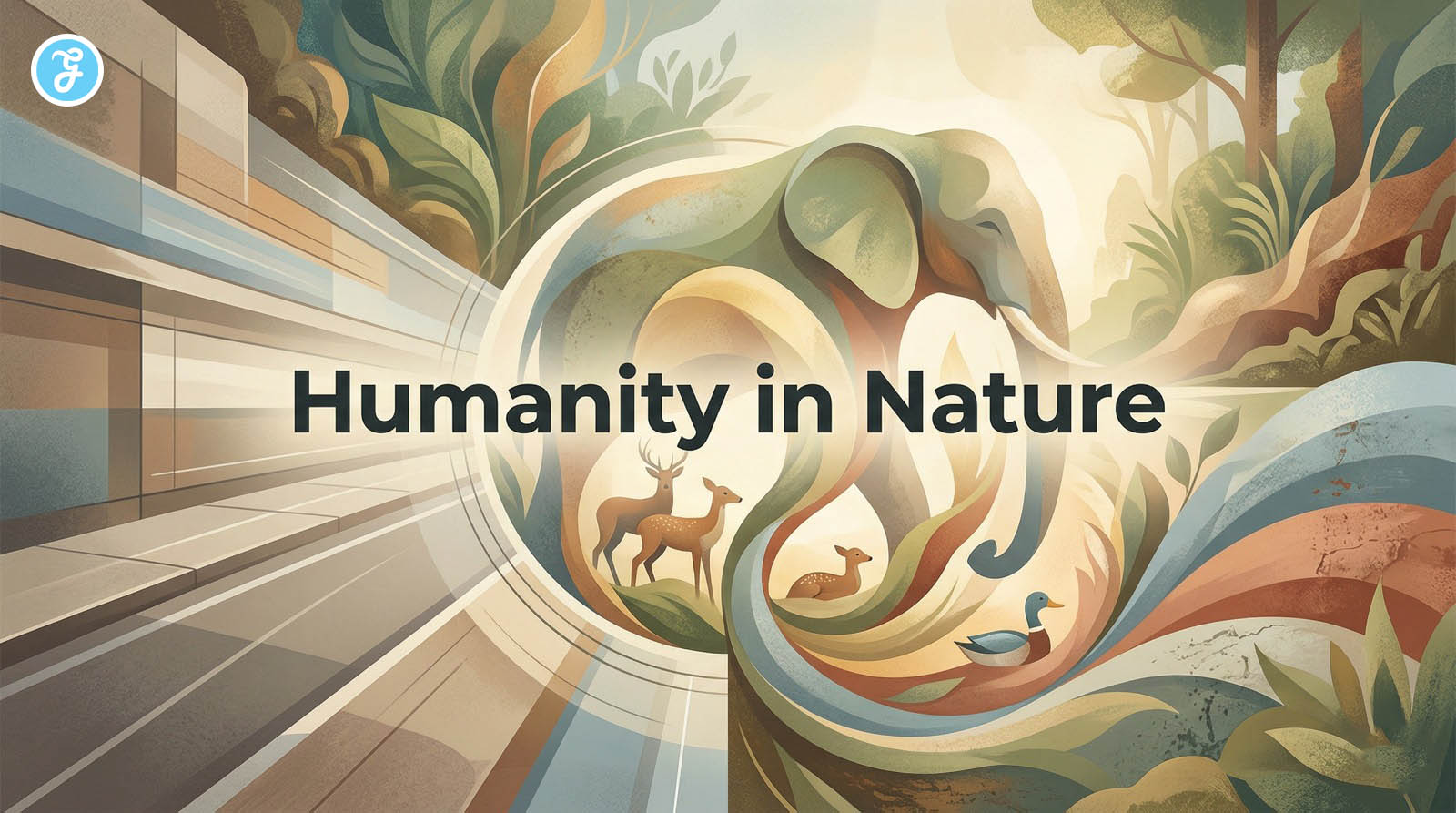
They remind us that the world is not just a collection of battlefields. It is also a place where strangers stop their cars to let a mother nurse her young.
Resilience Through Connection
Scientific research shows that positive interactions with animals boost our psychological resilience. When we choose to be kind to a different species, we are actually healing ourselves. These moments of grace help us return to a positive emotional state after being challenged by the weight of global events. They are not just “feel good” stories. They are evidence of a fundamental drive to respect life that war cannot fully erase.
Believing in Human Goodness Again
We need these stories to keep our perspective balanced. While the news shows us at our worst, the highway and the campus show us at our best. By focusing on Humanity in Nature, we find the strength to believe in human goodness again. It is a reminder that we are still a species capable of incredible gentleness. We just need to remember that this is who we are at our core.
Protecting the Spirit of Kindness
The news will continue to tell us that the world is breaking. But the elephant in Thailand, the deer at IIT Madras, and the ducks on the highway stand as three pillars of hope. They remind us that our default setting is not violence. These stories are the evidence we need to stay human in an age of global devastation.
The Evidence of Our Better Selves
We have seen that motorists can wait for an elephant and scholars can shield a nursing deer. We have watched high-speed traffic vanish to save a few ducklings. These are not isolated accidents. They are part of a consistent pattern of Humanity in Nature. These moments prove that when we are faced with fragility, our first instinct is still to protect.
A Call to Observe the Quiet Grace
Take a moment to look for these flashes of kindness in your own life. They do not happen on the front page; they happen in the quiet intersections of our daily commute. Notice the person who stops for a stray or the neighbor who saves a fallen nest. When you see these acts, share them. They are the emotional fuel that keeps us from sinking into total despair.
Our Most Important Remaining Legacy
War might occupy our history books, but it does not have to occupy our souls. The fundamental drive to respect life is our true nature. It is the one thing that survives even the darkest times. By choosing empathy over efficiency, we are protecting the best part of ourselves. This is the legacy we leave behind.
Grace Beyond the Battlefield
We are more than the conflicts we witness from a distance. We are a species capable of incredible gentleness and sudden grace. As long as we are willing to stop and yield the road to another living being, our humanity remains intact. We just have to remember to keep looking for it. It is always there, waiting for us to notice.