
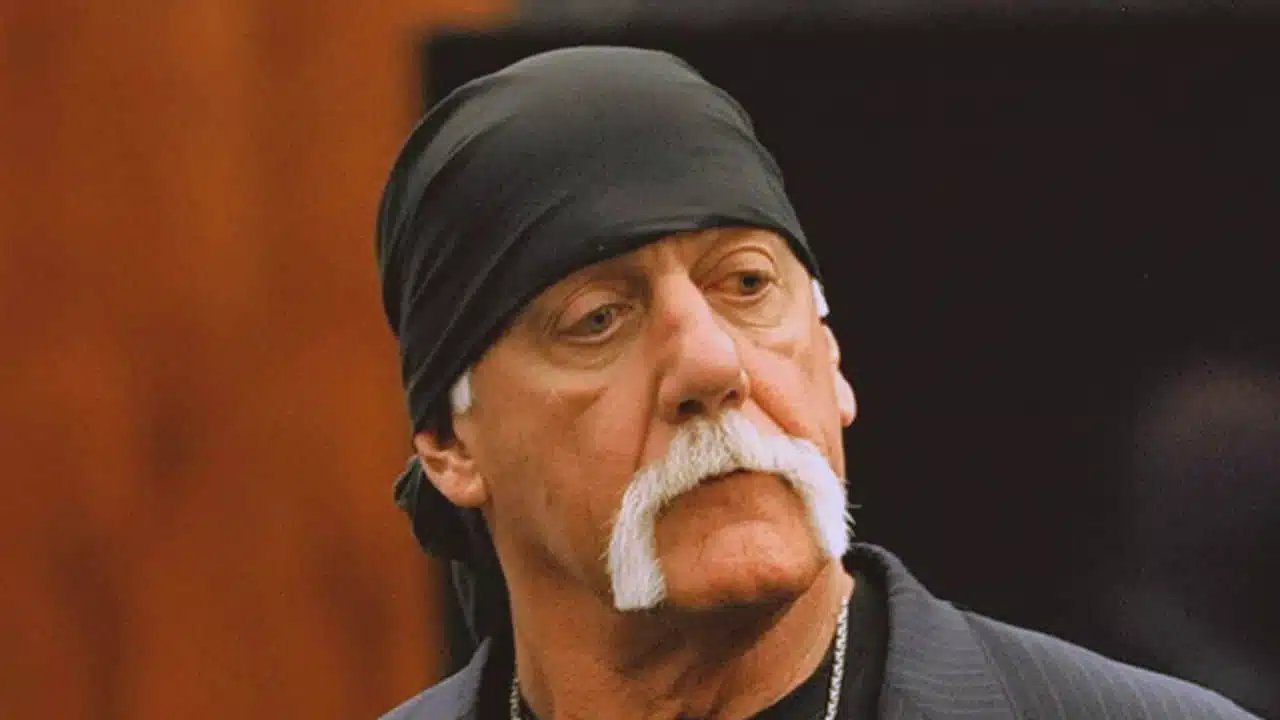
Terry Gene Bollea, the man the world knew as Hulk Hogan, has died at the age of 71. Widely considered one of the most influential figures in professional wrestling history, Hogan passed away on Thursday after going into cardiac arrest at his home in Clearwater, Florida. Emergency responders treated him at the scene before taking him to Morton Plant Hospital, where he was pronounced dead.
The announcement came from World Wrestling Entertainment (WWE), the company that Hogan helped transform into a global powerhouse. His death marks the end of an era in sports entertainment, as few figures have ever had the cultural reach and impact that Hogan did during his peak years.
A Sudden Medical Emergency in Clearwater
The Clearwater Police Department and local fire rescue teams responded to a distress call reporting a person in cardiac arrest at Hogan’s residence. Paramedics arrived quickly and performed emergency procedures on Bollea before transporting him to the hospital. Despite their efforts, he did not survive. Authorities later confirmed that there were no signs of foul play, though an investigation into the circumstances is still ongoing. The news was first reported by TMZ and later confirmed by WWE and local officials.
From Regional Talent to Wrestling’s Biggest Superstar
Before Hulk Hogan became a household name, professional wrestling operated in regional “territories” across the United States. Each area had its own stars and fan base, but the sport had not yet broken into mainstream culture in a significant way. Hogan changed that. With his massive physique, signature mustache, ripped yellow and red outfits, and booming charisma, he became the embodiment of the larger-than-life wrestling hero.
He began his career in the late 1970s and rose to fame in the American Wrestling Association (AWA). However, it was his move to the then-World Wrestling Federation (WWF, now WWE) that propelled him into superstardom. His early popularity received a massive boost after his role in the 1982 film Rocky III, where he played the memorable character “Thunderlips.”
Once he joined forces with Vince McMahon, the WWF’s ambitious promoter, Hogan quickly became the centerpiece of a national marketing strategy. His first WWF World Heavyweight Championship win in January 1984 kickstarted what fans would call “Hulkamania” — a cultural phenomenon that would dominate the wrestling world for years.
The Golden Era of Hulkamania
Throughout the 1980s, Hogan was everywhere — in the ring, on television talk shows, in movies, and even in Saturday morning cartoons. His trademark moves and catchphrases, including flexing his “24-inch pythons” and encouraging children to “say your prayers and eat your vitamins,” turned him into an inspirational figure for millions of young fans.
He headlined numerous WrestleMania events, including the unforgettable showdown against André the Giant at WrestleMania III in 1987. That match featured one of the most iconic moments in wrestling history when Hogan body-slammed the 500-pound Giant in front of over 93,000 fans at the Pontiac Silverdome in Michigan. This event remains one of the highest-attended indoor sporting events in North American history.
His feuds with other major stars like “Rowdy” Roddy Piper, “Macho Man” Randy Savage, and The Ultimate Warrior helped cement WWE as the dominant force in the wrestling industry. At the same time, Hogan’s image and branding helped make professional wrestling a central part of American pop culture in the 1980s.
Jumping to WCW and Reinventing Himself
In 1994, Hogan made the controversial decision to leave WWE and join World Championship Wrestling (WCW), a move that dramatically shifted the wrestling landscape. Initially presented as the same heroic character, Hogan eventually shocked the world in 1996 by turning heel — that is, transforming from a fan-favorite into a villain.
This transformation into “Hollywood” Hogan was part of the creation of the New World Order (nWo), one of the most infamous wrestling factions of all time. With a darker, more arrogant persona, Hogan helped WCW beat WWE in television ratings for 83 consecutive weeks, marking the only period in modern history where WWE was outperformed by another promotion.
This phase of his career showcased Hogan’s versatility as a performer. He went from the ultimate good guy to one of wrestling’s most compelling villains, keeping his character fresh and relevant for a new generation of fans.
The Finger Poke of Doom and WCW’s Decline
Despite the initial success, Hogan’s tenure in WCW was not without controversy. One of the most criticized moments came in 1999 during what is now referred to as the “Finger Poke of Doom.” In a widely panned match, Hogan lightly poked fellow wrestler Kevin Nash in the chest, who then exaggeratedly fell to the mat, allowing Hogan to win the championship.
The moment angered fans and exposed the predetermined nature of wrestling in a way that many felt was insulting. It led to a significant decline in WCW’s popularity and is often cited as a key turning point in the company’s eventual downfall. By 2001, WWE had acquired WCW, effectively ending the Monday Night Wars that had defined wrestling in the 1990s.
Return to WWE and WrestleMania X8
In the early 2000s, Hogan returned to WWE to much fanfare. His most celebrated match during this period took place at WrestleMania X8 in 2002, where he faced off against Dwayne “The Rock” Johnson. Held at Toronto’s SkyDome (now Rogers Centre), the match was one of the most emotional and electrifying in wrestling history. The crowd erupted in support for Hogan, who by then was considered a living legend.
Even though Hogan had returned as a villain, the overwhelming fan support turned him back into a hero that night. The match symbolized a passing of the torch between two of the industry’s biggest stars and remains one of WrestleMania’s most iconic moments.
Later Career and Stint with TNA
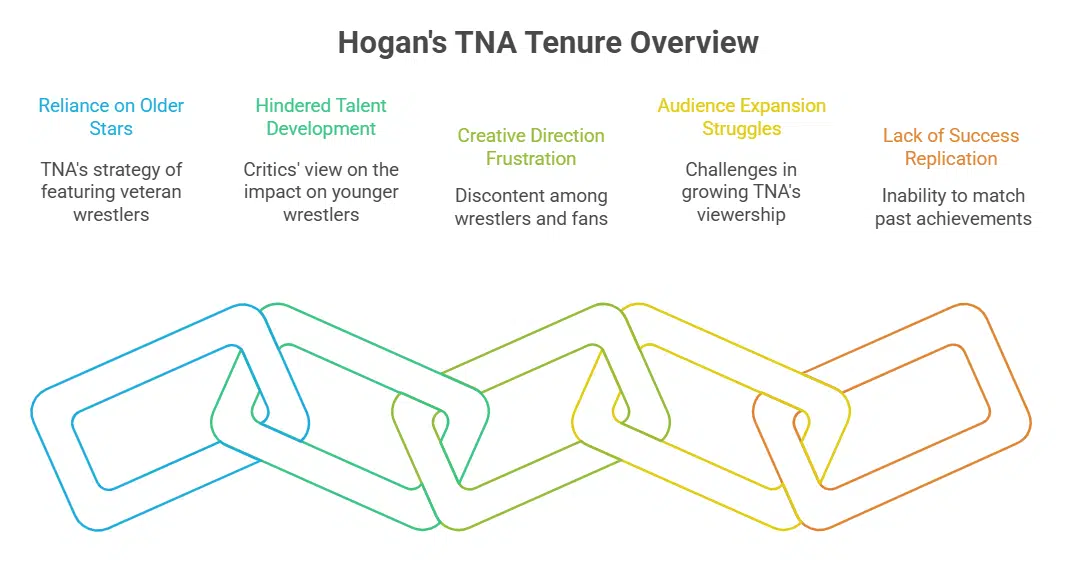
After spending a few more years with WWE, Hogan left again in 2010 to join Total Nonstop Action (TNA) Wrestling. His time with the promotion, however, was met with mixed reactions. The company often relied on older stars like Hogan, Sting, and Ric Flair, which critics say hindered the development of younger talent.
Many wrestlers and fans became frustrated with the creative direction, and despite Hogan’s name recognition, TNA struggled to expand its audience. He left the company in 2013, unable to replicate the kind of success he enjoyed in the WWE and WCW.
Racial Slur Controversy and Fallout
Hogan’s career faced a major blow in 2015 when an audio recording surfaced featuring him using racial slurs during a private conversation. The audio was leaked as part of an unauthorized sex tape published by the website Gawker. The remarks were widely condemned, and WWE terminated its relationship with Hogan immediately. His profile was scrubbed from their website, and he was removed from the Hall of Fame listings.
The scandal also led to a landmark legal case. Hogan sued Gawker for invasion of privacy and won a $115 million judgment, which forced the company into bankruptcy. The lawsuit was later revealed to have been secretly funded by billionaire Peter Thiel, who had his own grievances with the website.
Although Hogan publicly apologized for his language and addressed WWE’s locker room in an attempt to rebuild trust, many within the industry remained distant. His legacy, once untouchable, became clouded with controversy. Even after WWE eventually reinstated him and allowed him to make occasional on-screen appearances from 2019 onward, he was often met with a lukewarm or negative reception from live audiences.
Final Venture: Real American Freestyle
In the final chapter of his life, Hogan was working on launching a new wrestling company called Real American Freestyle. The organization was not designed to compete with WWE or AEW but instead aimed to spotlight amateur-style wrestling — more in line with Olympic or collegiate formats than traditional pro wrestling entertainment.
The inaugural event was scheduled for August 30, 2025. Hogan served as the commissioner and figurehead of the company. Following his death, the organization expressed deep sorrow and emphasized that Hogan was not just a founder but a guiding force behind the company’s vision. His belief in wrestling as a true athletic discipline shaped much of the company’s direction.
A Complicated but Monumental Legacy
Terry Bollea, as Hulk Hogan, shaped the wrestling industry like few others ever have. He helped take a niche, regionally fragmented sport and turned it into a global spectacle. He broke barriers, headlined historic events, and influenced generations of performers and fans.
Despite the controversies that clouded the latter part of his career, there is no denying that Hulk Hogan changed the world of professional wrestling forever. His charisma, showmanship, and larger-than-life presence turned him into a cultural icon, not just in America but around the world.
Fans will remember his signature leg drop, his shredded yellow shirts, his red-and-yellow bandana, and the roar of arenas filled with chants of “Hogan! Hogan!” Whether adored or criticized, his name will forever be linked to the rise of modern wrestling and the global sports entertainment empire that WWE has become today.