Does life feel like a wild rollercoaster lately? One minute you are fine. Next, everything flips upside down. It is normal to feel stuck or worried about what might happen tomorrow. But here is a fascinating fact. Recent studies show that some people do not just handle stress. They actually get better because of it. This is the power of an Anti-Fragile Mindset. I am going to show you the simple steps to build this kind of mental strength for yourself. So, let’s go through it together.
What is an Anti-Fragile Mindset?
An anti-fragile mindset helps you get stronger from stress and chaos. Instead of breaking down, you use the pressure to grow. Nassim Nicholas Taleb introduced this concept in his 2012 book, Antifragile. He calls it “benefiting from disorder.”
To understand this, think about Greek mythology. If you cut off one head of the Hydra, two grow back in its place. That is anti-fragility. It loves the fight because the fight makes it bigger.
Most people try to be “resilient,” which is like a rock that resists the waves. Anti-fragile people are like the waves themselves, gaining energy from the wind. They see problems as necessary fuel for improvement. A child learning to ride a bike falls over and over. Yet, with every scrape and bruise, their brain learns balance. They do not just recover; they become skilled riders because of the falls.
Here is a quick breakdown of the difference:
| Mindset Type | Reaction to Stress | Example |
|---|---|---|
| Fragile | Breaks under pressure | A glass vase is dropping on the floor |
| Resilient | Resists shock and stays the same | A rubber ball bouncing back |
| Anti-Fragile | Gets better and stronger | A muscle grows after heavy lifting |
Why Resilience is Not Enough in Uncertain Times
Resilience is a great start, but it has a limit. Being resilient mostly means bouncing back to your normal state after a hard time. But what if “normal” isn’t good enough anymore? In 2026, the world moves too fast for us to just stand still.
According to a 2024 report by the American Psychological Association, 43% of adults said they felt “too tired to function” due to stress. If you only try to bounce back to where you were, you eventually run out of energy. You are just surviving.
“The wind extinguishes a candle but energizes fire.” – Nassim Nicholas Taleb
Adaptability is the new requirement. Old plans can break apart in seconds. You need a mindset that feeds on change rather than just tolerating it. This shift pushes you past survival mode. It allows you to use shocks as fuel for personal development. It is the difference between surviving a storm and using the wind to sail faster.
Key Principles of an Anti-Fragile Mindset
You can shape your mind to use setbacks as stepping stones. Here are the core principles that make this work.
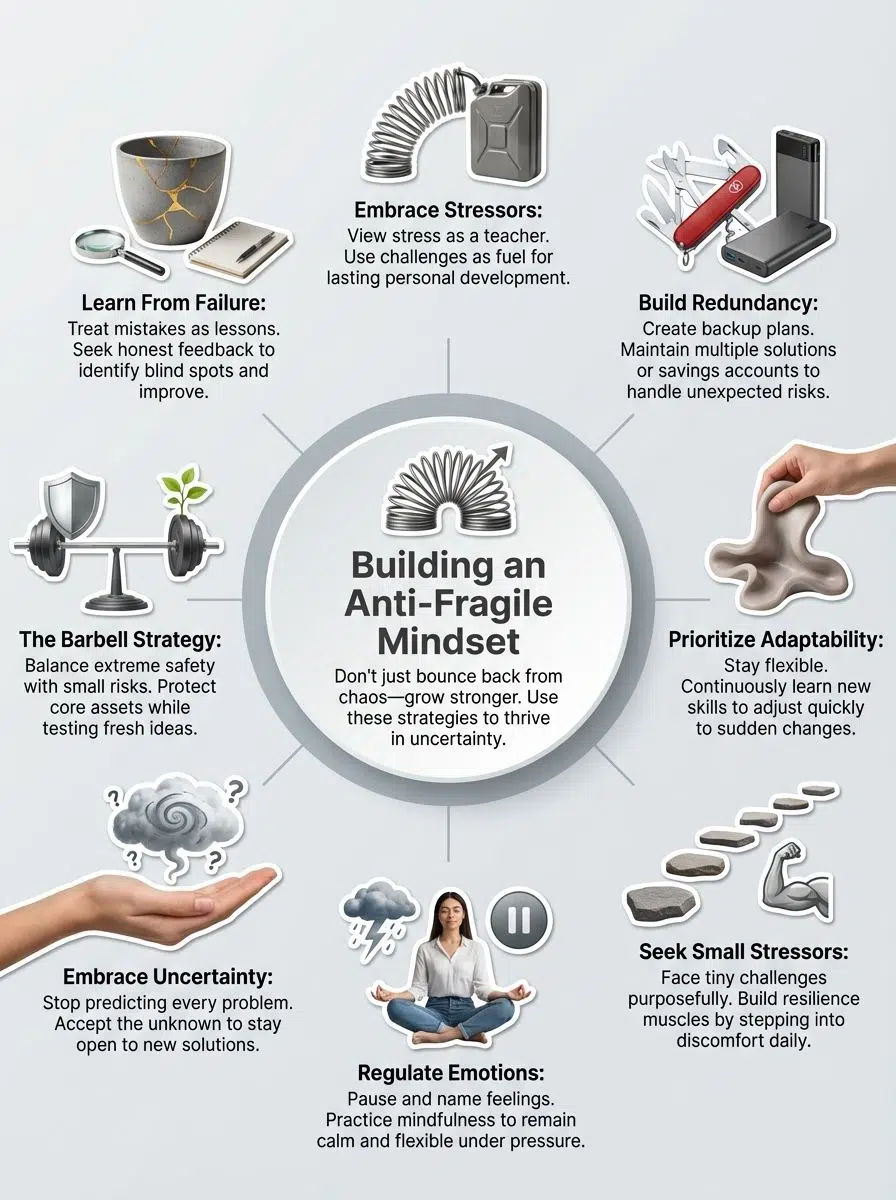
Embrace Stressors as Opportunities for Growth
Stress looks scary at first glance. Yet, smart achievers see it as a teacher. Take James Dyson, for example. He created 5,127 failed prototypes of his vacuum cleaner before he got it right. Those weren’t failures to him; they were information.
Biologists call this “hormesis.” It is the process where small doses of stress, like exercise or bitter vegetables, make an organism stronger. Facing stress sparks learning if you lean in with curiosity.
Growth often hides behind these tough moments. Small tests build strength like lifting weights grows muscles. Stress shapes resilience and adaptability, and boosts emotional intelligence over time. As Jean de La Bruyère famously said:
“Out of difficulties grow miracles.”
Build Redundancy and Flexibility
Life throws curveballs, so it pays to have backup plans. In engineering, this is called “redundancy.” It means having more than one way to solve a problem. It is not inefficient; it is safe.
For your personal finances, this might mean following the “Rule of Three.” Try to keep three to six months of living expenses in a high-yield savings account. If one income stream dries up, you do not panic because you have a buffer.
Flexibility pairs perfectly with redundancy. You must bend instead of breaking. Think of a bamboo tree swaying in a hurricane while the rigid oak snaps. Change your routines if needed. Try new solutions without getting stuck on “how we used to do it.”
Adaptability and Continuous Learning
Change comes fast. Adaptability helps you grab an umbrella and keep moving. People who prioritize learning adjust better to uncertainty. They use feedback as their guide, much like Waze reroutes you around traffic.
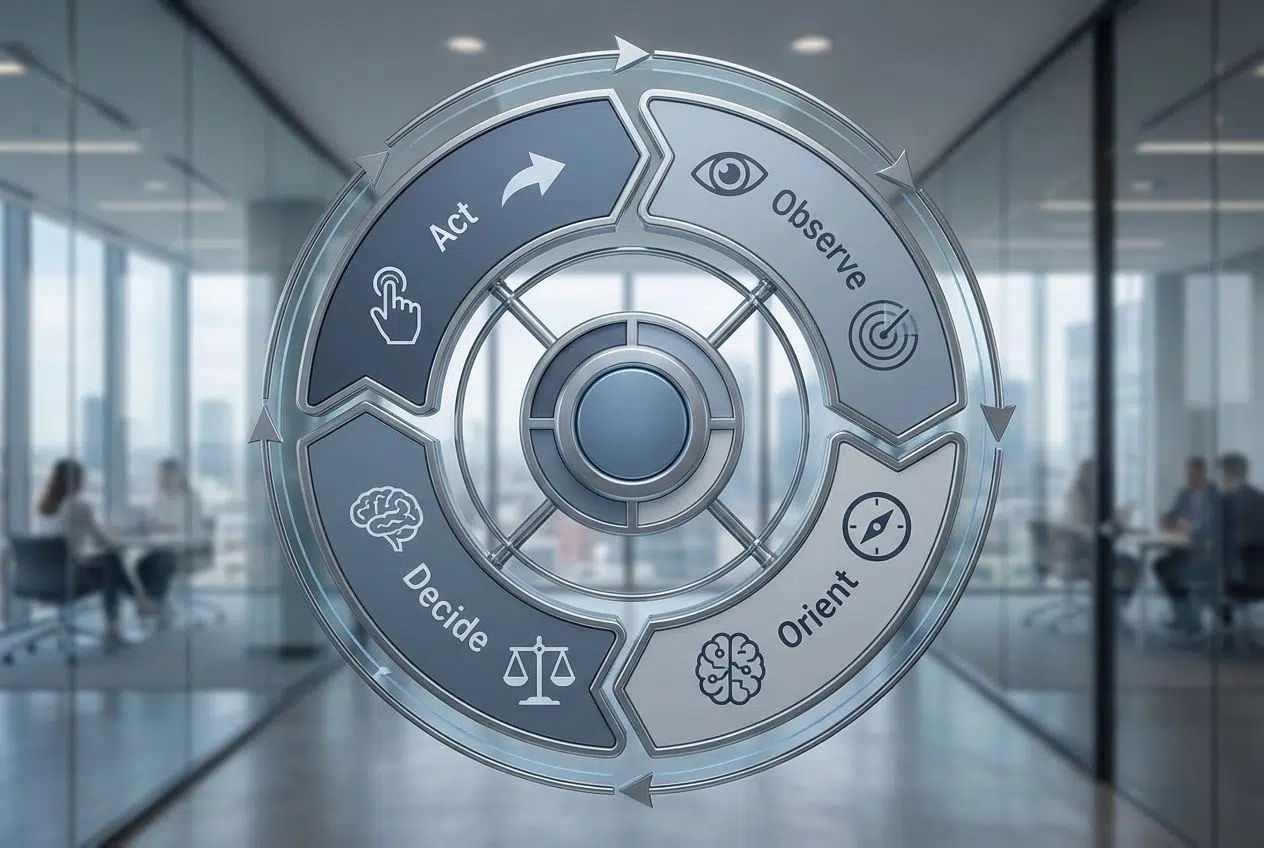
The U.S. Military uses a concept called the OODA Loop (Observe, Orient, Decide, Act) to make fast decisions in chaos. You can use this too:
- Observe: Look at what is actually happening, not what you want to happen.
- Orient: Update your mental map with new facts.
- Decide: Choose a new course of action immediately.
- Act: Execute and test the result.
Mistakes may sting, but they teach lessons no classroom can match. Stay curious. It keeps your mindset strong and open to transformation.
Proactive Growth Through Small Stressors
Adaptability shapes strong minds, but real growth asks for action. Rather than waiting for life to attack you, face tiny stressors on purpose. This trains your nervous system to stay calm.
A popular method today is cold exposure. Spending just 11 minutes a week in cold water (like a cold shower) can boost dopamine and train your brain to handle shock. Small risks build big strength over time. Each little challenge teaches lessons about courage. These small wins stack up like bricks in a wall. Soon enough, you thrive under pressure instead of folding.
Steps to Develop an Anti-Fragile Mindset
Small changes spark big growth. Simple daily actions build mental strength, even when the world feels upside down. Here is how to build your mental armor.
Focus on Internal Strength and Emotional Regulation
Internal strength grows from knowing yourself. You must pay attention to your feelings. When stress hits, pause and name the emotion. “I am feeling anxious right now.” This simple act engages your prefrontal cortex and lowers the panic response.
To practice this, try the “Box Breathing” technique used by Navy SEALs:
- Inhale for 4 seconds.
- Hold your breath for 4 seconds.
- Exhale for 4 seconds.
- Hold your empty lungs for 4 seconds.
People with high self-control stay flexible under stress. They bounce back faster and thrive during change. Practice mindfulness or write daily about your worries. Both are powerful tools for emotional intelligence.
Avoid Over-Control and Embrace Uncertainty
Trying to control everything makes stress worse. Life changes fast, and sometimes it throws a curveball that you never saw coming. Instead of trying to predict every possible problem, practice letting go.
The ancient Stoics had a “Circle of Control” exercise. You draw a circle. Inside, you put things you can control (your words, your actions, your attitude). Outside, you put what you cannot control (the economy, the weather, other people). Focus 100% of your energy inside the circle.
“You can’t direct the wind, but you can adjust your sails.”
Accepting uncertainty lets your mind stay flexible. By staying calm in chaos, you learn how to thrive no matter what comes next.
Create a Balance Between Risk and Safety
Nassim Taleb suggests using the “Barbell Strategy.” This approach mixes extreme safety with smart risks, avoiding the “lukewarm middle” where most people get stuck.

Think of it like a barbell with weights on both ends:
| Side A: Extreme Safety (90%) | Side B: Smart Risk (10%) |
|---|---|
| Keep your day job and steady salary. | Start a side business on weekends. |
| Invest in safe Treasury bonds or index funds. | Invest a small amount in a high-growth startup. |
| Stick to a strict sleep schedule. | Try a new, intense workout class. |
This plan protects you. You do not fear losing everything because you have a secure base. At the same time, taking small chances teaches strength. This brings steady learning without huge shocks if something fails.
Seek Feedback and Learn from Failures
Balancing risk and safety is like walking a tightrope. You wobble, and sometimes you fall. Falling teaches you more than staying on the rope ever could. Feedback works the same way.
Honest words from others help you spot your blind spots. The U.S. Army uses “After Action Reviews” (AARs) after every mission to ask: “What happened? Why did it happen? How can we do better?” Do this in your own life. Treat every mistake as data, not a judgment on your character.
Benefits of an Anti-Fragile Mindset
An anti-fragile mindset helps you stand tall during rough times. You build mental muscle so life’s surprises become fuel for growth instead of reasons to give up.
Thriving in Chaos and Uncertainty
Chaos feels like a storm. Yet some people grow stronger in this mess. They see stress as a teacher. In tough times, they ask questions and spot new chances to earn.
Look at the U.S. business landscape. According to Census Bureau data, Americans filed a record-breaking 5.5 million new business applications in 2023. These entrepreneurs saw economic uncertainty as the perfect time to build something new. A growth mindset helps you rise above fear and try new skills even if success seems far off.
Increased Mental and Emotional Resilience
Riding through chaos shapes a stronger mind. People with an anti-fragile mindset gain grit. They stay calm under pressure, even when life feels upside down.
Research from the Harvard Center on the Developing Child shows that resilience is not a trait you are born with. It is built through “serve and return” interactions and overcoming challenges. Kids who learn to problem-solve early show more resilience as adults. Adults who practice these skills notice their feelings sooner and deal better with stress at home.
Better Decision-Making Under Stress
Growth in mental resilience leads to sharper choices. Stress fogs your mind. A strong mindset cuts through that haze like headlights on a dark road.
When you are anti-fragile, you avoid “analysis paralysis.” You pause, breathe, and weigh options. Here is how this mindset improves your choices:
- Clarity: You separate facts from fears.
- Speed: You accept that no decision is perfect and move forward.
- Flexibility: You are willing to pivot if the first choice was wrong.
Examples of Anti-Fragile Thinking in Real Life
Some people grow stronger by turning setbacks into learning moments. Businesses also survive storms by shifting quickly.
Personal Development Strategies
You can use small, daily habits to strengthen your mindset. Try these tested strategies:
- The “Good” Response: Retired Navy SEAL Jocko Willink suggests saying “Good” when things go wrong. Did you miss a promotion? Good. Time to improve your resume. Did you get injured? Good. Time to focus on recovery.
- Daily Review: Jot down mistakes in a notebook every evening. Ask yourself what you learned from them.
- Active Rest: Take breaks to rest your mind. Rest boosts growth just as much as hard work does.
Business Adaptability During Crises
Small businesses can thrive during hard times by staying flexible. Consider how restaurants adapted during the 2020 lockdowns. Many did not just wait for doors to reopen.
They built takeout windows overnight. They started selling “meal kits” for customers to cook at home. Some even pivoted to selling their raw ingredients as groceries. By 2025, many of these “temporary” fixes became permanent, profitable revenue streams. This type of adaptability links directly to strong problem-solving. It turns a crisis into a new business model.
How to Sustain an Anti-Fragile Mindset Over Time
Growth takes practice. You must keep your mind thirsty for new lessons. Challenges make great teachers if you show up for class.
Regularly Challenge Yourself with Manageable Stressors
Small challenges build strength. Think of it like lifting light weights to add muscle over time. You need to keep the resistance going.
Try these “micro-stressors” to stay sharp:
- Learn a New Skill: Pick something hard, like coding or a new language on Duolingo.
- Public Speaking: Join a local Toastmasters group to face the fear of an audience.
- Physical Challenges: Sign up for a 5K run or a Spartan Race.
Face little fears on purpose. Watch your confidence grow. Each win shows you are tougher and more adaptable than before.
Build a Support System for Growth
Strength grows with help from others. You need a “tribe” that supports your growth mindset. Find people who will tell you the truth, not just what you want to hear.
Share your goals with them. Join groups where people challenge their limits, like a book club or a running group. Support systems keep you strong during uncertainty. You do not have to face change alone. A good group helps everyone adapt faster.
Final Words: Build Your Anti-Fragile Capability
Building an anti-fragile mindset takes small, steady steps. You use stress to grow. You keep learning new things. You do not fear a little risk. These tips are simple and fit into daily life without fancy tools. A strong mind helps you stand tall during storms.
Keep stretching your comfort zone and lean on those who lift you up. Soon enough, tough times will feel less like a wall and more like a stepping stone to success.