
Work can be stressful. Deadlines, emails, and long hours can feel overwhelming. Sometimes, it’s easy to forget about taking care of yourself during a busy day.
Creating a self-care toolkit can help you manage stress and stay balanced at work. Simple habits like short breaks or gratitude lists make a big difference in your mental health. This blog will show you how to build your own toolkit with tips for physical, emotional, and mental well-being.
Start small—your peace matters!
Identify Your Workday Challenges
Stress can build up fast during a busy workday. Pay attention to what drains you most—long meetings, endless emails, or juggling deadlines. These daily struggles often affect mental clarity and emotional health.
For instance, working remotely may blur boundaries between your job and personal life, making time management harder.
Track how specific tasks or interruptions impact your mood and focus. Maybe long periods of sitting are causing a sedentary lifestyle that affects physical health. “Taking moments throughout the day to check in with yourself makes all the difference.” Start writing down patterns like feeling burnout after staring at screens too long or anxiety from constant social media alerts.
Essential Components of a Self-Care Toolkit

A good self-care toolkit helps you feel balanced during work. It focuses on keeping your body, mind, and emotions healthy.
Physical Wellbeing Tools
Stretching every hour can reduce stiffness and boost blood flow. Use a standing desk if possible to avoid sitting for too long. Stay hydrated by keeping water nearby—drink at least eight glasses daily.
Eat healthy snacks like fruits or nuts during breaks to maintain energy levels.
Set alarms as reminders to move or take short walks. Keep ergonomic tools, like wrist supports, for comfort while working on your computer. Good lighting in your workspace reduces eye strain and improves focus.
These small changes support physical health and stress management during work hours.
Mental Health Resources
Tools like the Trevor Lifeline or speaking with a mental health professional can offer quick support during tough workdays. Employee assistance programs often provide free counseling for issues like stress reduction, substance abuse, and aggression.
Keep resources such as mindfulness apps, uplifting quotes, or short guided meditations handy. These can boost your mood in minutes. Writing down gratitude daily also helps improve mental well-being at work.
Emotional Support Practices
Take a minute to read an inspiring quote during tough moments. This small act can shift your mindset and ease stress. Write down three things you’re grateful for each day. Gratitude boosts happiness and helps manage mental health challenges.
Connect with coworkers who support you emotionally. A kind chat or shared laugh improves relationships and work-life balance. Create a calming corner in your workspace with comfort items like photos or soft lighting to feel more secure at work.
Adding Personal Touches to Your Toolkit
Make your self-care kit unique by including items or activities that bring joy, comfort, and calm—discover what speaks to you.
Favorite Hobbies or Activities
Bring small hobbies into your workday. A minute of drawing, knitting, or journaling can reduce stress and boost joy. Reading uplifting quotes during short breaks also improves mood and mental health.
Keep activities simple. Listen to music, step outside for fresh air, or stretch at your desk. These tiny habits help create a balance between tasks and well-being, making workdays more enjoyable.
Comfort Items
Keep a small item at your desk that brings comfort. A soft blanket, stress ball, or favorite mug can make work feel less stressful. These personal touches help create a sense of safety and calm during tough moments.
Scents like lavender oil or peppermint candles can improve focus and mood. Pictures of family, pets, or favorite places also boost emotional well-being. Small items with meaning remind you to pause and care for yourself during the day.
Strategies to Incorporate Self-Care into Your Workday
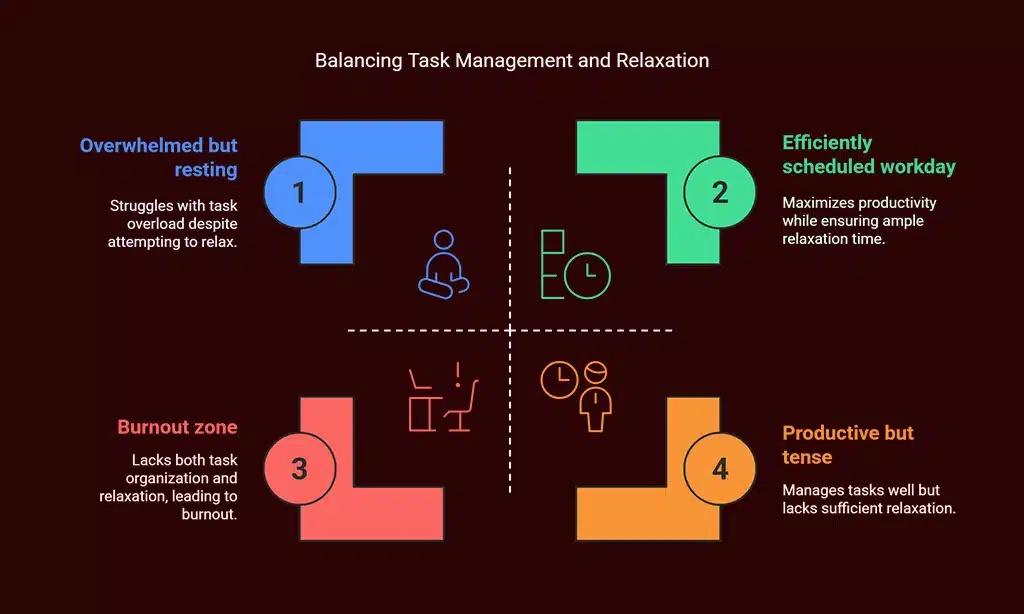
Make space for small habits that put your well-being first—learn ways to bring balance and calm into your daily grind.
Scheduled Breaks
Scheduled breaks boost your energy and reduce stress. Set a timer for one minute to read something uplifting. Doing this daily can improve mental health and keep you motivated at work.
Use these moments to check in with yourself. Write down a few things you’re grateful for or take slow, deep breaths. These small habits strengthen emotional well-being and create balance during busy workdays.
Setting Boundaries
Say “no” to tasks that overwhelm your schedule. Protect your work-life balance. Set clear hours for work and personal time. Keep boundaries around breaks or meal times firm, even during busy periods.
Avoid checking your inbox late at night. Turn off email notifications after office hours. This reduces stress and improves mental health over time. Speak up when workloads grow too heavy to handle alone; share concerns with supervisors or teams.
Regularly Updating and Evaluating Your Toolkit
Check your self-care toolkit often. Update it to match your needs or work challenges. For example, if deadlines cause stress, add quick stress reduction tools like deep-breathing apps or motivational notes.
A monthly review can help you spot what works. Remove things that no longer help.
Pay attention to changes in your life or job. You may need new mental health resources, like articles about time management or counseling options at work. Stay flexible and open to trying different strategies for better well-being and balance during busy days!
Takeaways
Taking care of yourself at work is important. A self-care toolkit can help make your day easier and less stressful.
Dr. Mia Harper, a workplace wellness expert with over 15 years of experience, highlights the value of building personalized self-care tools. She holds a PhD in Counseling Psychology from the University of Maryland, Baltimore and has worked on research related to employee well-being and mental health programs.
Her insights focus on combining simple practices with thoughtful planning.
Dr. Harper shares that small actions—like stretching or writing down what you’re thankful for—can lower stress and boost mood during work hours. She points out that organizing this toolkit around physical care, emotional support, and mental health creates balance for busy days.
She also stresses being honest about your needs when setting up boundaries or taking breaks at work. Ethical choices like respecting privacy in shared spaces align with creating healthier environments for everyone.
To use this effectively, Dr. Harper advises picking items based on time available during the day rather than complex routines you may skip later due to workload pressures.
One benefit is improved focus if consistent habits are followed daily; yet challenges come if workplaces lack supportive policies making such routines harder without employer understanding about their importance long-term benefits outweigh these setbacks.
FAQs on How to Build a Self-Care Toolkit for Your Workday?
1. What is a self-care toolkit for the workday?
A self-care toolkit is a set of simple strategies to manage stress, improve mental health, and maintain work-life balance during your day.
2. Why is stress management important at work?
Stress management helps reduce anxiety, boosts employee well-being, and supports better focus and time management on tasks.
3. How can I include mental health support in my toolkit?
You can practice self-awareness, take short breaks, or try methods like counseling psychology or dialectical behavior therapy to stay balanced.
4. Can a self-care plan help with employee retention?
Yes! Supporting employee well-being through stress reduction tools shows care for workers’ mental health—this often improves job satisfaction and loyalty.
5. How does time management fit into a self-care routine?
Good time management prevents burnout by organizing tasks efficiently so you have space to relax and recharge during the day.