
Have you ever felt that sinking feeling around 4:00 PM on Sunday? I know I have. Your weekend fun fades, and your mind starts to race. The “Sunday Scaries” hit hard, and stress grows as the workweek creeps closer. It makes it incredibly tough to enjoy your day off. Studies show that many people feel anxious on Sundays, even before anything bad actually happens. In this guide on how to beat “Sunday Scaries”, I am going to walk you through the exact steps I use to find stress relief.
I think you will be surprised at how easy it can be. So, grab a cup of coffee, and let’s go through it together. Simple changes can make a big difference in your emotional well-being!
What Are the “Sunday Scaries”?
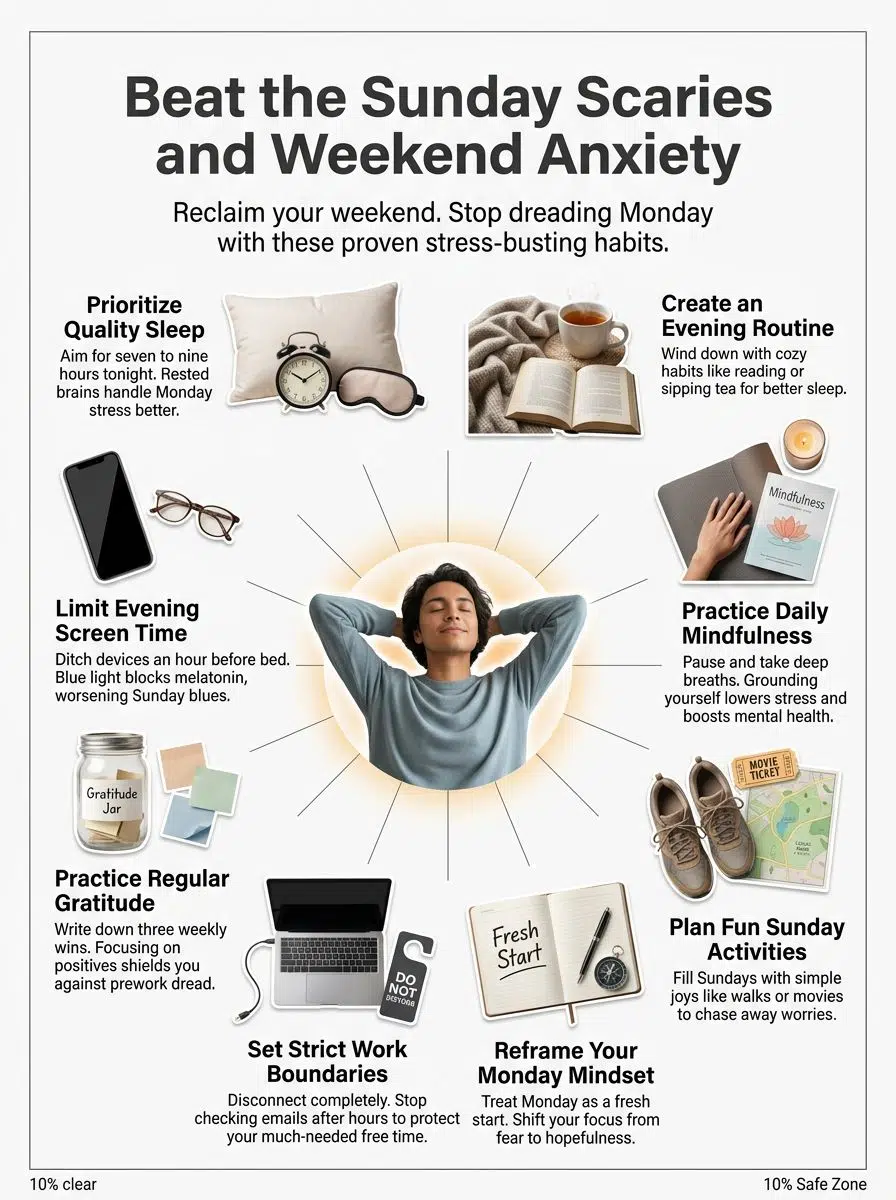
The “Sunday Scaries” feel like a heavy weight on your chest as Sunday afternoon arrives. Your mind races, wondering if you forgot something, and suddenly, Monday seems just around the corner.
A September 2024 Talker Research survey found the average American experiences this feeling 36 times a year. It typically starts right around 3:54 PM.
“An October 2025 survey from Caldera Spas found that 54% of Americans feel anxious as the weekend ends, turning Sunday into a day of dread instead of rest.”
Common symptoms of weekend anxiety
A heavy feeling sets in as the afternoon fades. You might feel a knot in your stomach or notice racing thoughts about work and school.
A 2025 report from Zety found that 73% of employees report physical symptoms due to pre-work anxiety. Here are the most common signs you might be dealing with:
- Trouble sleeping or staying asleep on Sunday nights.
- Headaches or tense shoulders from muscle tension.
- Feeling irritable with family or friends for no clear reason.
- Losing interest in fun plans and dreading the week ahead.
Worry feels loud, almost like background noise you cannot turn off. These signs point to weekend anxiety, which messes with both your mood and energy levels.
Why does the end of the weekend trigger stress
After spotting the signs, it helps to see why Sunday feels so heavy. The clock ticks toward Monday, and many people sense dread building as chores pile up. School or job routines feel close again. Thoughts spiral with worries about deadlines, meetings, or homework.
Your mind races through lists about unfinished business from last week. People crave a break yet find their minds stuck on repeat about Monday’s challenges. Stress relief slips away while anxieties fill in the space where peace should live.
Causes of the Sunday Scaries
Stress creeps in when the weekend ends, stealing your peace and quiet. Sunday can stir up worry and drain your joy before Monday even arrives.
Fear of the workweek ahead
The clock ticks on Sunday night, and your mind begins to race. Thoughts of meetings, emails, and early alarms start swirling around. Many people feel this pre-work anxiety as a heavy pit in their stomachs. A July 2025 Resume.io survey of 1,000 Americans highlighted the top reasons for this dread:
- Workload and deadlines: 33.1% of workers cite this as their main trigger.
- Burnout and exhaustion: 23.6% feel totally drained before the week begins.
- Unrealistic expectations: 15.7% feel they cannot meet the demands placed on them.
The pressure is so intense that 20.2% of Gen Z workers in the US have actually quit a job over Sunday anxiety. Spotting this cycle is key to knowing where your worries originate.
Unrealistic expectations for productivity
Fear of the workweek often leads to setting high bars for what you should achieve. Many people cram their weekends with chores, thinking they must finish everything. It feels like a race against stress, not just the clock. Making every minute count sounds good on paper, but it leaves little room for joy.
“Perfection is the enemy of progress. Weekends easily become checklists instead of time to recharge.”
Weekend anxiety grows as you try to do it all at once. This constant hustle leaves you more tired than refreshed by Sunday night.
Lack of weekend relaxation
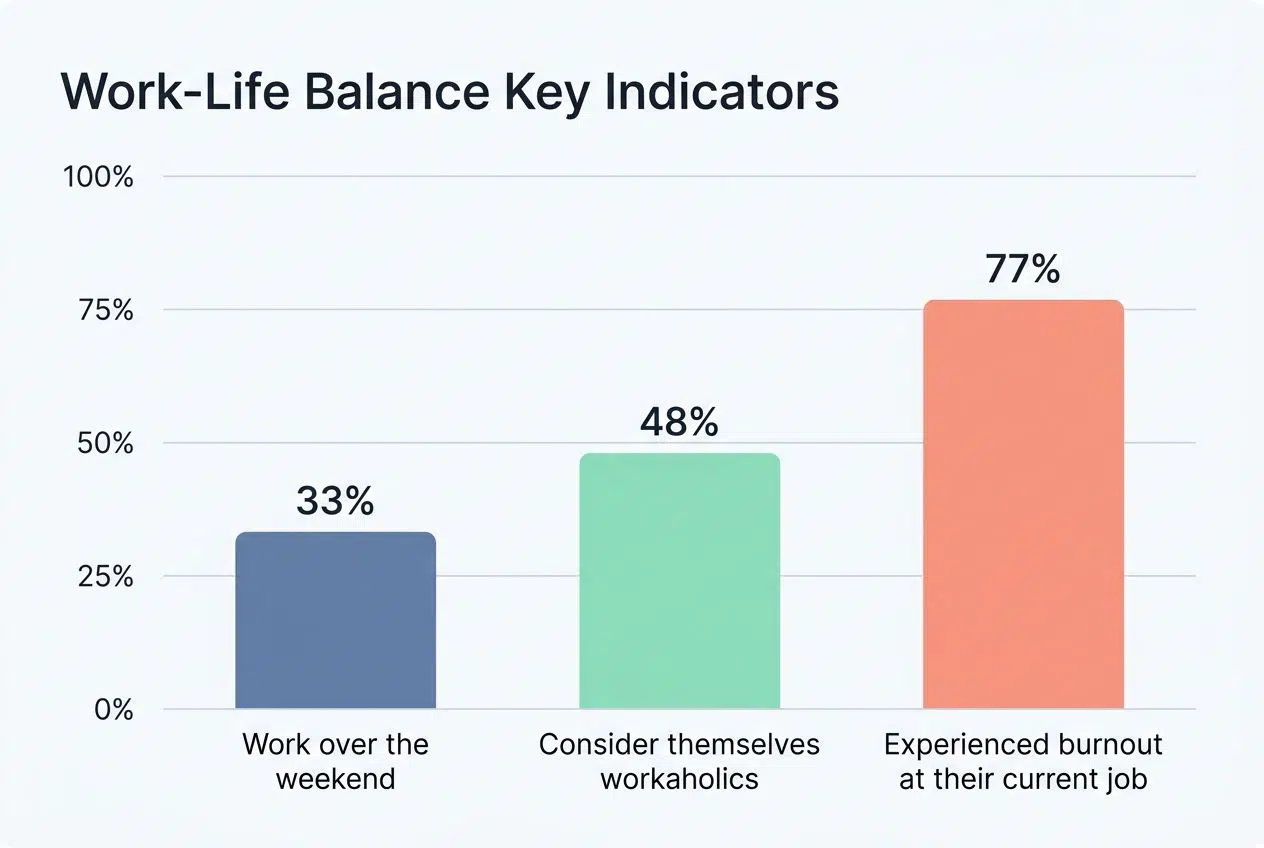
Busy weekends filled with chores or work emails leave no room for real relaxation. Minds stay in high gear, never slowing down enough to recover.
A November 2024 Lifehack Method report revealed that 66% of Americans lack a healthy work-life balance. Many folks struggle to unplug:
| Work Habit | Percentage of US Workers |
|---|---|
| Work over the weekend | 33% |
| Consider themselves workaholics | 48% |
| Experienced burnout at their current job | 77% |
The body feels tired but never refreshed. Without proper downtime, the Sunday Scaries grow stronger as Monday approaches.
How to Identify Your Sunday Scaries Triggers
Think back on your Sunday evenings. Spotting what sets off your weekend anxiety helps you find better coping strategies.
Reflecting on patterns of anxiety
Some people feel weekend anxiety at the same time every Sunday. Tracking these moments helps shine a light on your specific triggers.
A February 2025 MIBlueDaily report citing LinkedIn data shows 60% of professionals list worrying about workload as their main trigger. Write down where you are when the tension starts.
- Notice if the worry creeps in while you fold laundry.
- Pay attention to dread about an overflowing schedule.
- Log any sudden physical symptoms, like a tight chest.
Soon, you may see patterns that point to routines bringing on this anticipatory anxiety. Spotting these clues makes it easier to claim back your peace of mind.
Understanding work-life balance issues
Work-life balance problems constantly fuel weekend anxiety. If you spend your whole weekend answering emails, stress sneaks right into your free time.
A June 2025 Microsoft report found that nearly 20% of employees check their work emails before noon on Saturday and Sunday. These habits leave little room for fun activities.
Family dinners turn into laptop sessions, and Sunday walks get cut short by meetings. This cycle raises stress and makes the Sunday blues significantly worse.
The “Sunday Scaries”: How To Beat Weekend Anxiety
Sometimes, a simple change can turn Sunday night from stormy to sunny. Small steps bring big relief to your mental health.

Create a calming Sunday evening routine
Start by picking a set time to wind down. Try adopting the popular 10-3-2-1-0 sleep rule to ease your Sunday blues:
- 10 hours before bed: Stop drinking caffeine.
- 3 hours before bed: Finish eating and avoid alcohol.
- 2 hours before bed: Stop doing all work tasks.
- 1 hour before bed: Turn off screens and read a book.
- 0 snoozes: Wake up promptly the next morning.
Light a candle, grab a comfy blanket, and sip herbal tea. These simple habits tell your brain it is okay to relax.
Incorporate mindfulness practices
Sitting still for even two minutes helps your mind slow down. Breathe in deep, hold it, and let it out slowly. If you need help getting started, technology can guide you. Here is a quick comparison of popular mindfulness tools:
| App Name | Best Feature for Anxiety | Cost |
|---|---|---|
| Calm | “Daily Calm” 10-minute guided meditations | $69.99/year |
| Headspace | “SOS” exercises for sudden panic | $69.99/year |
Simple activities work wonderfully too. Take a walk and notice the leaves and the sky without any distractions.
Plan enjoyable Sunday activities
After practicing mindfulness, switch gears by adding fun to your Sunday. Try planning activities you look forward to all week. Many experts suggest the 2-2-2 method for a balanced weekend. You divide your free time into clear blocks:
- Two hours of deep, focused work or chores.
- Two hours of life-giving activities, like hobbies.
- Two hours of pure relaxation or family time.
Laughter and connection help chase away weekend worries. Permit yourself to enjoy stress relief on purpose.
Reframe your mindset about Mondays
Mondays often carry a heavy cloud of dread. Many people feel stressed just thinking about the upcoming workweek.
“Try viewing Mondays as a fresh start, not a punishment. Think of it like hitting the reset button.”
Some folks use Monday to set small goals, like enjoying a special breakfast. Make Sunday night part of your routine by planning one thing to enjoy on Monday morning. Changing how you think about Mondays shifts your mind from fear toward curiosity.
Strategies for Long-Term Management
Building good habits makes your weekends feel less heavy. Small changes lighten the load and help you look forward to each week.
Set boundaries for weekend work
Close the laptop after office hours and step away from work chats. Protecting your free time reduces stress and brings actual relaxation.
A November 2024 survey showed that 90% of US workers support right-to-disconnect laws. In fact, California recently pushed Assembly Bill 2751 to give employees the legal right to ignore after-hours emails.
- Make a rule like “No checking company messages after 6 p.m.”
- Let coworkers know that weekends are for rest and self-care.
- Only allow exceptions for true, defined emergencies.
Sticking with these boundaries teaches others to respect your mental health needs.
Develop a consistent self-care plan
Pick a few self-care activities you enjoy, like reading or listening to music. Schedule these into your weekend just as you would any appointment.
Changes do not have to be big to matter. Even ten minutes of mindful breathing helps lower your anxiety levels. Treat this plan as nonnegotiable time for your mental health. Share it with someone close so they can motivate you if you skip days.
Practice gratitude to shift focus
Try listing three things that made you smile this weekend. Gratitude helps your mind look for good bits instead of only seeing dread.
A November 2024 review from the University of Rochester Medical Center found that keeping a gratitude journal actually changes your brain chemistry. The benefits are clear:
- It releases dopamine and serotonin, which are feel-good chemicals.
- It lowers blood pressure and regulates your heart rate.
- It strengthens social ties by shifting your language from “I” to “we.”
Try sharing what you are thankful for at dinner. It shifts your view to one filled with positivity.
Healthy Habits to Reduce Sunday Anxiety
Small changes chase away those Sunday blues before they grab hold. Give your mind and body the care they crave.
Limit screen time in the evening
Scrolling through your phone late at night makes weekend anxiety worse. Bright screens tell your brain to stay awake, not wind down.
The CDC warns that exposure to blue light from screens suppresses your natural sleep-wake cycle and blocks melatonin. They suggest these easy fixes:
- Turn off all screens at least one hour before bed.
- Use red or yellow light bulbs for evening reading lamps.
- Enable blue-light filters on your devices if you must use them.
This simple switch eases stress and sets you up for better emotional well-being on Monday morning.
Incorporate physical exercise
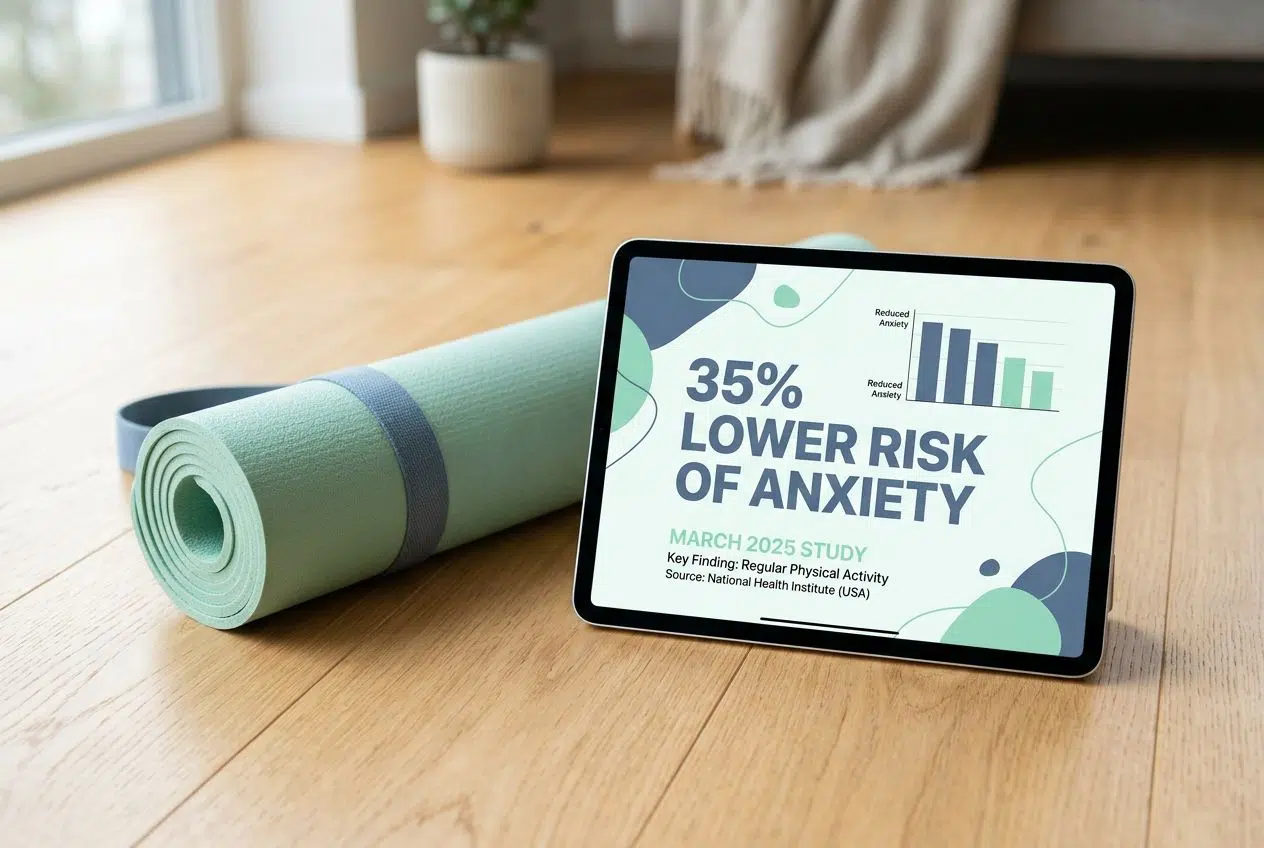
After turning off your screens, move your body. Physical exercise gives weekend worries less room to grow. Your stress melts when you take a brisk walk, try some yoga, or dance in your living room. Exercise sparks happy brain chemicals like endorphins.
“A March 2025 BMC Psychiatry study using US data found that ‘weekend warriors’ who exercise just one or two days a week have a 35% lower risk of anxiety.”
Choose activities that feel simple and fun. Your mind will thank you for each step taken before bedtime rolls in.
Prioritize quality sleep
Good sleep helps your brain and body rest, so you feel less tired or cranky. Try to go to bed at the same time each night. Keep your room dark and cool, as these tricks help you relax faster. Most adults need seven to nine hours of sleep for stronger mental health.
A calm bedtime routine signals your mind that it is time to wind down. People who get regular quality sleep notice fewer signs of anxiety by Monday morning.
When to Seek Professional Help
If your Sunday blues grow heavier, reach out to a mental health expert. You deserve support and a positive mindset.
Recognizing signs of deeper anxiety issues
People feel weekend anxiety in mild ways, but deeper issues often hang around longer. If simple stress relief tricks stop working, daily life feels harder.
The National Institute of Mental Health points out several red flags that show your anxiety might need professional attention:
- Trouble sleeping every single night, not just on Sundays.
- Feeling dread for most days of the week.
- Avoiding friends or frequently skipping work.
- Getting frequent headaches or stomach aches from worry.
Losing interest in things you usually enjoy means your mental health needs more care.
Exploring therapy or counseling options
Spotting deeper anxiety means it is time for extra help. Therapists and counselors guide you through strong stress about Mondays without judgment.
Online therapy has made finding support easier and more affordable than ever. If you are exploring virtual counseling in the US in 2026, here is a quick comparison:
| Platform | Average Weekly Cost | Accepts Insurance? |
|---|---|---|
| BetterHelp | $70 to $100 | No (Financial aid available) |
| Talkspace | Starts at $69 | Yes (Many major plans) |
Most therapy sessions last about 50 minutes once per week. Seeking support shows strength, especially if anxiety takes over your peace of mind.
Wrapping Up
Sunday blues can sneak up fast and make your stomach twist. A steady routine, a bit of exercise, or simple relaxation techniques serve as strong tools against weekend anxiety. Even small changes work wonders for mental health. Dread does not have to ruin every Sunday night. Laughter with friends, mindfulness practices, or writing down three good things from the week refreshes your mindset.
Choose one positive step at a time and stick with it. Mastering The “Sunday Scaries”: How To Beat Weekend Anxiety is entirely possible, and soon, anticipation for Mondays may fade away completely. You have got this!