Are you tired of high power bills and concerned about climate change? You may notice your energy use adds up fast, making a bigger carbon footprint and sending more greenhouse gases into the air.
Burning fossil fuels like coal or natural gas to create electricity fills our skies with pollution. This hurts our health, warms the planet, and uses up precious resources.
Here is a bright fact: Solar panels make clean electricity using only sunlight; they do not produce harmful pollutants or carbon dioxide (CO2). In this guide, you will see how solar energy cuts carbon emissions step by step.
From learning what makes up your carbon footprint to installing solar panels on your roof, every part helps build a greener future for everyone. Want cleaner air and lower bills? Keep reading—you are in the right place!
Key Takeaways
- Solar panels use sunlight to make clean energy. They do not release carbon dioxide or other harmful gases like coal and natural gas do.
- An average home solar system can cut about 200,000 pounds of CO₂ in 25 years. That is the same as planting a small forest.
- Big projects, like College of Lake County’s PV modules, saved over 44,869 metric tons of CO₂ over their lifetime.
- Using solar power with battery storage lets you store extra energy for cloudy days and nights. This means you rely less on dirty power from the electric grid.
- Switching to solar helps save money, lowers pollution, creates local jobs, and keeps the air cleaner for everyone.
Understanding Carbon Footprints

Every step you take, every mile you drive, even every light bulb that glows at home—these actions create a carbon footprint. This footprint shows the total greenhouse gases released from your choices, like driving gasoline cars or using electricity made from burning coal and natural gas.
Fossil fuels such as oil, natural gas, and coal help power cities but also release large amounts of carbon dioxide (CO₂) into the atmosphere. The Intergovernmental Panel on Climate Change shares big news: solar energy creates 20 times fewer emissions over its life than coal does.
An average rooftop solar system can cut about 200,000 pounds of CO₂ pollution in 25 years; that’s like cleaning up the air as much as planting a forest of trees! Even one house covered in solar panels will save several tons of harmful gases each year compared to homes still tied to non-renewable resources.
Reducing fossil fuel use lowers air pollution and slows global warming. Cleaner air means better health for people today—and a safer climate for generations tomorrow. Each small choice adds up fast to help ecosystems breathe easier.
How Solar Panels Help Reduce Carbon Footprints
Solar panels use sunlight to make electricity through photovoltaic cells, skipping the need to burn coal or natural gas. Every time a solar power system runs instead of fossil fuels, greenhouse gas emissions drop.
An average home solar setup can offset about 200,000 pounds of carbon dioxide over 25 years. College of Lake County installed nearly 5,000 PV modules and shaved off more than 44,869 metric tons of CO2 during the system’s life.
That is like taking truckloads of cars off city streets.
Solar battery storage keeps extra renewable energy from bright days ready for cloudy ones or nighttime use. More stored clean energy means less pulling dirty power from the electrical grid.
SOS Children’s Village in Chicago switched to rooftop solar arrays and cut as much pollution as saving roughly 155,266 gallons’ worth of gasoline burning up in engines. Studies say better air quality with less fossil fuel smoke could add two healthy years to lives in major cities across America—talk about a breath of fresh air! Solar technology helps homes inch closer to net-zero energy too; producing what they consume adds up fast against climate change pressures on our planet’s fragile balance.
Steps to Adopt Solar Panels for a Greener Future
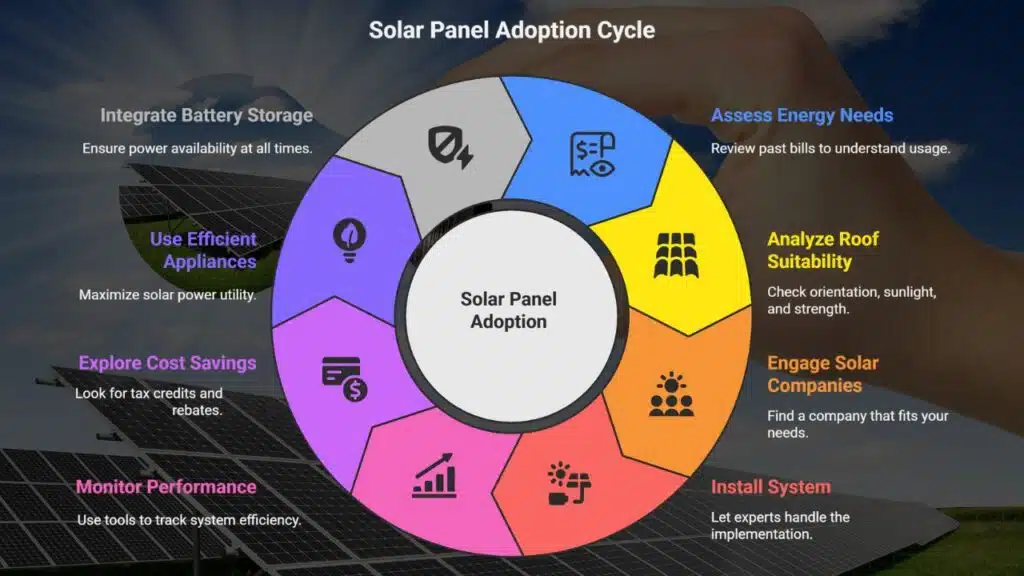
Transitioning to solar panels is a wise decision for both the environment and your finances. It centers around adopting cleaner energy choices that combat climate change. Here’s how to go about it:
- Assess your energy requirements by reviewing past energy bills to understand your power usage.
- Analyze your roof to ensure it is appropriately oriented, receives abundant sunlight, and possesses adequate strength.
- Engage with solar companies to discover one that can align a system with your budget and energy requirements.
- Have your system installed. Once a viable solution is chosen, let the experts handle the implementation.
- Regularly monitor performance through applications or tools created for this task.
- Explore cost-saving opportunities such as tax credits, state rebates, and local utility rebates.
- Use solar power in conjunction with efficient appliances to maximize utility.
- Consider integrating battery storage to ensure power availability, even when the sun isn’t shining.
Implementing these changes facilitates your transition to using less fossil fuel, reducing emissions, and living in a more sustainable manner. Plus, your solar panels will continue their service for 25 years or more! Once retired, they can be recycled rather than contributing to landfills.
These steps are not merely environment-friendly; they also facilitate significant savings over time!
Takeaways
Solar panels make a big difference. They turn sunlight into clean energy without polluting the air. By using solar power, you cut down on carbon emissions and save money too. Plus, they help create local jobs and boost the economy.
Choosing solar is not just smart for your wallet; it’s great for our planet!
FAQs
1. How do solar panels help cut my carbon footprint?
Solar panels use sunlight to generate electricity, skipping fossil fuels like coal or natural gas. This switch slashes greenhouse gas emissions and trims your individual carbon impact.
2. What’s the link between solar energy and climate change?
Solar power is a clean energy source that helps combat global warming by reducing co₂ emissions from traditional electricity production. Using renewable power means fewer greenhouse gases go into the air.
3. Can installing solar panels reduce my home’s reliance on non-renewable energy sources?
Yes, residential solar systems let you produce your own green energy at home. That means less need for finite resources pulled from the grid and more sustainable living for everyone under your roof.
4. Will I see other environmental benefits with a solar panel installation?
Absolutely! Solar technology cuts air pollution since it doesn’t burn fossil fuels or release harmful gases during power generation. Cleaner skies mean a healthier environment for all of us.
5. Are there ways to boost my home’s energy efficiency along with using solar panels?
Pairing solar installation with energy-efficient appliances makes your whole system work better together; it reduces overall electricity consumption so you get more out of every sunbeam.
6. What about incentives? Do tax credits help me go green faster?
Tax credits can lower what you pay upfront for installing residential solar systems; net metering lets you send extra power back to the grid too, making sustainable living easier on both your wallet and our planet’s future.