
Experiencing grief after a significant loss is normal. Whether you’ve lost a loved one, broken up with the partner that you believed was “the one,” or unexpectedly faced a layoff, grief is part of the healing process. There are said to be five stages of grief: denial, anger, bargaining, depression, and finally acceptance.
Going through these stages is a personal journey, and depending on what you’re grieving, it can take months or years to go through these stages. That said, this doesn’t mean that you need to grieve alone.
For some, grief will become so overwhelming that it feels impossible to carry on with day-to-day tasks. Something that you once loved doing, such as going out on a walk with your dog or meeting up with friends for dinner, now seems unappealing. While it’s important to take care of yourself and be in tune with your thoughts and feelings, it’s also important to realize when you need outside help.
What Are Some Signs of Complicated Grief?
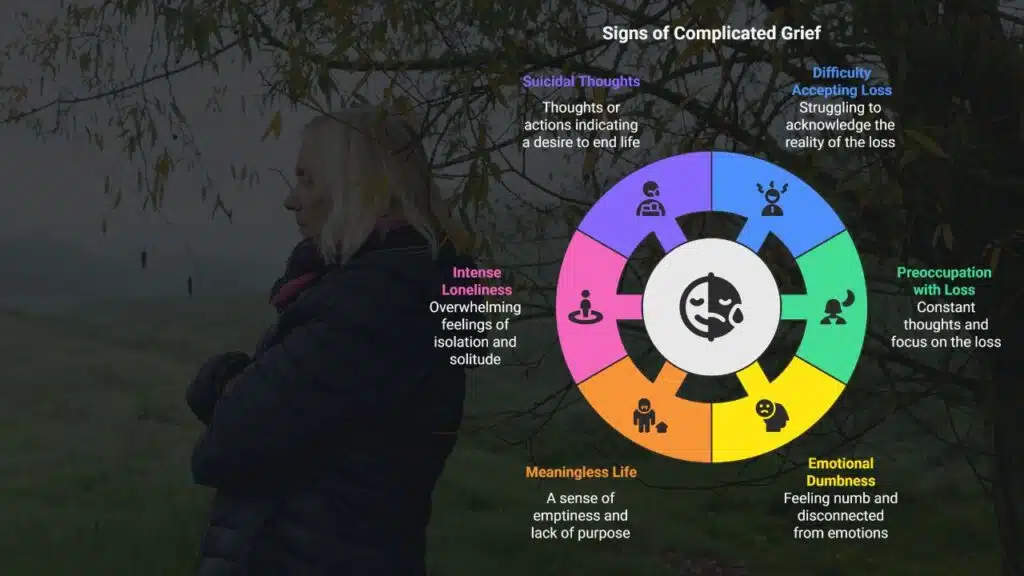
Complicated or prolonged grief is more severe and lasts longer than typical grief. Those experiencing this type of grief may have an intense yearning for what once was. They may feel deep emotional pain and have difficulty accepting the loss. Instead of processing that this is the new reality, the individual may be avoiding the situation altogether and pretending that it didn’t occur in the first place.
Some recognizable signs of complicated grief include:
- Difficulty accepting or disbelief about the loss
- Preoccupation with the loss, especially if the loss is a death
- Emotional dumbness
- Feeling that life is now meaningless
- Intense loneliness
- Suicidal thoughts or behaviors
While grief looks different for everyone, these signs of complicated grief vary from typical grief after a loss. Depression is a common symptom; however, with complicated grief, the feelings are more about intense yearning and preoccupation as opposed to feeling down and blue. Substance abuse disorder can also be triggered by complicated grief, in which case, inpatient treatment for substance abuse may be necessary. Post-traumatic stress disorder (PTSD) usually shows up as a sense of fear and powerlessness related to the event, rather than emotional pain experienced during complicated grief.
Treatment for Complicated Grief
There are several treatments available for complicated grief. Some of these techniques are more structured in terms of the protocol or length of time. However, each approach can be used individually or concurrently, depending on the patient’s specific needs.
Cognitive Behavioral Therapy (CBT)
CBT is a type of therapy that challenges negative thought patterns. This type of therapy is specifically helpful for complicated grief as it helps individuals process their thoughts and develop healthier coping mechanisms. CBT will help someone accept the loss, adapt to it, and look to the future of what life can look like now.
CBT can be conducted by a licensed mental health professional, including psychiatrists, licensed therapists, psychologists, and clinical social workers. There is no specific CBT certification or license, yet many of these professionals will be experienced in this specific type of therapy. Ask about their experience in CBT in regards to complicated grief.
Interpersonal Therapy (IPT)
IPT focuses on improving relationships and social interactions. It’s a type of short-term psychotherapy, lasting around 12 to 16 weeks. This type of therapy is known to help those with complicated grief, as well as anyone dealing with life transitions, isolation, or social disputes.
Unlike CBT, therapists received specific training for IPT. Psychologists, psychiatrists, social workers, and even marriage and family therapists can receive this type of training. Look for a therapist with an IPT training license or certificate, and ask about their experience in dealing specifically with complicated grief.
Supportive Psychotherapy
Another type of therapy, supportive psychotherapy, focuses on emotional support, validation, and encouragement in helping individuals cope with their current life situation. In this practice, the therapists will concentrate on creating a safe, non-judgmental atmosphere for the patient to fully express and process their emotions. The main goal of supportive psychotherapy is prioritizing symptom relief, enabling patients to get back to the routines and behaviors that they thoroughly enjoy.
Supportive psychotherapy can be conducted by therapists, social workers, psychiatrists, psychologists, counselors, or primary care physicians. It’s meant to improve coping skills and may be used in conjunction with other therapies for well-rounded support and care.
When to Seek Support for Complicated Grief
If you or a loved one is experiencing intense, persistent grief, then it’s a good sign that you need to seek expert help. If you are experiencing prolonged difficulty with basic functioning, such as loss of appetite, insomnia, or socializing, then you may also need support. Any thoughts or feelings of suicide or self-harm should be an immediate alarm for medical attention. Call or text the Suicide and Crisis Lifeline (call or text 988) for free and confidential help. You’ll be connected with a counselor who can assist in getting you help and/or direct you to the right specialty service.
Grief is a powerful emotion. Don’t judge how you’re feeling or feel ashamed for how long your symptoms persist. What you’re going through is valid, and you don’t need to validate your thoughts. Know that you are not alone in your struggles, and help is available to you.