
Gaming has evolved from being purely entertainment-focused to offering deeply personalised experiences. Thanks to data and machine learning, games now adapt to you, your preferences, playstyle, and habits. It’s not just about playing anymore; it’s about interacting with a world that learns from you and tailors itself to your gameplay.
The digital entertainment landscape is changing, whether it’s AI anticipating your next move or online casinos offering personalised recommendations. Games are becoming more intelligent, immersive, and persistent, offering experiences that feel personal, predictive, and always in motion.
Let’s explore how gaming is transforming.
The Rise of Personalised Gaming Experiences
In today’s gaming world, personalisation isn’t just a luxury. It’s a game-changer. Thanks to the power of data collection and player behaviour analysis, games can now adjust to our individual preferences, making the experience more immersive and enjoyable than ever before.
For example, in the U.S., mobile game players often see personalised content recommendations based on their in-game actions, from their challenges to the items they collect.
Similarly, in Australia, popular gaming platforms track how players interact with different game modes, offering in-game suggestions and adjusting the difficulty level based on their skill set.
Canada is also embracing this trend, with Ontario online casinos leading the charge in using data to customise gameplay.
These platforms employ algorithms that analyse unique behaviour patterns to recommend the best games for you, provide tailored bonuses, and modify the user interface to fit your preferred style of play. For instance, if you prefer playing fast-paced slots, you might get recommendations for similar games and bonuses aligned with your typical gameplay patterns.
This level of personalisation boosts entertainment value and keeps players more engaged.
Gaming is becoming more adaptable and player-specific, whether by delivering the right level of challenge or offering in-game rewards. This shift is taking digital entertainment to a whole new level.
Predictive Gaming—How Data Drives Anticipation
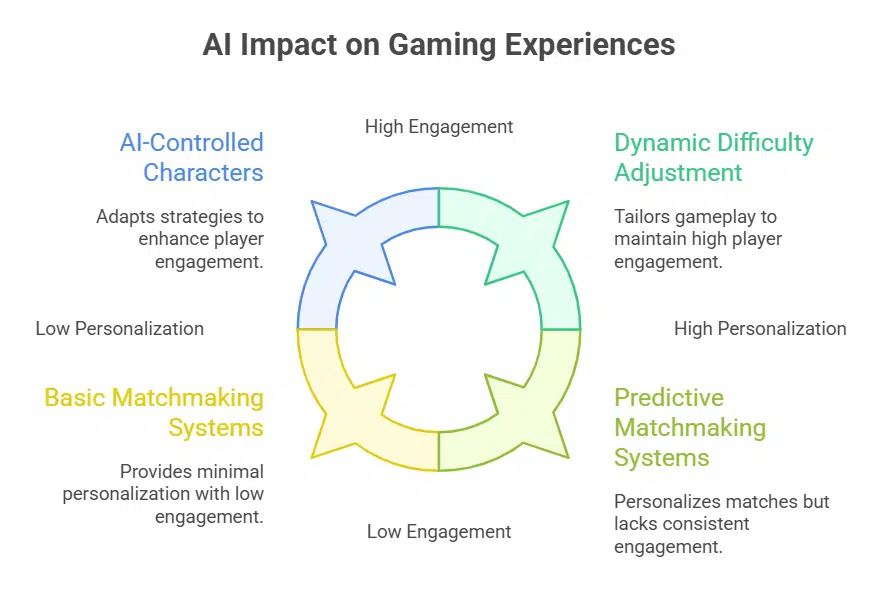
Modern games use machine learning algorithms to transform player experiences. AI can predict player behaviour and adjust gameplay by analysing data like session duration, click patterns, and in-game purchases. This means games can become more challenging or rewarding based on individual play styles.
For example, AI-controlled characters in games like Dark Souls learn from your actions, adjusting their strategies to match your skill level. This creates a dynamic and engaging experience where the game feels alive and responsive.
Similarly, dynamic difficulty adjustment systems monitor your performance in real time, tweaking aspects of the game to keep you engaged without causing frustration. This approach ensures that players can enjoy the game at their own pace, no matter the skill level.
In PvP games, predictive matchmaking systems analyse player data in multiplayer settings to create balanced teams, enhancing the overall gaming experience. This enhances fairness while maintaining engagement by matching players with their skill bracket.
Games are becoming more immersive, responsive, and personalised by utilising machine learning, providing experiences catered to each player’s individual interests and skills.
Persistent Gaming Worlds—The Impact of Continuous Play
In digital entertainment, persistent gaming worlds have revolutionised how we experience virtual environments. These virtual spaces continue to evolve and exist even when players are offline, creating a dynamic and ever-changing experience.
Massive Multiplayer Online Role-Playing Games (MMORPGs) like World of Warcraft and battle royale games like Fortnite have embraced this model.
In World of Warcraft, players’ actions and decisions have lasting effects on the game world, influencing quests, storylines, and the in-game economy. Similarly, Fortnite features a persistent world where events, seasons, and player interactions continuously shape the game’s landscape.
This persistence fosters a deeper connection between players and their digital worlds. It enhances the sense of accomplishment as players see the tangible results of their efforts and decisions over time. It also encourages ongoing engagement as the world evolves and presents new challenges and opportunities.
Persistent gaming worlds enrich the gaming experience by providing a living, breathing universe that responds to player actions, making each session unique and meaningful.
The Future of Gaming is Personal, Predictive, and Persistent
Gaming has transformed into a dynamic, personalised experience that accommodates player preferences. From AI predicting your moves to worlds that carry your progress across sessions, gaming has become more innovative and immersive than ever.
As gaming platforms leverage these innovations, the gaming experience becomes not just about playing. It’s about engaging in a world that learns and evolves with you—one that adapts to your habits, anticipates your preferences, and responds in real time to keep the experience fresh, exciting, and uniquely yours. The future of gaming is here, and it’s tailored to you.