
Gamification of savings means adding game-like features to saving money. This idea is simple, yet powerful. We use points, badges, and leaderboards to turn saving into a fun challenge. Many apps like Qapital, Acorns, Long Game, and SavingsQuest already use this approach. Research shows these tools work well; people save 20 percent more with them. In fact, using fun game methods can boost our saving habits by 22 percent.
Banks and fintech companies notice big benefits too. Gamified savings help keep customers loyal and teach helpful money skills. It makes the whole process feel less stressful and more enjoyable for everyone, kids or adults alike.
Some say making finance a game cannot build real money smarts… but success stories show otherwise. There are even cost-saving effects for businesses that adopt gamified savings tech.
As we start to see new ways technology shapes how we manage cash, like AI in games, the impact keeps growing. Get ready as we explore if turning saving into a game really works!
What is Gamification of Savings?

Gamification of savings means we make saving money feel like playing a game. We use fun tools and tricks to keep us motivated and engaged. This makes personal finance less boring and more rewarding.
Definition and concept
Gamification of savings takes ideas from games and blends them into personal finance. We see this in digital banking and savings apps that use points, badges, leaderboards, or rewards.
These tools make managing money feel fun and less stressful. This concept often relies on “Prize-Linked Savings” (PLS). This is a method legal in many US states thanks to the American Savings Promotion Act. It gives you chances to win cash prizes just for depositing money.
Many users notice real changes with gamified saving tools. Research finds game mechanics can help users save 20 percent more on average and improve habits by 22 percent compared to traditional methods.
These interactive features encourage us to set goals and track progress with visuals like progress bars or charts. We can also compete on leaderboards and earn incentives for reaching milestones. All of this supports better financial planning and healthy savings behavior.
Key elements: points, badges, leaderboards, and rewards
Turning savings into a game has changed how we think about money. Game features drive us to save more and stay motivated.
- Points build excitement by letting us track every dollar saved. Each small deposit earns points, making progress clear and rewarding.
- Badges mark important moments. You might earn a “Streak Master” badge for saving five weeks in a row. These digital trophies feel like real achievements and keep us wanting more.
- Leaderboards add friendly competition to the mix. We can compare our progress with friends, family, or other users on apps like Qapital and Truist Long Game. This healthy rivalry motivates many to stay disciplined.
- Rewards offer something extra beyond numbers on a screen. Sometimes users unlock gift cards, discounts, or boosted interest rates after hitting targets. A 2024 Deloitte study found that banks using these behavioral rewards saw customer engagement rise by up to 35%.
- Visual Progress displayed using bars or charts taps into behavioral finance tricks. This keeps us engaged while managing our personal finances.
- Financial literacy gets a boost because these activities make learning about budgeting and digital banking fun. It helps people of all ages gain real-world skills without stress.
- Companies find value too. Adding games to training tools or banking apps can result in cost savings and stronger customer loyalty as people return to play again and again.
- Experts say introducing playful elements into retirement planning helps overcome stress or negative emotions tied to long-term goals.
Using these strategies turns financial planning from a chore into something we look forward to. We do it one badge, point, leaderboard spot, or reward at a time.
How Gamification Works in Saving Money
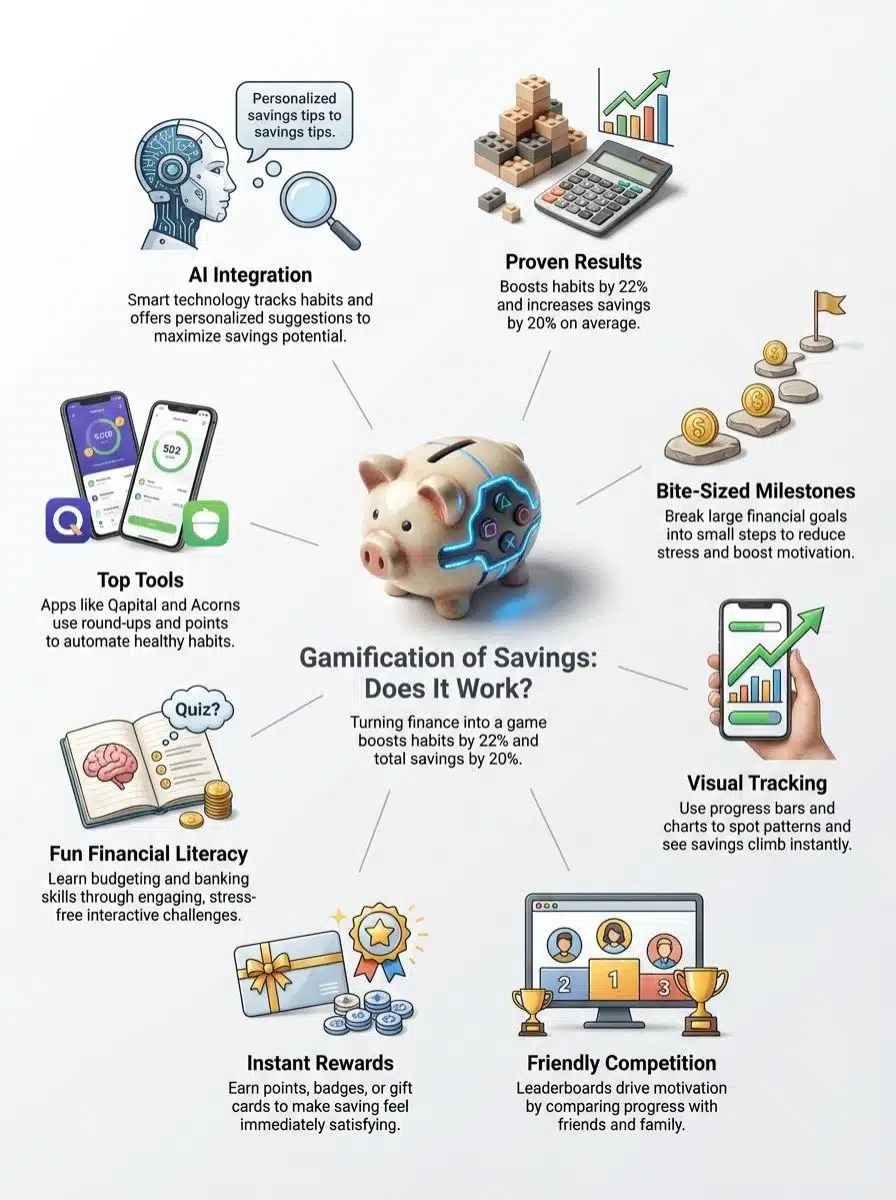
We see gamification turn saving into a more active and fun process. These tools use simple tricks to keep us excited about reaching our money goals.
Breaking financial goals into small, achievable milestones
Setting big savings goals can feel challenging. Breaking down these goals into small, achievable milestones can boost our motivation and make saving less stressful.
“The Goal Gradient Effect suggests that as we get closer to a goal, we work faster to reach it. Savings apps use this by showing you how close you are to the next level or badge.”
- Dividing a financial target into smaller steps helps us focus on what we need to do next. We stop feeling lost in the big picture.
- Many successful digital banking apps, such as Qapital and Acorns, use this approach. They show progress bars or colorful charts that track each milestone we reach.
- Research shows gamification boosts saving habits by 22%. Users stash away 20% more savings on average when app features break up goals into bite-sized tasks.
- Earning points or badges for reaching milestones makes it fun. It increases engagement with the process of personal finance management.
- Leaderboards encourage friendly competition among users. This helps maintain momentum as we hit each mini goal on our journey to larger targets.
- Setting clear benchmarks turns a dull budgeting routine into an enjoyable challenge. It keeps us excited about tracking our growth.
- Companies offering retirement planning tools now include milestones to help users reduce negative emotions about saving for the future. This makes it easier to stick with financial planning.
Using visual tools like progress bars and charts
Visual tools turn saving into a more engaging experience for us all. Tracking our financial goals becomes clear and simple with these tools. For example, as we set aside money each week, we get to see our savings climb higher on the bar.
This small burst of achievement keeps us motivated. We call this the “visual feedback loop.”
Research shows using such visual aids can boost saving habits by about 22 percent. Many apps use progress bars to break big goals into smaller steps. We see results faster, which makes us want to stick with the plan.
Charts also help us spot patterns in our spending or saving behavior easily. This is helpful for anyone working on their budgeting skills or aiming to improve financial literacy through digital banking features.
Encouraging friendly competition through leaderboards
Leaderboards can make saving feel like a game among friends, family, or coworkers. We see how tracking our progress next to others pushes us forward. With leaderboards in apps like Acorns, even small steps become more exciting because we want to move up in rank.
Research shows that such competition helps many people save about 20 percent more on average. The drive to climb higher is strong when we get live updates and weekly results.
This feature does not just boost engagement; it builds healthy savings habits too. Friendly competition lowers stress around financial planning while encouraging users of all ages to learn smarter money skills.
When banks or digital platforms use leaderboards, customers often show greater loyalty and improved financial literacy over time. Such motivation works well for both adults trying to budget and younger savers starting out with personal finance goals.
Popular Gamified Savings Apps
We can now find many apps that turn saving money into a fun game. These tools use different tricks to help us stay on track with our savings goals. Some even feel like they make banking less boring.
Here is a quick comparison of the top options available in 2026:
| App Name | Best For | Key Cost (Est.) | Gamification Feature |
|---|---|---|---|
| Qapital | Goal-oriented savers | Starts at $3/mo | “Rules” like saving when you walk or post on social |
| Acorns | Hands-off investors | Starts at $3/mo | Visual “Round-Ups” and “Earn” rewards |
| Truist Long Game | Prize seekers | Free (with account) | Play games to win cash prizes up to $1M |
| SavingsQuest | Credit Union members | Varies by bank | Badges and “fitness tracker” style savings |
Qapital
Qapital stands out as a savings app that uses gamification to help us build better money habits. The app lets us set personal saving goals and apply simple rules. You can round up spare change from purchases or move small amounts when you do daily tasks.
One of their best features is the “Payday Divvy.” This tool automatically splits your paycheck into different buckets for bills and savings the moment it lands.
We can track our progress with colorful charts and get real-time feedback. This keeps the process fun and easy to follow. With Qapital, earning points and badges rewards our saving behaviors. Its visual tools make it simple to see how close we are to reaching each goal.
According to research, apps using these game-like features boost saving habits by 22 percent on average. We end up saving about 20 percent more compared to not using them at all.
Acorns
Acorns uses gamification to help us build savings through everyday spending. The app rounds up each purchase we make, then moves the spare change into an investment account. We watch our progress grow using simple charts and graphs.
Users earn badges for reaching financial goals and staying consistent with their deposits. This makes saving feel like a rewarding game. A standout feature is “Acorns Earn,” which gives you bonus investments when you shop at thousands of partner brands.
Many people find Acorns easy to use. It is great if they want a hands-off approach to personal finance. The Bronze tier starts at just $3 per month, making it accessible for beginners.
Reports show that apps with these features boost saving habits by 22 percent. They also increase total saved amounts by about 20 percent on average when compared to traditional methods.
Long Game (Truist Long Game)
Long Game uses gaming features like points, rewards, and leaderboards to make saving feel more fun. It is now part of Truist Bank and known as “Truist Long Game.” We play mini-games with chances to win cash prizes or earn coins just for reaching our personal finance goals.
This way, even small deposits can bring instant wins and boost motivation. For example, logging a savings deposit could let us spin a digital wheel or unlock a new badge.
Thanks to this approach, we see higher engagement rates. Research shows gamification boosts savings habits by 22 percent and users save about 20 percent more through game mechanics.
Truist Long Game helps teach financial literacy while keeping us interested in building better habits over time. It shows how major banks are adopting game mechanics to keep customers coming back.
SavingsQuest
SavingsQuest turns our savings plan into a fun game. We reach milestones, earn points, and collect badges as we meet each goal. Visual progress bars let us track every step, which makes saving feel less stressful and more rewarding.
This tool is often offered through credit unions and smaller banks. It acts like a “fitness tracker” for your money.
Studies show that apps like SavingsQuest can boost saving habits by 22 percent. Users save about 20 percent more on average with these gaming features in place.
The reward system keeps us motivated to stick with our goals. Instead of feeling bored or overwhelmed by financial planning, we enjoy seeing our efforts pay off right away through new levels or prizes inside the app.
Benefits of Gamifying Savings
Gamified saving tools grab our attention and keep us interested longer. We notice ourselves making smarter money choices, step by step, as these features fit into our daily routines.
Increased engagement and motivation
Points, badges, and leaderboards change how we think about savings. They spark excitement and keep us interested in money goals that might feel boring otherwise. With features like progress bars or reward systems found in apps such as Qapital and Truist Long Game, we stay active with our personal finance routines.
Research shows that introducing game elements boosts saving habits by 22 percent. People using these digital banking tools save 20 percent more compared to those who do not use such features.
Turning financial planning into a fun challenge can reduce stress. It helps us track our success and push us to stick with our plans longer. This new approach even helps banks build customer loyalty while raising financial literacy for all ages.
Development of consistent saving habits
Gamification makes saving money fun, which motivates us to stay on track with our financial goals. Using points, badges, and progress bars helps break big savings targets into smaller, easy-to-reach steps.
“Consistency is the key to wealth. Gamified apps use ‘streaks’—like saving $5 every day for a month—to turn a one-time action into a permanent habit.”
Research backs this up. Apps with game elements help people boost their saving habits by 22%. Users save about 20% more on average compared to traditional methods.
Seeing our achievements unlock digital rewards or move us higher on a leaderboard gives real satisfaction. It encourages us to keep going.
Many gamified apps like Qapital use streaks, challenges, and short-term wins that nudge users toward regular contributions. These tools help turn saving from something we might put off into an enjoyable part of daily life.
Over time these small actions add up. Consistent effort can build lifelong habits that improve personal finance skills and provide greater security for the future.
Enhanced financial literacy
Game-like savings tools help us learn money skills without stress. Apps like Qapital, Acorns, and SavingsQuest use points, rewards, and friendly competition to build our knowledge in budgeting and financial planning.
Fun features such as badges or progress bars keep users excited about tracking goals. At the same time, they teach the basics of personal finance.
Research shows that game mechanics lead to a 22% boost in saving habits. With these tools, users save 20% more on average. Adding leaderboards and challenges keeps things interesting and also improves confidence with banking tasks.
Many community banks have found that using rewards helps customers understand complex ideas like interest rates or retirement plans. These digital solutions are shifting how we approach financial literacy today.
Challenges of Gamification in Savings
We can face some tough spots if we rely only on rewards to save money. Some of us may not find certain games or challenges helpful at all. It pays to keep an open mind.
Over-reliance on rewards for motivation
Overusing rewards in gamification can weaken genuine motivation to save. If users only stash money for prizes, they may lose interest once incentives disappear.
Studies show that gamified apps boost saving habits by 22 percent when rewards play a big role. Yet, this approach might not help us learn real financial skills or make smart choices about our personal finance goals.
- Relying mainly on badges or points risks making saving feel like a quick game instead of an important habit for life.
- We could miss out on building lasting financial literacy if we just chase the next small prize.
- Subscription fees can eat into your returns. Paying $3 a month on a small balance might cost you more than the interest you earn.
For lasting change in how we manage money through digital banking tools, it helps to focus on engagement. We must also prioritize learning key budgeting lessons, not just collecting gifts along the way.
Limited effectiveness for certain user groups
Gamification of savings does not work for every user group in the same way. Some people do not find points, badges, or digital rewards as exciting as others. For example, older adults may prefer traditional financial planning tools instead of digital banking apps that turn saving into a game.
People with low digital literacy can feel left out by these savings apps. They might struggle to keep up with frequent reminders or flashy progress bars.
Some users only save when they get a reward or prize. This means their motivation drops once those incentives go away. Research shows gamified tools help many people boost savings habits by 22 percent. It can lead to customers saving 20 percent more on average.
Still, if the goal is long-term personal finance growth and financial literacy gains, we need different approaches. We must consider those who do not connect well with gaming elements in money management apps like Qapital or Acorns.
Does Gamification Actually Work?
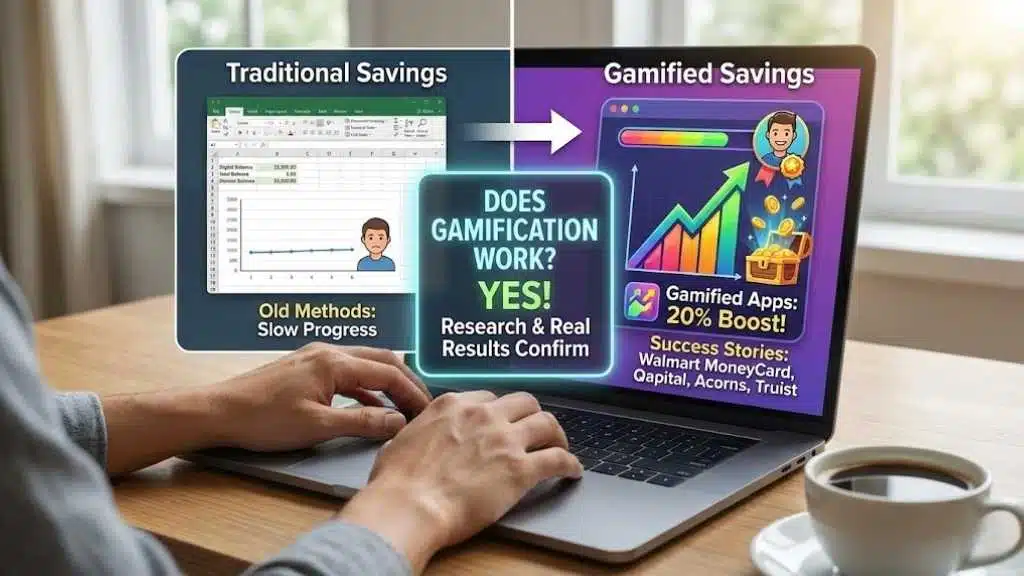
We see more people using saving apps that use game-like features. Some of us may ask if these tools really help us save, or if it is just fun with no real impact. Let’s find out what the facts say next.
Research findings on savings behavior improvements
Research points to strong results for gamification in savings. Studies show that using rewards, badges, and leaderboards helps boost saving habits by 22 percent. On average, people using these tools save about 20 percent more than those who do not have game mechanics in their financial planning apps.
Qapital and Acorns both use playful progress bars and point systems. This makes the process feel like a challenge instead of a chore.
Banking apps with game features report higher customer loyalty too. Community banks see better financial literacy among users who engage with fun challenges or interactive quizzes on personal finance basics.
These improvements are not limited to short-term gains. Well-designed games can also reduce money stress and build confidence with budgeting. They even encourage steady saving for retirement goals over time.
Success stories and real-world examples
Gamification makes saving money feel more like a game and less like a chore. Many apps and tools show how this approach leads to real results for people of all ages.
- Walmart MoneyCard Prize Savings has been a massive success. Customers have saved over $2 billion in the “Vault” to earn entries into monthly cash prize drawings.
- Qapital users boosted their saving habits by 22 percent since the app launched its gamified features. It gives people easy ways to set goals and earn points for small wins.
- Acorns uses visual progress bars and round-up games. Users save an average of 20 percent more than before they joined, showing how seeing your progress can keep you on track.
- Truist Long Game rewards players for hitting savings milestones with instant prizes. This helps people stay engaged over time while also building emergency funds.
- SavingsQuest partners with credit unions to help members learn about budgeting through fun challenges. Participants report higher motivation levels and stronger savings behaviors after using the app’s reward system.
- Some employers introduce gamified retirement planning programs. Employees who join these games often report lower stress and greater confidence managing their money.
These stories show us that turning saving into a game can boost engagement. It helps us reach our financial goals in ways that old-fashioned methods do not always achieve.
Future of Gamified Savings
We see new tech making saving games smarter and more personal every year. These upgrades can keep us curious and eager to learn about money in fun ways. Maybe they will even teach skills we never expected from a banking app.
Integration with advanced technology like AI
Artificial intelligence is making gamified savings smarter and more personal. Financial apps like **Cleo** and Qapital use AI to track our habits. They learn our preferences and suggest better ways to save.
Cleo, for example, is famous for its “roast mode.” The AI will jokingly make fun of your spending habits if you go over budget. This creates a fun, social-media-style interaction that keeps users paying attention.
AI can boost user engagement by suggesting new challenges or offering incentives at just the right moment. In fact, research shows that gamification boosts saving habits by 22 percent. Users save about 20 percent more when digital game mechanics are paired with data-driven suggestions.
This smart technology also supports financial literacy. It shows us patterns in how we manage money and helps us reach goals faster than ever before.
Potential for expanded financial education
Gamification opens up new ways to learn about money. We see apps using points, badges, and rewards to teach smart financial planning. Features like progress bars and leaderboards make the learning process fun and easy to follow.
According to data, users take in more information this way. A 22% boost in saving habits happens when game mechanics are present.
More banks now adopt these methods too, looking for cost savings and stronger customer loyalty. Tools built around games do not just help us save; they also build our confidence with budgeting. They help us set clear goals and tackle real-world problems like stress over retirement planning.
As gamified tools grow smarter with technology such as AI, we expect even richer lessons in personal finance for both young savers and adults alike.
Final Thoughts
We explored how adding game-like features, such as points, rewards, and leaderboards, can help us save more money. These methods break our goals into small steps we can reach.
Studies back this up; users often save about 20% more with gamified tools in place. With US personal savings rates hovering around 3.8% in 2025, these tools are more important than ever. Setting up these systems is simple with the many apps out now.
Have you thought about which tools might fit your saving style? Strengthening healthy habits today could mean stronger finances tomorrow.