The global energy system is moving through a once-in-a-century transformation. Fossil fuels are still dominant, but clean technologies are no longer niche. Solar, wind, advanced storage, and digital tools are reshaping how electricity is produced, moved, and used. For governments, investors, and households, the big question is no longer if the shift will happen, but how fast and who will benefit.
At the heart of this transition are a new wave of clean energy innovations. Some are already commercial. Others are in pilot stages. Together, they promise cheaper power, greater energy security, and a real chance to cut greenhouse-gas emissions while creating new industries and jobs.
Let’s explore 12 game-changing energy innovations that are shaping tomorrow’s power system. It focuses on real technologies, not science fiction, and on practical implications for economies and everyday life.
Why Energy Innovation Matters More Than Ever
Energy is the foundation of modern life. It powers homes, factories, hospitals, data centres, and transport networks. When energy becomes cleaner, cheaper, and more reliable, the benefits spread across entire societies.
Three powerful forces are pushing innovation forward:
- Climate pressure – Governments and companies have set net-zero goals, and they need concrete pathways to reach them.
- Energy security – Recent price shocks and supply disruptions showed how risky dependence on a few fossil-fuel suppliers can be.
- Digital demand – Data centres, AI, electric vehicles, and smart devices are increasing electricity demand and making grid management more complex.
The result is a global search for game-changing energy innovations that can decarbonise power, industry, buildings, and mobility without sacrificing growth.
How These 12 Technologies Were Chosen
Not every new idea deserves the label “revolutionary”. This list focuses on innovations that meet three tests.
- Impact – They can significantly cut emissions or transform how energy systems work.
- Scalability – They can plausibly reach large markets, not just small pilot projects.
- Timing – They matter in this and the next decade, not only in a far-off future.
The lens is global. Many examples come from Europe, North America, and Asia. But the focus always returns to what these clean energy innovations could mean for developing economies and the wider Global South.
1. Next-Generation Solar: Perovskites, Tandem Cells, and Vertical Farms
Solar power has been the flagship of the renewable energy surge. Costs have fallen dramatically, but the underlying technology is still evolving fast.
Perovskite and tandem solar cells are at the centre of the next wave. Perovskites are a family of materials that can absorb light very efficiently. When combined with conventional silicon in “tandem” cells, they can convert more sunlight into electricity than standard panels.
At the same time, solar is breaking out of the rooftop:
- Building-integrated photovoltaics (BIPV) turn facades, skylights, and windows into generators.
- Transparent and semi-transparent PV make it possible to harvest light from glass surfaces in offices and homes.
- Vertical and roadside solar farms line highways, rail corridors, and city walls where land is scarce.
For dense urban regions, especially in Asia and Europe, these advanced solar technologies offer a way to expand renewable generation without needing vast open spaces.
Challenges remain. Perovskite cells must prove long-term durability and withstand harsh weather. Recycling and raw-material supply chains also need attention. Even so, solar is evolving from flat blue panels into a flexible, high-efficiency ecosystem.
2. Advanced Wind: Floating Offshore and High-Altitude Designs
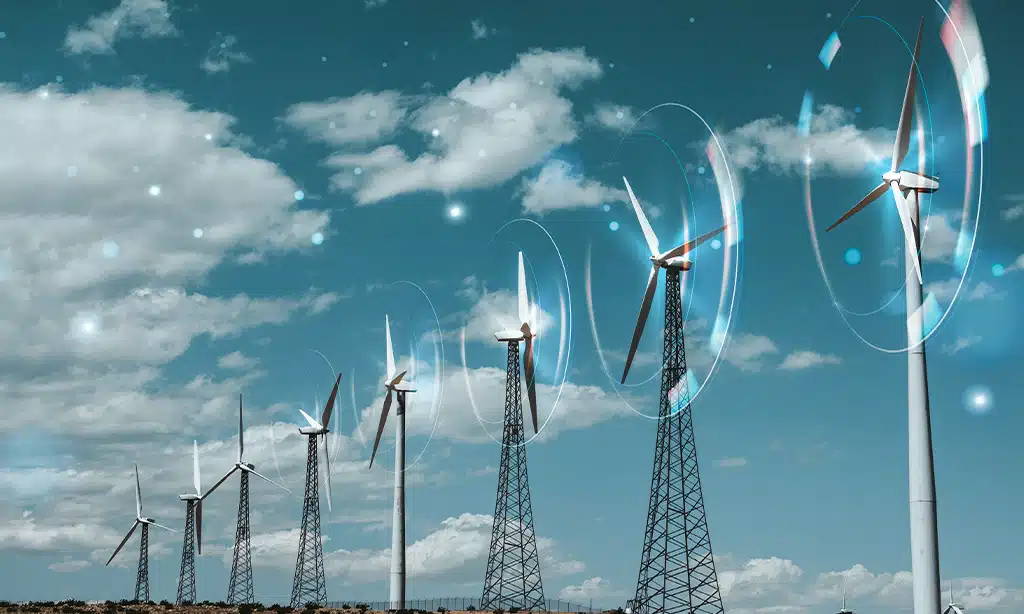
Onshore wind is now a mainstream power source in many countries. The frontier has shifted offshore, where wind speeds are stronger and more stable.
The big leap is floating offshore wind. Traditional offshore turbines stand on fixed foundations in relatively shallow waters. Floating platforms, by contrast, can be anchored in deep seas where some of the world’s best wind resources lie. This opens up vast new areas near major coastal cities.
At the same time, engineers are exploring high-altitude and airborne wind systems. Kites, tethered drones, and other devices can fly higher than conventional turbines, tapping strong winds with less material.
These next-generation energy technologies could be especially important for coastal nations with limited land and strong opposition to onshore turbines. Their main obstacles today are cost, port infrastructure, specialised vessels, and complex supply chains. But early commercial projects suggest that learning curves and scale can push costs down over time.
3. Long-Duration Energy Storage and Next-Gen Batteries
Solar and wind are intermittent. They need partners that can store energy when the sun sets and the wind drops. This is why long-duration energy storage is emerging as one of the most strategic clean energy innovations.
The familiar lithium-ion battery is being joined by a new generation of storage technologies:
- Solid-state batteries promise higher energy density and better safety for electric vehicles and grid use.
- Sodium-ion batteries use more abundant materials, offering a cheaper alternative for stationary storage.
- Flow batteries store energy in liquid electrolytes that can be scaled up simply by using larger tanks.
- Iron-air and zinc-air systems aim to deliver very low-cost storage for many hours or even days.
- Gravity, compressed-air, and pumped-hydro concepts offer mechanical ways to store electricity at scale.
Long-duration storage smooths out the variability of renewable power and reduces reliance on gas peaker plants. It can also help island grids and remote regions rely more on local renewables.
Costs, safety, lifetime, and recycling remain central questions. But as manufacturing expands and standards improve, advanced storage will sit at the core of the future of energy.
4. Green Hydrogen and E-Fuels for Heavy Industry
Some sectors are difficult to electrify directly. Steelmaking, cement, chemicals, shipping, and aviation require high-temperature heat or dense fuels. Here, green hydrogen is emerging as a crucial tool.
Green hydrogen is produced when water is split into hydrogen and oxygen using electricity from renewables. If that electricity is clean, the hydrogen can be nearly emissions-free.
This hydrogen can then:
- Replace coal in steelmaking.
- Provide heat and feedstock for chemical plants.
- Be converted into e-fuels for ships and aircraft.
New projects are appearing in Europe, the Middle East, Australia, Latin America, and parts of Asia, often designed as export hubs for low-carbon fuels.
The potential is large, but so are the obstacles. Electrolysers are still relatively costly. Transporting and storing hydrogen safely at scale is complex. Certification schemes must prove that hydrogen is genuinely low-carbon. Policy support, infrastructure, and clear long-term demand signals will decide whether green hydrogen remains a niche or becomes a backbone of the industrial transition.
5. Advanced Nuclear Fission: SMRs and Microreactors
Nuclear power divides opinion, yet it stays in the conversation because it can provide reliable, low-carbon baseload electricity. The new interest centres on small modular reactors (SMRs) and microreactors.
Instead of giant custom-built plants, SMRs use smaller designs manufactured in factories and assembled on site.
In theory, this can:
- Reduce construction times and cost overruns.
- Improve safety through passive cooling systems.
- Allow nuclear units to serve smaller grids, industrial clusters or remote communities.
Microreactors go further, with very small units that can support mining operations, islands, remote bases, or even large data centres.
These advanced designs are still moving through licensing processes and demonstration phases. Upfront costs, waste management, and robust regulation remain key concerns. But if SMRs deliver on their promises, they could complement renewables and storage in a low-carbon power mix, especially in countries that already have strong nuclear governance.
6. Nuclear Fusion: Chasing the “Artificial Sun.”
While advanced fission is closer to market, nuclear fusion remains the long-term prize. Fusion works by fusing light atomic nuclei under extreme heat and pressure, releasing large amounts of energy with very little long-lived radioactive waste.
Recent years have seen:
- Longer and more stable plasma runs in experimental reactors.
- Improved superconducting magnets and materials.
- A surge in fusion start-ups is pursuing different designs, from tokamaks and stellarators to laser-driven concepts.
Fusion is often presented as the ultimate “game-changing energy innovation”. The reality is more nuanced. Fusion is unlikely to make a large commercial contribution in the immediate future. But if current progress continues, it could start to supplement other clean energy sources in the middle of the century.
For now, fusion is a powerful symbol of how far researchers are willing to push technology in search of abundant, clean power.
7. AI-Powered Smart Grids and Digital Energy Systems
As renewables and electric vehicles spread, electricity grids are becoming more complex. They must handle two-way flows of power, millions of devices, and new patterns of demand. This is where AI-powered smart grids come in.
Artificial intelligence and advanced analytics can:
- Forecast solar and wind output more accurately.
- Predict demand peaks and optimise dispatch.
- Detect faults before they cause outages.
- Coordinate charging for EVs and operation of home batteries.
Utilities are starting to build digital twins of their networks – virtual replicas that simulate how the grid behaves under different conditions. This allows better planning of upgrades and helps operators prepare for extreme weather, cyber-risks, and new loads such as data centres.
These next-generation energy technologies also raise questions. Greater digitalisation brings cybersecurity challenges. The use of customer data requires strong privacy protections. Regulators, engineers, and software firms will have to work together to ensure that AI strengthens, rather than weakens, energy systems.
8. Vehicle Electrification and the Vehicle-to-Grid (V2G) Revolution
Transport is another critical front of decarbonisation. Electric vehicles are already transforming urban mobility and personal transport. But their role can go beyond simply replacing petrol and diesel cars. With vehicle-to-grid (V2G) and broader vehicle-to-everything (V2X) technologies, EVs become mobile storage units.
When connected to bidirectional chargers, they can:
- Feed electricity back into homes during peak times or outages.
- Support local grids in balancing supply and demand.
- Provide backup power for schools, hospitals, depots, or offices.
Fleets – buses, delivery vans, taxis, corporate vehicles – are likely to be early V2G adopters because their charging patterns are predictable and they often park at central depots.
To unlock this potential, energy and transport planners need:
- Dense and reliable charging networks.
- Interoperable standards for chargers, vehicles, and software.
- Tariff structures that reward smart charging and discharging.
Equity matters too. Policy must ensure that the benefits of EVs and smart charging reach beyond affluent early adopters and into emerging markets and lower-income communities.
9. Advanced Geothermal: Drilling Deeper for Always-On Clean Heat
Geothermal energy has long been used in volcanic regions. The new ambition is “geothermal anywhere”.
Enhanced geothermal systems (EGS) use advanced drilling techniques, often adapted from oil and gas, to create engineered reservoirs deep underground. Water is injected, heated by hot rock, and brought back to the surface to drive turbines or provide heat.
The advantages are compelling:
- Geothermal can deliver 24/7 clean baseload power.
- It can supply low-carbon heat for district heating, greenhouses, or industrial processes.
- The land footprint is modest compared with many other renewables.
However, the technology faces challenges. Deep drilling is expensive and technically demanding. There are concerns about induced seismicity. Permitting and social acceptance require careful management.
If these hurdles are managed, advanced geothermal could become a powerful partner to wind and solar, especially in regions with strong underground resources but limited surface space.
10. Carbon Removal: Direct Air Capture and Beyond
Even the rapid deployment of renewables and efficiency measures may not be enough to keep global temperature rise within safe limits. That is why carbon dioxide removal (CDR) is gaining attention.
One of the most discussed approaches is direct air capture (DAC). Giant fans draw in air and pass it over chemical sorbents that capture CO₂. The captured gas is then stored underground or used in products such as synthetic fuels or building materials.
Other methods include:
- Carbon mineralisation, which reacts with CO₂ in certain rocks to lock it away.
- Bio-energy with carbon capture and storage (BECCS).
- Nature-based solutions such as reforestation, soil carbon, and mangrove restoration.
CDR is one of the most controversial clean energy innovations. It can help neutralise unavoidable emissions and may one day deliver net-negative outcomes. But it is no substitute for rapid emissions cuts. Over-reliance could create a dangerous moral hazard, delaying necessary action in the hope that future technologies will clean up later.
Robust standards, transparent monitoring, and careful policy design will be vital to ensure carbon removal supports, rather than undermines, the transition.
11. Energy-Positive Buildings and Smart Materials
Buildings consume a large share of global energy for heating, cooling, lighting, and appliances. Turning them from passive consumers into active producers is a major opportunity.
Energy-positive and net-zero buildings combine:
- Highly efficient envelopes: good insulation, airtightness, shading, and natural ventilation.
- Smart materials like low-emissivity glass and phase-change materials that store and release heat.
- On-site generation from rooftop solar, BIPV facades, or small wind.
- Smart controls and sensors that optimise lighting and climate.
In cities, these measures can reduce strain on grids, cut air pollution, and lower household bills. For developers and owners, they create more resilient, attractive assets.
Retrofitting existing buildings is just as important as new construction. Green building codes, low-interest loans, and performance-linked incentives can accelerate upgrades. Digital tools that track consumption in real time help occupants understand and reduce their energy use.
12. Space-Based Solar Power and Power Beaming
Among all the game-changing energy innovations, space-based solar power is perhaps the most futuristic. The idea is simple: capture sunlight in orbit, where it is constant and unobstructed, and beam it down to Earth using microwaves or lasers.
Recent experiments have shown that wireless power beaming is technically possible over short distances with high efficiency. Research programmes are exploring small orbital testbeds and modular satellite designs that could one day scale.
If the technical, economic, and safety hurdles are overcome, space-based solar could:
- Deliver power to locations without strong local resources or where land is scarce.
- Provide constant baseload-like power independent of day-night cycles and weather.
- Support disaster-relief operations or isolated communities.
For now, costs and geopolitical concerns are significant. Launch prices, orbital debris, spectrum use, and security issues all need answers. Still, space-based solar illustrates how broad the innovation horizon has become in the search for a sustainable energy future.
From Isolated Technologies to an Integrated Clean Energy System
These 12 innovations do not exist in isolation. Their real power lies in how they interact.
- Solar, wind, and advanced geothermal provide clean generation.
- Long-duration storage, green hydrogen, and advanced nuclear stabilise supply.
- AI-powered smart grids and digital twins coordinate millions of devices and variable resources.
- EVs and V2G link the power and transport sectors.
- Energy-positive buildings turn cities into active energy players.
- Carbon removal tackles residual emissions that are hardest to avoid.
This integrated “new energy stack” is what will define the future of energy. It connects electricity, mobility, heat, and industry into a more intelligent, responsive, and low-carbon system.
Opportunities and Risks for Governments, Investors, and the Global South
For policymakers, these clean energy innovations present both opportunity and risk.
Key priorities include:
- Stable policy signals – Clear targets, carbon pricing, and credible timelines attract investment.
- Support for early deployment – Grants, contracts for difference, and guarantees can de-risk first-of-a-kind projects.
- Grid and infrastructure upgrades – Ports, transmission lines, storage, charging networks, and hydrogen pipelines.
- Skills and workforce development – Training programmes for installers, technicians, data specialists, and engineers.
Investors are already pouring billions into renewables, storage, grids, and climate tech. But capital is unevenly distributed. Many emerging economies face higher borrowing costs and weaker infrastructure.
Bridging this green divide will require blended finance, technology transfer, and regional cooperation. Without this, the clean energy transition risks deepening global inequalities instead of narrowing them.
What This Energy Future Means for Everyday Life
For households, SMEs, and communities, these trends translate into very practical changes:
- Homes – Rooftop solar, smart meters, efficient appliances, heat pumps, and better insulation.
- Transport – More electric vehicles, cleaner buses and trains, better charging access.
- Bills – Upfront investment in efficiency and local generation can stabilise or reduce long-term energy costs.
- Jobs – New roles in installation, maintenance, software, grid management, and green finance.
For many readers, the most visible changes will be EV chargers on the street, solar on neighbours’ roofs, and more digital control over their own consumption. Behind the scenes, advanced storage, smart grids, and new fuels will be doing the heavy lifting.
Outlook to 2030 and 2050: Three Plausible Scenarios
No one can predict the future with precision, but three broad scenarios help frame the stakes.
Scenario 1: Accelerated Transition
Governments align policy with climate targets, phase out fossil-fuel subsidies, and scale up clean finance. Costs of advanced storage, green hydrogen, and next-generation solar fall rapidly. Grids modernise in time to integrate high shares of variable renewables. In this world, clean energy innovations become the default choice for new investment, and emissions fall quickly.
Scenario 2: Patchwork Progress
Some regions move fast, others lag. Political cycles, infrastructure bottlenecks, and social resistance slow certain projects. Innovation continues, but deployment is uneven. The world avoids the worst outcomes, but opportunities are missed, and climate risks remain elevated.
Scenario 3: Missed Opportunity
Short-term crises and vested interests delay the transition. Fossil-fuel assets remain dominant for too long. Clean technologies stay fragmented and under-financed. The costs of climate impacts rise sharply, and later transitions become more disorderly and expensive.
Which path becomes reality will depend on choices made this decade by policymakers, investors, businesses, and citizens.
Bottom Line: Turning Innovation into Impact
The 12 game-changing energy innovations highlighted here show how quickly the energy landscape is evolving. From advanced solar and offshore wind to AI-driven grids, green hydrogen, EVs, and carbon removal, they offer powerful tools to build a cleaner, more secure, and more resilient world.
Yet technology alone is not enough. The real challenge is to turn potential into impact – through smart policy, bold investment, and inclusive planning that ensures benefits reach all regions and communities.
For readers, the takeaway is clear:
- Pay attention to how these clean energy innovations are unfolding in your country and industry.
- Support policies and business models that accelerate the low-carbon transition.
- Make informed choices in your own home, workplace, and portfolio.
The energy systems of tomorrow are being built today. The decisions made now will determine whether the future is defined by crisis, compromise, or a genuine sustainable energy revolution.
FAQs on Clean Energy Innovations
What is the most promising clean energy innovation today?
There is no single winner. The combination of cheaper solar and wind, better batteries, and smarter grids is currently delivering the largest real-world impact. Over time, green hydrogen, advanced geothermal, and long-duration storage could become just as influential.
Can green hydrogen really replace fossil fuels in heavy industry?
Green hydrogen will not replace fossil fuels everywhere, but it can play a major role in steel, chemicals, fertilisers, refining, and shipping. Its competitiveness depends on cheap renewable electricity, scalable electrolysers, and supportive policy frameworks.
How soon will nuclear fusion be commercially viable?
Fusion is progressing faster than in the past, but it is still in the experimental stage. Most credible projections see fusion as a complementary energy source in the middle of the century rather than a near-term solution.
Are advanced batteries safe for home use?
Modern residential batteries are designed with multiple safety layers, from thermal management to digital monitoring. Proper installation, certified equipment, and adherence to local standards are essential to minimise risk.
Which countries are leading in clean energy innovation?
Different countries lead in different areas. Some are strong in solar manufacturing, others in wind, grids, electric vehicles, or hydrogen. Regional leadership is likely to keep shifting as technologies mature and new players emerge.