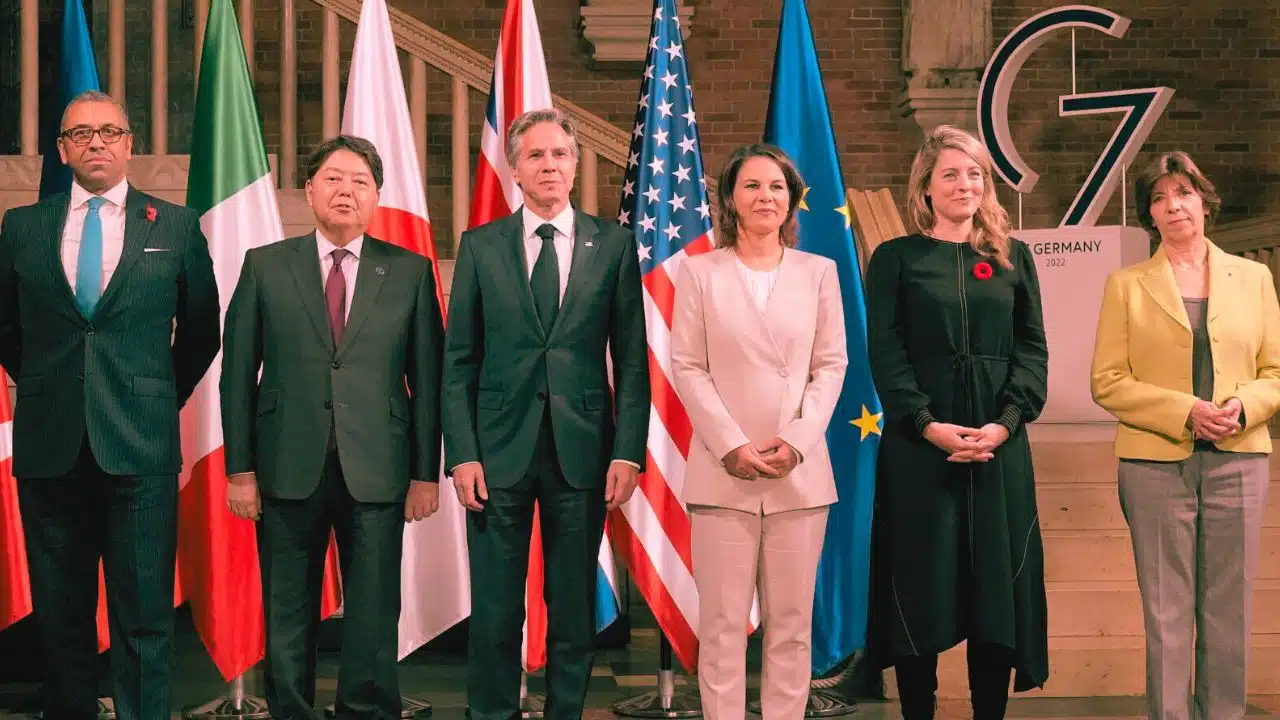
At the 51st G7 Summit in Kananaskis, Alberta (June 16–17, 2025), leaders from the U.S., UK, Canada, France, Germany, Italy, Japan, and the EU issued a firm appeal for “de‑escalation of hostilities in the Middle East, including a ceasefire in Gaza.” They reaffirmed Israel’s right to self‑defence and underlined that Iran must never acquire a nuclear weapon—labeling it “the principal source of regional instability.”
They also agreed to safeguard global energy markets and support humanitarian efforts. Interestingly, no comprehensive communique was formally released—reflecting the divisions within the summit, especially on the Iran‑Israel front.
Trump Abruptly Leaves Summit Over Middle East Crisis
Why he left early:
Monday night, after dinner and a photo session, President Trump abruptly departed, citing regional turmoil. White House Press Secretary Karoline Leavitt stated he was returning due to “what’s going on in the Middle East”, and Trump added “we’re going to be doing something” as soon as he landed in Washington.
He instructed the National Security Council to convene and Defense Secretary Pete Hegseth later announced the deployment of U.S. defensive capabilities to the Middle East—but clarified America would not join offensive action.
Summit disruptions:
Trump’s early departure led to the cancellation of key meetings—such as with Ukrainian President Zelensky and Mexican President Sheinbaum—highlighting how the regional crisis overshadowed other diplomatic agendas .
Fifth Straight Day of Strikes Between Israel and Iran
Israel launches “Operation Rising Lion”:
Since June 13, Israel has carried out large-scale airstrikes across Iran, targeting military bases, nuclear installations (including Natanz, Isfahan, and Fordow), and senior leaders; many officials were killed, and civilian structures were also hit.
Iran’s Operation “True Promise III”:
In retaliation, Iran launched over 150 ballistic missiles and more than 100 drones at Israeli territory, including Tel Aviv and Haifa. Israel’s air-defense systems intercepted 80–90% of them, but several missiles struck populated areas. Casualties reported: Iran – over 220 deaths; Israel – at least 24 killed, hundreds wounded.
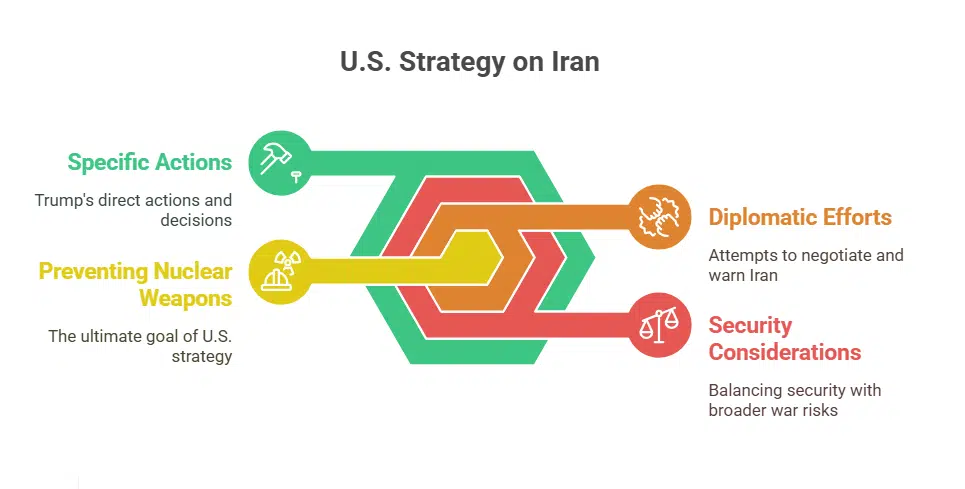
U.S. Strategy: Pressure, Prepare, But Avoid Direct Combat
Diplomatic moves & warnings:
Trump urged Iranians to evacuate Tehran, citing a failed diplomatic window. He emphasized “Iran cannot have a nuclear weapon” and said the country “rejected the deal” he offered.
Security insiders reported Trump vetoed an Israeli proposal to assassinate Iran’s Supreme Leader—a dramatic escalation he opposed to avoid triggering a broader war.
Military posture:
The Pentagon has dispatched refueling planes, ships, and missile defenses to the Middle East and Europe. Defense Secretary Hegseth stressed their deployment is defensive. A U.S. official confirmed the U.S. was not involved in Israel’s attacks—though Israel did notify Washington in advance.
Market & Economic Fallout
Immediate market responses:
-
Oil prices surged 7–10% due to fears of supply disruptions via the Strait of Hormuz.
-
Worldwide equities dropped; investors gravitated towards gold (+0.2%) and U.S. Treasuries.
-
Market sentiment remained tense, with looming Fed and BOJ decisions adding to volatility.
International Response & Summit Fractures
Allied reactions:
-
Emmanuel Macron welcomed Trump’s departure, noting there had been an “offer … to kick‑start broader discussions” around mediation.
-
Anthony Albanese described Trump’s decision as understandable given the crisis .
G7 unity challenged:
-
Trump declined to sign the Iran‑Israel de‑escalation statement, claiming he’d already addressed it publicly.
-
He also questioned the 2014 removal of Russia from the G‑8, causing friction over Ukraine and sanctions.
Diplomatic rifts:
There was no final joint communique—beyond the communal call for de‑escalation—indicating deep differences among G7 leaders. Canada pursued separate agreements on trade and migration tailing off from security solidarity.
Trade Deals Come Through Despite Crises
-
U.S.–UK trade: Trump and PM Keir Starmer signed a deal reducing tariffs on key products.
-
U.S.–Canada progress: Canada’s PM “Carney” said a trade pact could be finalized within 30 days, though disputes over tariffs remain unresolved .
Strategic Context & What Lies Ahead
Iran’s covert drone operations:
New reporting reveals Mossad had embedded drone units in Iran to sabotage missile sites ahead of air strikes, marking a precedent in covert hybrid warfare.
Long-term U.S. policy shift:
In February, Trump reinstated a “maximum pressure” campaign on Iran—cutting oil waivers and imposing sanctions to encourage diplomacy. This preceded the current military escalation.
Global implications:
-
Markets are bracing for more volatility amid central bank decisions.
-
Diplomatic initiatives may emerge, with Macron facilitating mediation and U.S. back-channel offers discussed .
-
However, risk of further military escalation—especially if Israel pursues deeper strikes or Iran retaliates—loom large.