

Does it feel like the weather has been getting wilder lately? You are not the only one noticing it. Extreme Weather Preparedness For Homeowner means getting your house and family ready for harsh storms, floods, blizzards, heatwaves, and power outages. In 2026, these wild weather events are hitting homes more than ever before.
A recent 2025 survey by Hippo Insurance confirms what many of us suspect. It found that 84% of homeowners now deal with more weather troubles than in the past. The need to prepare is clear as people face bigger risks like food going bad when the lights go out or falling trees causing damage.
Government groups like FEMA offer tips on their #WinterReady page to help you get set. You can also use tools from The Weather Toolbox to make plans and checklists fast. Stories pop up often about folks checking on neighbors after a storm or families keeping pets safe during messy weather days.
Many people forget that older adults, kids, pregnant women, and those with certain health needs might need extra care. Worries about staying warm or cool without power matter too. Smart gadgets now help monitor safety at home if used right.
Using generators safely prevents accidents while waiting out a storm is key for everyone’s well-being. Getting prepared means thinking ahead for pets and livestock as much as human family members because disaster doesn’t play favorites.
The next sections will show easy ways you can keep your home strong against any rough patch Mother Nature throws your way. Stick around, as your peace of mind may just depend on it!
Breaking Down Extreme Weather Events
Storms don’t knock; they barge right in. Change is coming fast, and it pays to stay one step ahead of wild weather. I know from experience that knowing exactly what you are up against is half the battle.
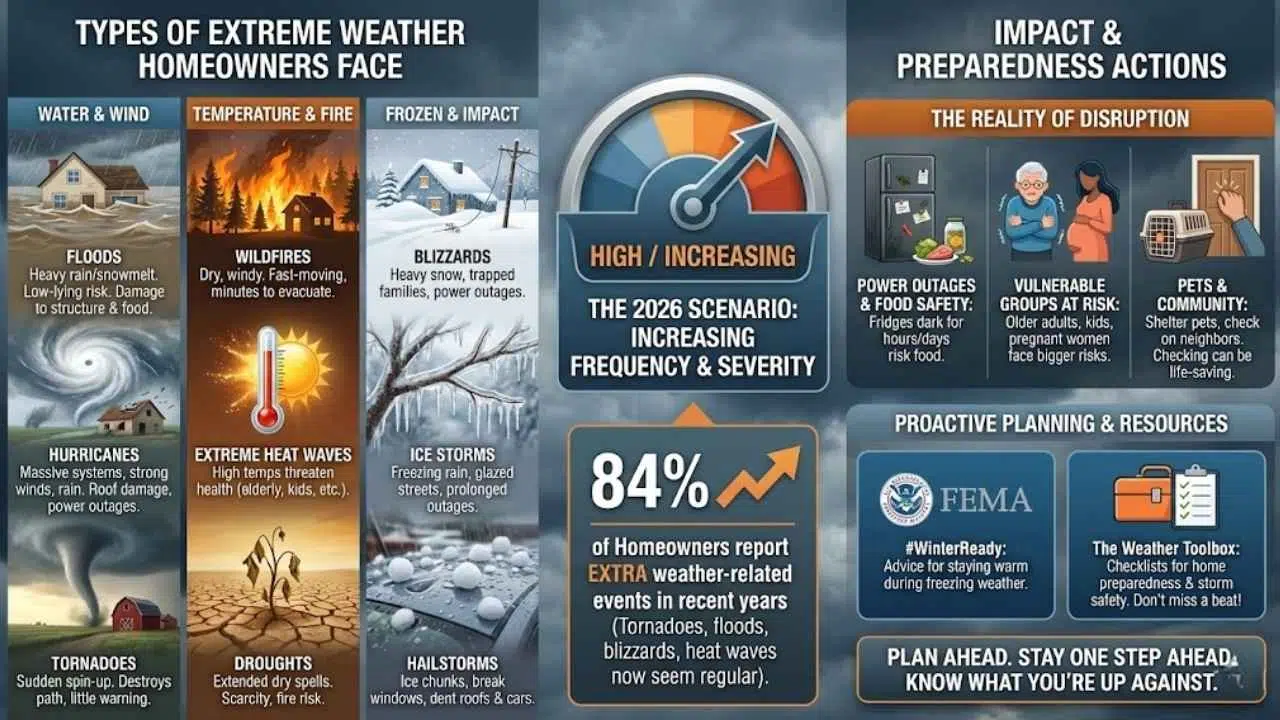
Types of extreme weather homeowners face
Weather is getting wild these days. In 2026, homeowners face more severe storms than before. Here is exactly what to watch out for in your area.
- Floods: These often happen after heavy rain or snowmelt. Homes near rivers or low-lying areas are at greatest risk. Floodwater can damage walls, floors, and even ruin food supplies.
- Hurricanes: These massive systems bring strong winds and torrential rain. Roofs can lift off like a hat in a windstorm. Downed trees and power lines knock out electricity for days.
- Blizzards: Heavy snow freezes roads and traps families inside their homes. Power outages become common, making it hard to keep food safe or heat the house properly.
- Tornadoes: These spin up with little warning and destroy everything in their path, from barns to cars to playgrounds.
- Wildfires: Flames burn fast during dry, windy months. Sometimes they leave people only minutes to grab pets and run.
- Extreme Heat Waves: High temperatures threaten family safety. This is especially true for older adults, children, pregnant women, and those with health risks.
- Ice Storms: Freezing rain glazes streets and power lines in thick ice. Outages leave neighborhoods cold for hours or even days.
- Hailstorms: Chunks of ice break windows, dent cars, and damage roofs faster than you can say “insurance claim.”
- Droughts: Extended dry spells kill lawns but also spark outdoor fires and make water scarce for both people and animals.
FEMA’s #WinterReady page has advice for staying warm during freezing weather events like blizzards or winter storms in 2026. Meanwhile, the Weather Toolbox offers checklists that cover each of these disasters so you do not miss a beat on home preparedness and storm safety this year!
The increasing frequency of severe weather in 2026
Storms and wild weather are popping up more often than before. In 2026, about 84% of homeowners say they have dealt with extra weather-related events in recent years. Tornadoes, floods, blizzards, and heat waves now seem regular in many places.
Kids might call it “crazy weather,” but for families, it means planning ahead is a must. Cold snaps keep shutting off the power during winter storms. Power outages also ruin food fast, so food safety becomes a real worry if fridges sit dark for hours or days.
FEMA’s #WinterReady page and tools like The Weather Toolbox give important tips to keep everyone safer at home. Older adults, pregnant women, kids, and people with health troubles face bigger risks from these severe changes outside.
Pets need shelter too if things turn rough quickly. Checking on neighbors can be life-saving when disaster hits out of the blue.
Preparing Your Home for Extreme Weather
A strong house can shield your family from powerful storms, wild winds, and heavy snow. Small fixes now might spare you big headaches later. Think of it as putting on a raincoat before the skies open up.
Inspecting and reinforcing your roof
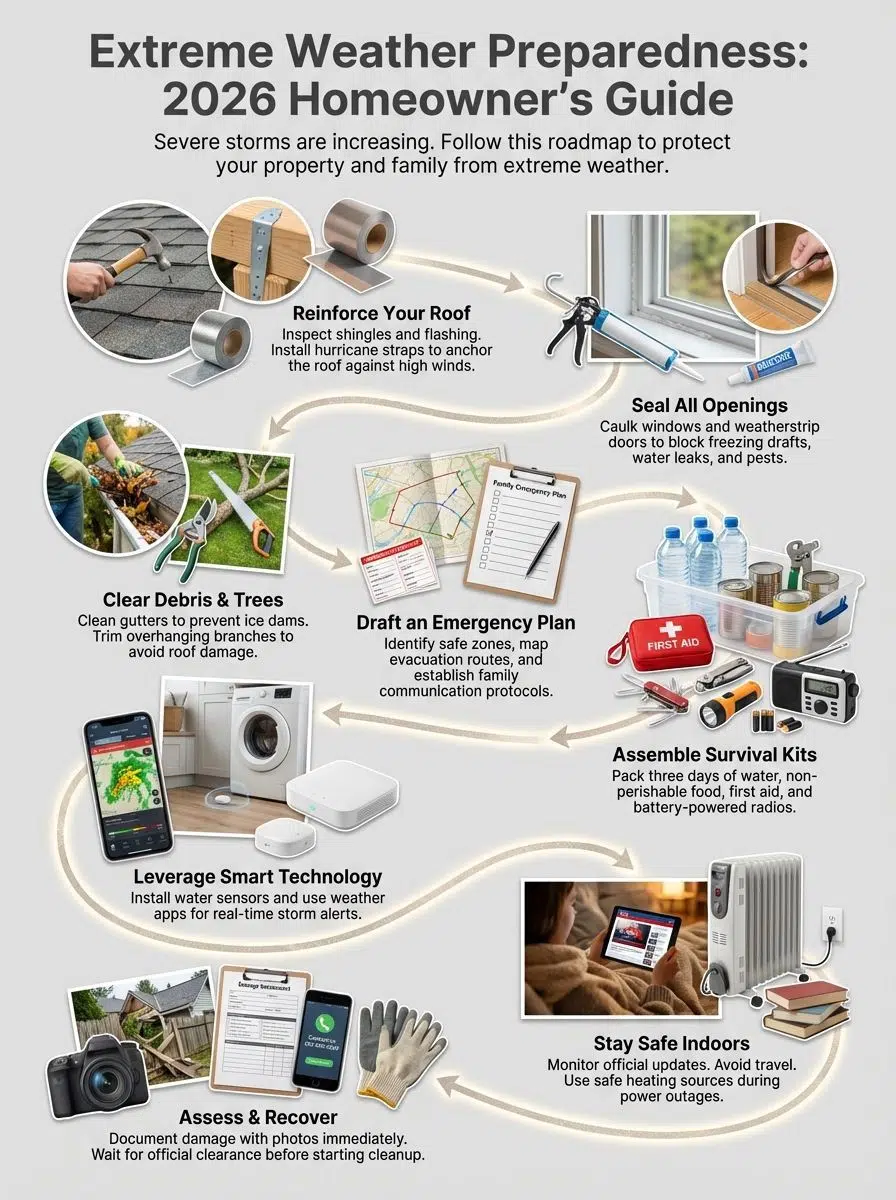
Strong winds and heavy snow can hurt your roof faster than you think. In 2026, more homeowners saw severe weather than ever before, making roof checks a top priority. A solid roof is your first line of defense.
- Check for Damage: Look for missing or broken shingles after every winter storm or strong wind event. They can lead to leaks that ruin insulation and ceilings.
- Inspect Flashing: Check around chimneys, vents, and skylights since loose metal pieces often let water inside during storms.
- Spot Sagging: Look for sagging spots that could mean hidden water damage or weak wood under the surface.
- Use Hurricane Straps: Reinforce with hurricane straps to anchor your roof better. These metal clips help roofs survive high winds.
- Seal Joints: Fix small cracks in sealant along joints because even a tiny gap welcomes rain and cold air. This risks family safety and food security if leaks get into living spaces.
- Clean Gutters: Clear away debris like leaves from gutters so water flows off easily. FEMA’s #WinterReady page warns clogged gutters freeze and make ice dams, pushing water underneath shingles.
- Trim Branches: Trim overhanging branches as falling limbs break shingles and puncture roofs during storms. Insurance claims for these damages have shot up in recent years.
- Consult a Pro: Ask a qualified roofer to assess damage or repair work especially after a major disaster. Keeping the roof strong is key to home safety and disaster planning.
- Upgrade Shingles: Install impact-resistant shingles made for hail-prone areas. Many insurers offer discounts for this upgrade since it lowers the risk of costly storm response later on.
- Check Insulation: Make sure attic insulation stays dry because wet insulation loses power fast. This drives up heating bills during extreme winter weather.
These simple steps keep out rain, snow, heat waves, and troublemakers like mold or pests. This leaves you better prepared no matter how wild the weather gets next year.
Sealing doors, windows, and other openings
Stopping drafts can help keep your home safe during extreme weather. Sealing up cracks also keeps out cold air, rain, and even bugs. Here are the specific spots you should check right now.
- Weatherstripping: Use weatherstripping for doors to block wind and water from sneaking inside, especially during winter storms or hurricanes.
- Caulking: Caulking around windows stops leaks that lead to higher heating bills and let in pests, rainwater, or even snowdrifts.
- Door Sweeps: Install door sweeps at the bottom of all outside doors. Make sure no gaps let in chilly air or dirt.
- Window Kits: Consider plastic window insulation kits for older windows. These clear sheets trap warm air inside during severe cold snaps.
- Attic Seams: Check attic entryways and seal any seams with insulation tape. This step stops heat loss that puts extra strain on your furnace.
- Pet Doors: Block up unused doggy doors or mail slots with thick towels or temporary inserts when a blizzard is coming.
- Vent Check: Inspect vents for gaps using a flashlight. Patch small holes with expanding foam from any hardware store.
- Pipe Entries: Look at places where pipes enter the house. Filling those spaces with spray foam helps lower the risk of rodents entering during stormy nights.
- FEMA Tips: FEMA suggests sealing all openings before winter arrives to improve home safety and energy efficiency in disaster preparedness plans.
- Homeowner Stats: Experts say over 84% of homeowners now face more frequent weather-related events, so sealing up even the tiniest crack matters for family protection.
Clearing gutters and trimming trees
Leaves and branches can cause big problems during severe weather. Blocked gutters and overgrown trees make your home less safe, especially in winter storms. A little yard work now prevents major damage later.
- Prevent Backups: Water backs up quickly in clogged gutters, leading to leaks or roof damage during heavy rain or snow.
- Stop Pests: Gutters packed with debris may grow mold and attract pests like mice, who love cozy corners in winter.
- Trim for Safety: Trimming trees helps prevent branches from crashing onto roofs or cars, which happens often during storms or blizzards.
- Remove Dead Wood: Old limbs can snap off under the weight of ice or snow, posing serious risks for power lines and windows nearby.
- Hire Pros: Professional tree trimmers use safe methods to cut heavy limbs. This keeps you out of harm’s way while making sure nothing lands on your house.
- Divert Water: Cleaning gutters is a simple step for home maintenance. It reduces your risk of flooding by letting water run away from the foundation instead of pooling up where you do not want it.
- Reduce Risk: According to recent studies, 84% of homeowners have noticed more weather-related events. Taking care of gutters and trees stops these issues from getting worse.
- Seasonal Checks: FEMA’s #WinterReady tips suggest regular gutter checks before every season change so you catch small problems early.
- Prevent Slips: Fewer blocked drains mean fewer slips outside for old adults, kids, or anyone walking near the house after a storm passes through your neighborhood.
- Clear Routes: Tree trimming makes evacuation routes safer since blocked paths slow down quick escapes if natural disasters strike without warning.
- Protect Kitchens: Clean gutters also protect food safety inside since leaks can ruin kitchens or pantries during power outages after a storm.
- Lower Insurance: Homeowner insurance claims drop when property protection includes basic steps like clearing gutters and pruning back large overhanging branches before disaster strikes again in 2026.
Creating an Emergency Plan
A strong emergency plan can save lives and cut stress during chaos. Simple steps, shared early with your family, make all the difference when storms strike.
Establishing communication protocols
Staying connected during extreme weather can save lives and protect families. Good communication keeps everyone informed and safe while storms rage outside.
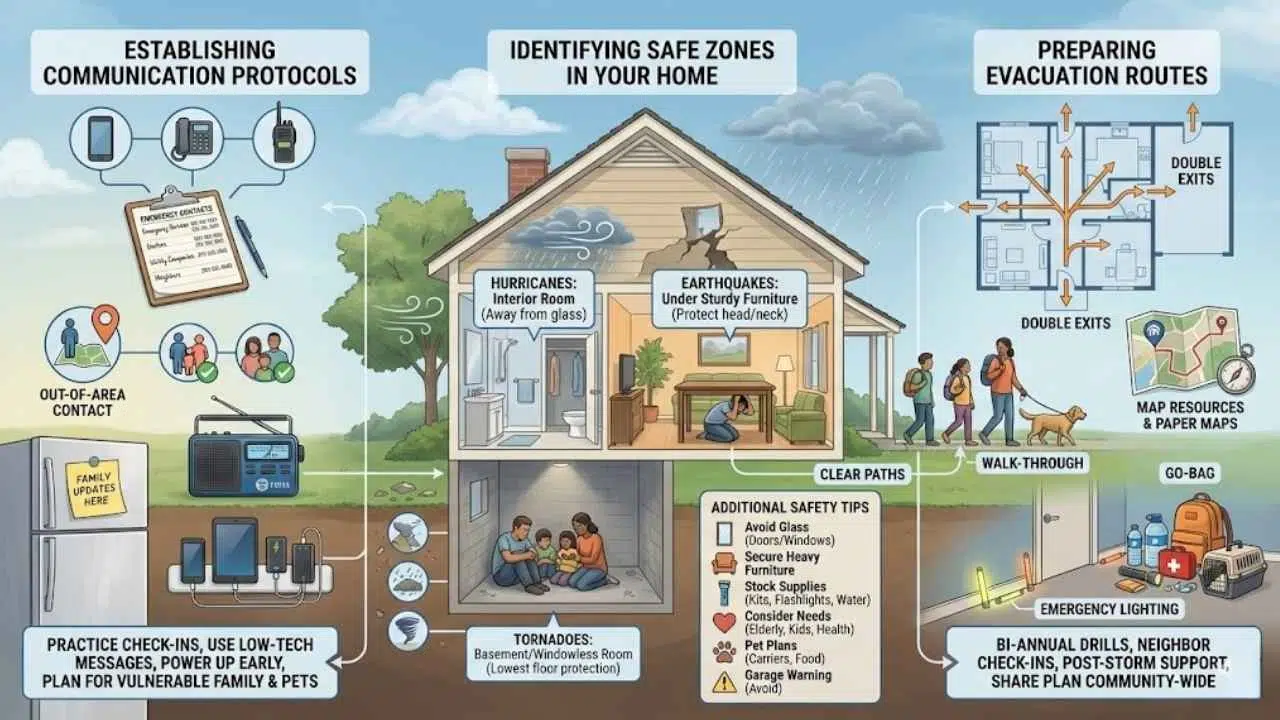
- Write It Down: Write down important phone numbers for emergency services, doctors, utility companies, and neighbors. Keep a paper copy somewhere easy to find in case the power goes out or phones die.
- Designate a Contact: Choose one person outside your area as a family contact. If local lines clog up, each person should update this contact about their safety and location.
- Practice Check-Ins: Practice how each family member will check in before an event strikes. Kids, older adults, and even pets should be part of your plan, as 84% of homeowners have faced more frequent weather disasters recently.
- Use Low-Tech Messages: Assign a spot for family updates like sticky notes on the fridge. You can also leave messages through group texts or apps if the internet is up.
- Get Radio Ready: Teach every household member how to use portable radios to receive weather alerts from FEMA or the Weather Toolbox if cell towers crash during severe storms.
- Use Safety Words: Set clear signals for danger and safety using simple words or codes so that even young children understand the plan without confusion.
- Power Up: Charge all devices early when you hear weather warnings. Keep backup battery packs on hand because outages can happen fast during winter storms.
- Plan for Vulnerable Family: Plan for people at higher risk. Older adults, children, pregnant women, and those with health conditions need extra attention in your protocol.
- Check Neighbors: Check on neighbors who live alone after you make sure your own group is safe. This habit builds climate resilience and boosts storm safety across your street.
- Include Pets: Include pet details with your contacts since disaster planning must also cover animal care. Do not leave Fido out!
Identifying safe zones in your home
Finding a safe zone in your home could save lives during severe weather. Each family member should know where to go if disaster strikes. You need to pick these spots before the sky turns dark.
| Threat Type | Best Safe Zone | Key Feature |
|---|---|---|
| Tornadoes | Basement or Windowless Room | Lowest floor offers best protection from debris. |
| Hurricanes | Interior Room (No Windows) | Away from glass that can shatter in high wind. |
| Earthquakes | Under Sturdy Furniture | Protects head and neck from falling objects. |
Additional Safety Tips:
- Avoid Glass: Avoid rooms with glass doors or windows since broken glass can cause injury in high winds or hailstorms.
- Secure Furniture: Keep heavy furniture away from beds and safe zones because an earthquake or storm could knock them over.
- Stock Supplies: Store emergency kits, flashlights, water bottles, and first aid supplies in your designated storm safety spots for easy access.
- Consider Needs: For households with older adults, children, pregnant women, or anyone with health conditions, pick areas close to necessary medical supplies and easy exits.
- Pet Plans: Plan for pets too; bring their food and carriers into your chosen weather preparedness zones.
- Garage Warning: Stay clear of garages during extreme weather. Many have weaker doors that may not stand up to strong winds or pressure changes.
- FEMA Advice: FEMA’s WinterReady tips suggest using interior hallways if you lack a basement, especially during winter storms and blizzards.
- Neighbor Help: Check on neighbors who might need help finding a safe place in their home before the next severe storm rolls in.
Each choice protects family safety and boosts your disaster response plan for 2026’s intense weather patterns.
Preparing evacuation routes
Planning for evacuation routes is a must-do for every homeowner, especially with severe weather on the rise in 2026. A clear path out can help save lives during storms or power outages.
- Double Exits: Mark two safe exits from each room to avoid getting trapped, even if one route gets blocked by debris.
- Walk-Throughs: Walk your family through the quickest ways to exit your home and meet at a designated safe spot outside.
- Clear Paths: Keep all hallways and doors free from clutter so people can move fast if bad weather hits without warning.
- Community Plan: Share your main evacuation plan with neighbors. Working together improves everyone’s chance of safety, which FEMA highlights as key for disaster resilience.
- Map Resources: Use The Weather Toolbox or FEMA’s #WinterReady resources to find maps and local shelter addresses before you need them.
- Bi-Annual Drills: Practice your evacuation drill twice a year, picking different seasons. Hazards change between winter storms and summer disasters.
- Go-Bags: Pack an emergency kit that’s easy to grab near every exit. Include bottled water, first aid supplies, flashlights, snacks, and extra medicine for family members most at risk like children, pregnant women, or those with health conditions.
- Pet Carriers: Include pet carriers in your plan because preparedness must cover pets too. They get scared or lost easily during chaos.
- Emergency Lighting: Place glow sticks or battery-powered lights near exits so you can see where you’re going if the power fails suddenly. This is a common situation reported by 84% of homeowners lately.
- Paper Maps: List multiple routes to nearby shelters on paper in case mobile devices die during a blackout. It helps guide older adults who may not use phones much.
- Emergency Numbers: Pin up the phone numbers of local responders openly in your house so anyone, including kids or guests, can call for help if needed.
- Post-Storm Check: Assign neighborhood check-ins so no one feels forgotten after a storm passes. Many people need support during recovery phases too.
Good routes now mean better odds later. Nobody wants trouble chased right up their doorstep!
Assembling an Emergency Kit
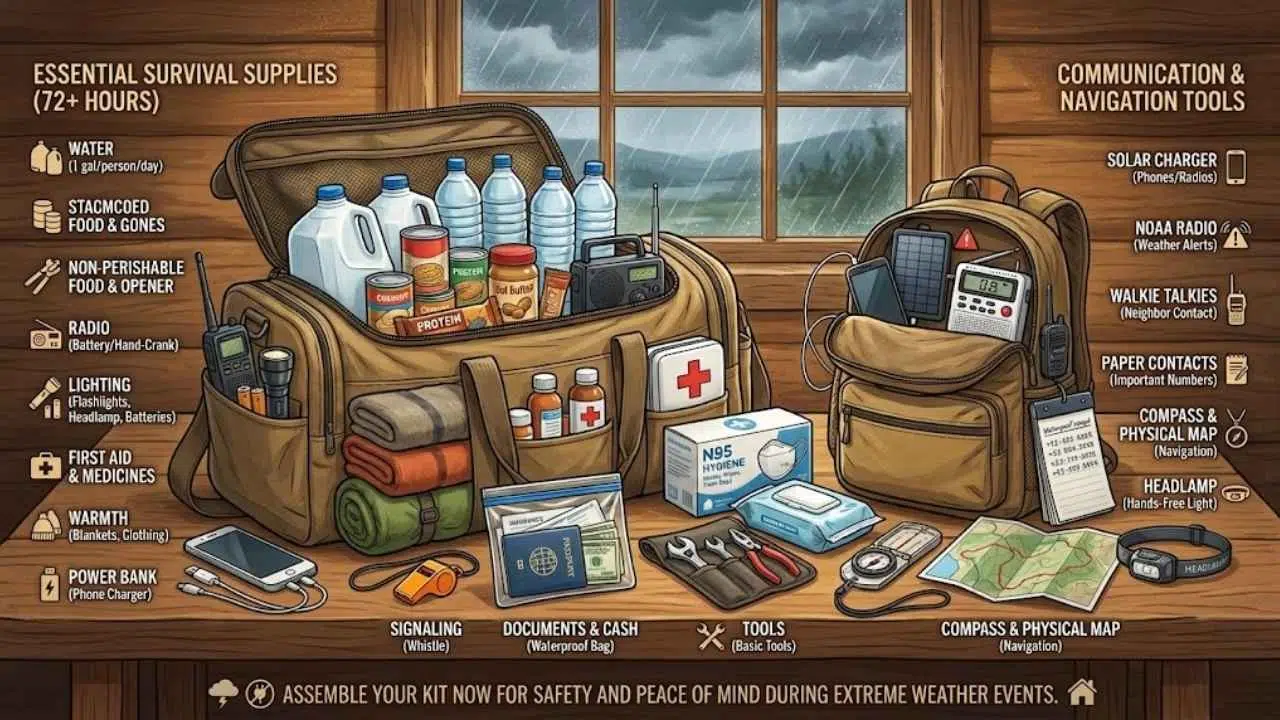
A solid emergency kit is like a lifeboat in a storm. Grab the right supplies now, and you’ll feel safer when wild weather hits, so stick around for some simple tips.
Essential supplies for survival
Everyone should keep emergency supplies ready at home. These items can save lives during extreme weather events, like winter storms or power outages. You need enough to last at least 72 hours.
- Water Rule: Clean water is crucial, so pack at least one gallon per person for each day, aiming for a three-day supply.
- Food Staples: Non-perishable food such as canned goods, nut butter, and protein bars keep you fed if the fridge stops working. Always check expiration dates.
- Can Opener: Manual can openers come in handy because electric ones will not work if the power goes out.
- Radio: Battery-powered or hand-crank radios help you hear Weather Toolbox alerts or FEMA’s #WinterReady warnings when phones lose service.
- Lighting: Flashlights and extra batteries are safer than candles to light up dark rooms and spots around your property.
- First Aid: First aid kits treat small cuts, scrapes, and burns before help arrives. Include personal medicines for every family member.
- Warmth: Warm blankets, sleeping bags, gloves, hats, and coats help prevent cold-related sickness in winter storms. This matters most for older adults and kids who risk getting sick faster.
- Power: Power banks charge cell phones when outlets fail. Communication becomes your lifeline to emergency services or neighbors.
- Signaling: Whistles signal rescue workers from inside damaged homes if stuck or trapped by debris after a disaster hits.
- Documents: Important documents such as IDs, medical records, and insurance papers belong in waterproof bags to keep them safe from floodwaters or leaks.
- Cash: Cash in small bills might be the only way to pay if card readers do not work due to outages after severe weather events.
- Tools: Basic tools including wrenches and pliers allow you to shut off utilities fast if needed for storm safety after tornadoes or blizzards hit hard.
- PPE: Masks limit breathing dust or mold after storms that bring heavy rain into kitchens or basements. Use these while cleaning up safely.
- Hygiene: Sanitary wipes and trash bags reduce sickness caused by spoiled food when fridges fail during long blackouts. These items guard your health while sheltering at home.
FEMA reports show families with these supplies recover quicker after natural disasters strike their neighborhoods and local shelters fill up fast during emergencies.
Having the right tools for communication and navigation can save lives during extreme weather. Power outages are common, so keep these items close.
- Backup Power: Cell phones with extra charged power banks help you reach family or call for help, even when the lights go out.
- NOAA Radios: NOAA Weather Radios give alerts about winter storms or natural disasters. This device works without Wi-Fi or cell service.
- Crank Radios: Hand-crank radios let you listen to emergency broadcasts if batteries die. Just a few turns for power, and you stay in the loop.
- Paper Contacts: A list of important phone numbers written on paper prevents panic if your devices fail.
- Walkie Talkies: Two-way radios allow communication with neighbors if the phone network is down. This is a good trick for checking on older adults or at-risk friends.
- Whistles: Whistles are simple but powerful. Three loud blasts tell search teams where you are, especially useful during blizzards or severe storm response.
- Compasses: Compasses make sure you do not get lost during evacuation, especially in areas without street signs left standing after strong storms.
- Physical Maps: Maps kept in your emergency kit guide your evacuation route if GPS stops working or roads close unexpectedly.
- Headlamps: Flashlights with spare batteries come in handy while moving at night, whether looking for shelter resources or just getting around safely indoors.
- Solar Chargers: Chargers that work using solar energy keep phones and radios alive during long-term power outages. No sun means no fun, but a bit of light goes a long way.
These tools support disaster response efforts, family protection, and home safety throughout any crisis and help every homeowner stay weather prepared in 2026 and beyond.
Staying Safe During Extreme Weather
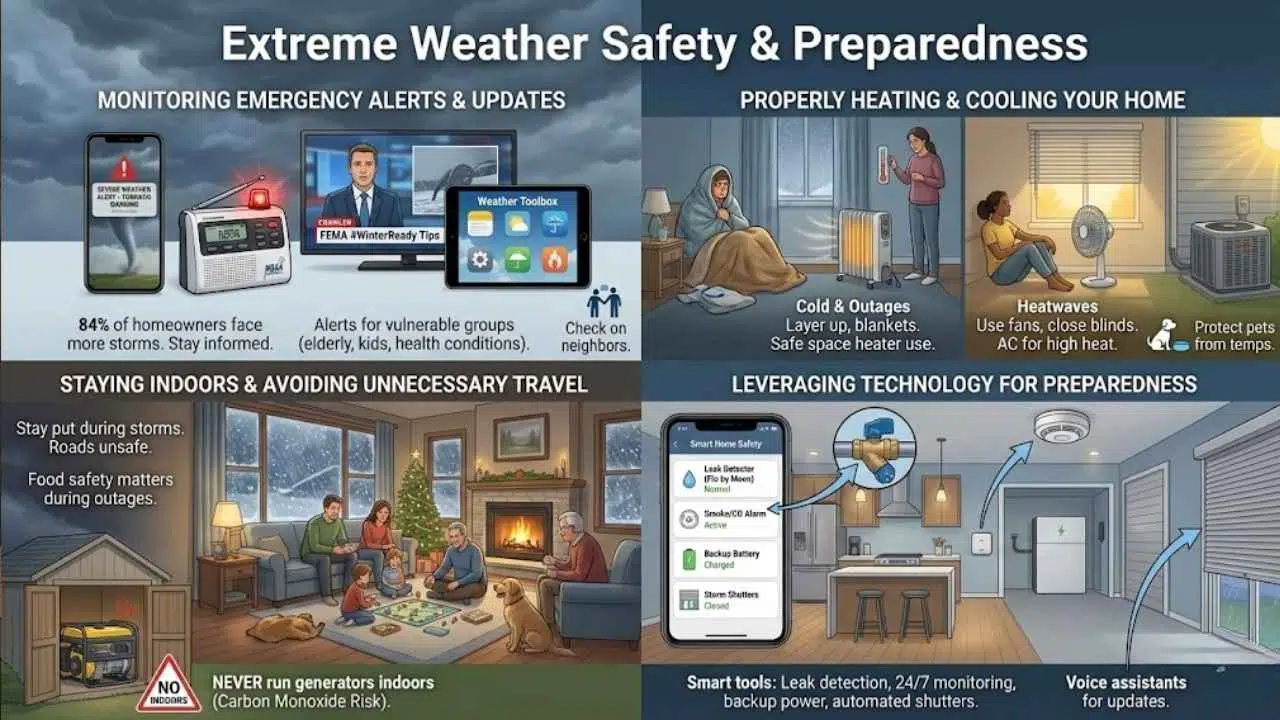
Stay sharp, keep your ears open for updates, and check out our next steps to boost your storm safety skills.
Monitoring emergency alerts and updates
Sirens wail, phones buzz, and TV screens flash urgent news. FEMA’s #WinterReady page dishes out lifesaving tips for cold snaps and blizzards. The Weather Toolbox offers real-time checklists and updates to help households handle extreme weather events, whether a hurricane or an ice storm comes knocking.
“Over 84 percent of homeowners now face more storms than before. Monitoring alerts is key for family safety.”
Local radio stations can sometimes be your best friend if the power fails. Smart home devices, weather apps, and even battery-powered radios keep you in the loop with storm safety advice or evacuation orders.
Older adults, children, pregnant women, along with those who have health conditions need quick access to these warnings since they’re at higher risk during natural disasters. Checking on neighbors can save lives too. One text could make all the difference in wild weather times.
Staying indoors and avoiding unnecessary travel
Stay put inside if the weather turns bad, like during winter storms or heavy rain. The roads get unsafe fast, and accidents rise as people rush out for small errands. FEMA warns that even short trips can become risky.
In 2024, about 84% of homeowners felt more of these rough events in their lives. This was not just on the news but right outside their door. Older adults, children, pregnant women, and those with health problems face a higher risk from icy sidewalks or blocked roads.
Food safety also matters because power outages spoil food quickly. Nobody wants to mess with food poisoning while stuck at home. Use apps for updates and storm alerts so you always know what’s coming next. Keep pets warm too; they count as family when disaster strikes! Stay sheltered inside until local officials say it is safe to go outdoors again.
Properly heating and cooling your home
Extreme weather can hit hard, so keeping your home at a safe temperature is vital. Use space heaters safely; keep them away from curtains and furniture to cut fire risk. Always follow manufacturer instructions and avoid plugging too many things into one outlet.
For cold nights or power outages, bundle up with layers or blankets instead of cranking the heat. During heatwaves, fans help but do not lower temperatures as much as air conditioning does.
FEMA recommends closing blinds during the day to block out sunlight and trap cool air inside. Check on older adults, children, and those who are pregnant since they face higher risks in extreme temperatures. Never run generators indoors because carbon monoxide can build up quickly and cause harm fast.
Keep pets cool or warm too since everyone under your roof needs protection through wild weather swings in 2026.
Leveraging Technology for Preparedness
Smart tools help you stay one step ahead of storms, like digital lifeguards for your home. With a few taps on your phone, you can get warnings fast and even control some safety features from anywhere.
Using weather apps and alert systems
Weather apps give real-time updates about storms, freezing rain, or heat waves. FEMA’s #WinterReady page shares alerts on blizzards and power outages fast, which helps protect you and your family.
Many homes use the Weather Toolbox for tools, checklists, and storm safety tips right at their fingertips. These apps warn of severe weather before it arrives so you can act quickly.
Emergency alert systems send out warnings to home devices and cell phones. Quick updates may be a lifesaver during winter storms or natural disasters. With 84% of homeowners facing more extreme weather events now than in past years, these notifications become vital for family safety and property protection.
Even children and older adults benefit because alerts save precious time for smart decisions. This includes staying indoors or planning safe routes out if needed.
Investing in smart home solutions for safety
Smart home devices play a big role in extreme weather preparedness. You don’t have to guess if a pipe burst anymore.
- Leak Detectors: Smart sensors like the Flo by Moen can spot leaks early and send alerts to your phone. Some even shut off the water automatically.
- Safety Monitors: Smoke detectors, carbon monoxide alarms, and water monitors work round-the-clock, giving you peace of mind even if you are miles away.
- Backup Power: Many homeowners now use backup battery systems or generators that start on their own during power outages. This is a game-changer for keeping food safe and family members warm.
- Shutters: Storm shutters that close with one button protect windows fast during high winds or hail.
- Voice Updates: Voice assistants like Alexa keep you updated with local emergency notifications so you do not miss storm updates at night or while helping neighbors check on pets.
As 84% of homeowners report seeing more severe storms lately, smart tech helps families stay ready year-round. It helps you get through even the wildest winter storms 2026 may throw your way!
Post-Storm Recovery Tips
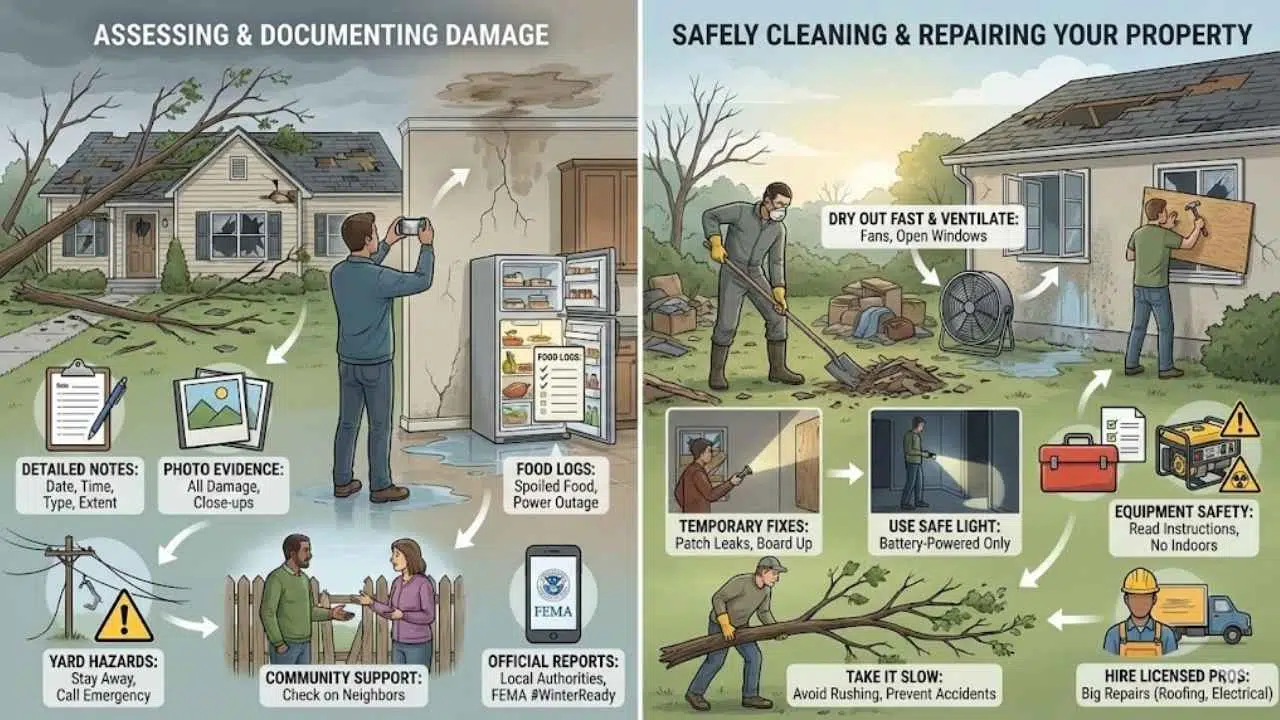
Once the storm clears, check your home with fresh eyes. Snap photos as you go; they could be worth their weight in gold later.
Assessing and documenting damage
Storms and cold weather can cause damage to your house. Checking your home right after the disaster helps keep your family safe and protects your wallet. Here is your post-storm checklist.
- Exterior Scan: Start outdoors. Look for missing shingles, broken windows, or fallen tree limbs that could hurt someone or make things worse with the next rainfall.
- Photo Evidence: Take clear photos of all damage before moving anything. This includes close-ups of roof leaks, water stains on ceilings, or downed fences that your insurance company will want to see.
- Detailed Notes: Write down what you find. Jot dates and times along with details about the type and extent of damage. Note water inside walls or roof holes big enough to spot from the ground.
- Yard Hazards: Walk carefully in your yard. Check for power lines on the ground and never touch them. Call emergency crews if you see any dangers like this.
- Interior Check: Check indoor spaces for safety issues such as wet floors, broken glass, or cracks in walls. These can hide risks like mold growth later on.
- Keep Debris: Save damaged items if possible so an adjuster can see them before tossing out debris. Some policies require proof for claims.
- Food Logs: Document spoiled food if a power outage happened. List what had to be thrown out and snap simple photos since food safety is key after a blackout.
- Community Support: Call neighbors. 84% of homeowners have faced more weather events lately and checking on each other helps everyone recover faster.
- Official Reports: Report big problems to local authorities and FEMA if needed. Government groups like FEMA offer tips, forms, and help on their #WinterReady page after storms hit.
- Cleanup Tools: Use tools from services like The Weather Toolbox for quick checklists so you do not miss hidden hazards during cleanup after severe weather events hit home.
Staying calm yet thorough now helps keep money in your pocket. It avoids trouble later when it comes time for storm response or emergency preparedness claims!
Safely cleaning and repairing your property
After extreme weather, safety comes first during cleaning and repairs. Hazards can hide in damaged homes, so it pays to stay alert.
- Wait for Clearance: Wait for local officials to say it is safe to go home after a disaster, such as a winter storm or severe flood.
- Gear Up: Wear strong shoes, gloves, and a mask to protect yourself from sharp debris, dust, and possible mold.
- Snap Photos: Take photos of damage right away because homeowner insurance companies may want proof for claims.
- Check Utilities: Watch for downed power lines or gas smells as these can cause danger. If you spot one, call the utility company immediately.
- Toss Bad Food: Throw away spoiled food as power outages can make refrigerators unsafe quickly, raising serious food safety concerns for families.
- Use Safe Light: Use only battery-powered flashlights since candles might trigger fires in places where gas could be leaking.
- Help Others: Check on your neighbors. Older adults, pregnant women, children and those with health issues need extra support after storms according to FEMA’s #WinterReady tips from 2026.
- Dry Out Fast: Clear out waterlogged belongings fast because mold grows within 24-48 hours and weakens home safety by causing illness.
- Ventilate: Dry wet walls and floors using fans but keep windows open when possible. Fresh air helps remove bad smells and dries things faster.
- Temporary Fixes: Do small fixes like patching leaks or boarding up broken windows quickly to keep out more water or cold air during winter storms next time around.
- Hire Licensed Pros: Hire licensed workers for big repairs like roofing or electrical work since shoddy fixes put family protection at risk.
- Equipment Safety: Use safe tools only. Read instructions closely before turning on generators as improper use causes deadly carbon monoxide poisoning every year during disaster response efforts.
- Take it Slow: Avoid rushing. Slow steps help prevent falls and accidents while picking up heavy rubble or clearing tree limbs blown down by wind events.
Staying patient pays off. Cleaning up with care keeps everyone safer while your home gets back into shape after nature strikes hard.
Final thoughts
Storms come fast, but smart steps can keep your family and home safe. Checking your roof, sealing windows, and having a solid emergency plan are not fancy ideas, but they work every time. Quick actions like keeping an updated kit of food, water, and tools make all the difference when things get rough.
These tips are simple enough for anyone to follow yet powerful in protecting what matters most. The Weather Toolbox and FEMA’s #WinterReady tips offer even more help if you want extra peace of mind or ideas for next steps.
You never know whose life you might save by being ready before trouble storms through. I learned this after helping my neighbor fix her leaky roof just before last winter’s big freeze hit our street!





























