Estate planning is a critical aspect of managing your wealth, especially if you aim to pass it on to future generations while minimizing the impact of taxes. Many people mistakenly assume estate planning is only for the ultra-wealthy, but it is equally important for individuals of all wealth brackets.
Estate planning helps ensure that your assets are distributed according to your wishes, and it plays a pivotal role in protecting your wealth from hefty taxation.
The tax laws in the UK, particularly around inheritance tax (IHT) and capital gains tax (CGT), can be complex and may significantly affect the value of your estate after your passing. The strategic use of estate planning can not only help reduce the tax burden but also facilitate smoother wealth transfer to your heirs.
In this article, we’ll explore 12 Estate Planning Tax Strategies for Wealth Preservation in the UK. These strategies are designed to help you preserve your wealth, minimize tax liabilities, and ensure a legacy that benefits your family and future generations.
Understanding UK Estate Taxes and Their Impact
Before we delve into the strategies, it’s important to have a solid understanding of the primary taxes that impact estate planning in the UK. These include inheritance tax, capital gains tax, and income tax considerations. A clear grasp of these taxes will enable you to develop effective strategies for managing your estate.
Inheritance Tax (IHT) and Its Implications
Inheritance tax (IHT) is a tax charged on the estate of a deceased person. In the UK, the current inheritance tax rate is 40% on the value of an estate above the £325,000 threshold. This tax can significantly reduce the amount your heirs receive, making it a critical consideration in estate planning.
It’s worth noting that the threshold is not automatically adjusted for inflation, which means many estates may be caught by IHT due to rising property values and other asset increases. However, there are several ways to reduce your exposure to IHT, such as gifting assets during your lifetime or using exemptions like the residence nil rate band (RNRB).
Inheritance Tax Rates
| Threshold | IHT Rate | Exemption |
| £325,000 | 40% | Nil Rate Band (NRB) |
| £175,000 | 40% | Residence Nil Rate Band (RNRB) |
| £3,000 | Tax-free | Annual gift exemption |
Capital Gains Tax (CGT) and Its Role in Estate Planning
Capital Gains Tax (CGT) is payable when an asset is sold or transferred for more than it was originally bought for. CGT typically applies to assets such as property, stocks, or business interests. In estate planning, CGT becomes relevant when the heirs sell inherited property or other assets.
CGT is charged on the gain made from the sale or transfer of an asset. However, when transferring assets to heirs, the market value is taken as the cost base, which means any capital gains accumulated during the deceased’s lifetime can trigger CGT liability.
CGT Rates for Individuals
| Asset Type | CGT Rate |
| Basic Rate Taxpayer (up to £50,270 income) | 10% |
| Higher Rate Taxpayer (above £50,270 income) | 20% |
| Property or Land | 18% (basic rate), 28% (higher rate) |
Income Tax Considerations for Estates
Income tax does not directly affect an estate once it has been distributed, but the management of an estate can generate income, especially from rental properties or dividends. As the estate is processed, any income generated is subject to income tax.
It is crucial for your executor or administrator to account for this income, as it could be taxed before it is passed to your beneficiaries. Furthermore, pensions are not typically subject to inheritance tax, but if your pension pot is substantial, there may be tax implications for your beneficiaries.
12 Effective Estate Planning Tax Strategies
Let’s explore 12 Estate Planning Tax Strategies for Wealth Preservation in the UK that can help reduce the tax burden on your estate while ensuring wealth is passed on smoothly.
Strategy 1 – Utilizing the Nil Rate Band
The Nil Rate Band (NRB) is the portion of an estate that is exempt from inheritance tax (IHT). The NRB threshold is £325,000 per individual, which means that if the estate is worth less than this, it will not be subject to IHT. This threshold can be used in conjunction with other strategies to reduce IHT liability.
- Actionable Tip: If you are married, you can transfer any unused NRB to your spouse, potentially doubling the IHT allowance to £650,000.
Nil Rate Band Overview
| Nil Rate Band | Amount |
| Standard NRB | £325,000 |
| Transferable NRB | £650,000 |
Strategy 2 – Making Use of the Residence Nil Rate Band
The Residence Nil Rate Band (RNRB) provides an additional tax-free allowance if the estate includes a family home that is passed on to direct descendants (children, grandchildren, etc.). This band can be particularly beneficial for homeowners.
- Actionable Tip: If your estate includes a home, ensure that it’s left to a direct descendant to benefit from the RNRB, which could reduce the IHT payable by up to £175,000.
Residence Nil Rate Band Overview
| Residency Threshold | IHT Rate | Allowance |
| Family Home Passed to Direct Descendants | 40% | £175,000 |
Strategy 3 – Gifting During Lifetime

Gifting assets during your lifetime is a powerful way to reduce the size of your estate and avoid IHT. The UK allows individuals to gift up to £3,000 each year tax-free, and this amount can be carried forward if unused in the previous year.
- Actionable Tip: Consider gifting valuable assets such as property or shares to your children or grandchildren while still alive, especially if you’re under the £3,000 annual exemption limit. This can help reduce the estate’s value and IHT liability.
Lifetime Gifts Overview
| Annual Exemption | Gift Limit |
| Tax-free Lifetime Gifts | £3,000 |
| Additional Gifts (if unused) | £6,000 |
Strategy 4 – Leveraging Trusts to Minimize Tax Burden
Trusts are a common method for reducing IHT liability. By transferring assets into a trust, you can effectively remove them from your estate. There are several types of trusts, including discretionary trusts and interest-in-possession trusts, each offering different benefits depending on your needs.
- Actionable Tip: Work with a solicitor to determine the best type of trust based on your goals, whether it’s to protect assets for children or reduce exposure to IHT.
Trust Types Overview
| Trust Type | Benefit |
| Discretionary Trust | Flexibility in asset distribution |
| Interest-in-Possession Trust | Income goes to the beneficiary while assets are preserved |
Strategy 5 – Charitable Donations and Their Tax Benefits
One of the best ways to reduce IHT while supporting a cause you care about is by donating to charity. If you leave a portion of your estate to a charity, you can lower the IHT rate from 40% to 36%.
- Actionable Tip: If you have a charitable cause close to your heart, consider including charitable donations in your will, which can have the double benefit of reducing tax liability and benefiting the community.
Charity Donation Benefits
| Donation Amount | IHT Rate Reduction |
| Charitable Legacy | 4% reduction in IHT rate (from 40% to 36%) |
Strategy 6 – Creating a Will to Maximize Inheritance Tax Relief
A well-crafted will is essential for minimizing taxes and ensuring that your wishes are carried out after your death. It allows you to plan for the distribution of your estate in a way that reduces IHT exposure, such as by specifying which assets qualify for the residence nil rate band or including gifts to charity.
- Actionable Tip: Work with an estate planning solicitor to ensure your will is updated regularly to reflect changes in your assets, tax laws, and personal wishes.
Will Benefits for IHT
| Will Clause | Benefit |
| Charitable Gifts | Reduces IHT by 4% |
| Specific Asset Allocation | Ensures IHT allowances are used |
Strategy 7 – Setting Up Lifetime Trusts
A lifetime trust is established during your lifetime, allowing you to transfer assets into the trust and effectively remove them from your estate. The assets placed in a lifetime trust are not subject to inheritance tax (IHT) upon your death, but you must be mindful of the potential tax implications when setting up and managing the trust.
Lifetime trusts can be particularly useful for high-net-worth individuals looking to reduce the size of their estate. By using trusts, you can maintain control over the assets during your lifetime while ensuring they are not taxed as part of your estate after your death.
There are various types of lifetime trusts, such as discretionary trusts and interest-in-possession trusts, and the choice of trust will depend on the level of control you wish to retain over the assets, the way they are managed, and how the beneficiaries are supported.
- Actionable Tip: Ensure you choose the correct type of trust based on your financial situation and long-term goals. Consult with an estate planning professional who can guide you in setting up the trust to maximize tax benefits.
Lifetime Trusts Overview
| Type of Trust | Benefit |
| Discretionary Trust | Flexibility in distribution of assets |
| Interest-in-Possession Trust | Beneficiaries receive income from trust, while assets are preserved |
Strategy 8 – Employing Business Property Relief (BPR)
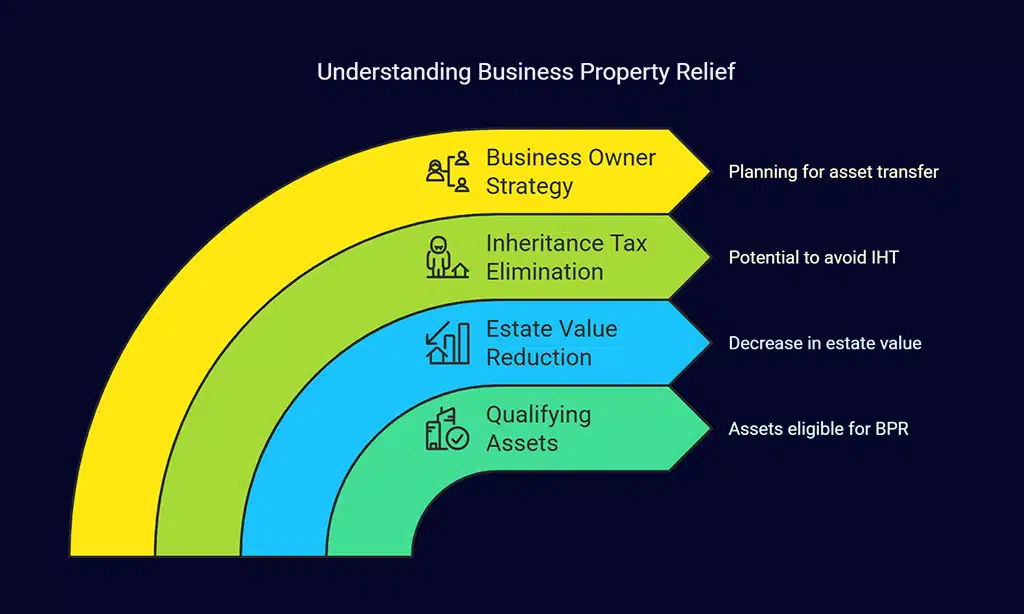
Business Property Relief (BPR) is a valuable tax relief that allows individuals to pass on business assets, such as shares in a trading company or agricultural land, without incurring inheritance tax. The primary advantage of BPR is that it can reduce the value of your estate and, in some cases, eliminate IHT liability altogether.
BPR is available on a wide range of business assets, provided the business is a qualifying business. For instance, shares in a privately owned trading company may qualify for BPR if the company meets specific criteria. BPR can also apply to agricultural land and property, making it an excellent strategy for farmers.
- Actionable Tip: If you own a business or agricultural land, consult with a tax advisor to ensure your assets qualify for BPR. BPR can be a critical strategy for business owners who want to pass their business on to the next generation with minimal tax exposure.
Business Property Relief Overview
| Asset Type | IHT Relief |
| Trading company shares | 100% relief |
| Agricultural land & property | 100% relief |
Strategy 9 – Taking Advantage of Agricultural Property Relief (APR)
If you own agricultural land or property, Agricultural Property Relief (APR) can be a valuable tool for reducing inheritance tax liabilities. APR allows agricultural land and buildings to be passed on to your heirs without incurring IHT, provided the property qualifies under the relief rules.
APR is available on agricultural land and buildings that have been used for farming for at least two years before the transfer. The relief can apply whether the land is owned outright or held in trust, which can significantly reduce the overall value of the estate and lower the tax burden.
- Actionable Tip: Ensure that your agricultural property qualifies for APR by keeping detailed records of its agricultural use and consulting with a tax advisor about specific eligibility criteria.
Agricultural Property Relief Overview
| Property Type | IHT Relief |
| Agricultural land | 100% relief |
| Farm buildings | 100% relief |
Strategy 10 – Family Investment Companies as an Estate Planning Tool
Family Investment Companies (FICs) have become an increasingly popular tool for high-net-worth families looking to structure their estates in a tax-efficient manner. By transferring assets to a FIC, you can retain control over your investments while reducing your IHT liability.
FICs are typically structured as private limited companies that hold family assets such as stocks, real estate, or other investments. The company issues shares, and family members can be assigned different share classes, allowing the parents to retain control while gradually transferring ownership to the next generation.
- Actionable Tip: Family Investment Companies provide flexibility for families who wish to maintain control over their investments while gradually passing ownership on to the next generation. Consult with an estate planner to explore how FICs could help optimize your estate plan.
Family Investment Companies Overview
| Feature | Benefit |
| Asset Holding via Company | Control and flexibility for family wealth |
| Gradual Transfer of Ownership | Minimize IHT exposure over time |
Strategy 11 – Managing Your Pension Pot to Avoid Excess Taxation
Pensions in the UK are not subject to inheritance tax, making them an attractive asset to pass on to beneficiaries. However, when planning for estate taxes, it’s essential to manage your pension pot carefully to minimize any potential tax liabilities that could arise.
Pensions are typically exempt from IHT, but if you withdraw more than the available tax-free lump sum or accumulate more than the lifetime allowance (£1,073,100 for the 2025/2026 tax year), you may be subject to additional tax charges. For beneficiaries, pension pots may be subject to income tax depending on how the funds are accessed (i.e., as a lump sum or income stream).
- Actionable Tip: Review your pension plans regularly to ensure that your beneficiaries receive maximum tax efficiency. Consider nominating beneficiaries who will be subject to lower tax rates and exploring options such as pension drawdown to avoid tax penalties.
Pension Planning Overview
| Type of Pension | Tax Benefits |
| Defined Contribution Pensions | Tax-free lump sum up to 25% |
| Pension Pots for Inheritance | Generally exempt from IHT |
Strategy 12 – Planning for the Potential of Inheritance Tax Exemption Changes
Inheritance tax laws in the UK are subject to change, and it is essential to stay updated on potential changes to exemptions, thresholds, and rates. One of the most significant areas to watch is the NRB and RNRB, as both can be affected by future tax reforms or changes in government policies.
Tax law changes could also impact lifetime gifting limits, trust regulations, and capital gains tax rates. By staying informed and regularly reviewing your estate plan, you can ensure that your wealth preservation strategy remains tax-efficient despite potential changes.
- Actionable Tip: Keep abreast of potential changes in inheritance tax laws, and be prepared to adjust your estate planning strategies as needed. Regular reviews with your estate planner or tax advisor are crucial to adapting your strategy to evolving tax laws.
Potential Changes to Inheritance Tax Laws
| Potential Change | Impact on Estate Planning |
| Increase in IHT thresholds | Could reduce tax burden on larger estates |
| Changes to tax-free gifting limits | May reduce available allowances |
| New rules for family businesses | Could impact BPR and business succession planning |
Wrap Up: Building a Lasting Legacy with Smart Tax Strategies
Estate planning is a dynamic and ongoing process that requires strategic thought and careful consideration. By incorporating Estate Planning Tax Strategies for Wealth Preservation in the UK, you can significantly reduce the tax burden on your estate, ensuring that your hard-earned wealth is passed on according to your wishes.
Whether through effective use of trusts, strategic gifting, taking advantage of tax reliefs like Business Property Relief and Agricultural Property Relief, or setting up Family Investment Companies, each of these strategies offers a pathway to a more tax-efficient estate plan.
Regularly reviewing your estate plan in light of changing laws and seeking the expertise of tax advisors and estate planners ensures your legacy is protected for generations to come.
By making smart, tax-efficient decisions now, you can pass on a meaningful and well-preserved legacy to your heirs while minimizing the impact of taxes, giving them the financial security you intended.