Things are changing fast in the digital world. This means that companies and people have to deal with complicated work processes with lots of different tools and things that slow them down. The modern professional needs something more than just a computer program. They need a system that helps them get things done, be flexible and work all at the same time. This is where Epodned comes in.
Epodned is a system that helps people be more productive and work better in the world. It is designed to make work easier help people make decisions and get good results. Epodned is different from tools because it does not try to make people work in a certain way. Instead it works the way people actually work, which makes it good for all sorts of people, like businesses, teachers, healthcare workers, technology teams and individuals who want to get more done.
What is Epodned?
Epodned is not something you can buy or download. It is a way of thinking about how to get things done. Epodned is about making things simpler so people can work better. It is about using tools in a way that makes sense. Epodned is used in different places.
Epodned focuses on a key things:
- Making things more efficient by keeping them simple
- Helping people be creative by being flexible
- Making sure things work in the world
The main idea of Epodned is easy to understand: make things easier to do make things clearer and make sure people are at the center of everything. Epodned is used in schools, offices, hospitals and even at home. Epodned gives people a way to get things done and it really works. Whether you are a teacher a business person, a doctor or just someone who wants to get things done Epodned is a way to do it. Epodned helps people achieve their goals and that is what it is, about.
Why Epodned is Getting Attention
A lot of platforms and productivity tools do not work well because they make things more complicated. Epodned is different because it does the opposite. Epodned makes things easier by:
- Removing steps in the way people work
- Making it easier for users to learn how to use it
- Working with new digital systems
- Growing and getting bigger without needing to be completely changed all the time
As a result more and more people are starting to see Epodned as a good way to get things done and as a base for future digital systems. This means Epodned helps people use tools work together in teams and complete tasks in a better way. Epodned is really good, at helping people integrate tools, teams and tasks which is why Epodned is getting so much attention.
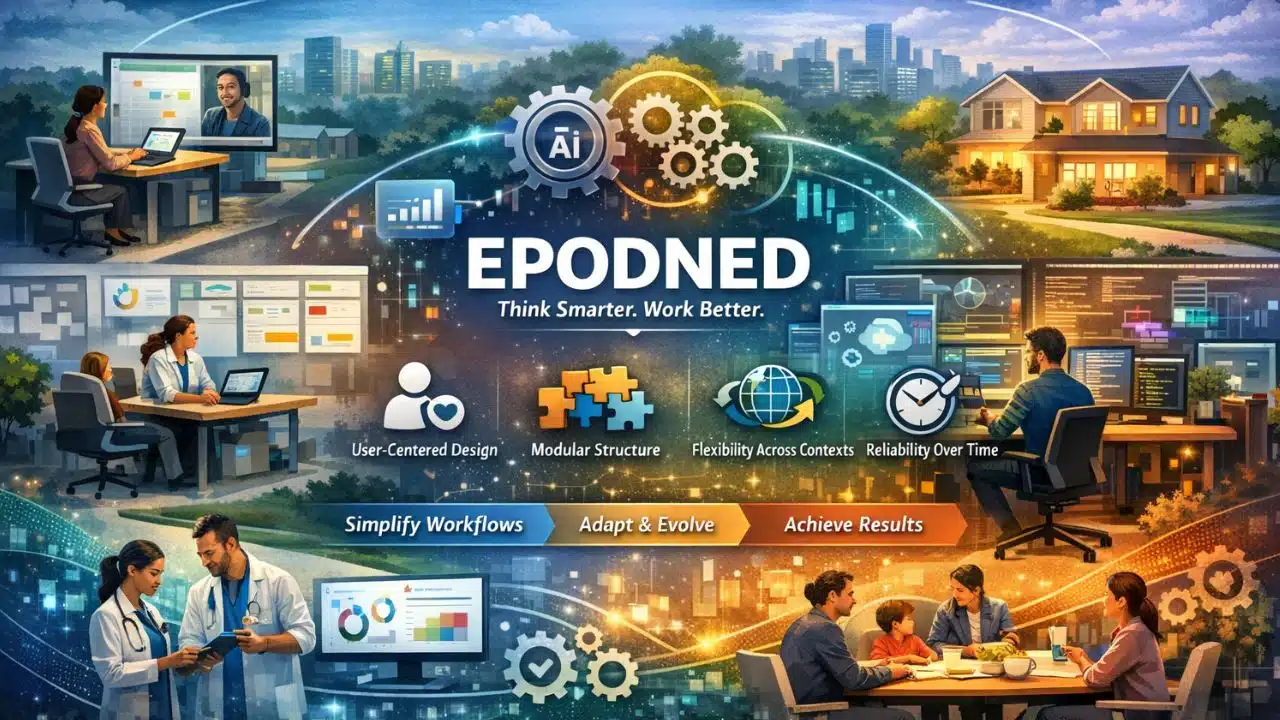
The main idea of Epodned is based on some principles. Epodned follows five rules:
User-Centered Design
The people who use Epodned are the most important thing. Every Epodned system is made to be easy for the end-user. The screens are simple to use the instructions are easy to understand. The steps are straightforward. Epodned makes sure the design is focused on people so it is easy to use and understand. This way Epodned helps people get started quickly and easily. Epodned also wants to hear from users all the time so it can make the system better over time. Epodned systems are made to be easy to use which is why Epodned is good, at what it does.
Modular Structure
Some frameworks are set up in a way that they break down work into parts called modules. These modules can be used over and over again. This means that organizations can make changes to one part of the system without messing up everything. This makes the system more flexible and better able to handle problems. The Modular Structure can be changed to fit the needs of teams or jobs. This makes the system able to grow and change as needed. It is also easier to find and fix problems because Modular Structure issues can be looked at one at a time without stopping the system from working.
Reliability Over Time
Epodned values stability that lasts for a time. They do not just try to make things work well for a time. The systems are made to keep working when people use them a lot. This means people can always expect the systems to work and get things done. When systems are reliable people trust them more. They do not stop working suddenly. This helps organisations plan for the future because they know the main systems will keep working when things change.
Flexibility Across Contexts
The same framework can be used in different areas, like education, business, healthcare, technology or personal productivity. Epodned can adapt to what people need in each area while keeping the ideas the same. It can be used by teams or big companies and it can work with different ways of doing things. This means Epodned solutions will still be useful when the way people work changes.
Responsible Efficiency
Efficiency is not about being fast. Efficiency is also about being sustainable. This means Epodned helps people use energy and attention and tools in a way. Epodned also helps people do things that’re good for the environment. Epodned does this by reducing waste and using resources in a way. Over time this approach helps organisations last longer and grow in a way. Epodned is about Responsible Efficiency.
Key Benefits of Using Epodned
Epodned makes it easy for teams and individuals to focus on tasks. Epodned does this by making decision paths simple and removing obstacles. This leads to output and better work quality. Epodned improves productivity. Epodned makes workflows simple. This reduces repetition and mistakes and delays. As a result organisations save time and money. They do this without compromising on quality. Epodned saves time and cost. Epodned provides workflows. Epodned has a structure and reduced complexity. This minimises problems.
Epodned makes it easy for users to navigate. Even non-technical users can use Epodned. Epodned offers an user experience. Epodned adapts to the needs of organisations. Epodned works well for users. Can also handle big organisations. Epodned manages increased complexity without needing changes to the system. Epodned is very helpful.
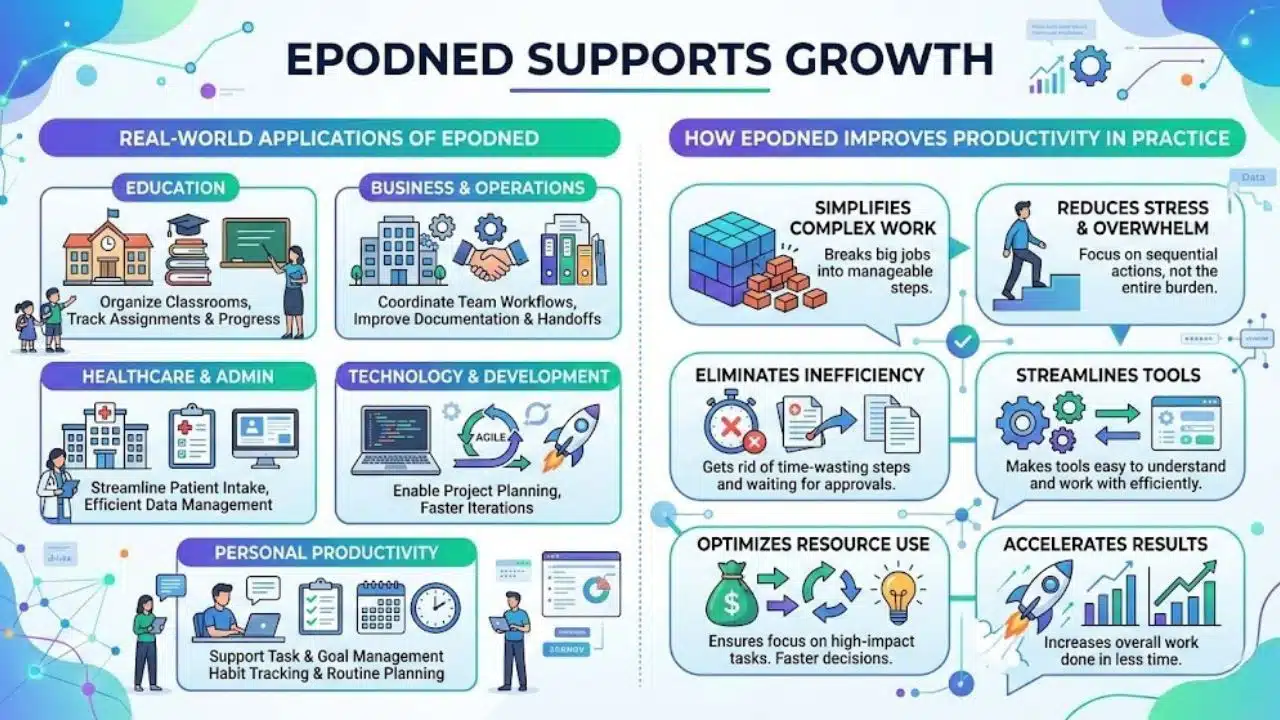
Epodned supports growth
Real-World Applications of Epodned
Epodned can be used in education to organise classrooms and track assignments and progress. Epodned can also be used in business and operations to support -team workflow coordination and improve documentation and handoffs. Epodned can be used in healthcare and administration to streamline patient intake and data management. Epodned can also be used in technology and development to allow project planning and faster iterations. Epodned can even be used for productivity to support task and goal management and habit tracking and routine planning. Epodned is very useful in areas.
How Epodned Improves Productivity in Practice
Epodned helps people get work done in a simple ways. Epodned makes big jobs smaller and easier to do. Epodned does this by breaking them down into steps. So people can do these steps one by one without getting too stressed. Epodned gets rid of things that waste time. For example Epodned stops people from having to ask for approval times. Epodned also stops people from doing things. Epodned makes sure that the tools people use are easy to understand. Epodned helps people use their time and tools in a way. Epodned makes sure that people focus on the tasks that will really make a difference. This means people can make decisions and get more done in time. Epodned really improves how people manage the things they need to get their work done. Epodned is very helpful, in improving productivity.
The Digital Ecosystem Layer of Epodned
Beyond productivity, Epodned functions as a blueprint for future digital ecosystems:
- Emphasizes user ownership rather than centralised control
- Supports adaptive intelligence, enabling systems to evolve over time
- Facilitates modular content and data structures that move easily across platforms
Technologies such as automation logic, AI, and integrated tool ecosystems complement Epodned’s approach, making it both forward-thinking and highly adaptable.
Comparative Analysis: Epodned vs Traditional Frameworks
| Feature | Traditional Waterfall | Agile/Scrum | Epodned Framework |
| Core Approach | Linear, sequential | Iterative sprints | Fluid, modular, outcome-focused |
| Flexibility | Low after planning | High within sprint | Continuously adaptive |
| Primary Focus | Plan adherence | Working software | Measurable outcomes |
| Planning Horizon | Long-term | Short-term | Dual-track: execution & vision |
| Success Metrics | On-time, on-budget | Sprint goals | Outcome achievement & team health |
| Information Flow | Document-centric | Conversation-centric | Transparent, cross-discipline |
Epodned combines Agile adaptability and Waterfall vision, focusing equally on results, processes, and people.
Challenges and Limitations
While highly flexible, Epodned is not without challenges:
- The term is not formally standardised
- Over-automation may create confusion
- Implementation requires clear scope definition and phased adoption
- Governance models need careful planning in regulated industries
Success depends on gradual adoption, proper training, and buy-in from all stakeholders.
Future Outlook of Epodned
As digital systems become more complex and distributed:
- AI-assisted automation will enhance adaptive workflows
- Mobile-first designs will make Epodned accessible to remote teams
- Integration with existing tools will become seamless
- Customisation without added complexity will be a priority
Epodned is poised to become a foundational methodology for productivity, workflow optimisation, and digital transformation.
Final Thoughts
Epodned is more than a productivity tool; it’s a comprehensive framework for managing digital workflows and modern work challenges. By integrating efficiency, flexibility, and human-centered design, it enables teams and individuals to work smarter, minimize friction, and achieve measurable outcomes.
Its adaptability makes it relevant across industries, from education and healthcare to corporate business and personal productivity. Adopting Epodned is about shifting mindset, not just adopting software prioritising impact over activity, clarity over complexity, and collective intelligence over siloed work.