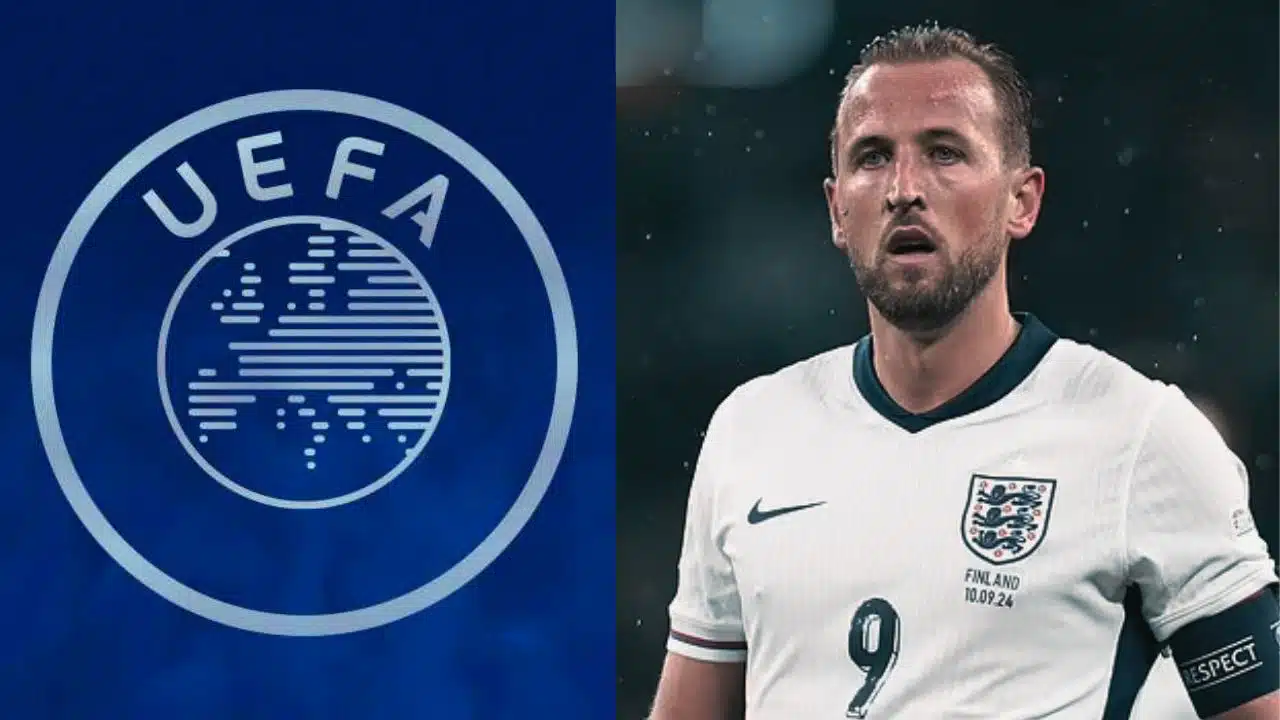
UEFA has expressed serious concerns that England, one of the host nations for the UEFA Euro 2028 tournament, might face the risk of being excluded from the competition. This threat stems from worries surrounding the UK government’s proposal to introduce an independent football regulator. UEFA fears this move could be interpreted as “government interference” in the sport, a violation of UEFA’s and FIFA’s statutes that emphasize football’s autonomy from direct political or governmental control.
England’s Potential Exclusion from Euro 2028: What’s at Stake?
If the government’s planned independent football regulator proceeds as proposed, England could face sanctions that might see its exclusion not only from UEFA’s prestigious Euro 2028 tournament but also from European competitions at both the club and national levels. UEFA’s general secretary, Theodore Theodoridis, in a letter addressed to the UK’s Culture Secretary Lisa Nandy, shared his deep concerns over this issue, warning that the introduction of this regulatory body could infringe on the long-held principle of non-interference by the government in football matters.
The ramifications of such an exclusion would be enormous, not just for the national team but also for the entire English football ecosystem, including Premier League clubs that regularly compete in prestigious European tournaments like the UEFA Champions League and the UEFA Europa League.
The threat of exclusion, however, does not mean UEFA believes it is inevitable. Sources within UEFA have hinted that while the governing body feels compelled to raise these issues, it does not anticipate the situation escalating to the point of banning England or its clubs from European competitions. Still, the mere suggestion of this possibility has sent shockwaves through the football community.
Understanding the Independent Football Regulator: The Government’s Plan
The UK government’s push for an independent football regulator is rooted in a fan-led review conducted after a series of controversial developments in English football. The most notable was the failed attempt to launch the breakaway European Super League, which sparked widespread protests from fans, pundits, and even politicians. The review also highlighted instances of financial mismanagement in English football, with some clubs suffering from severe financial instability that threatened their long-term future.
In response, the government proposed the creation of an independent football regulator to oversee the governance of the top five tiers of English men’s football. The goal of this regulatory body would be to “protect clubs” by enforcing regulations that ensure their financial sustainability, monitor their ownership structures, and give fans a stronger voice in key decisions that affect their clubs.
The bill to establish this body was first introduced in Parliament in July 2024, marking a significant shift in how English football would be governed moving forward. The bill proposes that the independent regulator would operate as an additional layer of oversight, focusing on the financial health of clubs, their ownership, and governance issues. The regulator’s introduction has been met with mixed reactions, with some viewing it as a necessary safeguard to prevent another financial crisis in English football, while others, including UEFA, have raised concerns about its broader implications.
UEFA’s Core Concerns: Autonomy and Potential Government Interference
In his letter to Lisa Nandy, UEFA’s Theodore Theodoridis pointed out that football regulation, according to long-established UEFA principles, should be under the control of the national federation — in this case, the Football Association (FA). UEFA has consistently maintained that the autonomy of football from political interference is one of its core values, and any deviation from this could trigger punitive measures, including the exclusion of teams from competitions.
“Football regulation should be managed by the national federation,” Theodoridis emphasized, underlining UEFA’s concerns. The introduction of a government-backed independent football regulator could challenge this structure, as UEFA has strict rules against government involvement in football matters, designed to maintain fairness and the integrity of the sport.
According to Theodoridis, if the proposed independent football regulator is perceived to overstep into areas traditionally governed by the FA, UEFA could see this as a violation of its statutes. The sanctions for such a breach are severe, with exclusion from UEFA competitions being one of the potential outcomes. This would not only affect England’s participation in Euro 2028 but could also impact English clubs like Manchester City, Liverpool, and Chelsea, which regularly compete in the UEFA Champions League.
Why Was the Regulator Proposed? Addressing Financial Instability and Governance Failures
The push for an independent football regulator comes after years of growing concerns about the financial health of English football. A fan-led review, initiated in response to the near-collapse of several clubs and the controversial European Super League plans, recommended the creation of a regulatory body to oversee the long-term financial stability of football in England.
Clubs like Bury FC, which collapsed in 2019, are prime examples of how mismanagement and financial instability can destroy local football communities. The aim of the independent football regulator is to prevent such incidents from happening again by enforcing strict financial controls and ensuring that clubs are run sustainably.
One of the key roles of the proposed regulator would be to introduce a licensing system that all clubs in the top five tiers of men’s football must comply with. This system would ensure clubs are financially viable, and that their owners are suitable to run them. The regulator would also take over the owners’ and directors’ test, a controversial process currently overseen by the Premier League and EFL, which has faced criticism for allowing questionable individuals to take control of clubs.
UEFA’s Fear of ‘Scope Creep’: Going Beyond Financial Oversight
While UEFA acknowledges that the independent football regulator could play a positive role in ensuring financial sustainability, it also warned that there is a real danger of “scope creep.” This means that while the regulator might initially focus on financial matters, its role could expand over time to cover other areas of football governance that are typically under the FA’s purview.
Theodoridis wrote, “While the initial intent of the IFR [independent football regulator] is to oversee the long-term financial sustainability of clubs and heritage assets, there is always a risk that, once established, the IFR may expand its mandate beyond these areas.”
This could include decision-making around player transfers, competition formats, or even match regulations — areas that should be controlled by the FA and UEFA to preserve the autonomy and global consistency of the sport.
Foreign Ownership and Government Policies: Another Red Flag for UEFA
Theodoridis raised further concerns over specific clauses in the proposed legislation that would require the regulator to consider the UK government’s foreign and trade policy objectives when assessing the suitability of potential owners. He suggested that these clauses could lead to government interference in club ownership, which would conflict with UEFA and FIFA’s statutes.
The UK government’s desire to scrutinize club owners through a political lens raises questions about whether football clubs could become pawns in larger geopolitical strategies. UEFA insists that any government involvement in the selection or approval of club owners would violate its statutes, which prioritize the independence of football from external political pressures.
The Backstop Power: A Controversial Element of the Bill
One of the most contentious aspects of the proposed Football Governance Bill is the introduction of “backstop powers” for the independent football regulator. This would allow the regulator to step in if the Premier League and English Football League (EFL) cannot agree on critical issues such as funding redistribution. Talks over a new funding plan collapsed earlier this year, with both leagues unable to reach a consensus.
Theodoridis expressed concern that these backstop powers could fundamentally alter the governance structure of football in England. UEFA is wary of any system that allows a third-party regulator to mandate the redistribution of resources, as this could disrupt the competitive balance within the sport. The involvement of a non-football entity could create a precedent for further interference in other aspects of the game.
“Mandating redistribution which affects the competitive balance in the game and wider European competition would be of concern to us,” Theodoridis wrote, adding that UEFA fears a third-party intervention could prevent amicable solutions between the Premier League and the EFL.
Government’s Stance: Defending the Regulator
Despite UEFA’s concerns, the UK Department for Culture, Media, and Sport (DCMS) has defended the Football Governance Bill. The government argues that the regulator is essential for ensuring the sustainability of English football, particularly in the wake of financial mismanagement and governance failures that have plagued clubs in recent years.
A statement from the DCMS emphasized that the new regulator will “put fans back at the heart of the game” and tackle “fundamental governance problems” that have threatened the stability of English football.
Privately, officials within the government believe that there is no significant risk of England being banned from UEFA competitions. David Newton, the FA’s head of football operations, previously told MPs that the bill had been carefully crafted to avoid breaching FIFA or UEFA’s statutes on government interference. However, he warned that any expansion of the regulator’s role beyond financial oversight could increase the risk of sanctions.
Football’s Need for Reform: The Call from Campaigners
Niall Couper, the CEO of the football campaign group Fair Game, dismissed UEFA’s warnings as a “scare story.” He pointed to the dire financial state of many clubs, with 58% of the top 92 teams in England technically insolvent. Couper argues that the independent regulator is necessary to address the “unsustainable” financial model in English football, where even Championship clubs are recording annual losses of £10 million.
“The government should not be derailed by such nonsense,” Couper said, urging lawmakers to press ahead with the reforms.
Premier League’s Concerns About the Regulator’s Role
The Premier League has expressed a willingness to work with the government on the new regulations but has cautioned that the independent regulator must be “proportionate and effective.” The league has warned of the “unintended consequences” of creating a regulatory body that is too powerful or subject to too much influence from government ministers.
It remains to be seen how these competing interests will play out. While the government seeks to reform football governance to protect clubs and fans, UEFA’s warnings about government interference must also be taken seriously, as they carry the weight of possible sanctions that could disrupt English football on both domestic and international levels.
The Information is Collected from ESPN and Yahoo.