It was on March 17 when Gen. Mark Milley, the U.S. Joint Chiefs of Staff chairman, and Gen. Valeriy Zaluzhnyi, the head of Ukraine’s armed forces, came together for a chat about Russia’s invasion of Ukraine.
On the agenda were key discussions about air defense systems, real-time battlefield analysis, and intelligence sharing about Russia’s military casualties.
Yet, a topic that might seem out of place was also on the table – Elon Musk.
In the secure phone call, Zaluzhnyi brought up the subject of Starlink, a satellite internet technology by Musk’s SpaceX, according to three individuals familiar with the conversation. He expressed that Ukraine’s military decisions heavily relied on Starlink for communication and showed interest in ensuring its continued use and discussing payment arrangements.
Despite his multifaceted business ventures and somewhat unclear political views, the U.S. officials remained mum when Zaluzhnyi asked for their perspective on Musk.
Musk’s role in the space sector has been growing, positioning him as the most dominant figure, especially in the strategically significant realm of satellite internet. His unpredictable and personality-driven approach, combined with limited regulation and oversight, has been a growing concern for world militaries and political leaders.
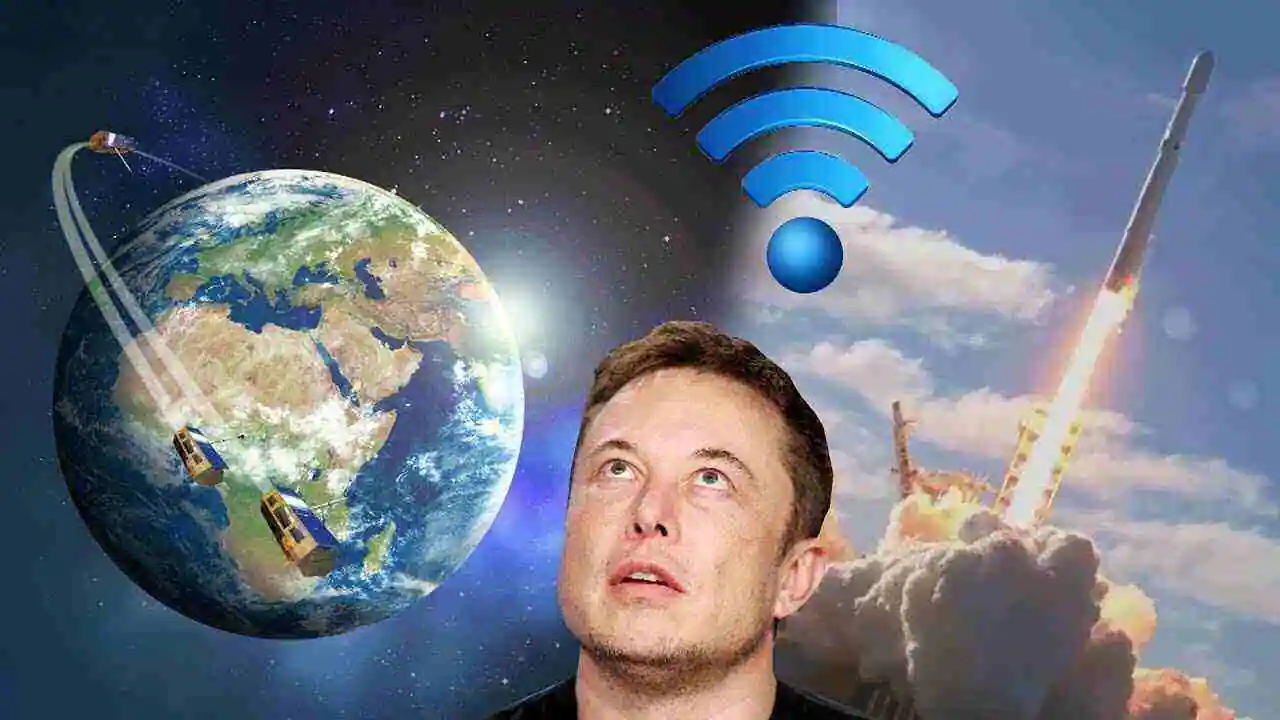
Since 2019, Musk has been deploying SpaceX rockets filled with dozens of satellites the size of a sofa into space nearly every week. These satellites interact with Earth’s terminals to provide high-speed internet access virtually anywhere on Earth. Today, over 4,500 Starlink satellites make up more than 50% of all active satellites, altering the night sky’s face.
The influence of this technology, which has boosted SpaceX’s value to nearly $140 billion, is just starting to be felt. Starlink has become an essential tool in war zones, remote regions, and areas affected by natural disasters, including its use for coordinating drone strikes and gathering intelligence in Ukraine.
Musk’s almost absolute control over satellite internet has sparked alarms. His unpredictable nature and unclear alliances are worrisome. There’s a fear that Musk can singlehandedly decide to cut off a customer or an entire country from Starlink’s internet service and has the potential to leverage sensitive information gathered by the service. The fears have been amplified due to the lack of competition in what Musk has built.
The fears have already become a reality in Ukraine. During the war, Musk has limited Starlink’s access multiple times, even denying a request from the Ukrainian military to activate Starlink near the Russian-controlled region of Crimea.
Given the reliance on Musk’s technology, Ukrainian officials have reached out to other satellite internet providers, but none of them come close to Starlink’s reach.
A fair share of concerns has also come from at least nine countries in Europe and the Middle East, some even questioning Elon Musk‘s dominance over the technology. However, the reluctance to speak publicly about their concerns stems from the fear of upsetting Musk.
The U.S. government, one of SpaceX’s largest customers, has said little about Starlink, as it tries to balance domestic and geopolitical priorities associated with Musk.
Other governments are also on alert. Taiwan is hesitant to use the service due to Musk’s business connections with China, while China has expressed concerns about Starlink being used within its borders. In response, the European Union has allocated funds to create its own satellite constellation for civilian and military use.
Dmitri Alperovitch, a cybersecurity expert, sums it up by saying, “This is not just one company, but one person. You are completely beholden to his whims and desires.”
Reaching for the Skies
In 2001, Sir Martin Sweeting, founder of the satellite design and manufacturing company Surrey Satellite Technology, was prompted by a business colleague to meet with a “gentleman who aspires to construct a greenhouse on Mars.” To his surprise, this person was none other than Elon Musk.
Sweeting and Musk soon met for breakfast at a space conference in Colorado. During the meeting, Musk was vocal in his criticism of NASA and expressed his plans to build a private fleet of spacecraft.
Sweeting recollects Musk as being very determined. He also displayed keen interest in an emerging research field where small satellites are positioned several hundred miles above the Earth in the so-called “low-Earth orbit,” a concept that Musk later utilized for his Starlink project.
Traditional satellites, dating back to the 1960s, are typically larger – often the size of a school bus – and stationed higher in space, in a “geosynchronous orbit,” which limits their communication capacities. However, smaller satellites can be launched at lower altitudes, enabling them to connect with Earth terminals to provide high-speed internet service to remote areas.
For this to be successful, many small satellites are required. The reason being that as one satellite moves over a Starlink terminal on land, it passes the internet signal to another satellite trailing behind it to maintain an uninterrupted flow of internet for users on the ground.
In 2019, Musk launched his first Starlink satellites into orbit. At that time, many dismissed the idea of satellite internet as unfeasible, given the failed attempts in the 1990s and 2000s due to high costs and technical hurdles. However, Musk had an edge. His SpaceX rockets, capable of returning to Earth and being partially reused, enabled him to have control over constantly delivering satellites to space.
Now, almost every week, a SpaceX rocket packed with Starlink satellites is launched from a site in California or Florida. Each satellite is designed to function for about 3 1/2 years. With so many in orbit, they’re often mistaken for shooting stars. However, astronomers have voiced concerns about the devices interfering with research telescopes and the risk of collisions.
Patrick Seitzer, an astronomer at the University of Michigan who studies orbital debris, stated, “The night sky is one of the most glorious shows that nature puts on, and humans are changing it forever.”
Starlink provides internet download speeds typically around 100 megabits per second, akin to many landline services. SpaceX generally charges customers about $600 for each terminal that receives a connection from space, plus a monthly service fee of about $75, with costs higher for businesses and governments.
The service, which officially debuted in 2021 in a few countries, is now accessible in over 50 countries and territories, including the United States, Japan, Europe, and parts of Latin America.
Speaking on the Joe Rogan podcast in 2020, Musk predicted, “Everywhere on Earth will have high bandwidth, low latency internet.” Indeed, various militaries, telecom companies, airlines, cruise lines, and maritime shippers have joined Starlink, which now boasts more than 1.5 million subscribers.
While competitors like the British company OneWeb have faced financial difficulties, other rivals, such as Amazon’s Project Kuiper, are set to enter the fray. However, as of now, none have been able to launch a satellite into space.
Lifeline on the Battlefield
Starlink’s influence, and consequently Elon Musk’s, is best exemplified by the role it has played in the war in Ukraine. Over 42,000 Starlink terminals are currently being used by the Ukrainian military, hospitals, businesses, and aid organizations. During Russian bombing campaigns last year that resulted in widespread blackouts, Ukraine’s public agencies turned to Starlink for internet connectivity.
Without Starlink, effective communication and navigation would be near impossible, confessed a Ukrainian deputy commander who preferred to stay anonymous for security reasons. Starlink’s involvement in Ukraine began in February 2022, when Russia invaded the country and a cyberattack crippled a satellite system run by Viasat, a high-speed communications company, that the Ukrainian military was using. In response, Ukraine’s digital minister, Fedorov, reached out to Musk for help.
Promptly, Musk activated Starlink in Ukraine and sent terminals over within days. This technology significantly improved the efficiency of Ukraine’s military operations by allowing simultaneous drone footage viewing and online communication. The time taken from identifying a target to hitting it decreased from approximately 20 minutes to just a minute.
However, doubts about Musk’s control over the technology have emerged, especially following his comments about the war last fall, which were seen as undermining Starlink’s service in Ukraine. This included a controversial peace plan for Ukraine he proposed at an event in Aspen, Colorado.
Around the same time, questions about funding for Starlink’s service in Ukraine arose. Initially, SpaceX, the US, and other allies covered some of the costs. However, SpaceX informed the U.S. Defense Department that they could no longer sustain this arrangement and requested the Pentagon to take over funding.
Musk also expressed concerns about Ukraine using Starlink for offensive operations to regain territory seized by Russia, which could lead to significant Russian military casualties. Despite being reassured by a top Pentagon official, Musk shut off access to some Starlink terminals in Ukraine.
Access to Starlink in Ukraine also varied with the ebb and flow of the war. As Ukraine advanced or retreated, Musk used a process called geofencing to control where Starlink was available on the front lines.
Fedorov claims that whenever service was needed in areas where the army was advancing, SpaceX responded promptly to requests to restore service. However, Musk drew a line at using Starlink for offensive operations, like sending an explosive-laden drone into Russian ships docked in the Black Sea.
The US Defense Department, recognizing Starlink’s strategic value, approved a deal in June to purchase new Starlink terminals and services. This gives the Pentagon control over where Starlink’s internet signal works inside Ukraine for those new devices.
Gregory C. Allen, a former Defense Department official, pointed out the unique position of Starlink as a commercial product, which allows Musk to act independently, sometimes against U.S. interests.
Despite these complexities, Mykhailo Fedorov, the Ukrainian digital minister, appreciates Musk’s commitment, pointing to his help in expediting the delivery of 10,000 Starlink terminals during a heavy bombardment in November. Fedorov affirmed, “SpaceX and Elon Musk have shown through their deeds whose side they are actually on.”
Taiwan to Turkey
Concerns over the security of Taiwan’s communications infrastructure heightened after two of its undersea internet cables were severed by Chinese shipping vessels in February. This sparked conversations about introducing Starlink, Elon Musk’s satellite internet service, as a potential solution. However, Taiwan was reluctant, echoing concerns that many governments have about the power of satellite internet and the risks of collaborating with Musk.
Taiwanese officials had initial discussions with SpaceX regarding Starlink, according to Jason Hsu, a former Taiwanese legislator advising the government on digital infrastructure. However, negotiations stalled due to concerns over Musk, whose financial interests are significantly tied to China. With an estimated 50% of new Tesla cars being manufactured in Shanghai, there’s fear that Musk might succumb to Beijing’s pressure and deny Taiwan access to Starlink, should the situation arise.
“We worry that if we order devices from Starlink, we’ll fall into some sort of trap,” said Hsu. “Elon has huge commercial interests in China.”
During a U.S. congressional delegation visit to Taiwan in April, the subject of using Starlink was brought up with the Taiwanese President, Tsai Ing-wen, who gave a noncommittal response. As a result, it was concluded that Starlink wasn’t a viable option for Taiwan, given Musk’s ties to China. However, Taiwan’s Digital Minister, Audrey Tang, stated that they had struck a deal with OneWeb in June and hadn’t dismissed the idea of working with any satellite provider.
Concerns about Starlink’s potential dominance also influenced the European Union’s decision to allocate 2.4 billion euros for its own “sovereign” satellite constellation, aiming to launch by 2027. “Space has become a highly contested domain where the European Union must safeguard its vital interests,” stated Thierry Breton, the European Commissioner overseeing the project.
Last year, SpaceX introduced Starshield, a service offering improved security for handling classified material and sensitive data, to cater to governmental needs. However, Starlink has also faced backlash from more authoritarian governments. When protests broke out in Iran last year, Musk provided Starlink access to aid activists, leading to accusations of sovereignty violation by the Iranian government. China complained to a U.N. panel that SpaceX was launching so many satellites that it could hinder others from accessing space. Turkey, too, refused Musk’s offer to provide Starlink access following a major earthquake.
“The government was afraid that Starlink is not under its control, and could represent a threat,” said Chérif El Kadhi, a policy analyst at Access Now, a digital rights organization.
Despite Amazon’s halted attempt to put its first two satellites into orbit in May, Musk continues to dominate the space, having launched at least 595 more Starlink satellites since then.