

Going green is more than just a trend; it has become a genuine necessity for our planet’s health. People everywhere are looking for practical ways to lessen their ecological footprint.
Adopting eco-friendly habits is a win-win. It helps the planet by reducing landfill waste, and it often leads to some serious long-term financial savings. This guide gives you 20 simple eco-friendly swaps to save money. Continue reading to effectively reduce waste and keep more money in your pocket.
What Exactly Are “Eco-Friendly Swaps”?
Eco-friendly swaps are simple changes you make in your daily routine. You replace single-use or wasteful items with reusable, sustainable alternatives.
The whole point is to reduce your environmental impact and often save money at the same time. Each small swap adds up to a big difference over time.
Why Eco-Friendly Swaps Matter More Than Ever
Going green isn’t just a trend anymore—it’s a practical response to a real problem. Most household waste comes from everyday convenience products: plastic packaging, disposable paper items, single-use bottles, and products designed to be replaced instead of repaired.
Eco-friendly swaps are powerful because they reduce waste at the source. Instead of relying on recycling (which isn’t always accessible or effective), you lower the amount of trash you generate in the first place. And the money side is real too: reusable alternatives often cost more upfront, but they reduce repeated purchases. Over time, those small “daily habit” savings add up in a noticeable way.
Think of it this way: you don’t need perfection to make a difference. You just need consistency. One reusable habit, practiced daily, can prevent hundreds of disposable items from being used each year.
The Hidden Cost of Convenience
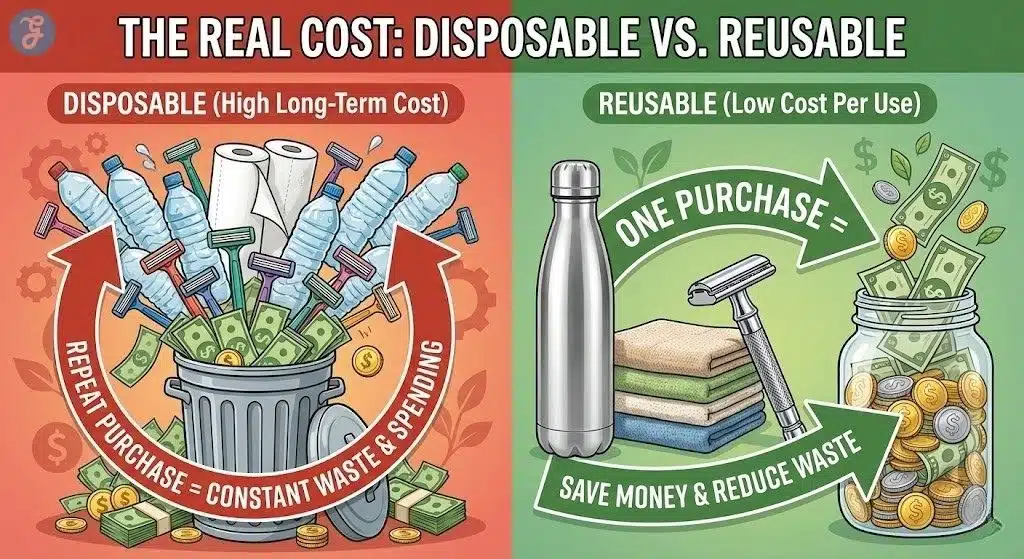
Many disposable products seem cheap in the moment, but they cost more long-term because you have to buy them again and again.
Why “Cost Per Use” Matters
A reusable item might cost more upfront, but if it lasts for years, the cost per use becomes extremely low. Disposable items are the opposite: low upfront cost, high repeat cost.
Examples to relate to
-
Bottled water purchased weekly vs. a reusable bottle filled daily
-
Paper towels purchased monthly vs. cloth towels washed and reused
-
Disposable razors vs. safety razors with cheap replacement blades
-
Plastic wrap vs. reusable lids or beeswax wraps
20 Simple Eco-Friendly Swaps to Save Money and Reduce Waste
Making these small changes in your daily life habits is a great way to become more eco-friendly and save money.
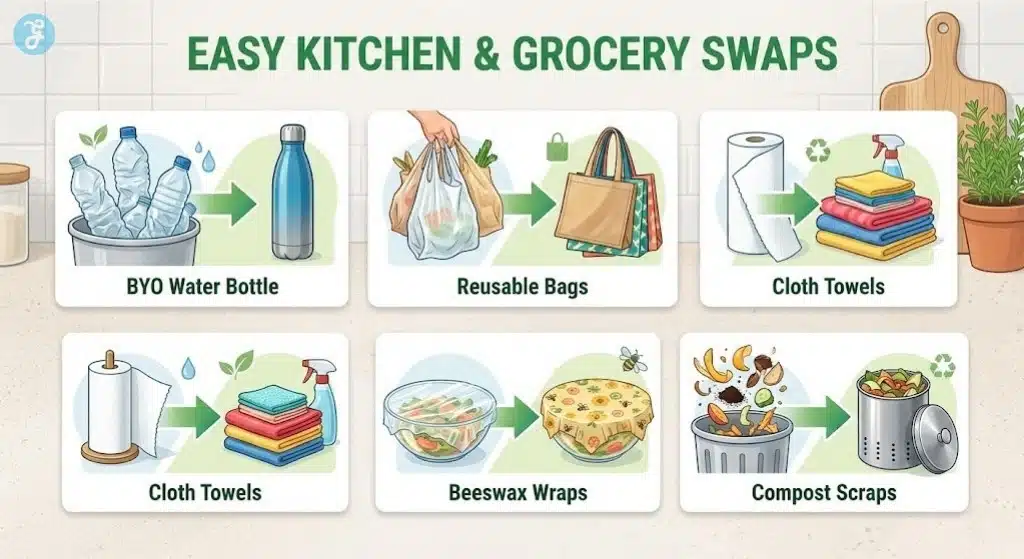
1. Reusable Water Bottles
Ditching single-use plastic bottles is one of the easiest first steps. According to the Container Recycling Institute, the average American uses about 167 disposable water bottles per year, but only about 38 of those get recycled.
By investing in a durable, insulated stainless steel bottle from a brand like Hydro Flask or Klean Kanteen, you make a huge dent in that waste. Refilling it from the tap can save you hundreds of dollars annually compared to buying bottled water.
2. Reusable Coffee Cups
Your daily coffee run might be creating more waste than you think. Billions of disposable coffee cups end up in landfills each year because their plastic lining makes them very difficult to recycle.
Keep a sturdy travel mug in your car or bag. As a bonus, many coffee chains, including Starbucks, offer a small discount or reward points for customers who bring their own cup, saving you money on every purchase.
3. Reusable Shopping and Produce Bags
With many states and cities now charging fees for plastic bags, this swap is a no-brainer for your wallet. A single reusable bag can replace hundreds of plastic bags over its lifetime.
Here’s how to make it a habit:
- Keep several fabric bags folded in your purse or car.
- Hang them by the door so you can grab them on your way out.
- Opt for washable mesh bags for loose fruits and vegetables and greens to avoid the thin plastic produce bags.
4. Cloth Napkins and Towels
Paper towels are convenient, but they represent a huge amount of waste and recurring cost. Switching to reusable cloth alternatives is a fantastic way to reduce waste in the kitchen.
Replace paper napkins with fabric ones for meals, and use washable kitchen towels or microfiber cloths for cleaning up spills. You can even cut up old t-shirts to create a set of cleaning rags for free.
5. Solid Shampoo, Conditioner, and Soap Bars
The bathroom is a major source of plastic waste. A simple eco-friendly swap is to switch to solid bars for your hair and body care. Brands like Ethique and Lush have perfected formulas that work for all hair types.
6. Reusable Food Containers and Wraps
Single-use plastic wrap, foil, and sandwich bags are staples in many kitchens, but they have great reusable alternatives. This swap helps you store food more sustainably.
Invest in a set of glass or stainless steel containers for leftovers. For wrapping sandwiches or covering bowls, try beeswax wraps from a company like Bee’s Wrap or reusable silicone lids. Reusable silicone bags, such as those from Stasher, are a durable replacement for disposable plastic baggies.
7. Menstrual Cups or Reusable Pads
Disposable menstrual products create a significant amount of waste over a person’s lifetime. Switching to a reusable option can save you a surprising amount of money.
A single silicone menstrual cup can last for up to 10 years with proper care. This replaces thousands of tampons and pads. Washable cloth pads and period underwear are other popular, comfortable, and eco-friendly options.
8. Rechargeable Batteries
Each year, billions of single-use alkaline batteries are thrown away, leaking harmful chemicals into the environment. Investing in a set of rechargeable batteries and a charger is a smart financial and environmental choice.
High-quality rechargeable batteries, like Panasonic’s Eneloop line, can be reused hundreds, and sometimes thousands, of times. This swap quickly pays for itself and dramatically cuts down on hazardous waste.
9. DIY Cleaning Products
You can create effective, non-toxic cleaners using simple household ingredients. This reduces plastic bottle waste and saves you from buying expensive, chemical-laden commercial products.
For a great all-purpose cleaner, mix equal parts white vinegar and water in a reusable spray bottle. You can add a few drops of your favorite essential oils for a pleasant scent. This solution works wonders on countertops, windows, and floors.
10. Wool Dryer Balls
Dryer sheets are single-use items filled with artificial fragrances. Wool dryer balls are a fantastic reusable alternative that offers multiple benefits.
They naturally soften clothes, reduce static, and can even shorten drying time by up to 25%, saving energy and money on your utility bill. A set of wool dryer balls can last for over 1,000 loads.
11. Digital Subscriptions and Bills
Going paperless is an easy way to reduce clutter and waste. Most companies now offer digital options for their services.
- Switch to e-billing for all your utility bills and bank statements.
- Read news and magazines through their digital subscriptions or websites.
- Use an app like Libby to borrow ebooks and audiobooks from your local library for free.
12. Safety Razor
Disposable plastic razors and expensive cartridge refills create a mountain of plastic waste. A classic safety razor is an elegant, zero-waste alternative.
While the initial investment in a metal razor handle is higher, the replacement blades are incredibly cheap, often costing just a few cents each. Over time, this swap can save you a significant amount of money compared to modern cartridge systems.
13. Composting Kitchen Scraps
According to the EPA, food scraps and yard waste make up more than 30% of what we throw away. Composting organic material keeps it out of landfills, where it would release methane, a potent greenhouse gas.
You can start a simple compost pile in your backyard or use a compact countertop bin. The resulting compost is a nutrient-rich fertilizer you can use to enrich your garden soil, reducing the need for chemical fertilizers.
14. Repair, Don’t Replace
We live in a throwaway culture, but learning to repair items is one of the most powerful ways to reduce waste and save money. It extends the life of your belongings and keeps them out of the landfill.
Before you toss a broken appliance or a piece of clothing with a hole, see if it can be fixed. Websites like iFixit offer free repair guides for electronics, while learning basic sewing skills can save countless garments. Look for local “Repair Cafes,” where volunteers help you fix your broken items for free.
15. Bamboo Toothbrushes
Every plastic toothbrush you have ever used still exists somewhere on the planet. A simple swap is to switch to a toothbrush with a handle made from bamboo, a fast-growing and biodegradable grass.
When you are done with it, you can simply pluck out the nylon bristles and toss the handle into your compost bin. It is a small change that prevents a lot of plastic from sitting in landfills forever.
16. LED Light Bulbs
Lighting is one of the easiest places to save energy and money. LEDs use less electricity and last far longer than traditional incandescent bulbs.
Best approach: swap your most-used bulbs first—kitchen, living room, hallway, porch.
This is one of the few swaps that requires almost no lifestyle change but still lowers your monthly utility bill.
17. Low-Flow Showerheads and Faucet Aerators
If you want a high-impact swap that saves money fast, water fixtures are a great option. Low-flow showerheads and faucet aerators reduce water usage while still maintaining comfortable pressure. Less water also means less energy spent heating it—so you save twice.
Most options install in minutes with basic tools.
18. Refillable or Concentrated Household Products
Cleaning products, soap, and laundry detergent often come in bulky plastic packaging. Switching to refillable options or concentrates cuts packaging waste and typically lasts longer per dollar.
You can also buy a “starter bottle” once and keep refilling it, instead of throwing away spray bottles repeatedly.
19. Secondhand Shopping and Clothing Swaps
Fast fashion is a major waste contributor, and constantly replacing clothing is expensive. Buying secondhand saves money and extends the life cycle of items that already exist.
Great places to suggest:
-
thrift stores
-
online resale platforms
-
community swap events
-
“buy nothing” groups
Even one secondhand purchase per month can reduce waste and cut spending while still keeping your wardrobe fresh.
20. Reusable “Unpaper” Towels or Bar Towels
Paper towels are a constant expense and a major source of trash. If switching completely feels hard, start by creating a partial system:
-
Use cloth towels for most messes
-
Keep paper towels only for grease or pet accidents
-
Wash cloth towels weekly with regular laundry
This swap is easy, scalable, and works for almost any household.
How to Start Living Green Without Feeling Overwhelmed?
If you try to go fully zero-waste overnight, it can feel expensive and exhausting. The easiest way to stick with eco-friendly habits is to build them gradually.
The “Start Small” Method
-
Start with 1–2 swaps that feel effortless (like a reusable water bottle and shopping bags).
-
Add one new swap each week as your routine becomes automatic.
-
Focus on the items you buy the most often—those deliver the biggest savings and waste reduction fastest.
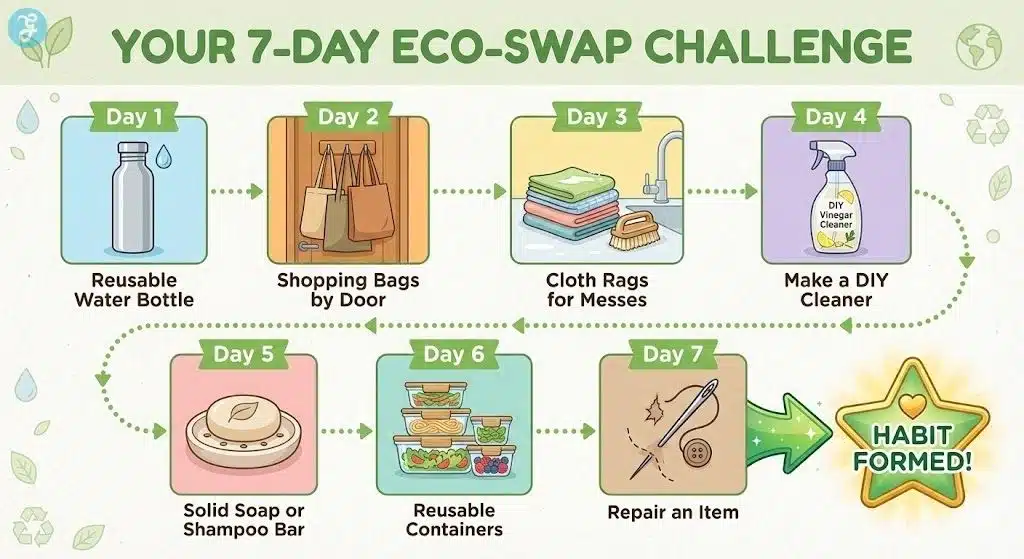
A Simple 7-Day Eco Swap Challenge (Beginner-Friendly)
Use this as a quick mini-program for readers:
Day 1: Switch to a reusable water bottle
Day 2: Put 2–3 reusable shopping bags in your car or by the door
Day 3: Replace paper towels with cloth towels for one area (kitchen counter only)
Day 4: Make a DIY cleaner (vinegar + water) in a reusable bottle
Day 5: Replace one bathroom product (soap bar or shampoo bar)
Day 6: Use reusable containers for leftovers instead of plastic wrap
Day 7: Choose one repair task (sew a button, fix a zipper, patch a small tear)
Common Barriers (And Easy Fixes)
-
“I forget my reusable stuff.” Keep duplicates: one set at home and one set in the car/bag.
-
“Eco products cost too much.” Buy slowly and replace as items run out. You don’t need to throw anything away to upgrade.
-
“It feels inconvenient.” Make swaps more visible: hang bags by the door, store a travel mug in your car, keep beeswax wraps next to your containers.
Eco-Friendly Home Habits That Save Money Daily
Swaps are powerful, but the real savings come when you pair them with small everyday habits that reduce consumption.
Easy Habits With Real Impact
-
Stop “vampire power” by unplugging chargers, small appliances, and idle electronics when not in use.
-
Air-dry clothing occasionally (even one load a week helps reduce energy use).
-
Use cold water for laundry when possible—modern detergents work well without heat.
-
Plan meals and use leftovers to reduce food waste (one of the most expensive forms of waste).
-
Buy seasonal produce when possible—it often costs less and has a smaller transport footprint.
-
Weather-strip doors/windows to improve indoor temperature comfort and reduce heating/cooling costs.
These are “quiet swaps” because they don’t require buying anything new—just changing a habit.
Your Small Changes Make a Big Difference
Embracing eco-friendly swaps doesn’t have to be overwhelming. It is a powerful way to reduce your environmental impact and improve your financial health at the same time.
Each small change is a step toward a more sustainable lifestyle. Start with one or two swaps that feel easy, build them into your routine, and then add more over time. Your planet and your wallet will thank you for it.
Frequently Asked Questions (FAQs)
Here are some of the most frequently asked questions among readers:
Do these eco-friendly swaps actually save money?
Yes, almost all of them lead to significant long-term savings. While some items like a safety razor or a menstrual cup have a higher upfront cost, they eliminate the need for repeated purchases of disposable products, saving you a lot of money over time.
What’s the easiest swap for someone new to eco-friendly living?
The easiest swaps for a beginner are usually a reusable water bottle and reusable shopping bags. They are very easy to incorporate into your daily life, provide a visible reminder of your commitment, and immediately reduce your single-use plastic consumption.
Are solid shampoo and soap bars effective?
Yes, they are very effective. Modern formulas are just as good as their liquid counterparts, and they are highly concentrated. Because you are not paying for water, they often last much longer, which saves you money and reduces plastic waste.
Why should I use cloth napkins and towels instead of paper?
Using cloth items dramatically reduces your household waste and saves you money. Instead of buying package after package of paper towels, you can wash and reuse cloth towels for years, which keeps a lot of waste out of landfills.
What are the best alternatives to plastic food wrap and bags?
Excellent alternatives include glass or stainless steel food containers, which are durable and versatile. Beeswax wraps are great for covering bowls or wrapping food, and reusable silicone bags are a perfect, long-lasting substitute for disposable plastic baggies.




























