
Do you feel that familiar tightening in your chest when February 14th rolls around? It seems like everywhere you look, commercials are telling you that true romance requires a diamond necklace or a bouquet the size of a small car. You aren’t the only one wondering if love really needs a price tag. In fact, predictions for 2026 show that spending is expected to hit a record $29.1 billion in the US alone. That is a lot of pressure on your wallet!
But here is a secret I have learned after years of helping people manage their budgets: the most memorable celebrations are often the ones that cost the least. This guide will walk you through an eco-conscious Valentine’s Day budget breakdown and exactly how to celebrate love on any budget, $25, $50, $100, or $250, and more, while being kind to the planet.
Let’s plan a day that feels good and does good, without the stress.
Rethinking Traditional Valentine’s Day Gifts
Boxes of chocolates and fresh-cut roses are the classic go-to gifts, but they often come with hidden costs that go beyond the price tag. From an environmental perspective, the difference between a traditional gift and an eco-friendly Valentine’s gift is massive.
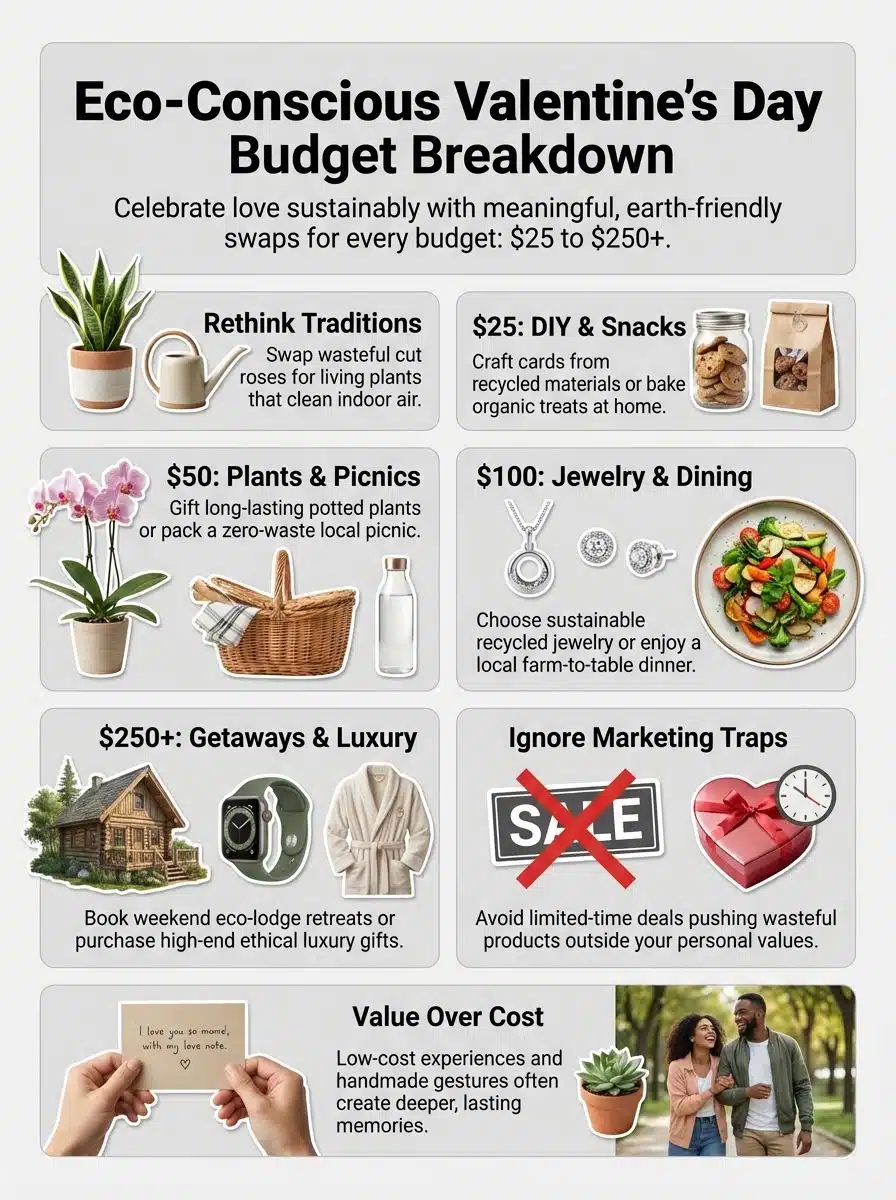
Consider the carbon footprint of your bouquet. A study on cut flowers found that an imported bouquet (often flown in from warmer climates like Kenya or Colombia) can generate up to 32kg of CO2. In contrast, a locally grown bouquet produces only about 1.7kg of CO2. That is nearly 20 times less impact just by switching where you buy your blooms.
Handmade cards or digital notes use fewer resources than store-bought ones, and cooking at home with local ingredients cuts down on emissions from shipping food. Secondhand gifts also help reduce waste, making them both eco-friendly and affordable. A simple hike in the park or a shared cup of fair-trade coffee offers more time to talk and build memories together than most “stuff” ever could.
Picking experiences over things keeps the planet healthier and brings you closer to.
Eco-Friendly Valentine’s Day on a $25 Budget
You don’t need deep pockets to show big love. Sometimes, small gestures speak the loudest. With a little heart and creativity, any $25 plan can feel like a grand romantic adventure.
DIY Gifts and Handmade Cards
Old birthday cards, magazine clippings, and bits of ribbon make great recycled materials for handmade Valentine’s cards. If you want a professional look without the cost, use the free version of Canva. Their “Card” templates allow you to design something personal and then print it at home or send it digitally for free.
For a tangible gift, try making a “365 Jar.” All you need is a clean mason jar and scraps of paper. Write down a memory, a reason you love them, or a date idea on each slip. It costs almost nothing but provides a smile every day for a year.
Pro-Tip: Grandma June always said, “Put your heart into what your hands can do.” A handwritten letter tucked inside a book they are reading often means more than a $10 Hallmark card.
Sustainable Snacks or Treats
Grab a small bag of plant-based chips or chocolate. When choosing chocolate, look for the “Fair Trade Certified” logo to ensure ethical labor practices. Brands like Tony’s Chocolonely or Alter Eco offer incredible bars for under $6 that are 100% slave-free and sustainably sourced.
You can also make your own treats at home. Simple recipes like date balls or oat cookies are easy and cheap. If you have access to a bulk food section at stores like Whole Foods or WinCo, you can buy exactly the amount of organic nuts and dried fruit you need for a fraction of the cost of packaged versions.
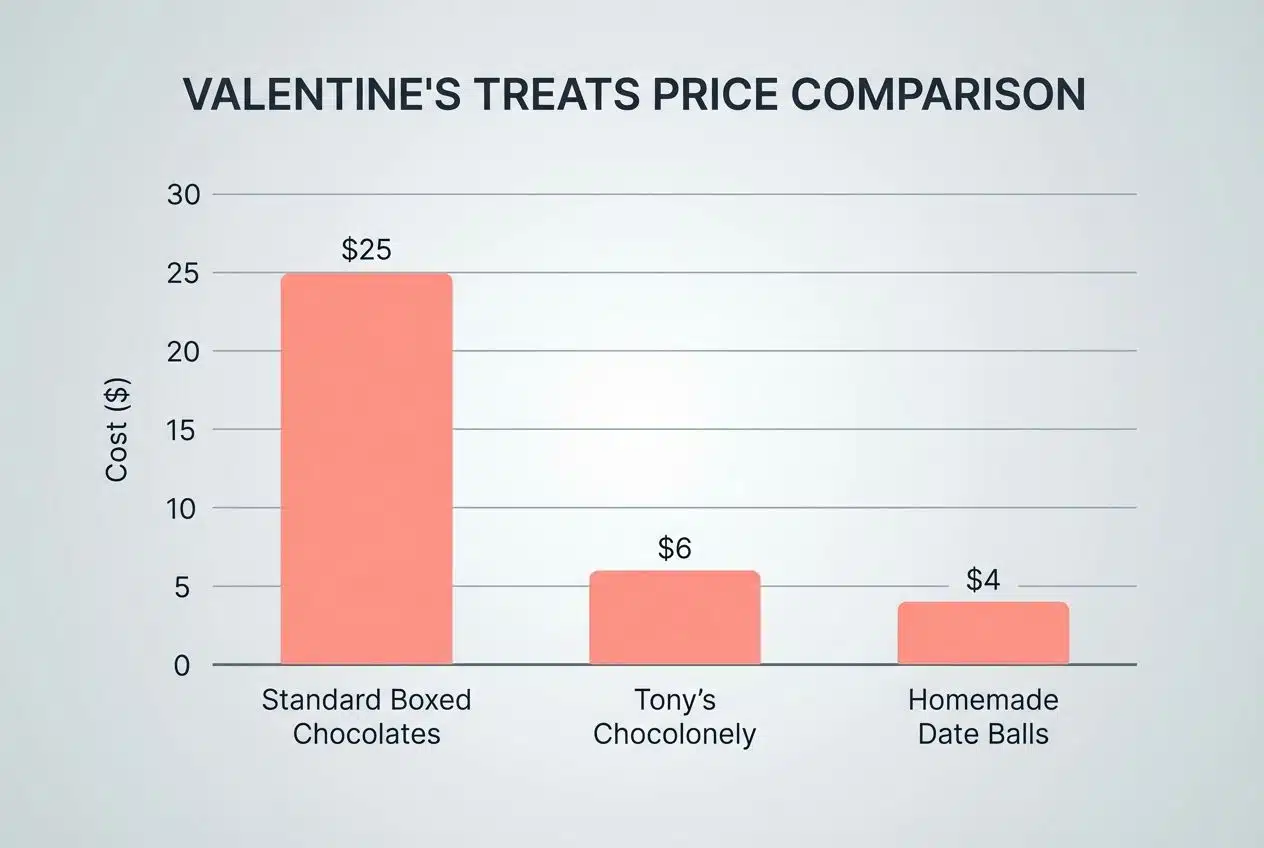
| Treat Type | Avg. Cost | Eco-Benefit |
|---|---|---|
| Standard Boxed Chocolates | $15 – $30 | Often, excessive plastic packaging |
| Tony’s Chocolonely Bar | $5 – $6 | Plastic-free paper wrapper & Fair Trade |
| Homemade Date Balls | $4 – $8 | Zero packaging waste & organic |
Eco-Friendly Valentine’s Day on a $50 Budget
You can make a big impression without emptying your wallet. Sometimes, the greenest gestures leave the brightest spark in someone’s eyes.
Ethical Flowers or Plants
Skip the single-use bouquet and the 300% markup that retailers often apply to red roses in February. Instead, buy a potted plant like a Snake Plant or a Pothos. These tough plants cost between $15 and $40 at local nurseries and naturally purify the air in your home for years.
If you have your heart set on cut flowers, use the Slow Flowers directory. This online resource helps you find florists who source 100% American-grown blooms. Buying from a local flower farm near you eliminates the carbon emissions from trans-Atlantic flights and supports your local economy.
Small Eco-Conscious Experiences
Stroll with your partner through a local park and breathe in the fresh air. Use the free app AllTrails to find hidden walking paths or waterfalls near your city that you never knew existed. Packing a simple picnic with local cheese and organic fruit turns a free walk into a romantic date.

- Visit a Museum: Many museums and botanical gardens offer discounted or free entry days for residents. Check their websites in advance.
- Cook Together: Use an app like SuperCook, where you enter the ingredients you already have, and it suggests recipes. This reduces food waste and creates a fun challenge.
- Star Gazing: Drive slightly out of the city and use a free star map app to identify constellations. It’s romantic, educational, and completely zero-waste.
Eco-Friendly Valentine’s Day on a $100 Budget
With a little more cash, you can make this day shine without leaving a heavy mark on the planet. Think big love with small waste, good for your heart and great for the Earth!
Sustainable Jewelry or Accessories
You might think ethical jewelry is out of reach, but several brands offer beautiful pieces under $100. Look for companies like Ana Luisa or Mejuri, which use recycled materials and transparent pricing. Ana Luisa, for example, is certified carbon neutral and offers gold-plated pieces that are durable and chic.
Alternatively, look for accessories made from innovative materials like cork leather or recycled glass. These items often come with a story about their artisan makers, which makes the gift feel much more personal than a mass-produced item from a department store.
Dinner at a Farm-to-Table Restaurant
Use your $100 Valentine’s Day budget to enjoy dinner at a farm-to-table restaurant. To find a truly green spot, check the Green Restaurant Association website or use the HappyCow app. HappyCow is famous for finding vegan options, but it also lists vegetarian-friendly places that prioritize fresh, plant-based ingredients.
These places use ingredients grown in the community, which means fewer trucks and planes are needed for delivery. Most of these restaurants partner with farmers who grow without harsh chemicals and treat workers fairly. You’ll find waste reduction practices here, too, like composting scraps or using only what’s in season.
Eco-Friendly Valentine’s Day on a $250+ Budget
Want to pull out all the stops without hurting the planet? Fancy gifts and special trips can still show love for Earth if you choose wisely.
Weekend Getaways at Eco-Lodges
A $250+ budget makes eco-friendly weekend escapes possible. Instead of a generic hotel, book a stay through platforms like Ecobnb or BookDifferent. These sites calculate the carbon footprint of your stay and highlight accommodations with valid sustainability certifications like Green Key or LEED.

Responsible tourism is about more than just sleeping in a “green” room; it is about giving back to the land. Spend time on outdoor adventures like guided hikes or bird watching. Some spots even hold conservation-focused workshops you can join together for new memories that last longer than chocolate hearts ever could.
High-End Ethical Gifts
If you are planning to propose or give a significant piece of jewelry, consider lab-grown diamonds. According to 2025 market data from MadisonDia, a 1-carat lab-grown diamond averages around $600, while a comparable natural diamond costs over $4,200.
These stones are chemically identical to mined diamonds but come without the ethical concerns of mining and with a much smaller carbon footprint. Brands like Brilliant Earth or VRAI specialize in these ethical gems. Luxury does not have to mean waste; it can stand for value and care.
Avoid Common Valentine’s Day Marketing Traps
Stores love to use holiday marketing strategies during Valentine’s Day. Promotions pop up everywhere, showing flashy ads and big sales. But often, a “sale” price is just the regular price with a red sticker.
To avoid getting tricked, use a browser extension like CamelCamelCamel (for Amazon) or Honey. These tools show you the price history of an item. You might see that the “Valentine’s Deal” is actually more expensive than the price was in January!
The “Scarcity” Trick: Be wary of websites that have countdown clocks (e.g., “Order in the next 10 minutes!”). This is a psychological tactic designed to make you panic-buy. Take a breath. The deal will likely still be there in an hour.
Pick gift ideas that match what matters most to the person, not just what looks good in a promotional campaign. High consumer engagement does not always mean it is the best choice for you or your wallet.
Common Misconceptions About Cheap Valentine’s Celebrations
Many folks think budget-friendly gifts mean you care less, but the data says otherwise. A 2025 survey by GiftAFeeling found that 92% of people prefer experience-based gifts over physical items. It turns out that memories are valued much higher than material goods.
Some say only expensive flowers are romantic, yet potted plants last longer, cost less, and actually help the planet. People might label secondhand shopping as thoughtless, but finding a vintage piece of jewelry at an antique shop is often seen as more unique and thoughtful than buying a generic necklace at the mall.
Experiences over possessions support meaningful connections and waste reduction rather than filling landfills with forgotten trinkets. Digital cards save money while also cutting down on paper trash, proving heartfelt gestures do not need a big price tag.
Final Thoughts
Choosing an eco-conscious Valentine’s Day means picking love gifts that do good, cost less, and make a difference. Through our Eco-Conscious Valentine Day Budget Breakdown, you now know how easy it is to fit green choices into any budget from $25 up to $250 or more.
Homemade cards, local flowers, and farm dinners are fun yet simple ways to show care for your partner and the planet. Saving money while cutting down on waste feels as sweet as chocolate without the sugar crash! For extra ideas, check out guides online or ask around at local shops with earth-friendly hearts.
Small steps can spark big change in romance and in caring for our world. Why not let this Valentine’s Day bloom greener than ever before? My own favorite date was a picnic with thrifted mugs; laughter costs nothing but stays forever.