

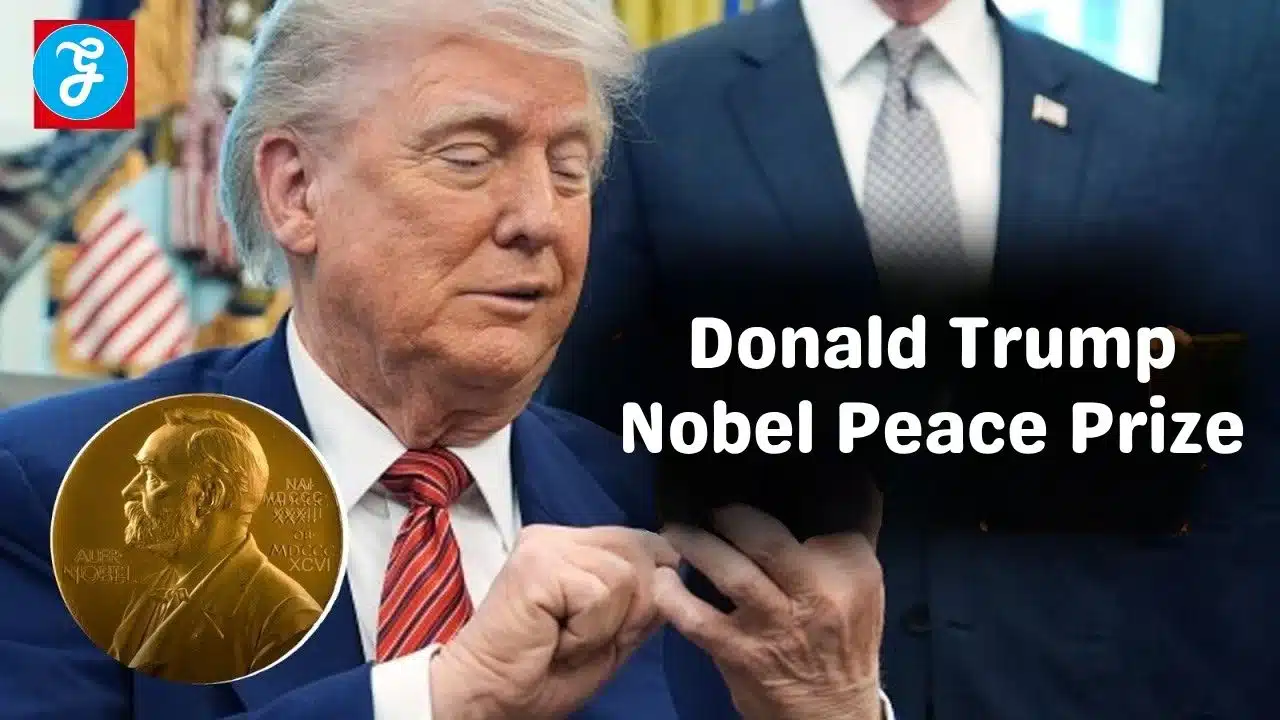
In a move that continues to animate supporters and detractors alike, President Donald Trump has once again been nominated for the Nobel Peace Prize, stirring a global debate over his foreign policy legacy and the very definition of peace in the 21st century. Proponents point to his administration’s role in the Abraham Accords and recent efforts to broker ceasefires as evidence of a dealmaker uniquely positioned to disrupt long-standing conflicts. Critics, however, argue his “America First” doctrine, withdrawal from international agreements, and polarizing rhetoric stand in stark contrast to the ideals espoused by Alfred Nobel.
The push for Trump’s recognition, particularly for the 2020 agreements that normalized relations between Israel and several Arab nations, has been a recurring theme among his allies. U.S. Representative Claudia Tenney (R-NY) formally nominated him in January 2024, stating, “Donald Trump was instrumental in facilitating the first new peace agreements in the Middle East in almost 30 years… The valiant efforts by President Trump in creating the Abraham Accords were unprecedented and continue to go unrecognized by the Nobel Peace Prize Committee.”
While the Norwegian Nobel Committee maintains a strict 50-year secrecy rule for nominees, the public nature of these endorsements has thrust the possibility of a Trump win into the spotlight. As the world watches, the core question remains: is a Nobel Prize for Donald Trump a plausible outcome or a political fantasy?
Key Facts & Quick Takes
- Primary Nomination: Donald Trump’s principal case for the prize rests on the Abraham Accords (2020), which normalized diplomatic relations between Israel and the United Arab Emirates, Bahrain, Sudan, and Morocco.
- Other Cited Efforts: Supporters also highlight his recent 20-point peace plan for the Gaza conflict and his claims of de-escalating tensions between India and Pakistan during his first term.
- Expert Consensus: Despite the nominations, most Nobel analysts and foreign policy experts consider his chances a “long shot,” citing his administration’s withdrawal from the Paris Climate Accord, the Iran nuclear deal, and a general disregard for multilateral cooperation.
- Presidential Precedent: Four U.S. presidents have previously won the Nobel Peace Prize: Theodore Roosevelt (1906), Woodrow Wilson (1919), Jimmy Carter (2002), and Barack Obama (2009).
- Controversial History: The Nobel Committee has a history of controversial picks, including Henry Kissinger in 1973 and Barack Obama just nine months into his first term in 2009, proving that contentious figures are not automatically disqualified.
The Case for a Trump Laureateship
The central argument from Trump’s supporters is one of tangible results over traditional diplomatic process. They contend that for decades, a rigid foreign policy establishment failed to make headway in the Middle East, insisting that a resolution to the Israeli-Palestinian conflict was a prerequisite for any broader Arab-Israeli peace.
“For decades, bureaucrats, foreign policy ‘professionals,’ and international organizations insisted that additional Middle East peace agreements were impossible without a resolution to the Israeli-Palestinian conflict. President Trump proved that to be false,” stated Rep. Tenney.
This view is echoed by others who see Trump’s transactional, top-down approach as effective in breaking diplomatic logjams. They point to the Accords as a historic achievement that has fostered new economic and security partnerships in a volatile region. More recently, proponents have pointed to his ambitious plan to end the war in Gaza as further evidence of his peacemaking credentials. Speaking to military leaders in Virginia, Trump himself claimed to have “ended seven wars” and suggested his Gaza plan could be the eighth, stating, “Nobody’s ever done that.”
Latest Data & Statistics:
- Abraham Accords Trade: Bilateral trade between Israel and the UAE, the first signatory of the Accords, reached over $2.5 billion in 2022, a significant increase from pre-agreement levels, showcasing the economic aspect of the normalization.
- 2025 Nominations: For the 2025 Nobel Peace Prize, a total of 338 candidates (244 individuals and 94 organizations) were nominated by the January 31 deadline. The official list of nominees will not be public for 50 years.
- Public Opinion on Normalization: A June 2025 poll by the Arab Barometer revealed a significant decline in public support for normalization with Israel in some Arab countries. For example, only 13% of Moroccans and 3% of Jordanians approved of normalization, reflecting the complexities and public sentiment surrounding the Accords, especially in the context of the ongoing Gaza conflict.
The Overwhelming Obstacles
Despite these arguments, a majority of Nobel experts and foreign policy analysts remain deeply skeptical. They argue that Trump’s presidency was characterized by a transactional and often unilateral approach that undermined the very “fraternity between nations” Alfred Nobel sought to reward.
Theo Zenou, a historian and research fellow at the Henry Jackson Society, noted that the Nobel committee prioritizes “sustained, multilateral efforts over quick diplomatic wins.” He told the Associated Press, “When you look at previous winners who have been bridge-builders, embodied international cooperation and reconciliation: These are not words we associate with Donald Trump.”
Critics also point to several key areas:
- The Palestinian Issue: A major criticism of the Abraham Accords is that they bypassed the Palestinians, potentially making a two-state solution more difficult to achieve. By normalizing relations with Israel without concessions for Palestinians, critics argue the Accords removed a key point of leverage for Arab nations.
- Disregard for International Norms: Trump’s withdrawal from the Paris Climate Accord, the Iran nuclear deal (JCPOA), and his contentious relationship with organizations like NATO are seen as antithetical to the spirit of the prize. Nina Græger, director of the Peace Research Institute Oslo, described Trump’s chances as “a long shot,” stating, “His rhetoric does not point in a peaceful perspective.”
- The Politics of the Prize: The Nobel Committee has faced backlash for politically charged decisions before. The 2009 prize to Barack Obama was widely criticized as premature. Awarding the prize to a figure as polarizing as Trump could be seen by the committee as caving to political pressure, something they typically seek to avoid.
Official Responses & Expert Analysis
The Nobel Committee itself remains silent, as is its tradition. However, the discourse surrounding the nomination is loud.
“The Trump Cabinet is an exercise in obsequious forelock tugging where each member aims to outdo the rest in fawning flattery at the feet of the president. For all his talk, Donald Trump has done little to end the cruelly attritional war in Ukraine following Putin’s invasion, while he continues to support Netanyahu’s total war in Gaza,” Mark Shanahan, who teaches American politics at the University of Surrey, told Newsweek.
This sentiment captures a broad consensus among many academics. They view the nominations as politically motivated lobbying efforts rather than a serious reflection of Nobel-worthy achievements.
What to Watch Next
The Nobel Peace Prize laureate is typically announced in early October. Between now and then, the five-member Norwegian Nobel Committee will deliberate in secret. While Trump’s name generates headlines, the committee will be assessing the long-term impact and durability of his actions.
The trajectory of the conflicts in Gaza and Ukraine, and the stability of the Abraham Accords amid regional turmoil, will undoubtedly influence their decision. A tangible, lasting peace deal in the Middle East directly attributable to Trump’s efforts could, in theory, shift the calculus. However, most observers believe the committee will favor less controversial candidates working on humanitarian aid, climate change, or grassroots peace-building efforts.
The path for Donald Trump to win the Nobel Peace Prize is narrow and fraught with obstacles. His nomination is a testament to a disruptive political force that has successfully challenged the foreign policy status quo. The Abraham Accords represent a significant diplomatic realignment in the Middle East.
However, the Nobel Peace Prize is awarded not just for a single achievement, but for a broader contribution to global peace and fraternity. On this front, Trump’s legacy of “America First” isolationism, his withdrawal from key international accords, and his divisive rhetoric present a formidable barrier. While the history of the Nobel Prize is full of surprises, a win for Donald Trump would arguably be its most controversial and paradigm-shifting decision to date.






























