
Readers may struggle when their dog ignores them at home or in the park. The rule of sevens says a young dog needs seven new experiences by week seven. This guide will bust myths with clear tips on training, socialization and positive reinforcement.
Keep reading.
Key Takeaways
- Owners can start training any puppy after week seven. Claire and Aaron Matthews taught their 12-week-old Japanese Akita with a clicker, treats, and short calm outings.
- You do not need to be the “alpha.” Modern science and trainers use positive reinforcement, a beep sound marker, and tasty treats to build trust and keep dogs eager to learn.
- No breed is impossible to train. Dr. Carmen Battaglia’s Rule of 7s and Golden Meadows Retrievers in California prove steady socialization and exposure work for all pups.
- The Rule of 7s asks owners to share seven new people, places, or objects by week seven. This daily exposure helps puppies grow into calm, confident adult dogs.
Is it ever too late to start training your dog?
No. Owners can start training any puppy that missed the Rule of 7s window. Claire and Aaron Matthews raised a Japanese Akita puppy at 12 weeks with care. A clicker saved every success with sound and treat pouch rewards.
Short calm outings on a leash gave the pup safe exploration experience. Praise after each brave move raised confidence and built strong bonding.
Pups with steady socialization become calmer adult dogs. You can still shape behavior with positive reinforcement and puzzle toys. Gentle training helps avoid fear. Each session stays fun and safe under close supervision.
Even older pups learn new tricks when owners stay patient and upbeat.
Do you need to be the “alpha” to effectively train your dog?
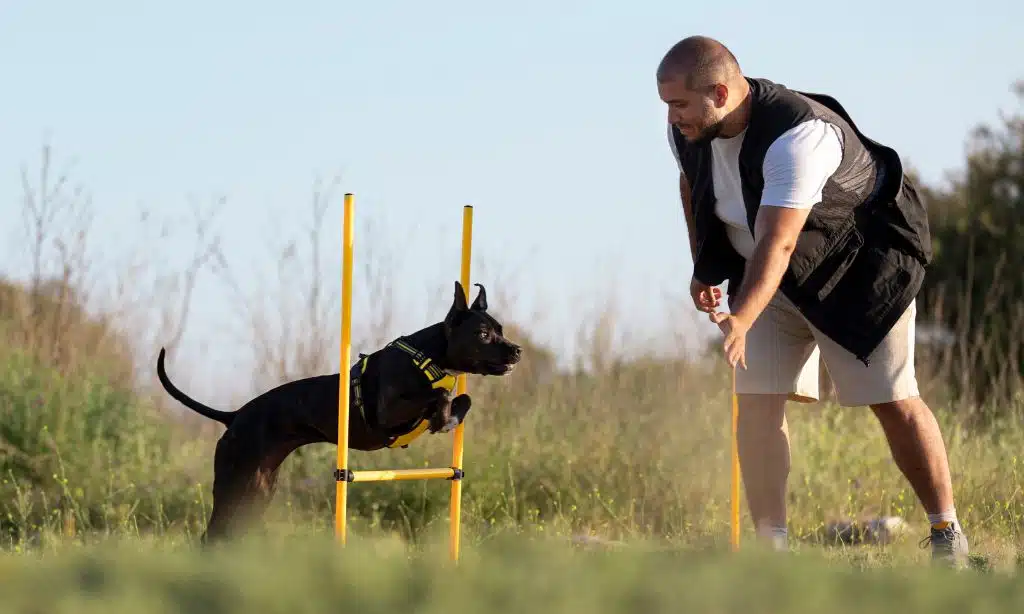
Some trainers used to push dominance games, but modern science shows positive reinforcement with praise and treats works best. Rewardbased training taps simple ideas from operant conditioning, it uses a beep device and tasty bites to shape good acts.
This plan creates a positive learning environment, it uses trust building tools, and keeps dogs eager to learn. Owners carry a leash and a snack bag, they switch between brief walks and fun drills.
Trainers warn that harsh methods can break bonds and spark fear, both of which stall progress.
Slow socialization warms shy pups to new sights, sounds, and pals. Encouragement matters more than barks or tense postures. Confidence grows when pups earn a pat, and when they snag a bite.
A mark word like yes, or a beep from a sound marker, links good moves to snacks, it taps classical conditioning and ends with wagging tails. Engagement pops up when pups dash back for more drills, it fuels bonding, it cuts fear and keeps pups keen.
Are some dog breeds impossible to train?
People often claim that some types resist training. Breeds like Japanese Akita seem aloof. Dr. Carmen Battaglia created the Rule of 7s to guide puppy development. It urges owners to expose pups to people, objects and places by three months.
Exposure builds behavioral development. That locks in socialization.
Golden Meadows Retrievers in California train Golden Retrievers well. They use clicker devices, leash guidance and daily challenges. A friendly pup grows into a safer adult dog. Trainers reward learning with treats and praise.
That proves no type stands beyond training.
Takeaways
Many dog owners still chase the alpha myth, but leaders rise with calm, not fear. Socialization works like a daily vitamin for pups, not a one-time shot. The Rule of 7s builds brave dogs with new sights and sounds.
Trainers use positive reinforcement and guide new habits, not harsh tactics. Keep each lesson fun, add dog biscuits or a clicker for praise. Small wins shape a lifelong bond.
FAQs on Dog Training Myths
1. Can dogs outgrow bad habits on their own?
Many American owners think dogs will drop a bad act with time. This dog training myth fails. Habits stick like gum on a shoe. You need clear steps, treats, and practice to change them.
2. Do tough corrections speed up training?
Some say a harsh tug, a shout, gives quick results. In truth, dogs learn best with praise, not fear. A wagging tail beats a raised voice any day. Calm, fun sessions win in the long run.
3. Are older dogs too old to learn new tricks?
Many believe senior pups have lost their spark for training. They can pick up moves with a slow pace, kind words, tasty treats. Age is just a number here.
4. Does one plan fit all dogs?
his is a top dog training myth. Every dog has its own mix of size, age, mood, and breed. Think like a chef who tweaks a recipe. Adjust your plan for each pup.