Exploring Digital Services at Scale
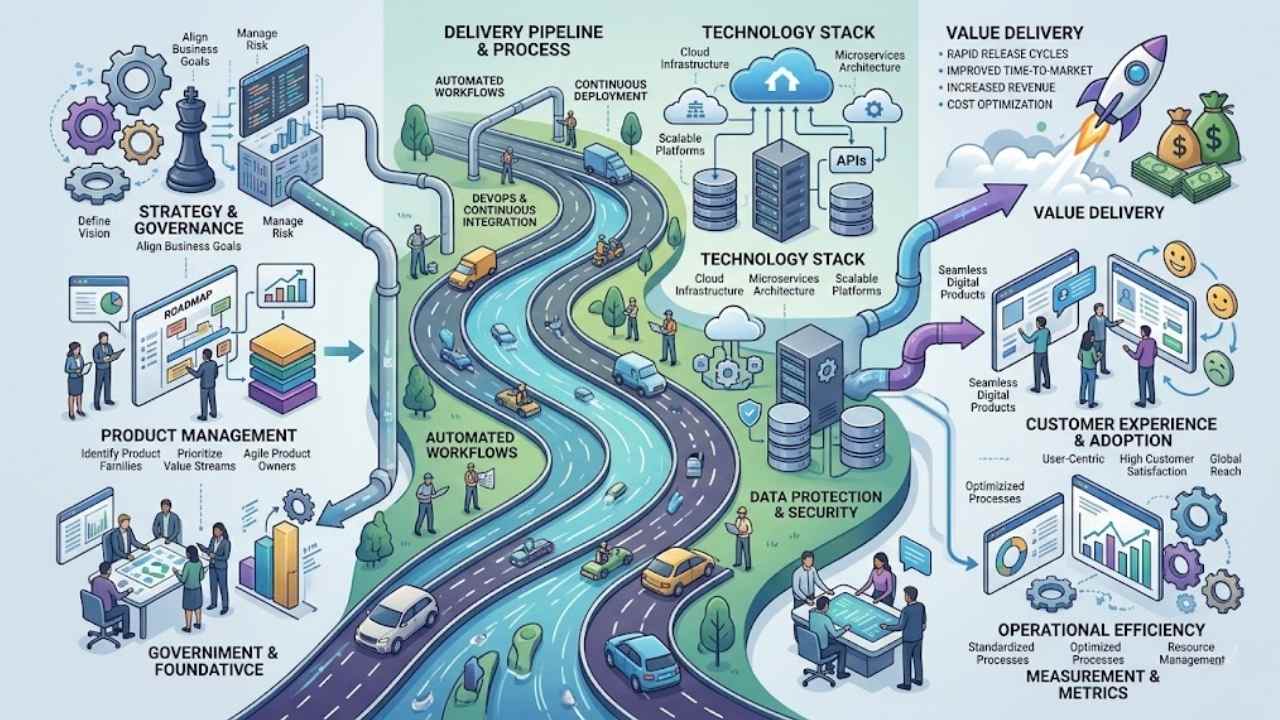
Imagine your business as a bustling city, where digital services act like the roads and bridges keeping everything moving smoothly. Scaling them up means building wider highways to handle more traffic, from cloud computing setups to agile practices that speed things along, so why not check out how defining these services and their growth can transform your operations?
Defining Digital Services
Digital services form the core of modern business, blending tech with customer needs to create value at scale. Think of them as the apps, platforms, and tools that keep things running smooth, like online banking or cloud computing in the banking sector.
They demand a redesign of organization structures to match new economies of scale and skills in a digital world. This setup pushes for a holistic approach, one that stretches past single products to cover enterprise product families and product-centric organization.
Businesses validate these products to align with goals, using digital transformation as the base for delivering value streams. They balance revenue growth against tech costs, labor expenses, and customer acquisition costs, all while optimizing customer experience and enhancing product experience for better scaling.
Digital transformation serves as the foundational process for delivering digital value at scale.
Picture a company in the health care industry juggling artificial intelligence for faster decisions; they connect data, people, and ideas through modern tech like agile methodologies and DevOps.
Data protection and customer data security stand guard, vital for trust in sectors like financial institutions or public sector. Technology selection supports this, enabling continuous releases and value delivery in areas from energy to transportation and logistics.
Product owners take charge, boosting accountability in a product-focused setup, while governance ties roadmaps to business strategy. Metrics track performance, driving continuous improvement in digital strategy and operations, even amid challenges like climate change and sustainability or the fourth industrial revolution.
The Importance of Scaling Digital Services
Companies redesign organization structures to match new economies of scale and skills in a digital environment. This shift helps with business transformation and automation. Think of it like upgrading an old engine to handle a bigger load; you gain speed and power.
Businesses balance revenue growth with control over technology costs, labor expenses, and customer acquisition costs. They optimize customer experience as a key strategy for scaling operations.
Enhancing product experience boosts the ability to scale digital services. Data protection and customer data security form vital parts of this process. You see, without secure data, trust erodes fast.
Technology selection and implementation support scalable delivery. Connecting data, people, and ideas through modern tools speeds up decisions at project and enterprise levels. Agile and iterative practices fit right in here.
Scaling demands a holistic approach beyond individual product-level considerations. Validate products to meet organizational needs and objectives. Digital transformation acts as the base for delivering value at scale.
Prioritize organizational strategy and product governance in your playbook. Use tools like the digital product family strategy playbook and product governance playbook. Consider a deliver digital products at scale workbook for readiness assessment.
Capture product family structures with templates. Product managers handle the product inventory. Project and portfolio management tie into business intelligence and data. Enterprise architecture, security and risk, and vendor management play big roles.
Stakeholder management and delivery models matter too. Product hierarchy and transformation roadmaps guide the way. Communication plans and guided implementation help. Look at cost savings from efficient digital service operations.
Industries like U.S. government, industry 4.0, education, and automotive benefit. Minimum viable product and user stories drive agile methods. Customer journeys and ESG factors add value.
Application development and operating models evolve. Version control systems aid software development. Usability testing refines services. Even in aerospace and defense or retail, these principles apply.
Principles for Effective Digital Service Delivery at Scale
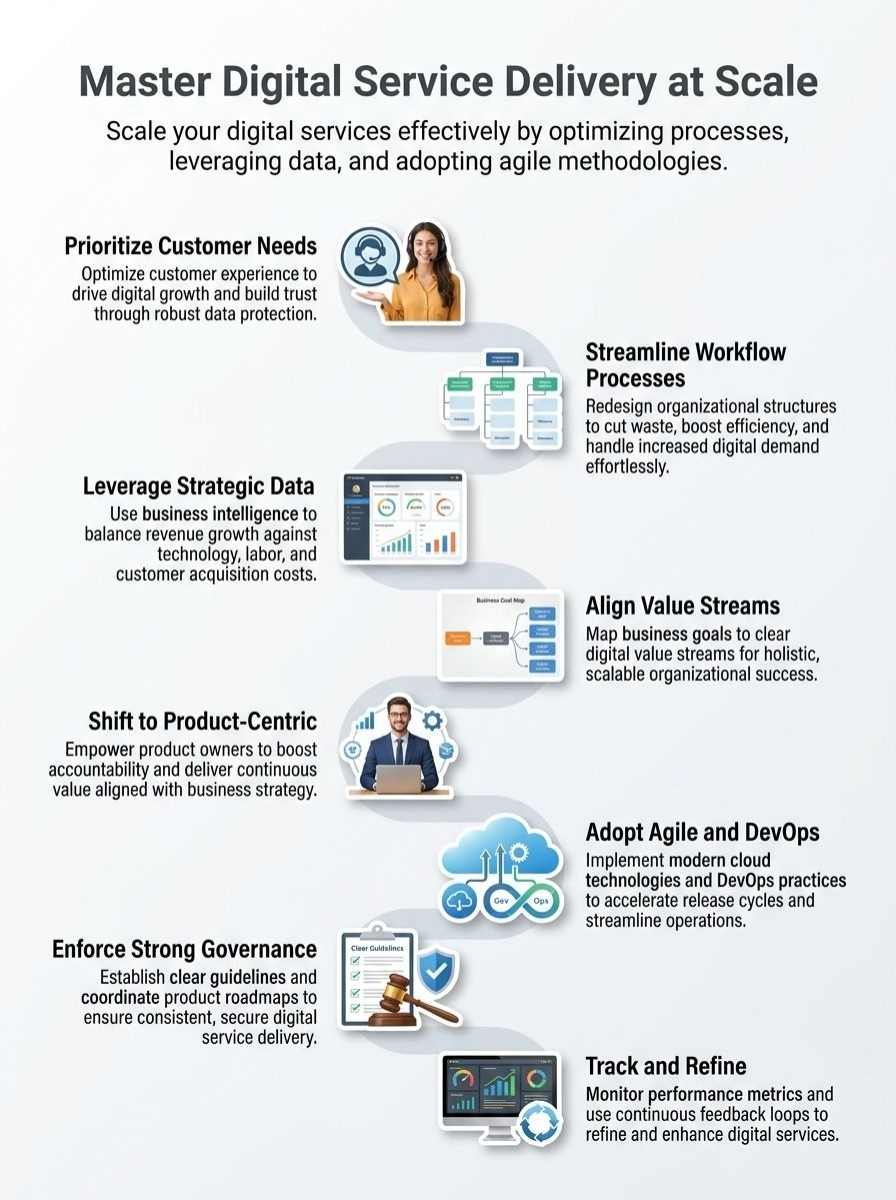
Picture scaling digital services like baking a cake, you mix the right ingredients to avoid a flop. Start with customer needs at the core, cut waste in processes, and tap business intelligence data for sharp choices—keep reading to master this in your own setup.
Prioritizing Customer Needs
Businesses scale digital services by putting customers first. They optimize customer experience as a key strategy. This drives growth in digital operations. Think of it like tuning a car engine for a long road trip, you want smooth rides without breakdowns.
Companies redesign organization structures to match new digital demands. They focus on skills and economies of scale. Data protection keeps customer info safe, a must for trust. Security and risk management play big roles here.
Enhance product experience to boost scaling efforts. Use business intelligence and data for smart choices. Balance revenue growth with controls on tech costs, labor expenses, and customer acquisition costs.
It’s like juggling balls while riding a bike, keep everything in motion without drops. Connect data, people, and ideas with modern tech for quick decisions. Project and portfolio management help align these efforts.
Generative AI can speed up insights in this mix. Optimizing customer experience is a critical strategy for scaling digital business operations.
Streamlining Processes for Efficiency
Streamlining processes boosts your efficiency in delivering digital services at scale. You redesign workflows to cut waste and speed up results, making everything run smoother.
- Redesign organization structures to match the new economies of scale and skills in a digital environment, like shifting teams to focus on project management and delivery readiness, so you handle more without extra hassle. Imagine your company as a sleek sports car instead of a clunky old truck, zipping through tasks with less fuel.
- Adopt a holistic approach for digital service delivery that looks beyond single products, tying into business intelligence and data for smarter moves across the board. This setup connects data, people, and ideas through modern tech, enabling faster decisions at project and enterprise levels, much like a well-oiled machine humming along.
- Validate products to confirm they align with organizational needs and objectives, using metrics from security and risk assessments to spot gaps early. Picture chatting with a friend over coffee about what really works, then tweaking things based on that honest talk.
- Kick off digital transformation as the base for delivering digital value at scale, incorporating tools like the U.S. Web Design System or TechFAR Handbook to guide your path. You weave in agile methods here, turning big goals into quick wins that feel empowering.
- Balance revenue growth with tight control over technology costs, labor expenses, and customer acquisition costs, perhaps drawing from corporate finance and strategy insights. It’s like juggling balls in the air, you keep them moving without dropping any, ensuring steady progress in industries such as automotive or retail.
- Optimize customer experience as a key strategy for scaling digital business operations, focusing on travel and tourism or consumer products industry examples where seamless interactions drive loyalty. Hey, who doesn’t love a smooth ride that makes you smile and come back for more?
- Enhance product experience to scale digital services effectively, integrating feature backlogs and IT landscape reviews for ongoing tweaks. This step boosts your ability to grow, similar to nurturing a garden where each plant thrives and supports the whole plot.
- Prioritize data protection and customer data security as vital parts of scaling, linking to infrastructure and operations for robust safeguards. You guard info like a vigilant watchdog, preventing leaks that could derail your efforts in areas like insurance industry or asset management.
- Select and implement technology that supports scalable delivery, from decarbonization tools to business resilience frameworks. Choices here speed up processes, letting you adapt quickly in dynamic fields like technology, media, and telecommunications or urban planning.
- Use agile and DevOps for faster delivery, converting goals into value streams that align with project and portfolio management. This method, inspired by entities like BCG Brighthouse, streamlines everything, turning potential chaos into a fun, efficient adventure.
Utilizing Data for Strategic Decisions
Data drives smart choices in your digital services. You connect data, people, and ideas with modern digital technologies. This setup speeds up decisions at project and enterprise levels.
Think of it like a well-oiled machine, humming along without hitches. Businesses use business intelligence and data to balance revenue growth with tight control over technology costs, labor expenses, and customer acquisition costs.
Products get validated this way too, matching organizational needs and objectives spot on. In the retail industry, for instance, firms tapped into data during the COVID-19 pandemic to pivot fast and keep shelves stocked.
You see, data protection and customer data security form the backbone here, guarding trust while scaling up.
Picture your team huddled around a dashboard, spotting trends that spark big wins. You weave in project and portfolio management to track it all. This approach fits right into your digital services playbook, aligning with business and organizational purpose.
Automotive industry leaders, say, crunch numbers on supply chains to cut risks and boost efficiency. Data helps you refine customer experience, making it a breeze to scale operations.
Security and risk stay front and center, weaving through every decision. In government services, officials lean on data to streamline infrastructure and operations, delivering value without the headaches.
You harness this power, turning insights into action that propels your digital transformation forward.
Aligning Digital Services with Business Objectives
Think of your business goals as a roadmap, and digital services as the fast cars that zoom you there, but only if they match up right. Start by grouping your services into clear families, like sorting tools in a workshop, then turn those big aims into smooth value streams that keep everything flowing, pulling in project management and data insights to make it all click.
Categorizing Enterprise Digital Service Families
Digital services come in families, and grouping them helps your business thrive.
| Service Family | Key Focus | Why It Matters |
|---|---|---|
| Customer Experience Services | Optimizing customer experience drives scaling. | Businesses balance revenue growth with tech costs, labor expenses, and customer acquisition costs; this family boosts loyalty, like a well-oiled machine keeping folks coming back. |
| Product Experience Services | Enhancing product experience scales services effectively. | Products get validated to meet organizational needs; picture your team redesigning structures for digital economies, turning goals into value streams that flow smooth as silk. |
| Data and Security Services | Data protection and customer data security form the backbone. | Connecting data, people, and ideas via modern tech speeds decisions; it’s like having a fortress around your info, vital for that holistic approach beyond single products. |
| Technology Implementation Services | Technology selection supports scalable delivery. | Digital transformation lays the foundation for value at scale; companies use agile methods, think DevOps tools, to streamline processes and make strategic calls with data. |
Converting Goals into Value Streams
Companies turn big goals into value streams to drive real results. This step links dreams to daily work, making sure every effort counts.
- Map your business aims to clear value streams, folks. Think of it like turning a roadmap into a GPS route. You start with broad objectives, say boosting revenue or cutting costs, and break them down into flows of value. Businesses must balance revenue growth with control over technology costs, labor expenses, and customer acquisition costs. Use tools like the capture your product family structures template to organize this. It helps categorize enterprise digital service families, aligning them with project and portfolio management needs.
- Validate products against your goals early on. Products must be validated to ensure they meet organizational needs and objectives. Imagine baking a cake; you taste the batter before the oven. This ensures a holistic approach, going beyond individual product-level considerations. Incorporate business intelligence and data to spot gaps. For industrial goods firms or principal investors and private equity groups, this step secures scalable growth.
- Build streams that optimize customer experience. Optimizing customer experience is a critical strategy for scaling digital business operations. Picture your service as a smooth river, not a rocky creek. Enhancing product experience contributes significantly to the ability to scale digital services effectively. Tie in security and risk measures, because data protection and customer data security are essential components. This keeps trust high while delivering digital products at scale.
- Leverage digital transformation as your base. Digital transformation serves as the foundational process for delivering digital value at scale. It’s like laying a strong foundation for a house. Organization structures must be redesigned to reflect the new economies of scale and skills required in a digital environment. Connect data, people, and ideas through modern digital technologies for faster decision-making across project and enterprise levels. Include infrastructure and operations in your planning.
- Focus on technology to support these streams. Technology selection and implementation play a key role in supporting scalable digital service delivery. Think of tech as the engine in your value car. Use a deliver digital products at scale readiness assessment to check readiness. This ties into agile methods, speeding up delivery. For security and risk, weave in protections right from the start.
Developing a Product-Focused Organization
Imagine shifting your team from old project habits to a fresh focus on products, like turning a clunky old car into a sleek race machine. With strong product owners leading the charge, you’ll boost accountability and deliver value that keeps customers coming back for more.
Transitioning to a Product-Centric Approach
Companies shift to a product-centric model by redesigning their structures. This reflects new economies of scale and skills in a digital world. Digital transformation lays the groundwork for delivering value at scale.
Think of it like upgrading your old car engine to handle highway speeds, you know? Products get validated to match organizational needs and goals. Businesses balance revenue growth with tight control over technology costs, labor expenses, and customer acquisition costs.
They integrate project and portfolio management to keep things on track.
A holistic approach goes beyond single products. It ties into business intelligence and data for smart choices. Security and risk management protect customer data as you scale. Infrastructure and operations support the tech backbone.
Optimizing customer experience acts like rocket fuel for growth. Enhancing product experience boosts your scaling power. Connecting data, people, and ideas through modern tech speeds up decisions in projects and across the enterprise.
It’s all about that smooth flow, folks.
Enhancing Product Owner Accountability
Product owners drive success in a digital world. They validate products to meet key goals. You redesign organization structures for new skills and scale. This shift boosts project and portfolio management.
Balance revenue growth with tech costs, labor expenses, and customer acquisition. Picture a team captain steering the ship, folks, keeping everyone on course.
Strengthen accountability with data protection at the core. Secure customer info builds trust and scales services. Use business intelligence and data for smart choices. Tie in security and risk checks early.
Infrastructure and operations support this with solid tech. Optimize experiences, like fine-tuning a favorite app, to grow operations fast.
Harnessing Technology and Agile Methodologies
Pick cloud platforms like AWS to boost your setup’s growth, and watch how they turn bottlenecks into smooth rides. Jump into Scrum practices with DevOps tools, they speed up releases and keep teams buzzing with energy, ready for more wins ahead.
Choosing Modern Technologies for Scalability
Organizations redesign structures to match digital demands, and that starts with picking the right tech. Digital transformation lays the groundwork for scaling value, so select tools that grow with your needs.
Think cloud platforms, they handle big loads without breaking a sweat. Technology selection drives scalable delivery, like choosing infrastructure that supports operations smoothly.
Connect data, people, and ideas with modern tech for quick decisions in project and portfolio management. Imagine your business as a rocket ship, fuel it with the best engines to blast off without stalling.
Data protection keeps customer info safe, a must for scaling services. Security and risk management fit right into this puzzle, guarding against threats as you expand. Business intelligence and data tools turn info into gold, helping spot trends fast.
You balance revenue growth with costs, like tech and labor, to stay efficient. Enhancing product experience scales operations, so pick tech that optimizes customer journeys. It’s like picking the perfect shoes for a marathon, they need to last the distance and feel good every step.
Implementing Agile and DevOps for Faster Delivery
Agile and DevOps speed up how you deliver digital services. They help teams work smarter, not harder, to scale big time.
- Teams adopt Agile methods to break work into sprints, like short races that keep everyone on their toes, and this ties right into project & portfolio management by redesigning organization structures for new economies of scale and skills in a digital setup.
- DevOps blends development and operations, imagine it as a smooth handshake between coders and system keepers, which streamlines processes and boosts infrastructure & operations for that holistic approach beyond just one product.
- Start with digital transformation as your base, it’s like laying a strong foundation for a house, so you deliver value at scale while validating products to match organizational needs and objectives.
- Balance your revenue growth with tight control over tech costs, labor expenses, and customer acquisition costs, think of it as juggling balls without dropping any, and Agile helps by making quick adjustments.
- Optimize customer experience through DevOps practices, picture your users smiling because services run without hitches, and this strategy scales your digital operations like a well-oiled machine.
- Enhance the product experience to scale services effectively, you know, like polishing a gem until it shines, and tie this to business intelligence & data by connecting data, people, and ideas for faster decisions across projects and enterprises.
- Focus on data protection and customer data security, it’s crucial like locking your doors at night, especially when using Agile and DevOps to handle security & risk in scalable delivery.
- Pick modern technologies that support scalability, treat it as choosing the right tools for a big job, and implement them with Agile to ensure faster delivery without skimping on quality.
Governance of Digital Service Products
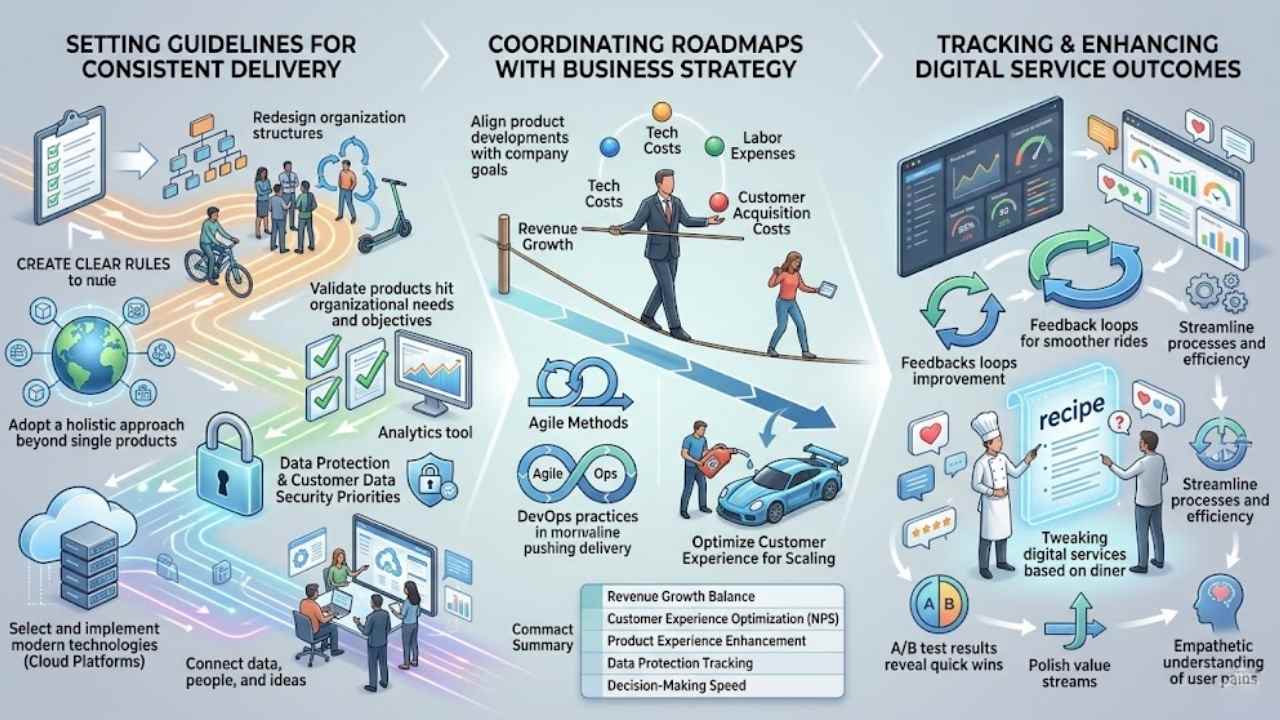
Picture governance as the secret sauce that keeps your digital operations from turning into chaos. You craft clear rules for steady rollouts, sync product timelines with company goals, and watch teams deliver like clockwork—stick around to see how it transforms your setup.
Setting Guidelines for Consistent Service Delivery
You need solid guidelines to keep digital services consistent at scale. These rules help your team deliver value without chaos, like a well-oiled machine humming along.
- Start by redesigning your organization structures to match the new economies of scale and skills in a digital world, because outdated setups can drag you down, and think of it as swapping an old bicycle for a speedy electric scooter to keep up with demand.
- Adopt a holistic approach that looks beyond single products, tying everything into digital transformation as the base for delivering value at scale, so your whole operation feels like a connected web, not scattered puzzle pieces.
- Validate all products to confirm they hit organizational needs and objectives, using metrics from data analytics tools to measure fit, and imagine chatting with your team like, hey, does this really solve our big goals?
- Balance revenue growth with tight control over technology costs, labor expenses, and customer acquisition costs, since unchecked spending can sink your ship, and use budgeting software to track every dollar like a hawk.
- Make data protection and customer data security top priorities in your guidelines, integrating tools like encryption protocols to safeguard info, because one breach could turn your scaling dreams into a nightmare, trust me on that.
- Select and implement modern technologies that support scalable delivery, such as cloud platforms for flexibility, and picture your tech stack as a sturdy bridge carrying heavy traffic without buckling.
- Connect data, people, and ideas through digital tools like collaboration software for quicker decisions at project and enterprise levels, fostering a vibe where ideas flow like a lively conversation at a coffee shop.
Coordinating Roadmaps with Business Strategy
Companies redesign organization structures to match digital economies of scale and needed skills. This shift supports a holistic approach for digital service delivery, one that looks past single products.
Digital transformation lays the groundwork for scaling value. Businesses align roadmaps by balancing revenue growth against tech costs, labor expenses, and customer acquisition costs.
Imagine a tightrope walker juggling balls; that’s you keeping everything in sync. Products get validated to fit organizational needs and objectives. Tech choices bolster scalable delivery.
Connect data, people, and ideas with modern tools for quicker decisions at project and enterprise levels.
Optimizing customer experience drives scaling operations, like fuel in a race car. Enhancing product experience boosts this scaling power. Data protection and customer data security form key pillars here.
Set guidelines to keep service delivery consistent across the board. Teams coordinate these roadmaps with general business strategy for smooth sailing. Agile methods help in this mix, speeding up the process.
DevOps practices push for faster delivery too.
Tracking and Enhancing Digital Service Outcomes
Picture your digital services as a race car, zooming ahead—you track speed with dashboards showing bounce rates and customer satisfaction scores, then tweak the engine through feedback loops for smoother rides.
Hey, imagine chatting with your team over coffee about those A/B test results; they reveal quick wins, like boosting load times, and spark ideas to polish your value streams even more.
Employing Metrics for Performance Measurement
Metrics drive success in digital services, so let’s break them down in a clear way.
| Metric Focus | Key Details | Why It Matters |
|---|---|---|
| Revenue Growth Balance | Businesses track revenue against tech costs, labor expenses, and customer acquisition costs. | This balance keeps operations lean and profitable as services scale. |
| Customer Experience Optimization | Measure satisfaction through feedback tools like Net Promoter Score. | Strong experiences boost loyalty and help scale operations smoothly. |
| Product Experience Enhancement | Use analytics to gauge user interactions and improvements. | Better experiences lead to effective scaling of digital services. |
| Data Protection Tracking | Monitor security incidents and compliance with tools like encryption software. | Secure data builds trust and supports safe scaling. |
| Decision-Making Speed | Connect data, people, and ideas via platforms like collaboration apps. | Faster decisions at project and enterprise levels enhance performance. |
Refining Services Through Continuous Improvement
Companies refine digital services, you know, by embracing continuous improvement as a daily habit. They redesign organization structures to match new economies of scale and skills in the digital world.
This shift creates teams that adapt fast. Digital transformation lays the groundwork for delivering value at scale. Businesses validate products to confirm they fit needs and goals.
Imagine a chef tweaking a recipe based on diner feedback; that’s how firms optimize customer experience for better scaling. They enhance product experience, which boosts their ability to grow services.
Data protection keeps customer info secure, vital for trust. Picture connecting data, people, and ideas with modern tech; it speeds up decisions across projects and the whole enterprise.
Firms take a holistic approach to digital service delivery, going beyond single products. They balance revenue growth with controls on tech costs, labor, and customer acquisition expenses.
Streamline processes, and watch efficiency soar. Technology selection supports scalable delivery; pick the right tools, like agile software, to make it happen. Teams implement these choices to refine services step by step.
Empathy guides this; understand user pains, and improvements feel personal. A dash of humor helps too, like joking that endless tweaks keep services from gathering digital dust. Continuous loops of feedback turn good services into great ones, driving real progress.
Final Thoughts
You’ve journeyed through scaling digital services, from prioritizing customer needs and streamlining processes, to harnessing Agile methods and DevOps for quick wins. These steps feel straightforward, right, like plugging in a lamp, and they pack efficiency that saves time and headaches in your daily grind.
Imagine the boost, folks, as your business surges with better revenue control, top-notch data security, and experiences that keep customers coming back for more. Check out books on value streams or online courses in product management to dive deeper and keep the momentum going.
Go ahead, spark that change today; your digital empire awaits, one smart move at a time.
FAQs
1. What does it mean to deliver digital services at scale?
Delivering digital services at scale means growing your online offerings to handle tons of users without a hitch, like turning a small lemonade stand into a nationwide chain. You use tools like cloud computing to keep everything running smooth, even during busy times. Picture it as training for a marathon; you build stamina step by step to avoid crashing.
2. How do I start scaling my digital services?
Begin by assessing your current setup and spotting bottlenecks, then automate routine tasks to free up your team. Tools like load balancers help distribute traffic evenly, making growth feel like a breeze.
3. What tools make delivering digital services at scale easier?
Cloud platforms such as AWS or Azure let you expand resources on demand, while automation software handles repetitive jobs. Think of them as your trusty sidekicks in a superhero movie, saving the day when demand spikes. Monitoring apps keep an eye on performance, so you catch issues before they snowball.
4. What challenges might I face when scaling digital services?
You could run into high costs or security risks as you grow, like juggling too many balls at once. Teams sometimes struggle with coordination, but planning ahead turns these hurdles into stepping stones.