Today, December 21, 2025, marked a significant astronomical turning point for the planet, the December solstice. Occurring officially at 15:03 UTC, the event signaled the official start of winter for the Northern Hemisphere and the beginning of summer for the Southern Hemisphere.
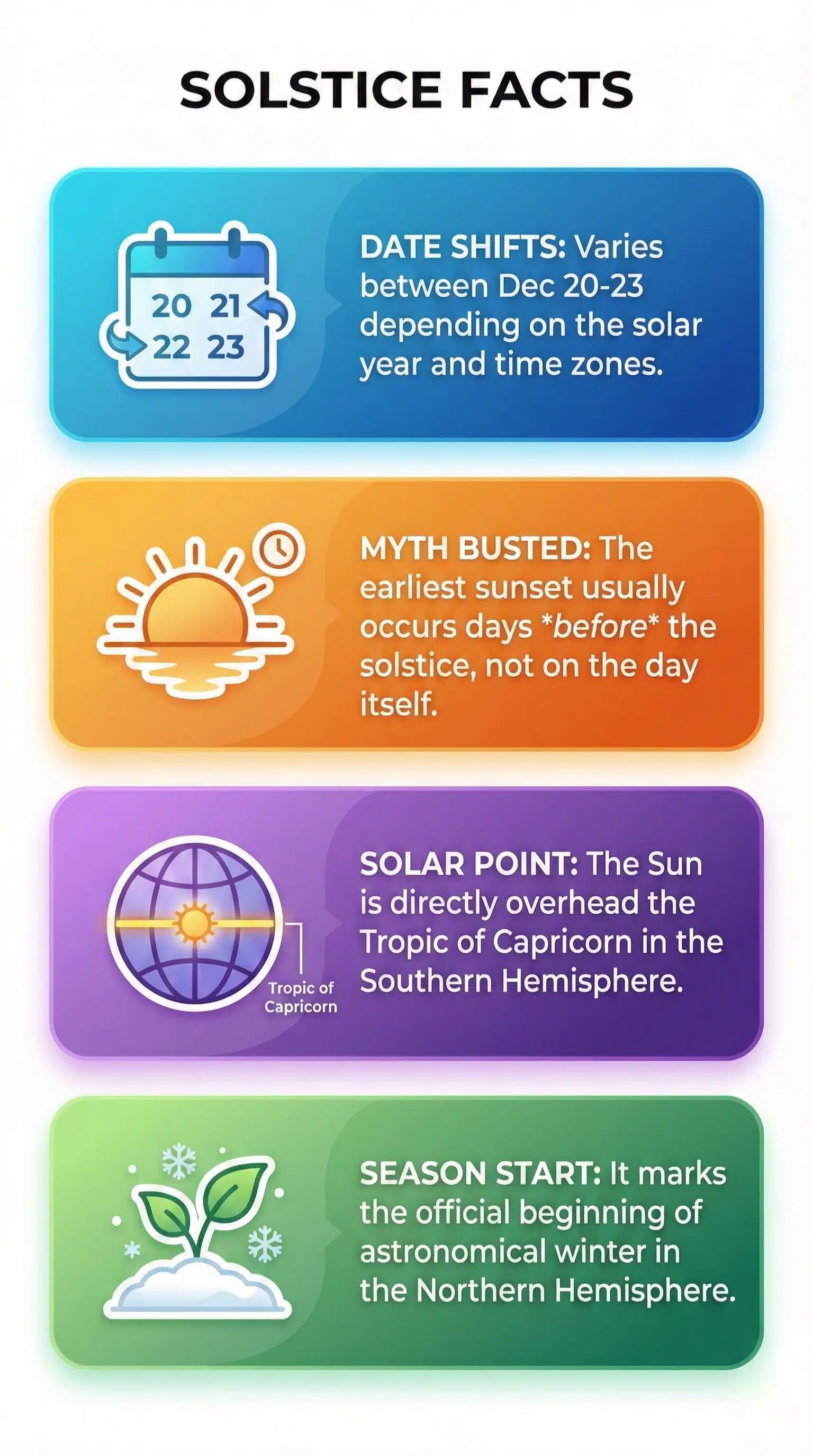
A Day of Extremes For those north of the equator, yesterday was the “shortest day” of the year. Due to the North Pole being tilted furthest away from the Sun, these regions experienced the least amount of sunlight and the longest night of 2025. Conversely, the Southern Hemisphere basked in its longest day of the year, with the Sun reaching its highest and most southerly point in the sky—directly over the Tropic of Capricorn.
Why the “Solstice”?
The term “solstice” is derived from the Latin words sol (sun) and sistere (to stand still). According to Time and Date, this name reflects the visual phenomenon where the Sun’s seasonal movement north or south appears to pause before reversing direction.
After this pivotal moment, the trend reverses. In the North, days will now gradually begin to lengthen, while in the South, they will start to shorten.
Not Always December 21
While this year’s solstice fell on December 21, the date is not fixed. The solstice drifts by about six hours annually because the solar year, which is the time it takes Earth to orbit the Sun, does not perfectly match our 365-day calendar year. This drift is corrected by leap years, keeping the event typically between December 21 and 22. Rare solstices can even occur on December 20 or 23, though the last December 23 solstice was in 1903 and the next won’t be until 2303.
Common Misconceptions
A common belief is that the shortest day also features the latest sunrise and earliest sunset. However, Time and Date notes that this is not typically true. In most locations, the earliest sunset actually occurs a few days before the solstice, while the latest sunrise happens a few days after.
As Earth continues its orbit, the Northern Hemisphere now looks forward to the slow return of longer days, while the Southern Hemisphere enjoys the peak of its solar year.