Many companies face slow shipping, lost packs, and high fees. They lack a clear view of goods as they move. That leads to waste and delays.
A study found that using a distributed ledger cut paperwork by 80 percent and cut transaction costs by 20 percent. This post helps supply chain teams solve these pain points. You will see how blockchain technology boosts transparency.
Crypto in supply chain management is emerging as a powerful tool to enhance efficiency and security.
Smart contracts streamline inventory management with IoT devices. Traceability stops fraud. Crypto cuts fees and delays. Find out how.
Key Takeaways
- A 2018 study found distributed ledgers cut paperwork by 80% and transaction costs by 20%, and a global retailer cut trace time from 7 days to 2 seconds.
- A grocer used QR codes and IoT devices to track cold-chain goods in real time, stopping missing pallets and slashing waste.
- Smart contracts on the Ethereum network trigger payments when IoT sensors or QR scans meet set conditions, cutting delays and bank fees.
- Public blockchains log every handoff in a tamper-proof record, so auditors spot fake goods fast and buyers verify luxury items.
- Crypto payments bypass banks, so vendors get paid instantly and customs clearances drop from days to hours.
How does crypto in supply chain management increase transparency?

Crypto links every step to a public ledger. IoT sensors feed data to blockchain networks. QR codes record scans in warehouses, trucks and ports. A global retailer cut trace time from 7 days to 2 seconds in 2018 using a distributed ledger.
This gives real-time visibility across global supply chains.
Smart ledgers keep records open for any stakeholder to view. No one can erase or change data in a public ledger. A diamond miner logs each stone on a supply chain ecosystem. Brands, banks and auditors check moves in real time.
Supply chain transparency cuts fraud and speeds recalls.
How can crypto streamline inventory management?
Blockchain technology logs each product move in a shared ledger, so teams see live data for inventory management. That tool boosts supply chain management, cutting manual checks. It links scanners and an enterprise resource planning system, and it curbs human errors.
A smart contract can trigger a reorder if stock dips too low. The distributed ledger locks every update, and teams trust what they read.
A grocer used QR codes and an IoT system to track cold chain goods. Workers scan a code, and the log updates in real time. No more wild goose chases for missing pallets. It saves money, it trims waste, and it gives buyers clear supply chain visibility.
Smart contracts in supply chain transactions
Smart contracts on a blockchain network link IoT sensors to a distributed ledger, cut paperwork, and speed shipments—keep reading to learn more.
What are smart contracts and how do they work?
These coded agreements run on a distributed ledger. The code holds terms and actions in a digital record. It can trigger payments when a purchase order meets every condition. Many platforms, like the Ethereum platform, let developers build these programs as decentralized applications.
They automate supply chain transactions and tap blockchain technology for real-time visibility. IoT sensors feed live data and prompt contract code to act. Companies cut transaction costs and delays, while they boost fraud prevention and regulatory compliance.
This tool scales well and aids in supply chain management across sectors.
How do smart contracts improve supply chain efficiency?
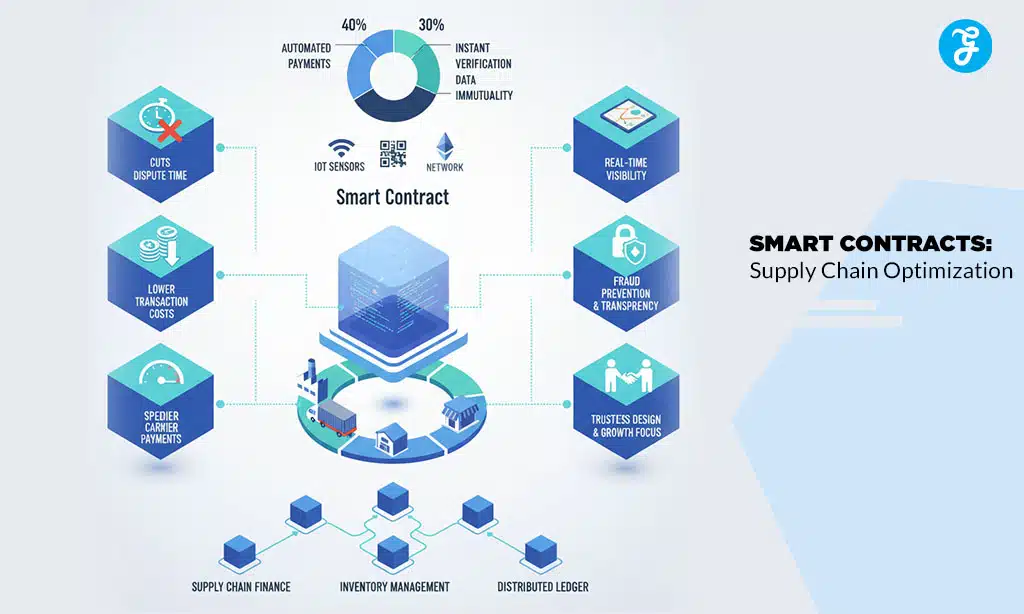
Digital agreements link steps to code. A distributed ledger logs each move and locks data on blockchain technology. The Ethereum network runs that code and hooks into IoT sensors or QR codes at each checkpoint.
This setup cuts dispute time, lowers transaction costs, and speeds up carrier payments. Teams skip piles of papers, they gain real-time visibility on goods.
Contract code auto-checks shipment scans and fires payments in supply chain finance. It then adjusts inventory management records on every node. That trustless design helps buyers and sellers focus on growth.
Logistics firms dodge fraud and boost supply chain transparency.
How does crypto improve traceability and prevent fraud?
Distributed ledger logs every handoff. QR codes tag each item. IoT sensors send updates at each point, and no step hides. This helps supply chain management and boosts transparency.
Auditors spot fakes fast on the shared ledger. Brands lock records so no one can tamper. Buyers can verify goods, even luxury items. Fraud prevention wins big thanks to secure digital records.
How does crypto reduce transaction costs and delays?
A distributed ledger logs each trade in one spot. It cuts banks out of payments. That slashes transaction costs. Companies tap supply chain finance on blockchain technology.
Smart contracts on Ethereum platform pay vendors fast. They trigger once goods scan via QR codes. No three-day bank holds slow cash flow. Shipments clear customs in hours, not days.
Takeaways
Crypto brings a clear view across the whole chain. Distributed ledgers hold every step in a digital record. You tap barcodes on a box to see its journey. Smart contracts save time and tame paper trails.
Connected devices track batches and flag dodgy orders. Firms cut fee bills and skip delays. The network wins at traceability and fraud prevention. Now, supply chains hum like a well tuned engine.
FAQs
1. How do smart contracts speed up purchase orders?
Smart contracts live on a distributed ledger and act like robots that pay invoices once goods pass a scan. They automate purchase orders, cut paperwork, and clear roadblocks fast.
2. How does blockchain technology boost supply chain transparency?
It shines a light on each step, like a lighthouse in a storm. You get real track and trace for luxury goods, spot counterfeit goods, and dodge supply chain disruptions before they hit.
3. Can crypto cut waste and track stock in real time?
Yes, it ties into inventory management tools to give real-time visibility on your shelves. You see what sells, what spoils in the food supply chain, and you slash waste on the spot.
4. How does crypto shake up trade finance?
Crypto flips the old playbook. It speeds up trade finance, links banks and suppliers on one chain, and makes supply chain finance leaner. It’s a win for fintech in a complex supply chain ecosystem.
5. Can blockchain help food safety?
Sure. You scan a qr code on a batch, and you see its full history. You catch a chill breach or tainted batch before it lands on your plate. You outsmart supply chain disruptions with clear food safety data.
6. What about energy use and rules?
Blockchain needs power, but new chains cut energy consumption. These applications of blockchain pass audits with flying colors, they tick boxes for regulatory compliance, and when you add internet of things sensors or artificial intelligence and machine learning, you gain fresh insights on every shipment.