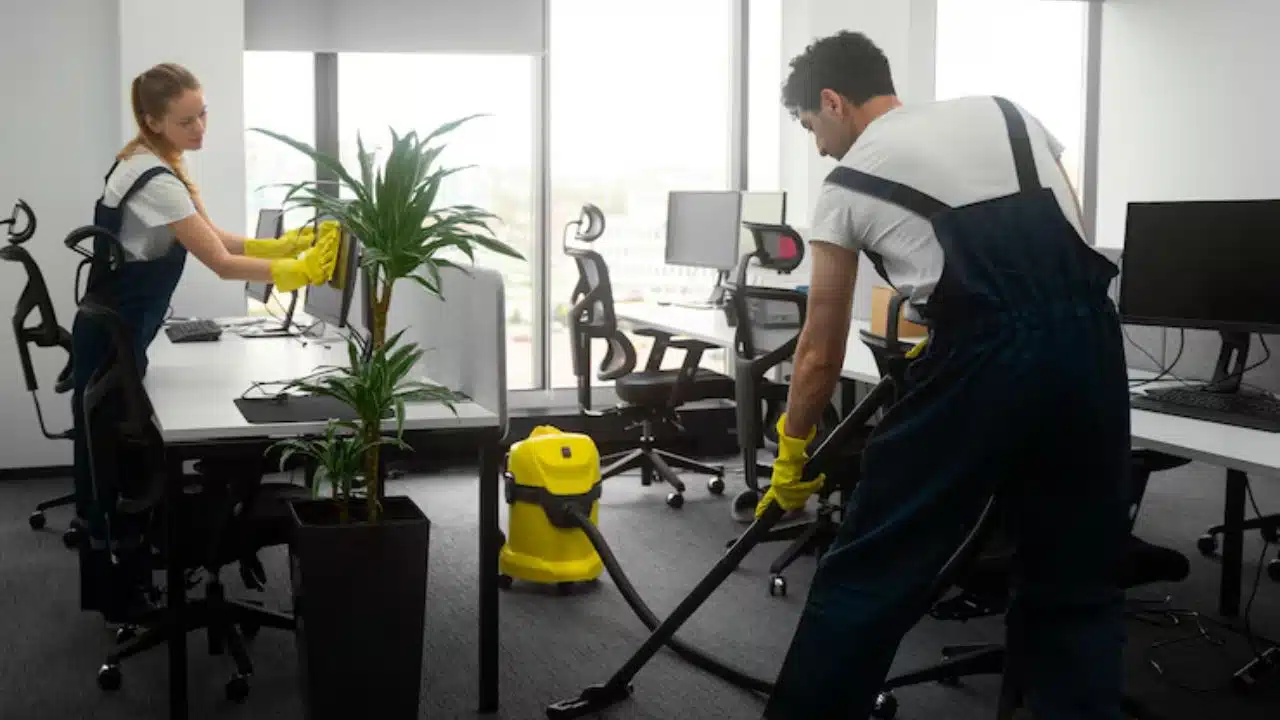
COVID-19 has impacted our world in many ways, with industries all over the world now responding to adaptation and evolution at an unprecedented pace. One of the sectors which have found themselves at the frontier of this change is the cleaning industry. The importance of hygiene and sanitation being at the top of the list, cleaning services are now finding their way around a rapidly changing landscape, full of new challenges and needs from customers. In this blog post, we will look at ways COVID-19 has changed the cleaning industry and learn more about how companies are responding with resiliency, innovation, and unwavering commitment to public health.
Disinfection Services Demand Boom
Perhaps the most dynamic change initiated by the pandemic is the growth in demand for disinfection and sanitization services. Since the SARS-CoV-2 virus can remain active on surfaces for a long duration, the demand for thorough cleaning at par with professionals has become indispensable.
Consequently, cleaning companies have quickly diversified their service portfolios to include specialized disinfection packages suited to the peculiar needs of various environments: be it an office, a school, a health facility, or public transport.
Now, meeting these new demands, businesses have invested heavily in advanced equipment and products. Units such as electrostatic sprayers, which deliver a positive electrical charge to disinfectant particles in a manner that allows for equal distribution over surface areas, have become increasingly common in the arsenals of many a cleaning crew.
EPA-approved disinfectants that have proven effective against the coronavirus are also being used with increased frequency. In this way, staying on the cutting edge positions cleaning companies as essential allies in the COVID-19 fight.
Safety First with Advanced Safety Protocols
Beyond simply improving their ability to disinfect, though, cleaning companies have also worked to entirely overhaul their safety protocols to best protect their employees and customers. This has truly been an all-encompassing effort as it relates to touching on every level of their operations.
Companies have started by instituting stringent requirements on using personal protective equipment (PPE) like masks, gloves, and gowns. Also, it is a new standard to conduct regular temperature measurement and to check the health condition of the staff to identify potential COVID-19-infected cases.
Besides individual protective measures, cleaning businesses have also been compelled to revise working protocols to limit the transmission of the virus. They have included social distancing in relatively small space, and shifts in worker schedules to reduce the number of people on the site at any one time. Many have also invested in specific training programs to ensure that their staff are up to speed with the latest disinfection techniques and safety best practices. Cleaning businesses restore confidence and peace of mind by taking care of the well-being of their teams and clients.
Changes in the Client Landscape: How to Navigate Them
While the pandemic has driven up the demand for cleaning services, it has also brought many shifts in the landscape of clients. Many of the traditional commercial clients have had to scale back or pause their cleaning contracts.
This trend arises from numerous offices, schools, and public spaces operating at reduced capacities or closing completely. However, this downturn has been largely mitigated by a surge in business from other sectors, particularly those on the frontlines of the pandemic. For instance, healthcare facilities in this area have consistently highlighted the critical need for meticulous disinfection to maintain cleanliness. Other important clients have included grocery stores and delivery services, which are as of late seeing dramatically increased traffic with the rise of e-commerce and the use of home delivery. The residential market observed increased demand for cleaning services as people remained mostly at home and focused more on domestic hygiene.
Meeting the challenge of these changes has meant that cleaning businesses needed to be nimble and flexible in their marketing and outreach efforts. They needed to identify new prospective clients, tailor their offerings to fit into specific gaps left by others in their industry, and then communicate how those services would be delivered. Remaining nimble and responsive to market change dynamics has indeed seen cleaning companies not only weather the storm but also discover new opportunities for growth.
Embracing innovation and emerging technologies
Other areas that the pandemic has brought with it are innovations in technology and modern cleaning methods. For example, autonomous cleaning robots have gained immense popularity in the disinfection of large spaces where there is no or minimal human contact. Robotic systems armed with UV-C light or chemical disinfectants could easily navigate through challenging locations and deliver a consistent, reliable clean.
Besides robotics, advanced air purification systems are going to be of quite a bit of interest in order to help abate the spread of pathogens through the air. Some of these systems include HEPA filtration, ultraviolet light, and bipolar ionization technology as part of an HVAC system to improve air quality indoors and help to mitigate the probability of viral transmission. Many cleaning companies in fact also explore the use of antimicrobial surface coatings that can offer long-term protection against bacteria and viruses.
There is, therefore, a need for cleaning businesses to continuously take the forefront of these evolving technologies, which will help them stand out above other businesses and provide their clientele with a top-notch service. The companies can achieve more through the adoption of a culture of innovation and investment in the latest tools and techniques in the market.
The Road Ahead: Adjusting to the New Normal
And going forward, the implications of this, in the long run for the cleaning industry, are certainly going to be long-term and transformational. Even as vaccination efforts progress, and the world readies to return post-pandemic, the heightened attention likely to persist will be around hygiene and cleanliness.
Both businesses and individuals have developed a newfound respect for cleaning services in the role of public health played and is unlikely to wane in the near term.
There are implications from such behaviors for cleaning companies, which mean that they should both brace themselves for challenges and also be open to opportunities. On the one hand, this will require the companies to become flexible in aligning themselves with the changing customer expectations and needs, which will consequently mean that they have to continually invest in new technologies, training, and safety. On the other hand, the pandemic only underscored the really essential nature of their work and revealed new avenues of growth and expansion.
The new normal shall demand that janitorial service is very flexible, proactive, and has a customer-oriented approach. It may imply diversification, looking into new markets, and having a very good relationship with the client based on trust, transparency, and common service delivery in the interest of public health. By being open to change while remaining committed to the work of fostering clean, safe, and healthy spaces, these companies will come out of the pandemic and any new future virus with renewed strength and resilience.