You work hard every day. You want your company to do the right thing. But sometimes you see big promises with very little real change. If your job feels like empty talk rules the show, you are definitely not the only one. Many workers expect more than just nice words from their workplaces.
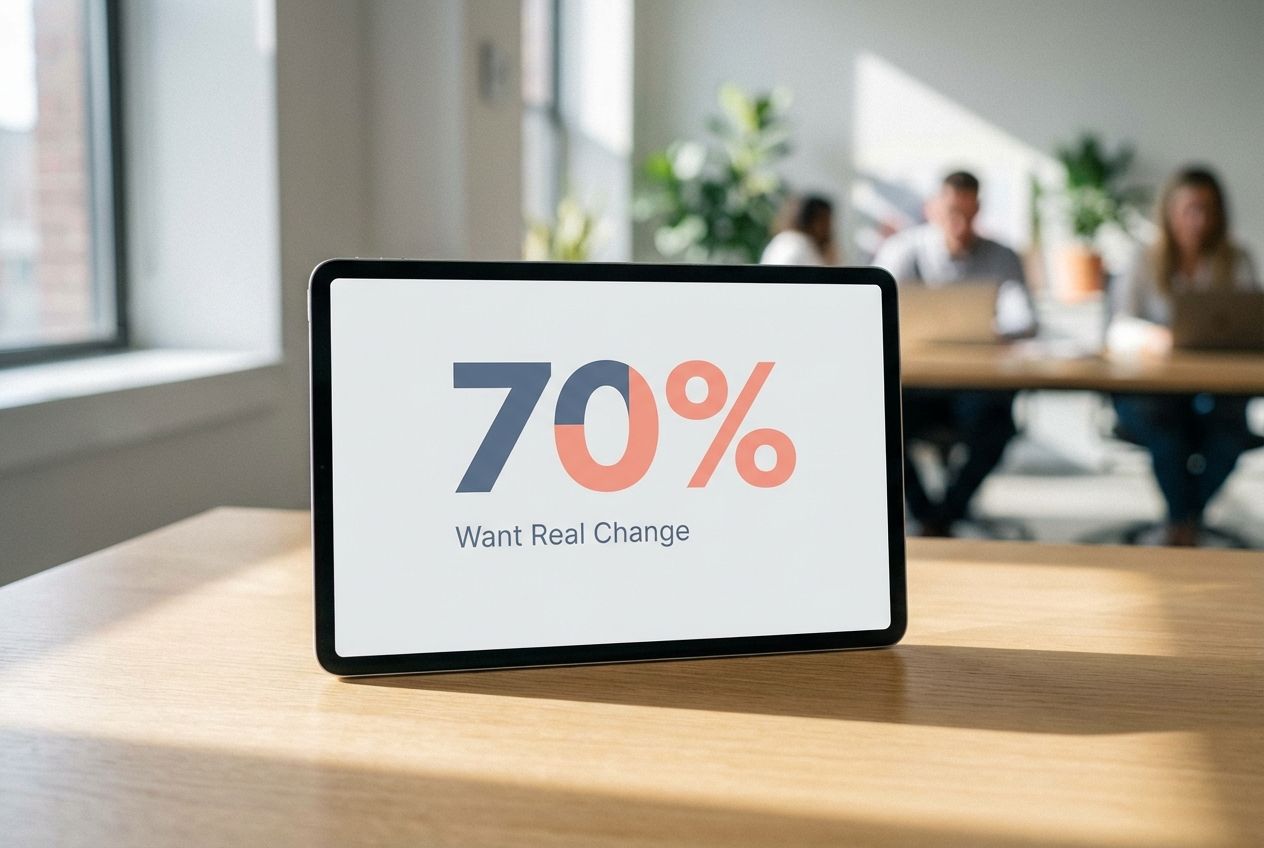
In fact, recent data shows that over 70% of people want their companies to make a clear difference in society through Corporate Social Responsibility. This need for true action changes how you view your job. It affects the pride you take in your work. It even decides if you stay or leave.
This guide breaks down what Corporate Social Responsibility really means. We will look at why employees care so much about it today. We will also cover the steps that turn big talk into real change at work.
What Is Corporate Social Responsibility (CSR)?
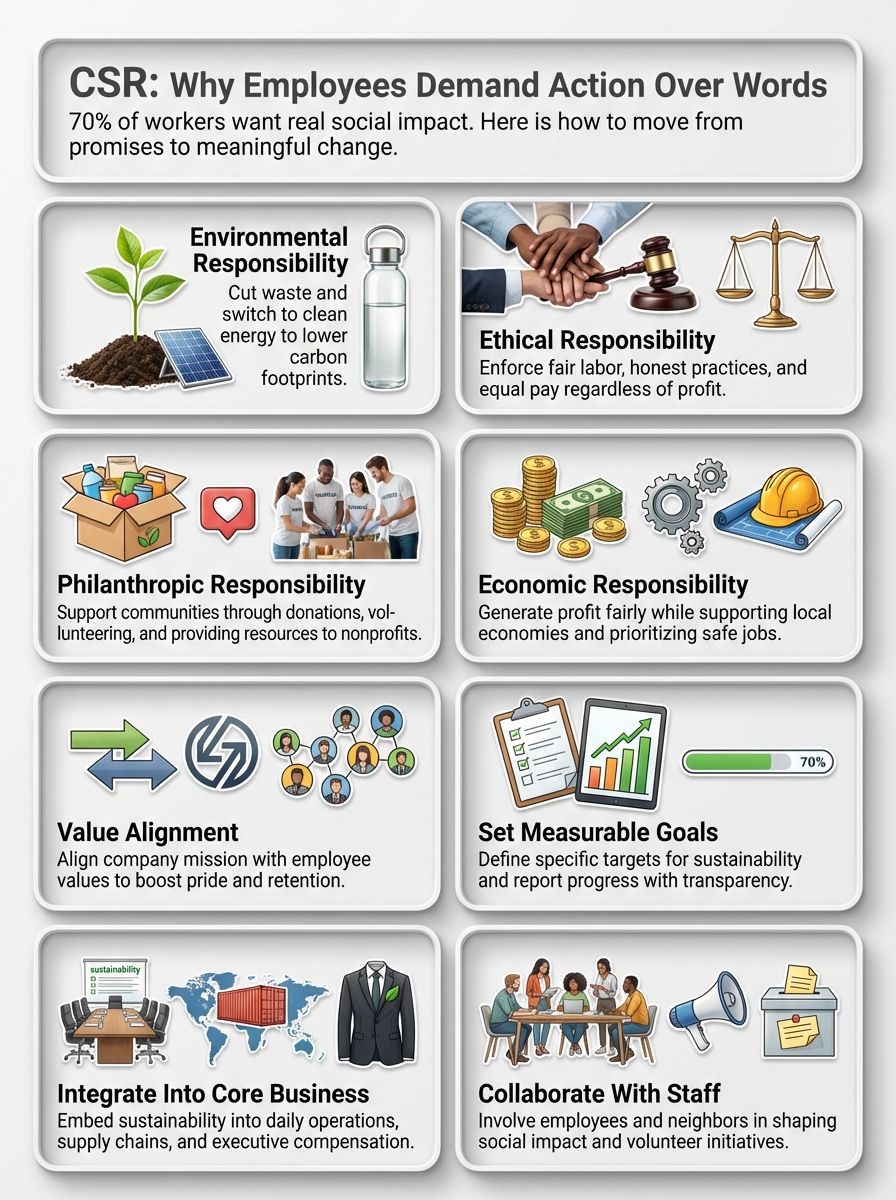
Think of Corporate Social Responsibility, or CSR, as the operating system for a company’s conscience. It means a company acts in ways that help people, communities, and the planet rather than just chasing the next dollar.
This concept includes being fair with workers, making safe products, and reducing harm to nature. It is not just about writing a check to a charity once a year. It is about how the business functions at its core.
Big names like Microsoft spent over $1 billion recently on community programs. They built skills training in 36 countries and funded green tech projects. But you do not have to be a tech giant to make this work. Even small changes in local supply chains make a dent.
Good CSR covers three main bases:
- Ethical practices: Following the rules and treating people right.
- Sustainability goals: protecting the environment for the future.
- Community support: Helping local groups and neighbors.
Firms report their actions so everyone can see what they are doing. Employees watch for real changes before offering trust or pride at work.
“Doing business without doing good is no longer an option.”
Types of Corporate Social Responsibility
CSR wears many hats and shapes how businesses touch lives. I like to think of these as different modules in a larger system. Each type guides companies on how they can do good, inside and out.
Environmental Responsibility
Companies lower their energy use and cut waste to protect the planet. This is often the most visible type of CSR. Many US companies are switching to clean energy, such as wind or solar power. For instance, Apple reached 100 percent renewable energy for its offices in 43 countries by 2020.

Businesses also recycle materials, reduce plastic, and choose eco-friendly packaging. These actions can shrink a company’s carbon footprint significantly. Practical steps often include:
- Installing LED lighting to cut energy consumption.
- Eliminating single-use plastics in the cafeteria.
- Offering remote work options to reduce commuter pollution.
Some firms set big goals like zero net emissions by 2030 or less water use each year. Patagonia repairs gear so clients use it longer instead of buying new stuff. This helps save resources and shows strong organizational commitment to sustainability. Employees notice these efforts. It sparks pride and boosts workplace culture.
Ethical Responsibility
Ethical responsibility means doing the right thing even if no one is watching. Honest business practices matter to employees. They want leaders who set fair rules and treat workers with respect.
Clear hiring rules, equal pay for women and men, and safe workplaces are mandatory basics. These are not just buzzwords but real needs. In the US, certifications like B Corp help verify these claims. To get certified, a company must score at least 80 on a rigorous impact assessment.
Many people today care about how a company acts, not just what it sells. Employees notice if a business chooses partners with strong ethical practices or avoids unfair labor practices in global supply chains. Taking action shows true organizational commitment. It boosts employee engagement.
In 2023, more than 70% of workers said they felt proud working for a company that follows ethical guidelines in all decisions. This builds trust inside teams. It sets a healthy workplace culture from top to bottom.
Philanthropic Responsibility
Philanthropic responsibility means businesses help their communities. Many big companies give money or tools to schools, hospitals, and local charities. For example, Microsoft has donated over $1 billion in software every year since 2017 to help nonprofits run better.
Employees notice these actions and want their company to support important causes too. A strong giving culture boosts employee engagement and trust. People like working for a business that puts social impact before pure profit.
Volunteering days have become part of workplace culture at places like Salesforce. Their staff spent over two million hours volunteering recently. This focus on community involvement shows real organizational commitment beyond words alone.
Economic Responsibility
Companies have a duty to make money in fair and honest ways. They must pay workers fair wages, offer safe jobs, and follow laws that protect everyone. Fair business helps build strong trust with employees and the community.
Smart use of resources matters too. Firms can support local suppliers or help create new jobs where they operate. This boosts local economies and shows real organizational commitment. Social impact grows when companies put people before quick profit. This shows true stakeholder responsibility instead of empty promises.
Why CSR Matters to Employees
People want to work where their actions count for something bigger. As a developer, I want my code to work, but I also want the product to be useful. Employees notice when real change happens and often stick around because of it.
Alignment with Personal Values
Workers want their jobs to fit with their values. An employee who cares about sustainability looks for a company that uses ethical practices and supports the planet. Firms like Patagonia act on climate issues, so staff feel proud of their work. If leaders ignore social impact or workplace culture, people notice fast. Employees see through empty promises. They want real community involvement and honesty.
Matching goals helps everyone give their best effort each day. Staff rally behind a clear organizational commitment that matches what matters to them at home and in life. For example, survey results from 2022 show over 64 percent of workers think a company’s ethics matter as much as paychecks do.
Teams push hard for projects tied to corporate governance or stakeholder responsibility if the mission fits how they live outside the office, too.
Desire for Meaningful Impact
People join companies to do more than just earn a paycheck. They want their work to matter and make positive changes in the world. Employees look for jobs at places that show real social impact, like reducing waste or supporting local communities.
Firms that put sustainability and ethical practices at the center of decisions see higher employee engagement. A study from Deloitte found 73 percent of Millennials prefer working for brands making a difference in society. Folks want leaders who back up big words with action.
Making progress on sustainability goals builds trust and drives organizational commitment. Actions speak louder than slogans painted on office walls or tucked away in fancy reports.
Increased Job Satisfaction
Desiring meaningful impact leads straight to greater job satisfaction. Employees feel proud when their daily work supports corporate social responsibility. Real action on sustainability builds a strong sense of purpose at work. People see that their tasks matter for more than just profits.
Google saw 87 percent of its team report higher happiness because the company put ethics and environmental action front and center. That matters. Happy workers stay longer and do better work.
Clear accountability, open communication about social impact, and chances for employees to join CSR programs all boost workplace culture. This sparks loyalty and energy in ways bland slogans never can manage.
The Gap Between Words and Actions in CSR
Sometimes companies talk a big game about caring for people and the planet. But their actions do not match up. Employees see through empty promises fast. They want real change rather than just speeches.
Performative Initiatives
Some companies talk big about sustainability and ethical practices, but only make small changes to look good. This is often called “greenwashing.” They post catchy slogans or green logos online, yet skip any real action inside their workplace culture.
One example is planting a few trees for Earth Day while ignoring high carbon emissions from daily business operations. Employees see through these shallow efforts quickly. They want true accountability and transparency. They do not want hollow gestures meant for good press or social media likes.
This gap often hurts employee engagement. It lowers trust in management’s commitment to Corporate Social Responsibility: Why Employees Demand Action, Not Words.
Lack of Transparency
Employees spot vague promises fast. They read a report packed with colorful claims but see only a few real numbers or clear targets. These gaps chip away at trust and engagement. Without regular updates about progress on sustainability or ethical practices, people wonder what is real and what lives in the shadows.
Clear data builds accountability. Companies that dodge tough questions from workers appear to hide flaws instead of fixing them. Words like “commitment” mean little without proof. Real actions, transparent goals, and honest answers build confidence across teams. This simple truth shapes workplace culture and keeps everyone rowing in the same direction.
How Companies Can Take Meaningful CSR Actions
Actions speak louder than words. Employees spot empty promises from a mile away. Clear steps toward real change can spark pride and loyalty faster than any glossy report. Here is how companies can move from buggy logic to working solutions.
| Vague Promise (Avoid) | Actionable Goal (Adopt) |
|---|---|
| “We care about the environment.” | “We will cut office energy use by 20% by 2026.” |
| “We support our community.” | “We donate 1% of all profits to local food banks.” |
| “We value diversity.” | “We publish an annual diversity report with clear metrics.” |
Set Clear and Measurable Goals
Clear goals shine like signposts. Employees want to know what the company stands for. They need to see how it tracks progress in social impact or sustainability. Vague promises about climate action do not spark trust.
Instead, use numbers. Reduce energy use by 30 percent in two years. Cut plastic waste to zero by 2026. Donate $1 million yearly to local communities. Measurable targets turn Corporate Social Responsibility into action.
Staff see real change if a business reports results every quarter with simple charts and honest updates. These steps boost workplace culture and employee engagement because everyone can check growth at a glance.
Integrate CSR into Core Business Practices
Setting goals is good. But folding Corporate Social Responsibility into everyday business moves things forward. Companies can pick suppliers who follow ethical practices. Management can review workplace culture and reward teams for hitting social impact targets.
Instead of a side project, sustainability lives in the day-to-day system. Think green offices, smaller carbon footprints, and open reporting on progress. Teams work better when they see leaders making real changes that match what they say about accountability.
Starbucks links its employee engagement goals to community involvement programs. Salesforce adds stakeholder responsibility by tying part of executive pay to meeting diversity milestones each year. These real steps show workers that sustainability is not just talk. It becomes part of how the company runs every day.
Collaborate with Employees and Communities
Employees want to shape the company’s Social Impact. Give them a seat at the table for Sustainability projects or Workplace Culture events. People feel more invested when their ideas matter.
For example, Salesforce created an employee-led program that boosted Community Involvement in local schools. This also supported Stakeholder Responsibility. Work with neighborhoods, too. Do not just stay behind office walls.
Host clean-up days. Support local causes. Invite feedback from real people living nearby. Strong partnerships build trust fast and show Organizational Commitment through action.
Examples of Companies Excelling in CSR
It helps to look at who is doing it right. These companies provide a blueprint for how to blend profit with purpose. Patagonia goes beyond standard efforts. In 2022, the founder transferred ownership of the company to a trust and a non-profit. Now, all future profits go toward fighting climate change. They also repair gear, so customers buy less, which is rare in retail.
Ben & Jerry’s has a long history of activism. They fight for criminal justice reform and support local farms. They also offer employees paid time off for volunteering in their communities.
Microsoft has been carbon neutral since 2012. They aim to be carbon negative by 2030. This makes them a leader in sustainability. Starbucks buys ethical coffee beans and runs community programs to cut waste. These organizations blend core business with social impact. They show real commitment through action.
The Role of Employees in Driving CSR
Employees often start the spark for real change. They push companies to show their true colors. They roll up their sleeves and shape how work culture grows every day.
Advocating for Change
Workers speak up about the gap between talk and action. Some join staff councils or sign open letters. Google employees famously did this in 2018 regarding ethical concerns with military projects.
Others use data to show why ethical practices and transparency matter for workplace culture. Their voices force management to rethink priorities and push past empty promises. Pushing for change takes teamwork.
Many team up with local groups or suggest new ideas during meetings. These small actions ripple outward. They shape policies on ethics, sustainability, and stakeholder responsibility. Action steps often become clear as more team members get involved.
Participating in CSR Programs
Employees roll up their sleeves and jump into CSR programs. They are eager to make a difference. Joining tree-planting activities or helping at local schools gives staff a real sense of purpose.
They work on clean-up projects. They teach tech skills in underfunded areas. They mentor young people from the community. Each action adds to the company’s social impact and builds stronger connections between employees.
Corporate governance grows stronger as people work side by side for sustainability goals. Staff see clear results when they help reduce waste or support charity drives. Involving everyone boosts employee engagement and makes the workplace culture feel open and fair.
The Bottom Line
Corporate Social Responsibility goes beyond lofty promises. It grows strong through real effort and clear results. Simple actions make a difference fast. These steps fit into daily routines, so they stick. When leaders show they care about ethics, the whole team feels motivated. Everyone wants to work with pride and purpose.
Check out trusted business articles or local volunteer spots if you want more ideas. My own project group once swapped plastic cups for reusable ones. Seeing that small shift spark bigger changes showed me that every action counts.