We currently exist in an era defined by a staggering psychological contradiction. The modern consumer is more anxious, more medicated, and more digitally fractured than at any point in human history. Yet, simultaneously, we are the primary targets of a multi-trillion-dollar global wellness industry that promises to sell us the exact peace of mind our lifestyles have systematically destroyed. We are bombarded with advertisements for thousand-dollar silent retreats, luxury meditation cushions, elite bio-hacking supplements, and monthly subscription apps that literally send us push notifications to remind our lungs to breathe. We have commodified inner peace, packaged it into highly optimized digital funnels, and sold it back to an exhausted population at a massive premium.
This entire ecosystem is a beautifully executed grift. It thrives on the premise that mental clarity requires expensive external intervention. It relies on the lie that the cure for digital burnout is to be found in another digital application.
But a quiet, fierce rebellion is brewing against this manufactured wellness complex. A growing demographic of professionals, creatives, and everyday citizens are realizing that the most effective, most profound, and completely free psychological release valve has been sitting empty in their homes this entire time. They are canceling their expensive meal delivery subscriptions, ignoring the latest pseudo-scientific wellness fads, and picking up a chef’s knife. The widespread embrace of Cooking as Therapy 2026 is not a superficial lifestyle trend. It is an aggressive, necessary reclamation of our own humanity.
To fully harness this power, however, we must first dismantle a deeply ingrained, toxic societal misconception. For generations, society committed a profound intellectual error: it relegated the everyday act of cooking to the domain of domestic, feminine obligation. We categorized the professional, Michelin-starred kitchen as a realm of masculine genius and high-stakes pressure, while simultaneously dismissing the home kitchen as a space of mundane women’s work. This false dichotomy stripped the act of feeding oneself of its inherent dignity.

Cooking is not a feminine trait; it is an essential human life skill. It should never be tied down to any gender. It is the absolute baseline of biological survival. More importantly, it is a gateway to experiencing the better things in life. It is not just a menial chore designed to fill up stomachs. It is a profound methodology used to satisfy minds, fill hearts, and serve as a relentless creative outlet. By stripping away the gendered baggage and recognizing the kitchen as a universal human sanctuary, we unlock the ultimate defense against a world designed to drain our attention and our wallets.
To truly understand the power of this culinary rebellion, we must ruthlessly dissect the convenience economy that alienated us from our food, tear down the gendered tropes of domestic labor, and explore the raw, undeniable psychology of physical creation.
The Toxic Lie of the Convenience Economy
For the past two decades, the global technology sector has aggressively sold us a highly seductive narrative. We were told that friction is the ultimate enemy of human progress. We were instructed to view every minute spent doing a manual chore as a minute wasted. The ultimate goal of the modern professional was to outsource fundamental human tasks to gig-economy workers and algorithmic delivery platforms so that we could reclaim our precious time for higher-level intellectual pursuits.
This philosophy led to the absolute normalization of the daily food delivery habit. We willingly removed ourselves entirely from the biological process of sustenance. We reduced the complex, ancient ritual of preparing a meal into the simple, sterile act of pressing a button on a glass screen and waiting for a stranger to leave a cardboard box at our door. We convinced ourselves that we were optimizing our lives.
But we must pause and ask ourselves a critical, unforgiving question. What did we actually do with all of that reclaimed, frictionless time? Did we write sweeping historical novels? Did we engage in deep, philosophical meditation? Did we spend unbroken hours connecting meaningfully with our families and communities?
We did not. We spent that newly acquired time scrolling through algorithmic social media feeds, answering after-hours corporate emails in bed, and consuming endless streams of digital outrage. The convenience economy did not free us from stress; it merely freed up more time for us to expose ourselves to digital anxiety. By outsourcing our cooking, we inadvertently outsourced our most reliable daily grounding mechanism. We traded the therapeutic, deliberate rhythm of chopping vegetables for the frantic, dopamine-depleting rhythm of the endless digital scroll. We forgot how to take care of ourselves in the most literal sense.
The analytical matrix below illustrates the severe psychological deficit created by the convenience economy compared to the restorative power of manual cooking.
| Daily Activity | The Convenience Economy (Outsourcing) | The Culinary Rebellion (Insourcing) |
| Physical Engagement | Completely passive, requiring only the swiping of a thumb on a smartphone screen to trigger a transaction. | Highly active, requiring the complex coordination of hands, spatial awareness, and deliberate physical movement. |
| Mental Focus | Fractured and distracted, easily interrupted by incoming digital notifications and multi-tasking habits. | Singular and intense, demanding absolute, unbroken focus on the immediate physical environment and ingredients. |
| Sensory Input | Sterile and synthetic, limited primarily to the blue light of a screen and the notification chime of an application. | Rich and deeply immersive, flooding the brain with the smell of aromatics, the sound of searing heat, and the tactile texture of raw ingredients. |
| End Result | A fleeting dopamine hit followed by the hollow, expensive consumption of heavily processed, mass-produced food. | A profound sense of personal accomplishment, deep creative satisfaction, and the creation of legitimate, healthy sustenance. |
Dismantling the Gendered Kitchen
To fully reclaim the kitchen as a space of mental sanctuary, we must confront the historical biases that have warped our relationship with domestic labor. The cultural narrative surrounding food preparation has been deeply, unfairly bifurcated for over a century.
Society constructed a bizarre reality where the act of cooking at home to sustain a family was viewed as an inherent, invisible feminine duty, completely devoid of prestige. Conversely, the act of cooking in a commercial restaurant for financial gain was elevated to a masculine art form, dominated by aggressive, celebrated male chefs. This arbitrary gendering of a survival skill did a massive disservice to humanity as a whole. It told women that their daily, life-sustaining labor was merely a chore, and it told men that participating in the daily nourishment of their own households was somehow beneath their dignity or outside their societal role.
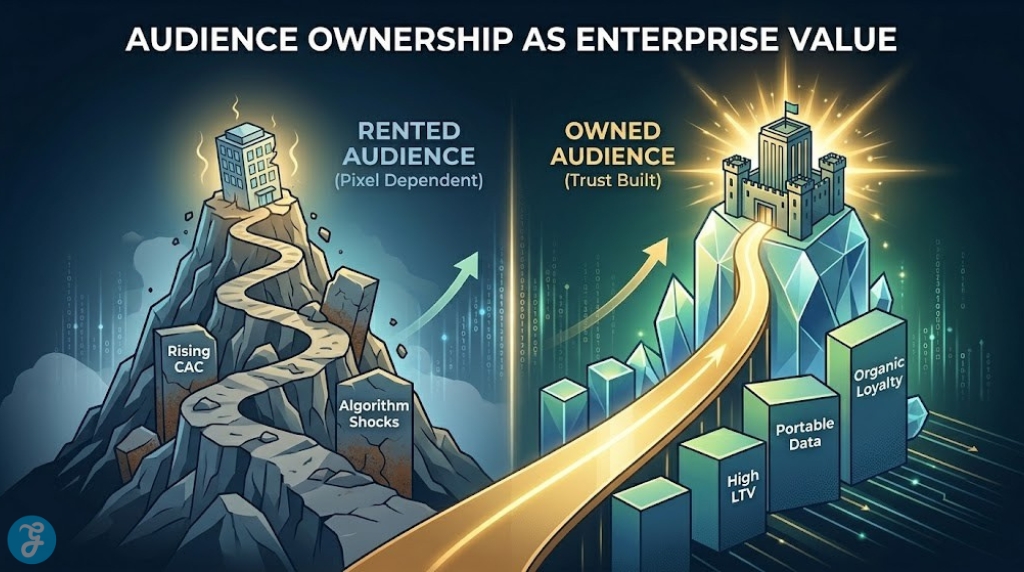
We must aggressively shatter this framework. Cooking is an essential life skill, as fundamental to human independence as managing personal finances or understanding basic first aid. Tying the ability to feed oneself and one’s loved ones to a specific gender identity is an intellectual failure.
When an individual steps up to a cutting board, the ingredients do not care about their gender. The Maillard reaction occurs regardless of who is holding the tongs. Emulsifying a vinaigrette relies entirely on the universal laws of chemistry, not societal expectations. Cooking is a human right and a human responsibility.
When we view cooking purely as a chore, we rob ourselves of its inherent beauty. It is the original alchemy. It is the process of taking raw, fibrous, inedible elements of the earth and using fire, water, and time to transform them into energy and pleasure. To possess this skill is to possess absolute independence. It is the ultimate form of self-reliance. When we stop viewing the kitchen through the lens of outdated domestic stereotypes and start viewing it as a laboratory of human survival and creativity, the psychological benefits become immediately accessible to everyone.
This grid deconstructs the evolution from outdated societal tropes to the modern, universal understanding of culinary empowerment.
| Societal Perspective | The Outdated Gendered Paradigm | The Modern Universal Reality |
| The Primary Motivation | Obligation and expected domestic duty based on historical gender roles. | Personal empowerment, biological survival, and the desire for creative expression. |
| The Perception of the Task | A repetitive, invisible chore that holds little cultural prestige or recognized value. | A celebrated, highly respected life skill that fosters deep independence and self-sufficiency. |
| The Culinary Domain | The home kitchen is isolated, undervalued, and distinct from the celebrated professional sphere. | The kitchen is a borderless sanctuary, offering the same creative fulfillment to a home cook as a professional. |
| The Emotional Outcome | Resentment, fatigue, and the feeling of being trapped in an endless cycle of domestic labor. | Deep satisfaction, psychological grounding, and the joy of mastering the physical world. |
The Kitchen as the Ultimate Analog Sanctuary
Once we discard the convenience economy and the gendered stereotypes, we can clearly see the kitchen for what it truly is: a psychological fortress. To understand why cooking operates as such a potent stress buster, we must look at how it forces the modern brain to behave.
In the contemporary workplace, our tasks are relentlessly abstract. We manipulate digital spreadsheets, we manage remote relationships over video calls, and we strategize for future financial quarters. The mind is constantly projecting forward into hypothetical, anxiety-inducing scenarios or ruminating backward on past communications. We are almost never required to be violently, physically present in the current second. Our bodies sit in ergonomic chairs while our minds run marathons in the cloud.
Cooking absolutely refuses to tolerate a wandering mind. It is a harsh, uncompromising, and deeply beautiful teacher.
When you are holding a sharp, eight-inch high-carbon steel knife and attempting to brunoise a shallot into perfect, uniform cubes, you cannot be thinking about an impending corporate performance review. If your mind drifts to a stressful email, the physical feedback is immediate and painful. When you are tempering whole cumin and mustard seeds in smoking hot oil for a complex curry, you have a window of exactly three seconds before the spices transition from perfectly toasted and aromatic to irreparably burned and bitter. You cannot casually look down at a smartphone notification. You must be there, entirely, completely, in that specific micro-second of existence.
This is the exact state of “mindfulness” that the wellness industry charges thousands of dollars to teach you at elite, secluded retreats. But in the kitchen, it is not a theoretical exercise discussed on a yoga mat; it is an operational necessity. The sensory demands of cooking act as a heavy anchor, dragging the frantic, over-stimulated modern brain out of the digital void and slamming it firmly back into the physical body.
The sound of a wooden spoon scraping the fond off the bottom of a cast-iron Dutch oven, the sharp, pungent smell of raw garlic hitting hot butter, the physical, elastic resistance of kneading a dense bread dough; these are undeniable, biological realities. They remind a stressed, frayed nervous system that the world is physical, tactile, and capable of yielding immense pleasure if treated with deliberate respect.
The comparative breakdown below contrasts the artificial mindfulness sold by corporations with the organic, deeply rooted mindfulness demanded by the culinary process.
| Concept of Mindfulness | The Corporate Wellness Product | The Reality of the Kitchen Counter |
| The Method | Passively listening to a pre-recorded audio track instructing the user to visualize breathing. | Actively engaging all five human senses simultaneously to monitor a rapidly evolving chemical process. |
| The Cost | Expensive monthly software subscriptions, premium application upgrades, and costly specialized equipment. | The fundamental, unavoidable cost of standard groceries required for basic human survival. |
| The Motivation | Extrinsic, driven by the modern guilt of not maximizing one’s daily “personal optimization” routine. | Intrinsic, driven by the undeniable biological imperative of hunger and the deep desire for sensory pleasure. |
| The Outcome | A temporary, elusive sense of calm that shatters immediately upon reopening an overflowing email inbox. | A tangible, edible reward that provides critical physical nourishment and profound, lasting psychological satisfaction. |

The Chemistry of Absolute Control
Beyond the mandate of physical presence, the kitchen provides something that the modern world has almost entirely eradicated: absolute, predictable control.
We live in an era characterized by a profound, pervasive sense of systemic helplessness. The average citizen has absolutely no control over global supply chain collapses, fluctuating macroeconomic interest rates, sudden corporate restructurings, or the opaque, shifting algorithms that dictate what information they see online. We are passengers in a chaotic, rapidly accelerating vehicle, entirely at the mercy of invisible geopolitical and economic forces. This lack of agency is the core root cause of the modern anxiety epidemic.
The kitchen is the ultimate antidote to this helplessness. It is a defined, enclosed micro-universe where the laws of physics and chemistry apply perfectly, predictably, every single time.
If you apply sustained heat to sugar, it will predictably melt, caramelize, develop deep complex flavors, and eventually turn to solid glass. If you vigorously whip egg whites with a clean metal whisk, the proteins will inevitably denature, trap air, and form stiff, glossy peaks. If you combine an acid with a base, they will react. There are no shifting corporate politics in baking a loaf of sourdough. There is no algorithmic bias in properly roasting a whole chicken. The ingredients do not care about your job title, your social media following, or your socioeconomic status. They only respond to the precise physical inputs you provide with your own hands.
For a person feeling entirely out of control in their professional or personal life, stepping into the kitchen and executing a complex recipe from start to finish is an incredibly empowering act of defiance. It is a daily, necessary reminder that cause and effect still exist in the universe. It proves, undeniably, that if you follow the rules of the physical world, you can manifest a beautiful, desirable outcome through the sheer labor and focus of your own two hands. It restores a critical sense of personal agency.
This index outlines the psychological relief provided by the predictable physics of cooking against the backdrop of a chaotic world.
| Life Domain | The Modern Macro Reality (Chaos) | The Micro-Universe of the Kitchen (Control) |
| Rules of Engagement | Highly ambiguous, subject to sudden, unannounced change, and often fundamentally unfair. | Strictly defined by the immutable, reliable laws of chemistry, thermodynamics, and biology. |
| Predictability of Effort | Extremely low; best-laid professional plans are frequently destroyed by unforeseen external variables. | Extremely high; executing the exact same technique with the same ingredients will consistently yield the exact same result. |
| Agency and Ownership | Minimal; individuals are often small, replaceable cogs in massive, incomprehensible corporate machines. | Absolute; the cook is the sole architect, the primary executor, and the direct beneficiary of the final product. |
| Resolution of Conflict | Often drawn out over agonizing months of corporate negotiation, litigation, or endless bureaucratic emails. | Immediate and final; the dish is either seasoned correctly upon tasting, or it is adjusted on the spot with a pinch of salt. |
The Creative Canvas: Satisfying Minds and Filling Hearts
While the therapeutic benefits of cooking are immense for the individual, to view the kitchen purely as an isolation chamber is to miss half of its magic. Cooking is not just a means to fill up stomachs; it is a way to satisfy minds and fill hearts. It is a relentless, boundless creative outlet that bridges the gap between survival and art.
In our professional lives, creativity is often heavily constrained. It is suffocated by strict brand guidelines, rigid client briefs, target demographic data, and the overarching need for commercial viability. The kitchen is completely free of these constraints. It is the ultimate global canvas. An individual can spend their Tuesday evening mastering the intricate, heavily spiced, slow-cooked traditions of their own cultural heritage, and then immediately pivot on Wednesday to exploring the stark, minimalist techniques of Japanese cuisine or the rustic, hearty traditions of Italian pasta making.
This experimentation satisfies the human mind’s deep craving for continuous learning and mastery. Cooking is an active, ongoing education. It requires researching historical spice trade routes, understanding regional agricultural practices, and mastering entirely unfamiliar culinary tools. When you successfully balance the complex sweet, sour, salty, and spicy notes of a Thai green curry, you are not just making dinner; you are solving a complex, sensory puzzle. You are satisfying your intellect.
Furthermore, the culmination of this creative process is inherently designed to be shared. In our hyper-individualized, digitally isolated society, we have lost the physical architecture of community. We live in isolated apartments, we communicate primarily through text messages, and we consume our media alone, wearing noise-canceling headphones. The act of cooking for another human being is a radical, powerful rejection of this isolation.
When you spend hours tending to a slow-simmered braise, and you plate it for your family, your friends, or even a neighbor, you are engaging in the most ancient, fundamental form of human connection. You are bypassing the clumsy, often inadequate medium of spoken language.
A home-cooked meal is a physical, edible manifestation of care. It silently communicates a profound message: I have dedicated my most precious resource, my time, to ensure your survival and to bring you joy.
The joy that food creates is not merely chemical or nutritional; it is deeply, structurally sociological. A shared meal acts as a powerful societal equalizer. When people sit down at a counter to eat, the rigid postures of professional life relax. Emotional defenses drop. The sensory pleasure of good food physically lowers cortisol levels, making space for authentic laughter, vulnerability, and genuine connection. It fills the heart just as effectively as it fills the stomach.
This comparative breakdown demonstrates how the kitchen actively repairs the fragmented modern social dynamic through shared creativity.
| Social Environment | The Digital / Professional Sphere | The Shared Culinary Experience |
| Mode of Communication | Highly curated, text-based, asynchronous, and incredibly prone to severe emotional misinterpretation. | Face-to-face, synchronous, highly contextual, and driven entirely by shared sensory pleasure and proximity. |
| Emotional Vulnerability | Heavily guarded; interactions are carefully calculated to protect professional reputation and corporate status. | Naturally lowered; the biological act of breaking bread together triggers deep evolutionary cues of safety and trust. |
| Creative Exploration | Often reduced to the superficial consumption of digital media or combative, exhausting political debates online. | Deeply immersive; exploring history, geography, and tradition through physical flavor profiles and shared tasting. |
| Definition of Value | Based strictly on economic output, optimized productivity, and continuous, draining digital availability. | Based entirely on warmth, generosity, hospitality, and the fundamental human willingness to nourish others. |
The Final Reclamation of the Self
The modern wellness industry desperately wants you to believe that peace is a premium, luxury feature. They want you to believe it is locked behind a paywall, accessible only to those who can afford the right retreats, the correct aesthetic accessories, or the most exclusive mindfulness coaches. It is a brilliantly executed lie designed to keep you endlessly searching, spending, and consuming.
The truth is infinitely more accessible, though it requires actual effort. The truth is that genuine psychological grounding requires getting your hands dirty. It requires stepping entirely away from the glowing screens, abandoning the toxic illusion of the frictionless life, and returning to the brutal, beautiful, analog reality of biological survival.
The adoption of cooking as a therapeutic escape is the ultimate act of modern self-reliance. It is the aggressive refusal to let algorithms feed you or dictate your mood. It is the conscious, deliberate decision to carve out a physical sanctuary in an increasingly digital world. It is the realization that feeding yourself is not a gendered chore, but a universal human right.
Every single time you mince a clove of garlic, every time you knead a wet dough until it turns smooth and elastic, and every time you serve a hot, nourishing meal to someone you deeply love, you are actively repairing the psychological damage inflicted by the modern age. You are satisfying your mind, filling your heart, and proving your own independence.
You do not need another application to tell you how to live. You do not need a wellness guru to teach you how to breathe. You simply need to walk into your kitchen, turn on the heat, and reclaim your life, one meal at a time.