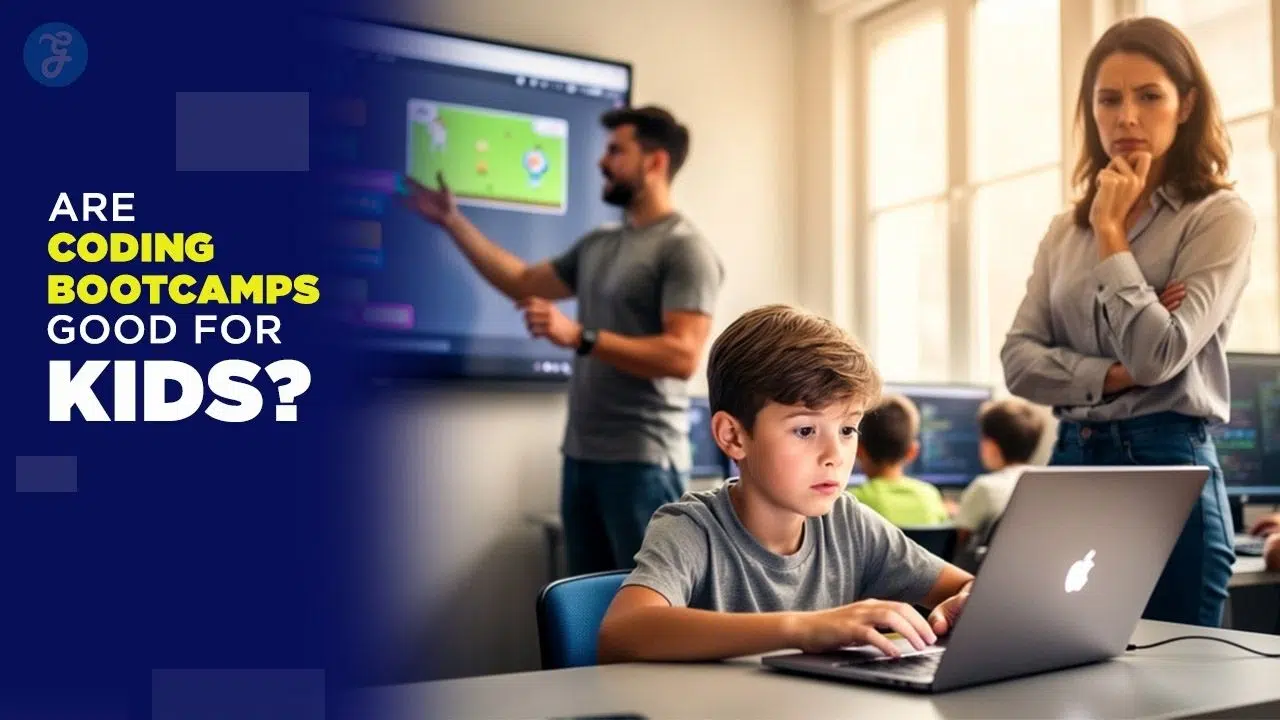
Have you ever watched your child effortlessly master a new tablet game and wondered if they could build one themselves? Many parents ask if signing up their kids for coding bootcamps is the right move. You might worry your child will get lost or overwhelmed, or you might find yourself asking, “Are coding bootcamps for kids too soon or worth exploring. More schools now teach computer science, and research shows kids can pick up coding as soon as they start reading. These programs pop up everywhere. They offer classes even to children in grade school.
I am going to walk you through the exact steps I use to evaluate these programs. We will figure out if they are helpful or too much for a young mind. Grab a cup of coffee, and let’s go through it together. I will show you everything you need to know.
What Are Coding Bootcamps for Kids?
Coding bootcamps for kids teach young minds how to write computer programs in simple ways. These camps use games and fun projects. This approach makes learning feel more like play than work.
You will usually see a few common formats in the US:
- 1-week summer immersives: These short bursts keep kids engaged without burning them out.
- Scratch 3.0 camps: Developed by the MIT Media Lab, this free tool uses visual blocks instead of text.
- Roblox Studio sessions: Older kids use the Lua language to build 3D multiplayer worlds.
Overview of coding bootcamps
Children gather in these programs to learn programming using friendly tools. They often teach basic computer science and introduce key skills for future jobs. Kids use languages like Python or Scratch.
Python is incredibly popular right now. Its syntax reads almost like plain English. This makes it the perfect first text-based language for young learners.
Instructors help kids build simple apps or games through hands-on projects. Bootcamps focus on practical learning instead of heavy theory. The main goal is to spark interest in technology and boost digital literacy early on.
Common age groups targeted
These programs often start with children as young as five or six years old. Some camps welcome kids in kindergarten. Others focus on students ages eight to fourteen.
Many popular options group learners by age and skill to maximize fun and skill development. Code Ninjas uses a highly motivating 9-belt system. Kids progress from a White belt to a Black belt, just like in martial arts.
Pre-teens and teens join more advanced camps. For example, iD Tech Camps offers intensive 2-week overnight sessions for ages 13 to 18. The goal is simple. Teachers want to help each child learn programming at a pace that fits them best.
The Rising Popularity of Coding Bootcamps for Kids
More parents want kids to pick up tech skills early. These camps are filling up fast. Kids now swap soccer balls for laptops, eager to learn the language of computers.
Schools often struggle to keep up with the rapid pace of tech changes. Bootcamps step in to fill that gap with updated, engaging lessons.
Increased demand for STEM education
Parents and schools push for strong learning in science, technology, engineering, and math. Many jobs now depend on digital skills. These programs offer hands-on lessons that build early computer science basics.
Big tech companies look for workers with strong STEM backgrounds. The US Bureau of Labor Statistics recently shared a massive projection.
Software developer jobs in the US will grow by 15% from 2024 to 2034, adding over 267,000 new positions to the economy.
Coding as a critical future skill
Kids who know how to code can shape their futures. Today, most jobs use computers or software in some way. The focus has even expanded beyond basic code.
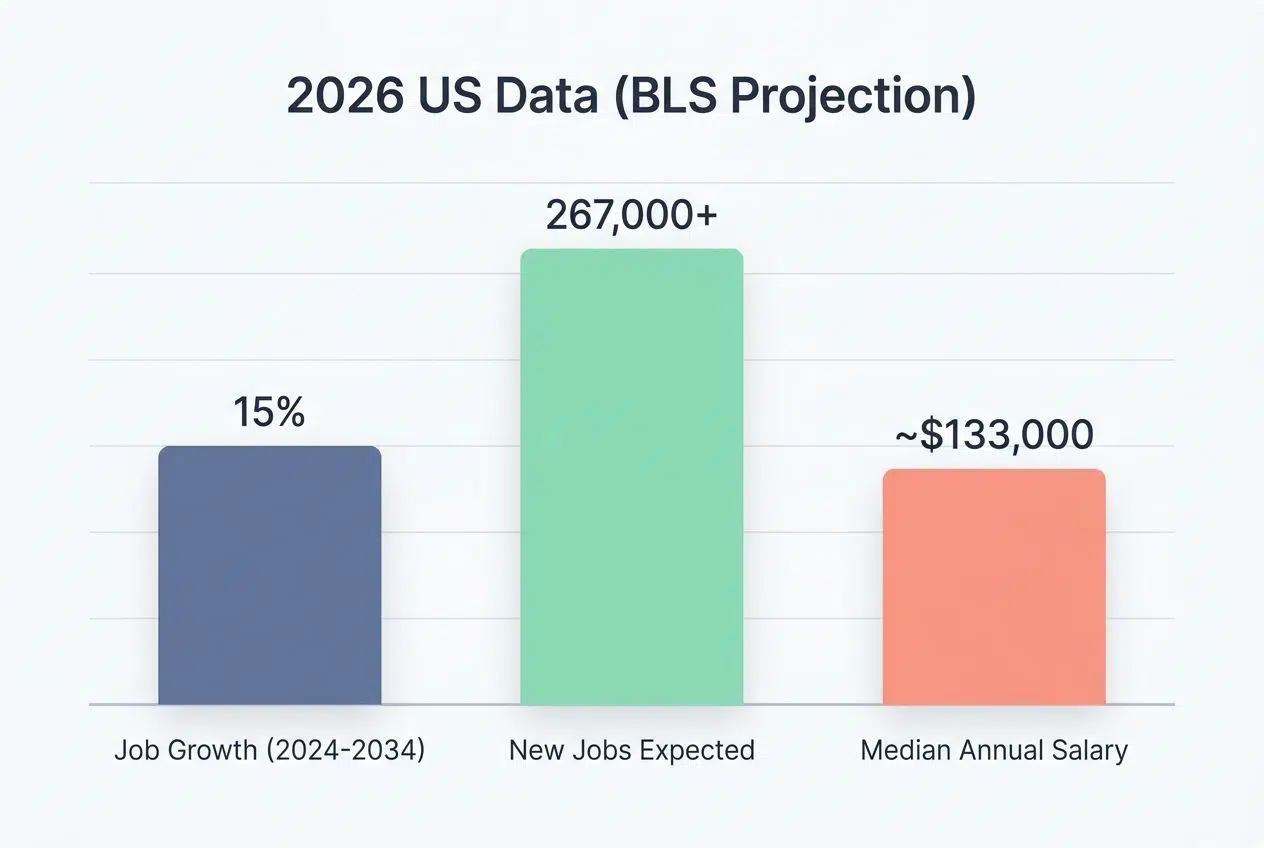
A 2026 report from Code.org highlights a massive shift toward “AI + CS” education. They now track how schools integrate Artificial Intelligence alongside Computer Science. Code.org also reports over 107 million student accounts created globally, proving that early tech education is a massive movement.
| Career Metric | 2026 US Data (BLS Projection) |
|---|---|
| Job Growth (2024-2034) | 15% (Much faster than average) |
| New Jobs Expected | 267,000+ |
| Median Annual Salary | ~$133,000 |
Benefits of Coding Bootcamps for Kids
Kids light up when they figure out how to make a computer do what they want. These programs spark fresh thinking. They act like seeds planted in the soil of young minds. Learning to code teaches a very specific type of logic. Computers only do exactly what you tell them to do.
Promotes problem-solving and critical thinking
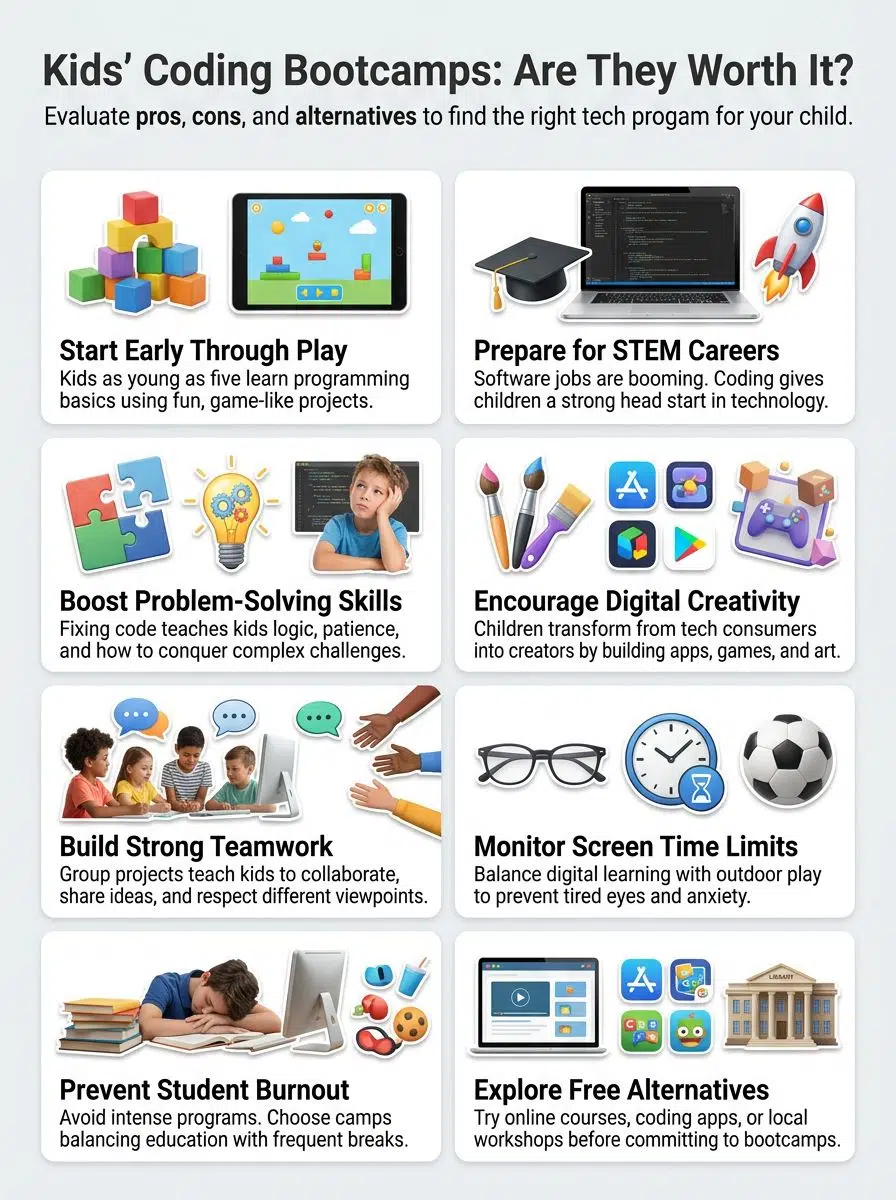
Camps boost a child’s ability to solve problems. They set up small challenges using games and puzzles. Kids must figure out what is wrong in their code and fix it step by step.
This process is called debugging. When a game character gets stuck on a wall, the child has to read their script line by line to find the error.
This trial-and-error style helps them break big problems into smaller parts. Educators call this computational thinking. Each success builds confidence and sharpens their mind.
Enhances creativity and innovation
Kids use code to build games, stories, and digital art. This sparks their creativity like painting with a new set of colors. They learn how small ideas grow into cool projects.
Some programs ask kids to design complex worlds. Teens might use tools like Unreal Engine to build professional-grade 3D environments.
- Digital Art: Coding is highly visual, allowing kids to draw shapes and animate characters using math.
- Storytelling: Visual novels and text adventures let children combine creative writing with logic.
- Self-Expression: Technology turns wild ideas into real things kids can share with friends.
Prepares kids for future careers in technology
Jobs in technology keep growing fast. Many companies want people who can code, build apps, and fix computers. Kids learn skills used by actual software engineers and web designers.
That $133,000 median salary for software developers makes this a very appealing career path. Learning early gives children a huge head start.
These skills also look fantastic on college applications for STEM majors. Some kids even join local hackathons or online contests to test their skills with friends.
Encourages teamwork and collaboration
Learning skills for future technology careers is great. Kids do not walk this road alone. Bootcamps get everyone working together on group projects.
Industry pros use specific methods that kids learn early on.
In “pair programming,” two students share one screen. One types while the other reviews the code, teaching them incredible patience and communication.
Potential Concerns About Coding Bootcamps for Kids
Some parents worry these camps might be too much for young kids. It is natural to question if screen time is replacing outdoor play. Let us look at the facts and see why early tech education is actually quite balanced.
Are kids too young to learn coding?
Kids pick up new things fast, like riding a bike or tying their shoes. Learning programming can start early, too. Many bootcamps offer courses to children as young as five or six. Research shows young minds handle digital literacy very well.
- No reading required: Apps like Scratch Jr. use purely visual symbols, perfect for ages 5 to 7.
- Academic boost: A Computer Science Teachers Association (CSTA) survey noted that early coding often improves a child’s math and reading scores.
Screen time and its impact on children
Questions about age lead right into another big topic. Parents worry about screen time. In January 2026, the American Academy of Pediatrics (AAP) updated its official guidelines. They moved away from the strict “two-hour limit” rule.
The AAP now focuses on quality and context. They state that active, creative screen time (like building a game) is much healthier than passive scrolling. Parents can help by setting limits and encouraging breaks for movement.
Risk of burnout from intense programs
Long hours in front of a computer can make kids feel tired or stressed. For young minds, too much pressure leads to burnout fast. Good camps prevent this by following healthy tech habits.
- The 20-20-20 Rule: Instructors remind kids to look 20 feet away every 20 minutes for 20 seconds to prevent eye strain.
- Physical breaks: The best programs mandate outdoor time. Kids might play a game of tag before going back to their keyboards.
How to Choose the Right Coding Bootcamp for Your Child
Picking a good camp takes some thought, but it does not need to feel hard. Ask questions, peek at reviews, and trust your child’s feelings. Kids know best when they love to learn. You want a place that feels welcoming and supportive.
Assess the curriculum and its appropriateness for the child’s age
Check if the program matches your child’s age and skill level. Younger kids need simple instructions, lots of visuals, and easy steps. Colorful blocks help beginners learn programming without feeling lost.
Look for programs that align with the CSTA (Computer Science Teachers Association) standards. This ensures the curriculum is age-appropriate and educationally sound.
Older kids may enjoy text-based languages like JavaScript. Make sure activities fit short attention spans for younger children. Games and puzzles keep them interested while teaching basic computer science ideas.
Look for programs that balance learning and fun
Kids learn best when they feel happy and curious. These camps should mix games, teamwork, and simple tasks with digital literacy lessons. You can usually spot a great program by its features.
- Gamification: Earning digital badges keeps kids motivated.
- Real-world testing: Programs that include robotics let kids get up and move around to test their code in real life.
Review the qualifications of instructors
Certified teachers or software engineers with experience know how to make programming fun. Look for instructors who have taught children before, not just adults. Good programs share details like degrees in education or related fields.
You should always ask about the student-to-teacher ratio. A ratio of 8:1 or 10:1 ensures your child gets plenty of personalized help.
Also, verify that the camp runs strict background checks on all staff. Quality instruction builds trust, keeps kids safe, and helps them learn key skills step by step.
7 Recognized Coding Bootcamp Programs for Young Learners
Many great programs exist today. Code Ninjas, iD Tech Camps, and SkoolOfCode are some of the most popular in the US. Finding the right fit depends on your budget and schedule.
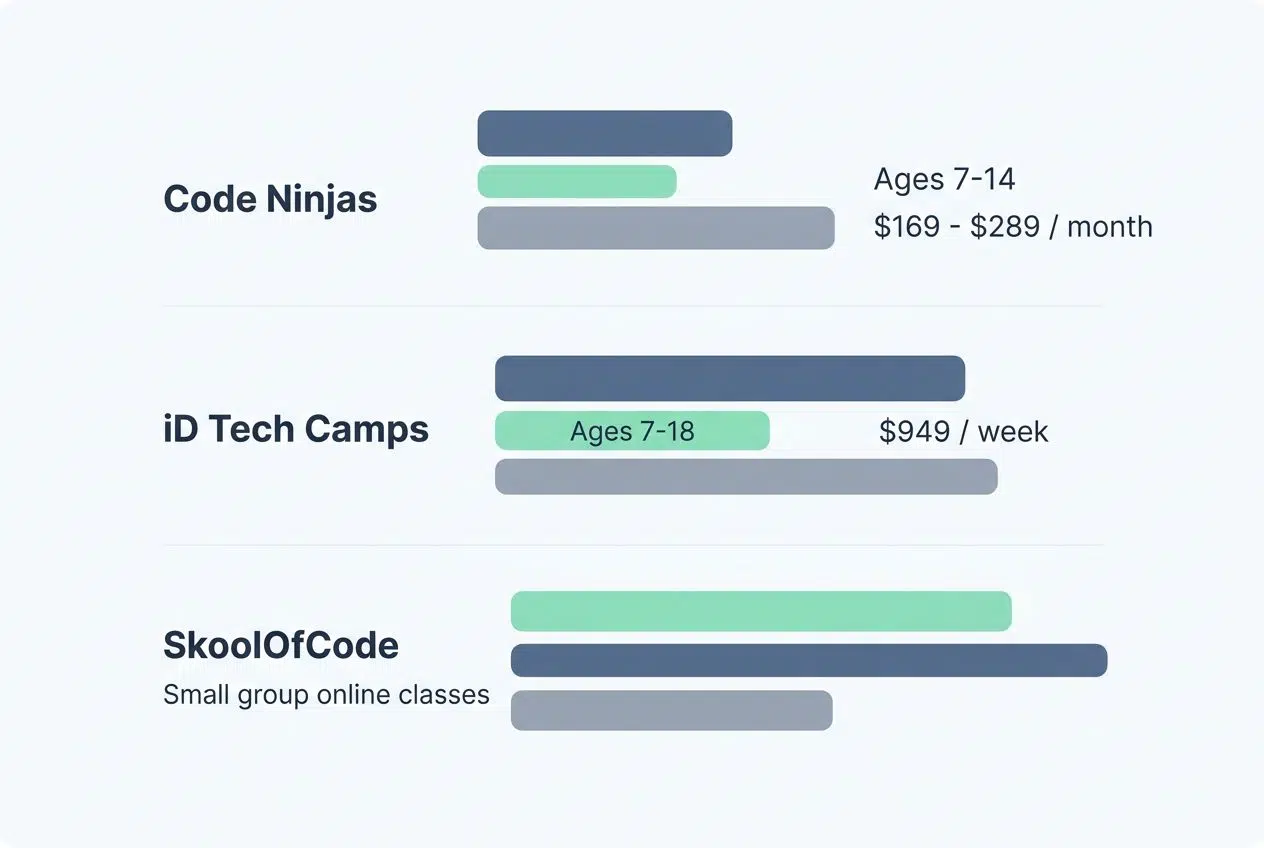
| Program Name | Best For | 2026 US Pricing (Approximate) |
|---|---|---|
| Code Ninjas | Ages 7-14 (In-person) | $169 – $289 / month |
| iD Tech Camps | Ages 7-18 (Campus/Overnight) | $949 / week |
| SkoolOfCode | Small group online classes | Varies by course length |
Overview of Code Ninjas
Kids come through the doors at Code Ninjas ready to learn programming. This bootcamp started in 2016 and now has hundreds of centers across the US.
Boys and girls from ages 7 to 14 build games, design apps, and solve real problems. In 2026, memberships typically run between $169 and $289 per month.
Their teachers use a fun 9-belt system. Kids level up from White to Black belt as they master new skills. Laughter fills the rooms while students crack codes together.
Features of iD Tech Camps
iD Tech Camps offer elite tech courses for ages 7 to 18. The camp runs at big-name universities like Stanford, MIT, and NYU. They offer incredible options for teens.
- 1-week sessions: These start around $949 and offer a mix of coding and campus exploration.
- 2-week overnight camps: Starting around $4,599, these intensive programs help teens build college-ready portfolios.
Benefits of SkoolOfCode
SkoolOfCode gives children a chance to build real skills in programming. Kids learn coding with friendly teachers who know both technology and child development. They offer live, instructor-led online classes.
These classes are usually kept very small. A 1:6 teacher-to-student ratio means every child gets attention and help when needed.
This is a perfect option for busy US families. Parents see progress as kids show off what they can make using code. Learning here feels more like play than homework.
Introduction to Scratch-based programs
Scratch-based programs help children learn computer science in a simple, visual way. Kids drag and drop colorful blocks to build their own games or animations on the screen. This tool is completely free and browser-based.
Developed by the MIT Media Lab, Scratch has empowered over 100 million kids worldwide to create interactive stories.
Alternatives to Coding Bootcamps
Some kids learn best with hands-on games, short courses, or local workshops. There are many ways to spark a love for computer science without signing up for camp. Let us explore a few budget-friendly options.
Online coding courses for kids
Online courses give kids a way to learn programming right at home. Platforms like Code.org and Khan Academy offer amazing classes. Kids pick up basic computer science skills through puzzles and small projects. The impact of these free platforms is staggering.
- Code.org: By 2026, they reached over 107 million student accounts globally with their free K-12 curriculum.
- Khan Academy: Offers self-paced, free lessons in JavaScript and HTML for older kids.
Coding apps and games
Kids enjoy learning with coding apps and games. These tools often feel like playful challenges. Programs like Scratch Jr, Tynker, and Lightbot help children solve puzzles using logic.
Tynker is incredibly popular right now. Over 100,000 schools use it to teach everything from basic sequencing to Minecraft modding. Lightbot is another fantastic puzzle game that secretly teaches programming loops.
Many of these platforms break big ideas into small steps. Parents find peace of mind knowing screen time builds digital literacy instead of just watching videos.
Community coding workshops
After kids move past apps, local workshops become the next step. These events happen at schools, libraries, or tech centers. You see real people learning together. These are fantastic for budget-conscious families.
- CoderDojo: This global network runs free, volunteer-led programming clubs for kids ages 7 to 17.
- Public Libraries: The Institute of Museum and Library Services (IMLS) reports that most US public libraries now offer free digital skill programs on weekends.
Expert Opinions on Coding for Young Kids
Teachers share many stories of young kids lighting up while solving code puzzles. Child experts say learning to program can support mental growth, if done with balance. The consensus is highly positive.
What educators say about early coding education
Many educators support introducing coding in early learning. They say young children pick up computer science skills quickly. Schools often begin with simple block programs to build confidence.
In 2026, the focus in US schools is rapidly shifting. Educators now push for “AI + CS” education, ensuring kids understand artificial intelligence alongside basic coding.
Some teachers notice a surprising benefit. Students who learn sequential coding logic often show improved reading comprehension scores in the classroom.
Perspectives from child development specialists
Child development specialists say learning to code supports logic and creativity. Dr. Jenny Radesky, a prominent voice from the American Academy of Pediatrics, notes that kids learn best through social interactions. Her team highly recommends a specific approach for screen time.
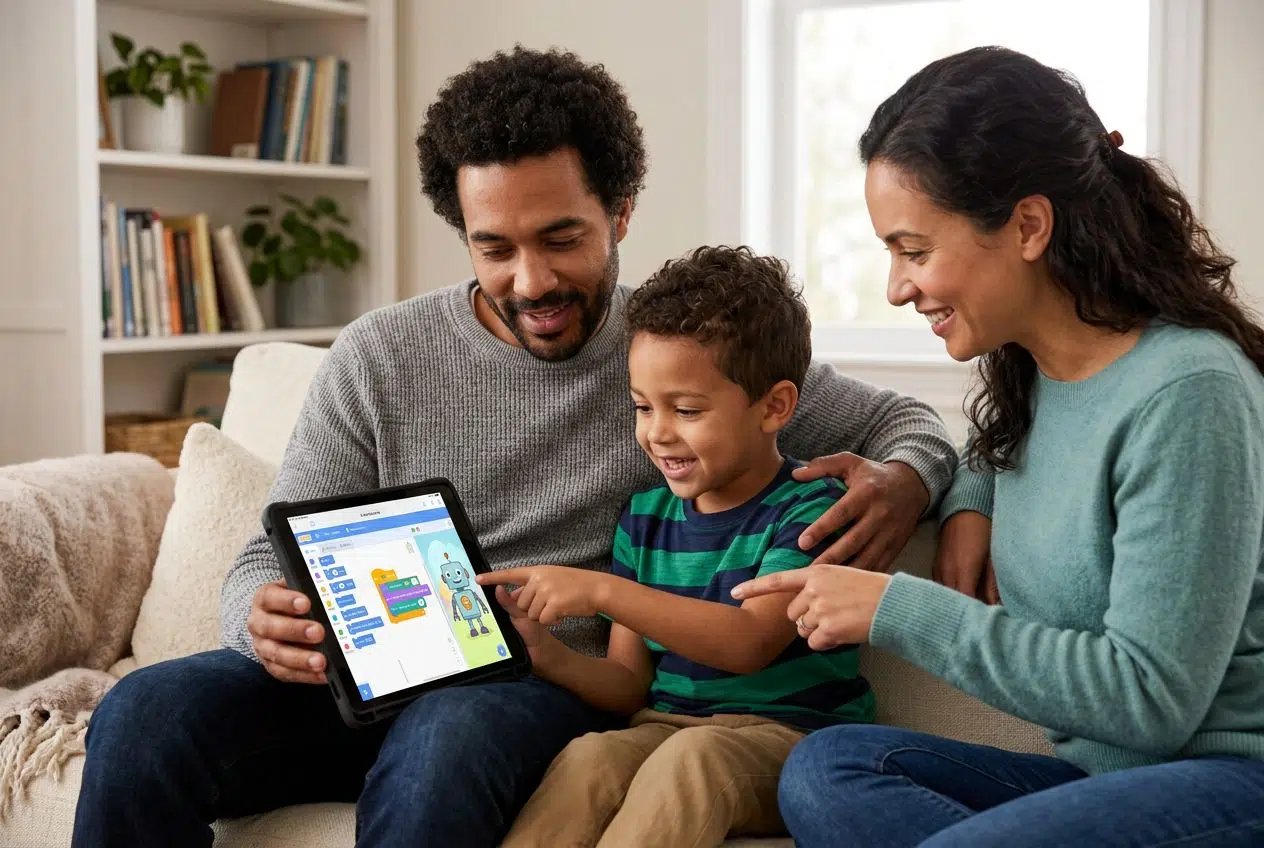
Parents should practice “co-viewing,” which means sitting with your child to play their coded game together, turning screen time into a bonding moment.
Final Thought: Coding Bootcamps For Kids: Too Soon?
Coding bootcamps for kids bring big benefits like problem-solving, teamwork, and digital skills that last a lifetime. Picking the right camp is easy if you check their age groups, teaching style, and fun level.
While some worry about screen time, many programs mix play with learning and give lots of breaks. These camps spark curiosity and can help future programmers get excited early on.
Parents can find more tips in books or local workshops to keep up the momentum at home. Every kid’s journey looks different. Sometimes learning to code just means one small step today leads to giant leaps tomorrow. So, if you are still asking yourself, Coding Bootcamps For Kids: Too Soon? I think you will find it is right on time.