China has signaled the end of its decade-long electric vehicle subsidy era by excluding EVs from its 2026-2030 strategic industries plan, marking a dramatic policy shift just as Chinese automakers achieved their strongest month ever in Europe with record sales performance.
For the first time in over a decade, electric vehicles were omitted from China’s list of strategic emerging industries in its 15th Five-Year Development Plan, published Tuesday by the official Xinhua News Agency. The exclusion represents a fundamental change for a sector that received billions in government support since 2009, transforming China into the world’s largest EV market where electric vehicles now account for over 50% of total auto sales.
European Market Breakthrough Demonstrates Sector Maturity
The policy shift comes as Chinese EV manufacturers posted their best European performance ever, capturing a record 7.4% of all passenger car sales across Europe in September, according to researcher Dataforce. BYD led the surge with a 398% year-over-year increase in European registrations, reaching 24,963 units. SAIC Motor’s MG brand and Chery Automobile Co. rounded out the top performers, collectively surpassing South Korean automakers like Kia Corp. for the first time.
The European breakthrough demonstrates the sector’s evolution from subsidy-dependent to globally competitive. BYD’s European registrations from January to September totaled 120,859 units, marking a 299.5% increase from the previous year. Chinese brands’ combined European sales exceeded those of established manufacturers including Audi and Renault.
Strategic Pivot Toward Emerging Technologies
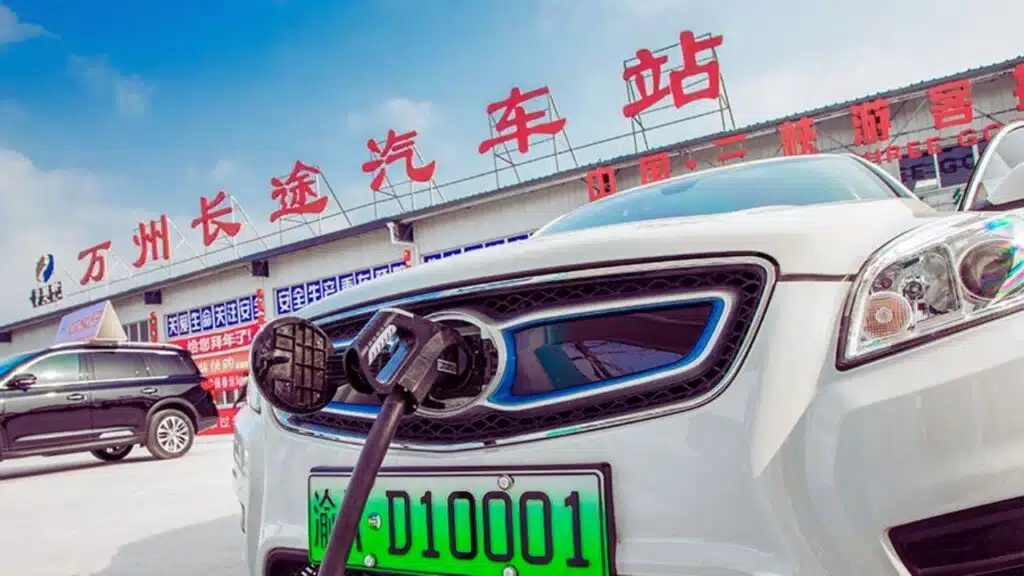
China’s strategic pivot reflects confidence that its EV industry has achieved sufficient maturity to compete independently. “It’s an official acknowledgement that electric vehicles no longer need prioritised policies. Electric vehicle subsidies will fade,” said Dan Wang, China director at consultancy Eurasia Group. The government instead prioritizes quantum technology, bio-manufacturing, hydrogen energy, and nuclear fusion as new economic growth drivers.
The move addresses mounting oversupply concerns, with 93 of 169 automakers operating in China holding market shares below 0.1%. President Xi Jinping warned against “rushing headlong” into industries without considering sustainability, questioning whether every province needed to develop sectors like artificial intelligence and EVs.
While China phases out purchase tax rebates by 2027, Chinese manufacturers continue expanding globally. The success in Europe, where plug-in hybrid sales surged 62% in September, validates the sector’s transition from government dependency to market-driven growth, positioning Chinese brands to compete internationally without subsidies.