FIFA President Gianni Infantino hailed the latest FIFA Club World Cup as the beginning of a “golden era” for global club football during a press conference held at none other than Trump Tower in New York City. The location wasn’t random—FIFA has recently opened an office in the building owned by former U.S. President Donald Trump, a sign of their growing relationship.
Infantino and Trump have become close allies over the past year, with both men heavily invested—politically and symbolically—in the success of the expanded Club World Cup and the upcoming 2026 FIFA World Cup, set to be co-hosted by the United States, Canada, and Mexico.
“President Trump has been fantastic,” Infantino said, praising the former president’s involvement. Trump also appeared alongside Infantino at MetLife Stadium in New Jersey during the final, further cementing his presence in global football affairs.
Chelsea Dominate on the Pitch
While the politics played out off the field, Chelsea delivered a stunning performance on it. English midfielder Cole Palmer was the star of the show, scoring two goals and assisting Brazilian striker Joao Pedro for the third. Paris Saint-Germain (PSG) couldn’t recover after the first-half onslaught, and Chelsea claimed a comfortable 3-0 victory.
A Tournament Defined by Big Money
Infantino pointed to the tournament’s financial success as proof of its impact. According to FIFA, the revamped Club World Cup generated over $2 billion in revenue, with an average of $33 million earned per match. Chelsea alone pocketed $40 million for winning the final, while PSG received $30 million. The total prize pool stood at a staggering $1 billion, making this competition one of the most lucrative in FIFA history.
Even beyond the finalists, FIFA pledged a $250 million “solidarity payment” to be distributed among clubs worldwide. However, critics question whether this sum—divided across 211 FIFA member nations—can truly address the deep-rooted financial inequality in global football.
European teams dominated the competition, with three out of four semifinalists and most quarterfinalists hailing from Europe. The final featured two European giants who had recently won top continental competitions, underscoring the continued supremacy of European club football.
Not Everyone is Celebrating
Despite FIFA’s glowing self-assessment, not everyone in the football world shares Infantino’s optimism. Critics—including top managers like Germany’s Jürgen Klopp—argue that the Club World Cup adds unnecessary stress to already overburdened players.
Klopp previously warned that the non-stop football calendar is pushing players to their physical and mental limits. “There’s insane money involved, but this tournament isn’t for every club,” he said. He criticized the lack of breaks between high-stakes competitions such as the European Championship, Copa America, the Club World Cup, and the upcoming World Cup.
Extreme Heat Adds to Player Strain
Player fatigue wasn’t the only concern—weather conditions became a major issue during the tournament. Matches were played in extreme heat, which raised safety concerns among athletes.
Chelsea midfielder Enzo Fernandez admitted to experiencing dizziness on the field due to the heat, calling the conditions “very dangerous.” Borussia Dortmund’s coach, Niko Kovac, compared the playing environment in Charlotte to being inside a sauna.
While FIFA implemented cooling breaks during games, the bigger issue remains unresolved: many of the stadiums lack climate control. Only four venues scheduled to host 2026 World Cup matches—Atlanta, Dallas, Houston, and Vancouver—currently have air-conditioned, indoor stadiums. Infantino has since committed to using those facilities for daytime kickoffs whenever possible.
FIFA Takes a Step on Player Welfare
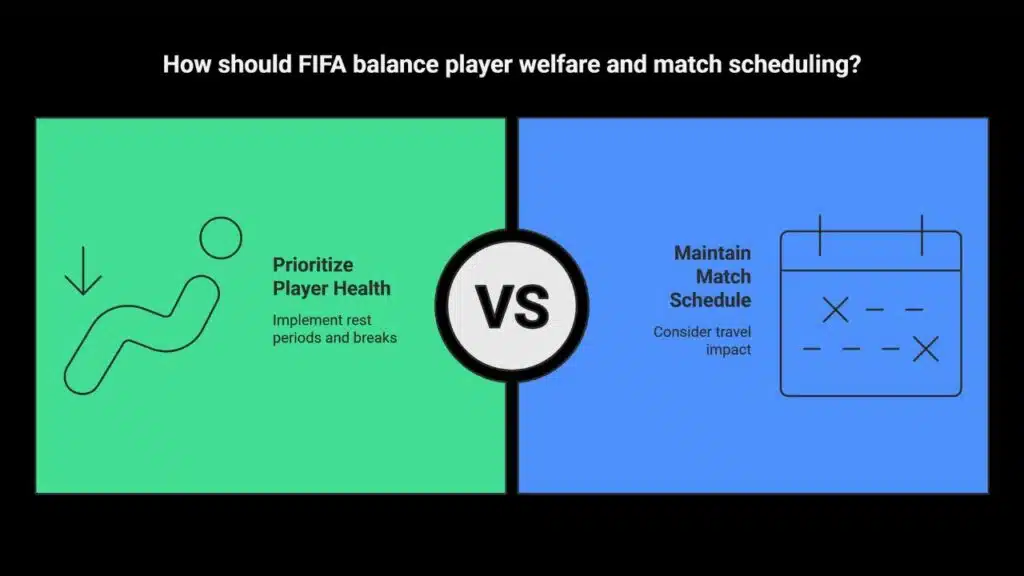
In a surprise move, FIFA announced a new agreement with global players’ union FIFPRO to prioritize athlete health. The agreement mandates a minimum 72-hour rest period between matches and guarantees players a three-week off-season break. FIFA will also begin considering the impact of long-haul travel on player health in future scheduling decisions.
These new measures come after repeated warnings from players and coaches about unsustainable match loads, and mark a rare acknowledgment from football’s governing body of the need for reform.
A Political Stage for Football
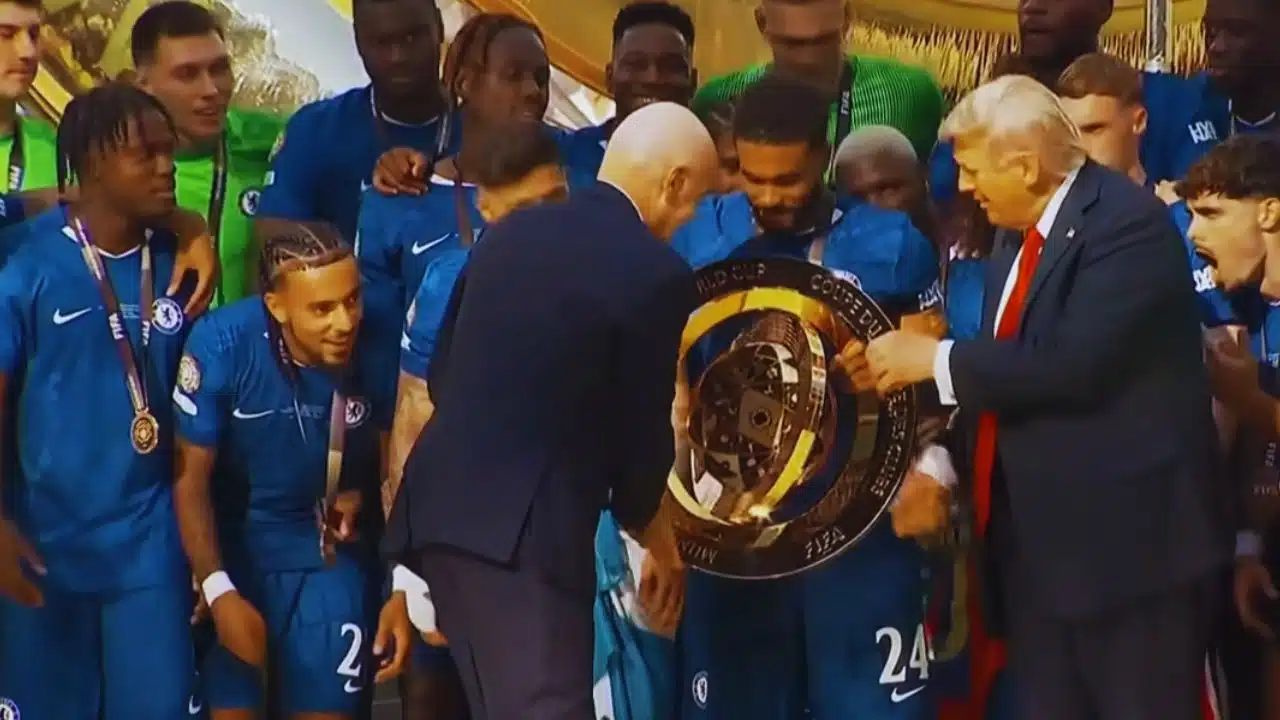
Chelsea’s win was followed by on-field celebrations and a minor scuffle between players and staff. But it was the podium that drew political attention: Infantino and Trump stood side by side, handing medals and trophies to Chelsea’s squad.
The moment symbolized a bigger shift in global football politics—one where sporting success, financial gain, and political strategy intersect. With Trump expected to leverage the 2026 World Cup for political messaging, and Infantino fully embracing the spectacle, the stage is set for an even bigger global event.
The 2025 FIFA Club World Cup was more than just a football tournament—it was a high-stakes political and financial showcase. Chelsea’s dominant win over PSG highlighted the strength of European clubs, while FIFA celebrated unprecedented revenue. However, concerns over player welfare, extreme weather conditions, and the tournament’s deeper impact on global football fairness continue to fuel debate.
With the 2026 World Cup on the horizon, this Club World Cup may be remembered not just for the football on the field—but for the power plays off it.
The Information is Collected from DW and MSN.