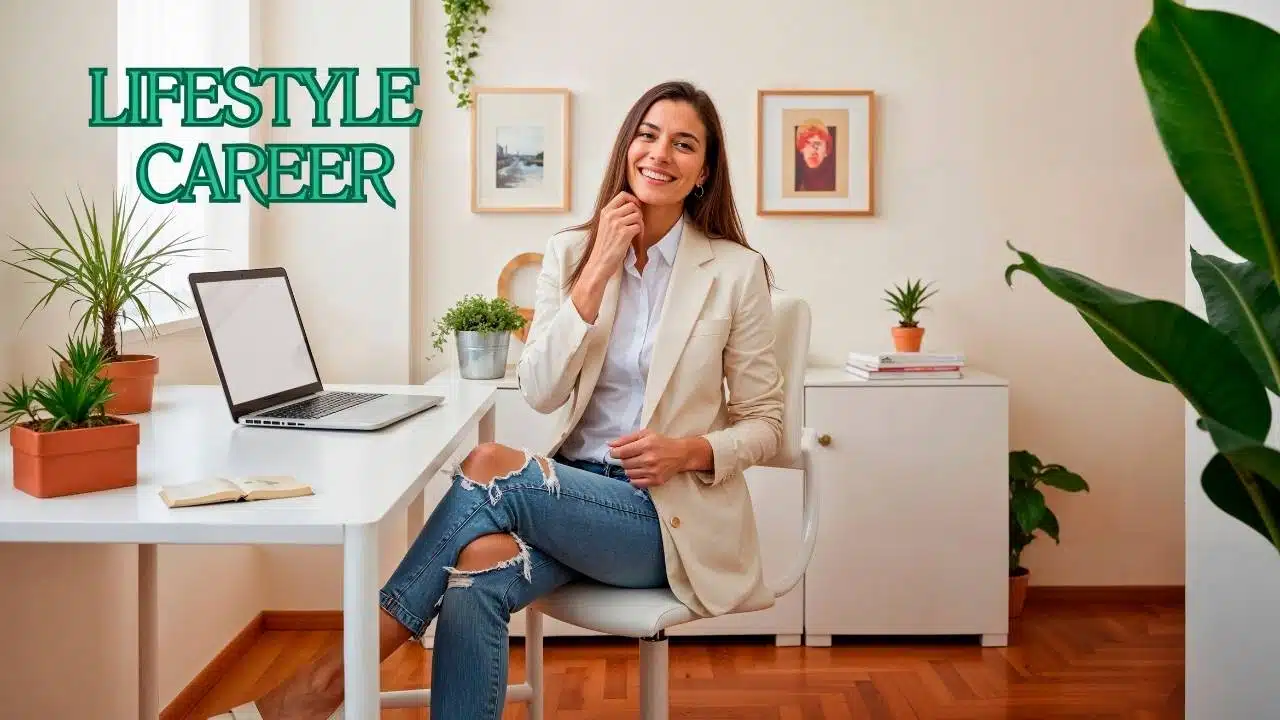
Lifestyle is no longer just an aesthetic Instagram feed or a hobby blog you update when you have time. For many people today, it has become a serious professional path. From lifestyle content creators and wellness coaches to travel curators and stylists, more and more jobs in the lifestyle industry are built around the way people live, work, dress, travel, and take care of themselves.
If you are wondering how to build a career in lifestyle, you are not alone. Many aspiring professionals can see the potential but feel lost about where to start, what skills they need, and how to turn creativity into a steady income.
What Does a “Career in Lifestyle” Actually Mean?
Before you commit to this path, it helps to define what a lifestyle career really is.
A lifestyle career is any professional path that centers on improving, showcasing, or curating ways of living. It often sits at the intersection of creativity, communication, and everyday life. It is not limited to influencers; it spans a wide ecosystem of roles.
From Hobby Blogging to a Global Creator Economy
In the past, lifestyle blogs were often side projects. Today, the creator economy supports millions of people who share their expertise and experiences in areas like:
- Fashion and beauty
- Wellness and mental health
- Home organization and interior decor
- Travel and experiences
- Productivity and personal growth
- Food, cooking, and nutrition
- Family, parenting, and relationships
These careers can grow on social platforms, independent blogs, newsletters, podcasts, or a mix of several channels. Many professionals now treat their lifestyle influencer career or creative side projects as full-time businesses, with diversified income streams and long-term strategies.
Main Career Paths in the Lifestyle Industry
A career in lifestyle can look very different from one person to another.

Here are some of the most common lifestyle industry jobs and roles:
- Lifestyle content creator/influencer: Creates content for platforms like Instagram, TikTok, YouTube, or blogs, often focusing on a specific niche such as slow living, budget fashion, or solo travel.
- Lifestyle writer or editor: Produces articles, guides, and features for digital magazines, blogs, and brands. Focuses on storytelling, research, and editorial quality.
- Stylist and image consultant: Helps individuals and brands express themselves through clothing, grooming, and visual identity.
- Wellness and lifestyle coach: Guides clients in areas such as habits, organization, fitness routines, nutrition basics, or overall life balance.
- Travel and experience curator: Designs trips, retreats, and local experiences, often blending storytelling with logistics.
- Brand and agency roles: Works as a social media manager, community manager, creative strategist, or content producer for lifestyle brands and platforms.
Each of these paths uses lifestyle as the core theme, but the skills, daily tasks, and income models can differ significantly.
Myths That Hold People Back
Several myths stop people from even trying to build a lifestyle career:
- “I need a perfect, luxury life before I start.”
- “Only people from certain countries or big cities can succeed.”
- “I must have millions of followers to earn anything.”
- “Algorithms and luck matter more than strategy and consistency.”
In reality, you can build a long-term career in lifestyle around authenticity, clear positioning, and consistent value—not perfection.
Step 1 – Define Your Lifestyle Vision, Values, and Niche
The first step in any lifestyle career roadmap is clarity. You need to know what kind of life you want to highlight and why it matters to others.
Start With Your Real Life
Instead of chasing trends, look at your own daily reality:
- What do friends and colleagues already ask you for advice about?
- What problems have you solved for yourself—budgeting, fitness, focus, self-care, style, small-space living?
- Which routines or systems have genuinely improved your life?
Lifestyle work becomes easier and more sustainable when it grows out of your own experience rather than a forced persona.
Choose a Niche You Can Sustain
A niche is simply a focused area within a lifestyle.
It could be:
- Minimalist urban living
- Budget-friendly fashion for students
- Wellness for busy parents
- Solo travel for introverts
- Productive routines for freelancers
- Home office and remote work lifestyle
To build a long-term career in lifestyle, your niche should meet three conditions:
- You can talk about it for years, not just weeks.
- There is audience interest, proven through social conversations and search demand.
- There are monetization angles, such as products, services, sponsorships, or affiliate programs.
Craft a Simple Positioning Statement
A positioning statement helps you define your identity in the lifestyle space.
Use a simple template: “I help [type of person] achieve [specific lifestyle outcome] through [format or platform].”
Examples:
- “I help young professionals build healthy, realistic routines through short, practical videos.”
- “I help students dress well on a budget through outfit breakdowns and styling tips.”
- “I help remote workers create calm, productive home offices through tutorials and before-and-after content.”
This statement is not final; it will evolve as you grow. But it gives direction to your lifestyle content creator journey.
Step 2 – Audit Your Skills and Choose a Career Path
Once you know your niche, you need to decide which role suits you best.
On-Camera, Behind-the-Scenes, or Hybrid?
There are three broad approaches:
- On-camera: You appear on video, host shows, or share vlogs. Ideal if you are comfortable speaking publicly, showing your face, and developing a personal brand.
- Behind-the-scenes: You work as a writer, strategist, designer, or producer. You might write scripts, design campaigns, manage communities, or edit videos for other creators or brands.
- Hybrid: You show up on camera sometimes, but also sell services, consulting, or creative work related to your niche.
A sustainable lifestyle influencer career does not always mean being the most visible person. There is real demand for editors, strategists, and creative partners who understand lifestyle audiences.
Skill Audit Checklist
Take an honest look at your current skills:
- Writing and storytelling
- Public speaking and hosting
- Photography and videography
- Design and editing
- Research and curation
- Organization, planning, and project management
- Community building and customer service
You do not need to be good at everything. You just need to know where you are strong, where you are average, and where you need training.
Map Skills to Career Models
Match your strengths to specific roles:
- Strong writing → lifestyle writer, newsletter creator, scriptwriter, blog editor.
- Strong camera presence → vlogger, live host, short-form lifestyle creator.
- Strong organization → retreat planner, content producer, social media manager.
- Strong empathy and coaching → wellness and lifestyle coach, productivity mentor.
This step turns “I want to work in lifestyle” into “Here is the kind of creator economy career I am building.”
Step 3 – Build the Foundations of Your Personal Brand
In lifestyle work, your personal brand is not just a logo or color palette. It is the story, voice, and values that your audience associates with you.
Clarify Your Story and Core Message
Ask yourself:
- What parts of your background shape your view of lifestyle?
- What values guide your choices—simplicity, sustainability, affordability, inclusivity, culture, or experimentation?
- What do you want people to feel after they consume your content?
A clear message helps audiences trust you and helps brands understand whether you are a good fit for collaboration.
Choose Your Brand Elements
You do not need a complicated branding process.
Focus on:
- A simple, memorable name or handle
- A short tagline that hints at your promise
- A consistent tone of voice—friendly, calm, energetic, analytical
- A visual style that your audience can recognize
The goal is to create a personal brand in lifestyle that feels real, not manufactured.
Define Your Target Audience
Lifestyle is broad. Your audience should not be “everyone.”
Define:
- Age range and life stage (student, new professional, parent, freelancer, retiree)
- Challenges and goals (saving money, getting fit, organizing life, traveling more)
- Platforms they already use and the type of content they prefer
When your audience is clear, your content becomes more focused and useful.
Step 4 – Set Up Your Platforms and Basic Tech Stack
To start your lifestyle influencer career or related path, you need a digital home and at least one main stage.
Own Your Home Base
Social media profiles are important, but you do not fully control them. Algorithms change. Accounts can be restricted or suspended.
That is why it helps to have:
- A simple website or blog: A place where you publish evergreen content, host your portfolio, and attract search traffic.
- An email newsletter: A direct channel to your community, independent of platforms.
This structure supports both creators and behind-the-scenes professionals.
Pick 1–2 Primary Social Platforms
Trying to be everywhere at once usually leads to burnout. Instead, choose the platforms that suit your niche and strengths.
- Visual and style-focused → Instagram, TikTok, Pinterest
- Storytelling and depth → YouTube, podcasts, long-form blogs
- Professional networking → LinkedIn, portfolio websites
This makes it easier to build an audience around your lifestyle without spreading yourself too thin.
Build a Simple Tech Stack
You do not need expensive gear to begin.
Start with:
- A smartphone with a decent camera
- A basic microphone or earphones
- Natural lighting indoors or outdoor shots during daylight
- Free or affordable editing apps for photo and video
- A planning system (Notion, Trello, spreadsheets, or a simple notebook)
As your income grows, you can upgrade your tools.
Step 5 – Create a Portfolio and Proof of Concept
A portfolio is not only for designers. Anyone who wants to build a career in lifestyle should show what they can do.
Start With Small Experiments
Instead of waiting for everything to be perfect, run 30-day experiments:
- 30 days of healthy, low-budget recipes
- 30 days of work outfits from a small wardrobe
- 30 days of morning or evening routines
- 30 days of micro-habits for mental wellness
These experiments help you:
- Develop consistency
- Understand what resonates with your audience
- Collect content for your portfolio
Build a Portfolio That Shows Outcomes
Your portfolio can be a dedicated page on your site, a PDF, or a simple folder.
Include:
- Your best posts, videos, or articles
- Short explanations of what you wanted to achieve
- Metrics where relevant (views, saves, comments, shares)
- Testimonials or feedback, if you have them
For behind-the-scenes roles, include examples of campaigns, strategies, or projects you contributed to.
Use Internships, Collaborations, and UGC
You can also build proof by:
- Interning or freelancing for small lifestyle brands
- Creating UGC (user-generated content) for products you genuinely use
- Collaborating with other small creators in your niche
This demonstrates to future clients and brands that you understand how lifestyle content works in real contexts.
Step 6 – Grow an Audience and Community Around Your Lifestyle
With a niche, personal brand, and portfolio in place, the next step is to develop a community.
Build a Content Strategy, Not Just Random Posts
A strategic mix helps you grow faster and more sustainably:
- Teach: How-to guides, step-by-step tutorials, checklists, and explainer posts.
- Show: Day-in-the-life videos, room tours, before-and-after transformations, routines.
- Talk: Opinions, reflections, Q&A sessions, and honest discussions about challenges.
This structure serves both lifestyle content creator roles and service-based professionals.
Maintain a Realistic Posting Cadence
You do not need to post every hour. What you need is consistency.
For example:
- 3–4 short-form videos or posts per week
- 1 long-form video, article, or newsletter per week
Adjust this schedule based on your energy and commitments. The goal is to maintain a sustainable rhythm, not burnout.
Build a Community, Not Just Numbers
Engagement matters more than raw follower counts.
Focus on:
- Replying to comments and messages
- Asking questions and inviting opinions
- Hosting live sessions or Q&A sessions
- Collaborating with other creators, writers, or professionals in your niche
A small, engaged community can support your lifestyle career roadmap more strongly than a large but passive audience.
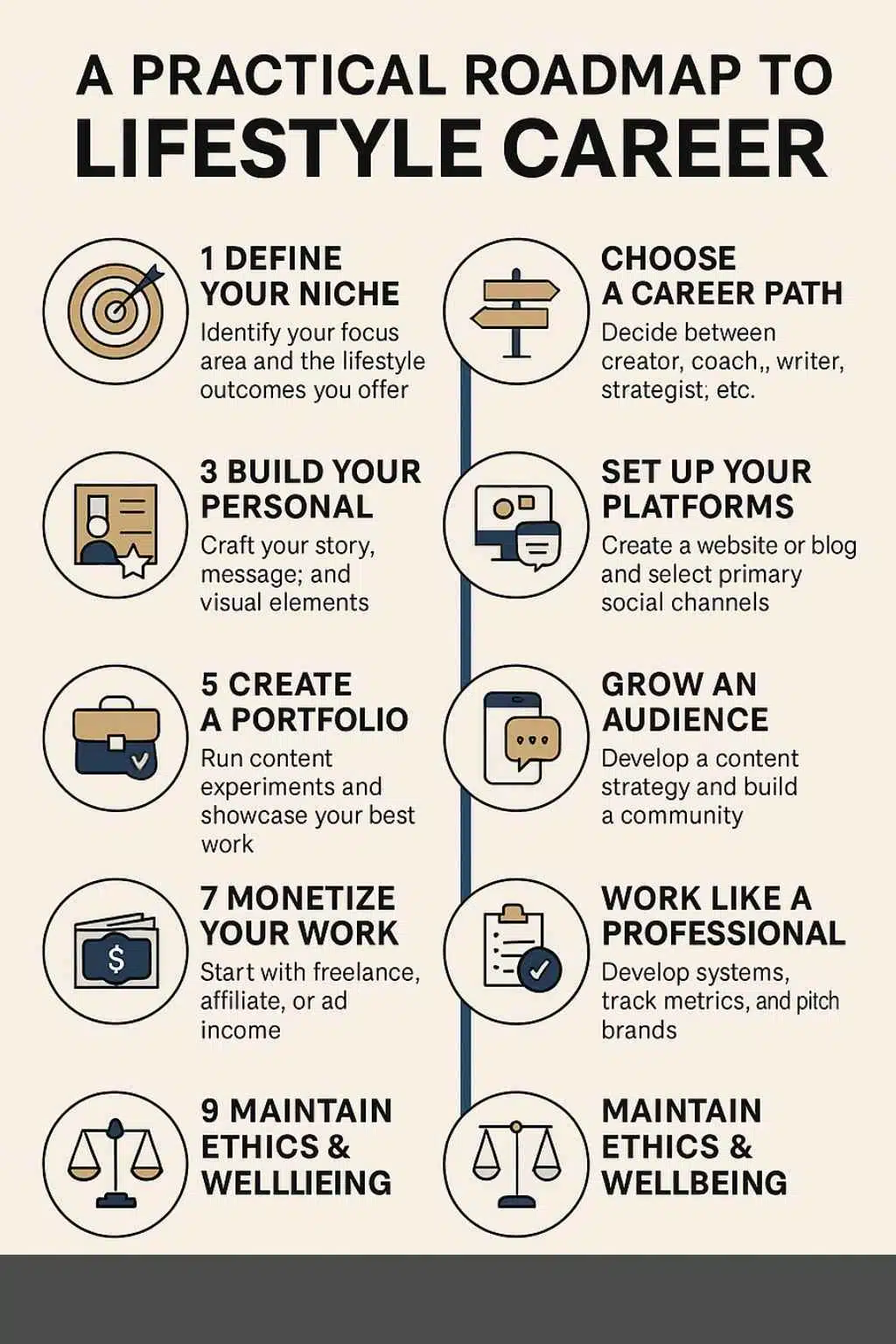
Step 7 – Monetization Roadmap for a Lifestyle Career
Once you have content, proof of concept, and an audience, you can start to monetize lifestyle content.
Early-Stage Monetization (First Year)
At the beginning, focus on simple, low-risk income streams:
- Freelance writing for lifestyle blogs and brand sites
- UGC for small businesses and local brands
- Affiliate marketing for tools, apps, and products you truly use
- Basic sponsored posts with clear disclosures
This stage is about learning how to price your work, communicate with clients, and deliver value.
Growth-Stage Income Streams (1–3 Years)
As your brand and audience grow, you can introduce:
- Larger brand partnerships and ambassadorships
- Digital products—e-books, guides, template packs, presets, trackers
- Group programs, workshops, or online classes
- One-to-one services like styling, coaching, or consulting
Here, you begin to move from “project to project” income to more structured offerings.
Long-Term Diversification
A mature lifestyle influencer career or lifestyle business often includes:
- Your own product lines or co-branded collections
- Membership communities with exclusive content and support
- Retreats, events, or live experiences
- Advisory or creative direction roles for brands and media
This phase turns your early experiments into a stable business.
Step 8 – Work Like a Professional: Systems, Money, and Metrics
Even creative careers need structure. To build a long-term career in lifestyle, treat your work like a real business.
Put Basic Business Systems in Place
You do not need to know everything about finance and law, but you should:
- Use simple contracts for projects and collaborations
- Track income and expenses in a spreadsheet or accounting tool
- Know how and when you will get paid
- Keep records for tax and reporting purposes in your country
Simple systems create freedom and reduce stress.
Know Your Key Metrics
Pay attention to the numbers that actually matter for your goals:
- For creators: engagement rate, saves, shares, watch time, click-throughs
- For service providers: repeat clients, referrals, closing rate, profit margin
- For products: conversion rate, refund rate, customer feedback
Metrics show whether your creator economy career is on the right track or needs adjustment.
Learn to Pitch Brands and Editors
Whether you want to work with brands or write for publications, pitching is a core skill:
- Prepare a media kit with your story, audience, examples, and basic stats
- Make your emails short, clear, and focused on what you can offer
- Suggest specific ideas—series, campaigns, or angles—rather than just saying, “I’d like to collaborate.”
This professional approach separates serious lifestyle professionals from casual hobbyists.
Step 9 – Protect Your Energy, Ethics, and Reputation
Lifestyle work can be emotionally demanding. You are often mixing your personal life with your career.
Protect Your Mental Health and Boundaries
Some simple practices:
- Decide what parts of your life are private and never shared
- Set specific work hours and off-screen time
- Learn to filter feedback and not engage with every negative comment
- Have routines that ground you away from the internet
A healthy creator or professional is more effective than a constantly exhausted one.
Stay Ethical in the Lifestyle Space
Trust is your most important asset.
Protect it by:
- Clearly labeling sponsored content and ads
- Avoiding exaggerated or misleading claims
- Respecting copyrights for music, images, and text
- Being honest when you use AI or paid tools in your work
Good ethics help your personal brand in lifestyle remain strong over the long term.
Build a Reputation That Lasts
Everyone makes mistakes. What matters is how you respond.
- Acknowledge errors
- Correct them transparently
- Avoid blaming others or hiding issues
A reputation built on honesty and integrity will support every future step in your lifestyle career roadmap.
Your 12-Month Lifestyle Career Roadmap
To make all of this practical, here is a simple one-year plan for building a career in lifestyle, step by step.
Quarter 1: Foundation
- Define your niche, audience, and positioning statement
- Clarify your brand story, values, and message
- Set up your main platforms: website/blog, primary social channel, email list
- Run one 30-day content experiment to build consistency
Quarter 2: Portfolio and Audience
- Create a basic portfolio that includes your best content and results
- Publish at least 10–20 solid pieces of content in your niche
- Engage actively with early followers and peers
- Start small collaborations, internships, or UGC projects
Quarter 3: Monetization and Systems
- Introduce your first paid offering: a digital product, service, or package
- Pitch 5–10 brands, agencies, or publications that match your niche
- Set up simple systems for tracking income, expenses, and metrics
- Review what content performs best and adjust your strategy
Quarter 4: Scale and Sustainability
- Double down on platforms and formats that work best
- Streamline your content creation with templates and batch work
- Outsource small tasks if possible (editing, design, or admin)
- Plan the next year’s growth: new offers, platforms, or collaborations
Common Mistakes When Trying to Build a Career in Lifestyle
As you follow this roadmap, watch out for these frequent errors:
- Chasing every micro-trend instead of building a clear narrative
- Investing heavily in equipment while neglecting skills and strategy
- Ignoring search and SEO and relying only on viral algorithms
- Monetizing too early in ways that make your audience feel used
- Treating your lifestyle work as a hobby while expecting full-time results
Avoiding these mistakes will make it much easier to build a sustainable lifestyle career.
Final Words: Lifestyle Careers Are About Real Change, Not Just Aesthetic Feeds
At its core, a lifestyle career is about helping people live better, not just look better. You are not only showing an image; you are offering ideas, habits, systems, and inspiration that can quietly reshape someone’s everyday life.
If you feel called to this path, you do not need to wait for the “perfect” moment. Choose one action from this roadmap today: clarify your niche, write your positioning statement, start a 30-day content series, or build your first simple portfolio.
Step by step, you can build a career in a lifestyle that is creative, meaningful, and sustainable—for your audience and for yourself.