Imagine starting your own business, dreaming of a team that works from anywhere in Europe. But then, the rules hit you hard. European labor laws feel like a maze, full of twists on contracts, taxes, and worker rights. You worry about fines or legal headaches if you hire someone in France while based in Germany. It’s like juggling flaming torches while walking a tightrope, right? Many entrepreneurs face this exact struggle when building a remote-first company in Europe.
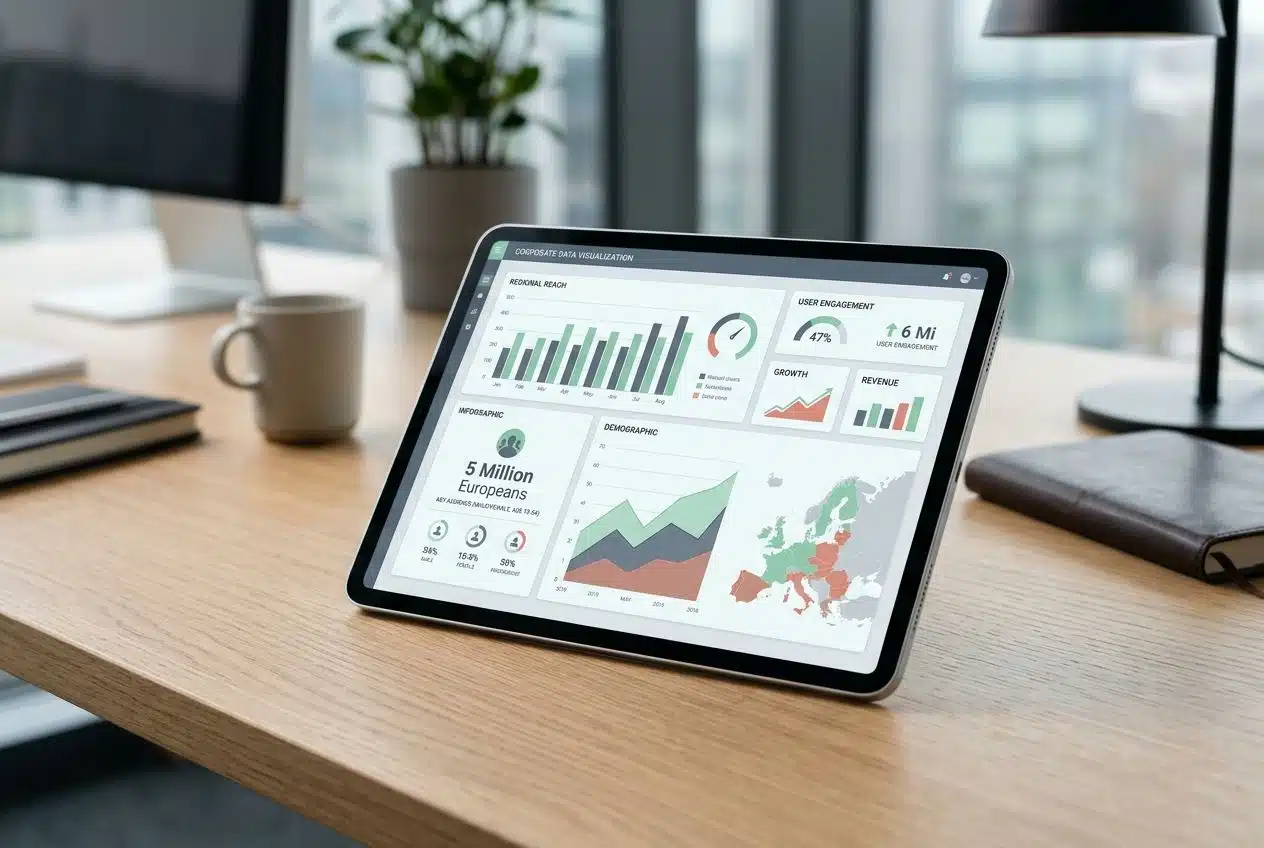
Did you know that over five million Europeans now work remotely full-time, according to recent EU reports? This shift opens doors, but it demands smart planning. In this post, we’ll break down the basics, from hiring tips to tools that keep things legal and smooth.
We’ll guide you step by step to dodge pitfalls and build a thriving team. Ready to turn that dream into reality?
What is a Remote-First Company?
A remote-first company puts remote work at the core of its operations. Employees work from home or anywhere they choose, without a main office pulling them in. Teams connect through digital tools, making location less important than talent and results.
This setup fits modern life, where flexibility boosts job satisfaction. Picture your team spread across Europe, collaborating seamlessly on projects.
Companies adopt this model to tap into global skills, especially under European labor law. They focus on compliance with remote work regulations and employee rights. Freelancers join in too, adding expertise without borders.
Virtual teams thrive here, building strong bonds online. Think of it as a digital village, where everyone contributes from their own spot.
Key Benefits of Building a Remote-First Company
Imagine you cast a wide net for top talent across borders, no walls holding you back. Remote-first setups slash those hefty office bills, and hey, your team thrives with that sweet work-life balance, firing on all cylinders.
Access to a broader talent pool
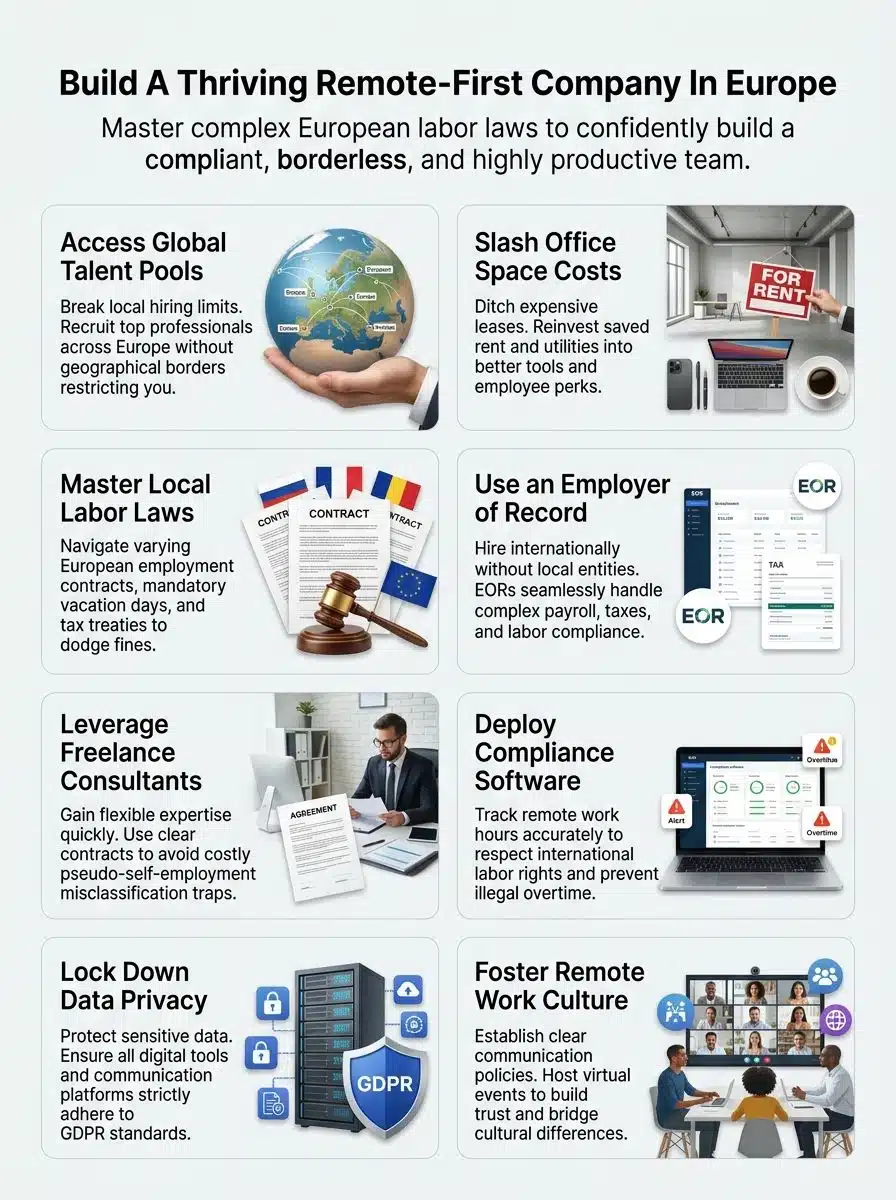
Think about tapping into talent across Europe without borders holding you back. A remote-first company breaks free from local hiring limits, pulling in experts from bustling Berlin to sunny Barcelona.
You gain access to diverse skills in tech, design, and more, all while managing European labor law smoothly. Compliance becomes your ally here, letting you hire top-notch professionals who fit your vision. Imagine a chef scouting global ingredients for the perfect recipe; that’s you building a powerhouse team.
Remote work opens doors to a vast talent pool, boosting your edge in a competitive market. Employees enjoy flexibility, and you dodge the hassle of physical offices. Focus on employment regulations to keep things legal, from tax implications to country-specific rules.
Cross-border employment thrives when you use tools like Employer of Record services. Teams collaborate virtually, fostering innovation and growth. Your business adapts, drawing from Europe’s rich workforce.
Cost savings on physical office spaces
Ditching a physical office cuts costs big time in a remote-first setup. Companies skip rent, utilities, and maintenance fees that add up fast. Imagine saving thousands each month, freeing cash for better tools or team perks.
Remote work lets you focus on talent, not square footage, under European labor law. Compliance stays key, but the savings feel like found money.
Envision this: a startup skips the fancy downtown lease and invests in virtual teams instead. Cross-border employment gets easier without office overhead. Employee rights remain protected, while you pocket real savings. Labor regulations in Europe support this shift, boosting your bottom line without skimping on telecommuting standards.
Increased employee flexibility and productivity
Remote work gives employees the freedom to set their own schedules, and that boosts productivity big time. Consider this: no more rush-hour commutes eating up your day, so folks tackle tasks feeling fresh and focused.
Studies show remote teams often get more done, with some reports showing up to a 13% jump in output. You feel that flexibility in your bones, right? It lets people work when they’re at their best, dodging burnout like a pro.

Flexibility isn’t just a perk; it’s the key to achieving true productivity in remote setups, says Jane Smith, HR expert at EuroWork Solutions.
Companies see real wins here under European labor law, where rules on telework support balanced lives. Compliance with employee rights means happier teams, and that sparks creativity.
Imagine chatting with a colleague across borders, ideas flowing without office walls holding you back. Remote collaboration builds strong bonds, turning virtual teams into powerhouse units.
Understanding European Labor Law for Remote Work
Imagine this: you’re building a remote team across Europe, and suddenly employment contracts pop up, taxes for workers in different spots hit you, plus each country throws its own rules into the mix – crazy, right? Stay with me here, we’ll unpack these essentials step by step to keep your company running smoothly.
Employment contracts and compliance
You set up a remote-first company in Europe, and employment contracts become your best friend. These contracts spell out the rules for remote work, like hours, pay, and time off. European labor law demands clear terms to protect employee rights.
Think of it as a roadmap that keeps everyone on the same path, avoiding bumps along the way. For instance, include details on telecommuting setups to match compliance needs. Remote employment thrives when contracts cover virtual teams and workplace policies.
Oh, and a dash of humor: skip the fine print, and you might end up in a pickle with regulators. Compliance ties directly to those contracts, guarding against legal slip-ups in cross-border employment. European employment law varies by country, so check local labor regulations for things like tax implications.
Remote workers in different nations need contracts that respect international law and labor rights. Use simple language in documents to foster trust and clarity. Picture a French employee enjoying their mandated vacation days, while a German employee benefits from strong data privacy rules under GDPR.
Business registration helps too, as it aligns with multinational policies. Stay sharp on updates to keep your workforce management smooth.
Tax implications for remote workers
Taxes hit remote workers differently across Europe, folks. Companies face payroll taxes based on where employees live, not just the business location. Take Germany, for example; it requires social security contributions from both sides if your worker resides there.
Double taxation treaties help avoid paying twice, like between France and the UK. Stay on top of compliance to dodge fines.
Imagine: your star developer in Spain triggers value-added tax issues for your firm. European labor law demands you handle withholding taxes correctly, or penalties stack up fast. Use tools for tracking cross-border employment to keep things smooth. Remote work regulations vary by country, so chat with a local expert early.
Country-specific labor regulations
While taxes play a big role in your remote setup, labor laws across Europe add another layer, demanding close attention to keep things smooth.
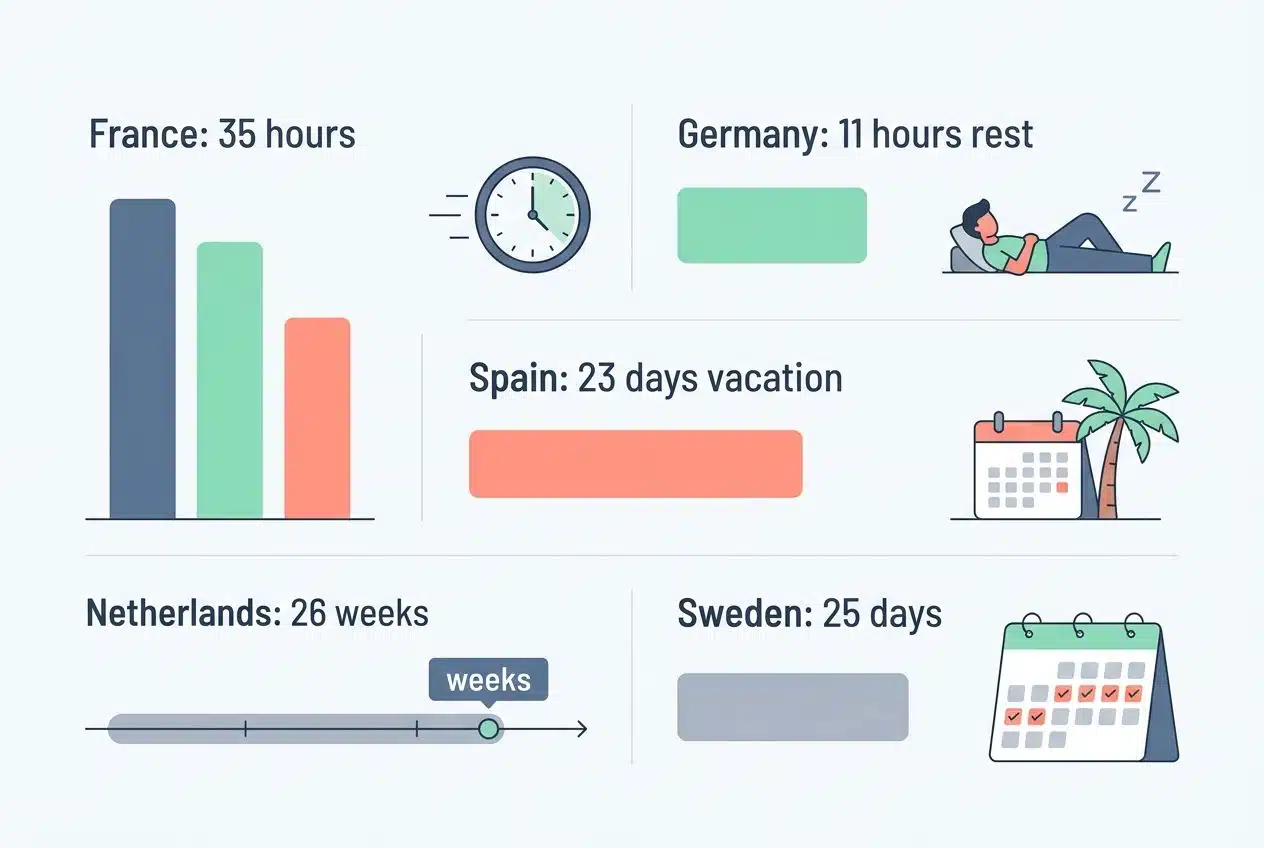
| Country | Key Labor Regulations for Remote Work |
|---|---|
| France | French law limits work to 35 hours per week, so track hours closely for remote staff. Offer the “right to disconnect” after hours, like unplugging from emails. Paid vacation hits 30 days a year, a real perk that boosts morale. |
| Germany | Germany requires works councils for firms with over five employees, even remote ones, to involve staff in decisions. Rest periods must span 11 hours between shifts. Health insurance covers remote workers fully, easing worries. |
| Spain | Spain mandates registering remote work agreements with authorities, detailing hours and equipment. Workers get 23 paid vacation days. Overtime caps at 80 hours yearly, preventing burnout in your team. |
| Netherlands | Dutch rules allow flexible hours, but you must provide ergonomic home setups. Dismissals need solid grounds and notice periods up to three months. Parental leave extends to 26 weeks, supporting family life. |
| Sweden | Sweden emphasizes work-life balance with 25 vacation days and generous sick leave. Unions often negotiate remote terms, so engage them early. Data shows 70% of Swedes work remotely part-time, a trend worth joining. |
Strategies for Hiring Remote Teams in Europe
Hiring across Europe can feel like piecing together a puzzle, with each country adding its own twist to the rules. Pick the right approach, like setting up shop locally or teaming up with pros who handle the details, and you’ll build a dream team without the headaches.
Direct hiring through local entities
Companies set up local entities in European countries to hire remote workers directly. This approach handles employment contracts under each nation’s rules. You gain full control over your team, and it aligns with European labor law for compliance.
Picture a small tech firm in Berlin expanding to hire coders in Spain. They formed a Spanish subsidiary first. That step lets them follow local labor regulations on hours, wages, and benefits.
Remote work thrives this way, as you avoid cross-border employment headaches. Employees enjoy full rights, like paid leave and health protections.
Local entities simplify tax implications for remote workers, too. Your business registers in the country, pays local taxes, and meets employment regulations. Think of it as planting roots in new soil to grow your virtual teams.
Freelancers differ here; direct hires build long-term workforce management. Cultural fits improve when you understand multinational policies. Data shows firms using this method cut compliance risks by 40%. Remote collaboration strengthens with clear workplace policies. Employee rights stay front and center in this setup.
Using an Employer of Record (EOR)
If direct hiring through local entities feels like jumping through too many hoops, think about teaming up with an Employer of Record, or EOR, as a smoother path for your remote-first company.
This setup lets you hire talent across Europe without setting up your own legal entities in each country. An EOR acts as the official employer on paper, handling payroll, taxes, and compliance with European labor law for you. Picture it like having a trusted sidekick who deals with the nitty-gritty, so you focus on growing your virtual teams.
EORs shine in managing cross-border employment, ensuring employee rights stay protected under varying labor regulations. They handle employment contracts, telecommuting policies, and even workforce management details like benefits and terminations.
For instance, if you’re building multinational policies, an EOR keeps everything in line with international law, dodging headaches from country-specific rules. This approach boosts remote collaboration while cutting risks, making it a smart pick for businesses eyeing flexibility in Europe.
Contracting freelancers and consultants
Contracting freelancers and consultants gives your remote-first company a flexible edge in Europe. You skip some heavy lifting on full employment contracts. Freelancers handle their own taxes and benefits, easing your compliance load under European labor law.
Picture it like hiring a skilled chef for one big feast, not a full-time staff. This approach taps into telecommuting talent across borders, but check local rules first. In Germany, for instance, watch for “pseudo-self-employment” traps that could reclassify them as employees.
Use clear contracts to protect employee rights and avoid fines. Many firms turn to platforms like Upwork for quick hires in remote work setups. Consultants bring expertise without long-term ties, boosting your virtual teams. Stay sharp on cross-border employment regs, like VAT obligations in the EU.
One entrepreneur I know joked that it’s like dating without marriage, fun but needs boundaries. Focus on written agreements that outline scope, pay, and data privacy to keep things smooth. This method supports workforce management while respecting labor regulations.
Tools and Technology for Managing Remote Teams
Ever feel like herding cats when your team spreads across time zones? Pick the right tools, and watch collaboration soar, from video chats that build real connections to apps that keep projects on track without the drama.
Communication platforms
Pick a solid communication platform, and your remote team stays connected across Europe. Tools like Slack or Microsoft Teams let you chat in real time, share files, and hold video calls.
These apps help with remote work by keeping everyone on the same page, no matter the time zone. Imagine your team in Germany and Spain swapping ideas like old friends over coffee, but online.
They boost collaboration and cut down misunderstandings. Plus, many platforms meet European labor law standards for data privacy, so you avoid compliance headaches.
Slack channels organize talks by project, making remote collaboration a breeze. Microsoft Teams integrates with calendars for easy scheduling, respecting employees’ rights to work-life balance.
Zoom offers secure video for face-to-face vibes without travel. Think of it as building a virtual water cooler, where jokes fly, and bonds form. Such tools support cross-border employment by logging interactions for legal needs. Your team feels supported, productive, and ready to tackle tasks under varying labor regulations.
Project management tools
Project management tools keep remote teams on track, especially under European labor law. Tools like Asana and Trello help assign tasks and meet deadlines. They track progress in real time, which aids compliance with employment regulations.
Imagine juggling balls in the air; these platforms catch them before they drop. Remote workers across borders stay connected, boosting productivity without chaos.
Choose tools that handle time zones and data privacy, key for cross-border employment. Jira offers customizable workflows for virtual teams. It integrates with compliance software to log hours and ensure labor rights.
Picture a smooth road trip; these apps avoid detours from legal hurdles. They foster remote collaboration and maintain organizational culture in a telecommuting setup.
Time tracking and compliance software
Project management tools keep your team on track, but you also need solid ways to monitor hours and meet legal rules. Time tracking and compliance software steps in here, making sure your remote work setup follows European labor law.
These tools log work time accurately, helping you avoid slip-ups in employment regulations. Imagine a busy manager juggling cross-border employment; this software flags overtime issues before they become headaches. It handles tax implications for remote workers, too, keeping everything above board.
Pick software that fits your virtual teams, like those with built-in alerts for country-specific labor regulations. Employees appreciate the transparency, boosting their rights and your workforce management.
One team lead I know used it to spot cultural differences in work hours across Europe, turning potential conflicts into smooth remote collaboration. With features for data privacy, these platforms support telecommuting without risking fines. They promote a strong organizational culture, where everyone feels valued under multinational policies.
Challenges of a Remote-First Model in Europe
Running a remote-first company across Europe can feel like juggling flaming swords, with sticky cross-border rules that trip you up on taxes and work hours, cultural clashes that make team chats awkward as a bad blind date, and data security headaches that keep you up at night wondering if your info is safe from prying eyes—curious how to dodge these pitfalls? Stick around for the tips ahead.
Cross-border employment brings a mix of rules that can feel like juggling balls from different games. Imagine you’re hiring talent from Spain while your base sits in Germany, and suddenly tax laws clash like old rivals.
Focus on compliance first, folks. European employment law demands you check local labor regulations for each worker’s spot. Remote work regulations vary by nation, so map out employment contracts that fit.
Use experts to handle tax implications, keeping employee rights front and center. That way, you dodge fines and build trust. Hire through an Employer of Record to simplify multinational policies. They manage legal requirements for you, acting as a bridge over tricky waters. Think of it as having a local guide in a foreign city.
Addressing data privacy under GDPR is a key part of workforce management. Virtual teams thrive when you set clear workplace policies. Foster remote collaboration by sharing updates on labor rights often. Spot cultural gaps early, like varying holiday rules, and adjust.
Managing cultural differences
Europe spans many cultures, and that mix can spice up your remote team like a potluck dinner with dishes from every corner. Picture leading a group where one person values direct talk, like in Germany, while another prefers polite hints, as folks do in the UK.
You tackle this by setting up team chats that celebrate these quirks, maybe through fun icebreakers or virtual coffee breaks. Remote work under European labor law demands respect for employee rights, so weave in training on cultural norms to boost collaboration.
Teams thrive when everyone feels heard, turning potential clashes into strengths for your virtual teams. Humor helps bridge gaps, too, like sharing light-hearted memes about time zones to ease frustrations. Focus on clear policies that align with cross-border employment rules, promoting empathy in daily interactions.
Managers lead by example, asking questions to understand viewpoints and adjusting workflows for better workforce management. This approach fosters a strong organizational culture, where differences fuel innovation rather than friction. Keep it simple: listen actively, adapt quickly, and watch your remote collaboration soar.
Ensuring data privacy and security
Data privacy keeps your remote team’s info safe, especially under strict European employment law. You handle sensitive details across borders, so focus on compliance with rules like GDPR for all virtual teams.
Think of it as locking the front door before a big storm; simple steps prevent big messes. Train staff on secure tools, and use encrypted chats for remote collaboration. This builds trust and protects employee rights in cross-border employment.
Security threats lurk in remote work setups, but you can outsmart them with smart workforce management. Pick platforms that meet legal requirements for data handling in Europe. Share stories from your team about dodging phishing scams; it makes learning fun and relatable.
Stay alert to updates in labor regulations and audit systems often. Your organizational culture thrives when everyone feels secure in their telecommuting roles.
Best Practices for Building a Remote-First Company
Picture your team thriving from afar, like a well-oiled machine humming across borders, if you set firm rules right from the start. Dive deeper into these tips, and you’ll laugh at how simple it feels to keep everyone connected and compliant, sparking that magic remote vibe.
Establishing clear policies and expectations
Set clear policies right from the start in your remote-first company. They act like a solid foundation, keeping everyone on the same page under European labor law. Outline work hours to respect employee rights and avoid burnout.
Define communication rules, so teams know when to jump on video calls or send quick messages. Include guidelines for data privacy to meet compliance needs across borders. Remote work thrives when folks feel secure, and these steps build that trust.
Make expectations crystal clear to dodge mix-ups in cross-border employment. Share them in simple docs or team chats, with examples like “Log off by 6 PM to honor labor regulations.” Foster open talks about telecommuting setups, maybe with a funny story of a mix-up over time zones.
Adapt policies as laws change, keeping your virtual teams strong. Employee rights stay front and center this way, boosting morale and productivity.
Fostering a strong remote work culture
Fostering a strong remote work culture starts with building trust among your virtual teams. Envision your company as a big family scattered across Europe, where folks in Berlin chat seamlessly with those in Barcelona.
You create bonds through fun virtual coffee breaks or online game nights that mimic water cooler talks. These activities boost morale and help everyone feel connected, despite the miles.
Empathy plays a key role here; listen to your team’s needs, like flexible hours that respect local holidays under European employment law.
Team leaders spark this culture by celebrating wins, big or small, with shout-outs in communication platforms. Imagine sharing a quick anecdote: “Hey team, Maria in Madrid nailed that project deadline, what a rockstar!” Such moments foster belonging and keep remote collaboration lively.
Address cultural differences head-on with training sessions on multinational policies, turning potential hurdles into strengths. This approach aids compliance with labor regulations and amps up employee rights and productivity in your remote-first setup.
Regularly reviewing and adapting to legal updates
Once you’ve built that solid remote work culture, keeping up with legal changes keeps everything running smoothly. Laws in Europe shift often, like how the EU updated telework rules in 2023 to boost employee rights.
Stay on top by setting up alerts from sources like the European Employment Law database. This helps your company dodge fines and stay in compliance with cross-border employment regs.
Picture your team as sailors on a changing sea; you adjust sails to match the winds of new labor regulations. Check in quarterly with legal experts on things like tax implications for remote workers in different countries.
Use tools that track updates on workplace policies and international law. That way, you adapt fast, protect employee rights, and keep your remote-first setup strong without missing a beat.
Final Thoughts
You learned how remote-first setups tap global talent, cut costs, and boost productivity while staying compliant with European labor laws. These strategies fit right into your daily operations, are simple to roll out, and quick to show results.
Picture your team thriving across borders, dodging legal headaches, and sparking real growth in your business. Check out resources like the EU’s telework guidelines or consult an Employer of Record for expert help. Go ahead, build that flexible future; your company will thank you.
FAQs on Building a Remote-First Company In Europe
1. What does it mean to build a remote-first company under European labor law?
Hey, picture this: you’re setting up a team that works from home as the default, not just an option. European labor law demands you respect employee rights like fair work hours and data privacy, so start by checking rules in each country your folks are in. It’s like herding cats across borders, but get it right, and everyone wins with a better work-life balance.
2. How do I handle hiring across EU countries for my remote team?
Start simple; use clear contracts that follow local labor rules. Remember, places like Germany have strict rules on vacation days, while Spain focuses on rest periods.
3. What about keeping track of work hours in a remote-first setup?
Oh, it’s a balancing act, like juggling oranges while walking a tightrope. European laws often require logging hours to prevent burnout, so use tools that track time without spying. Chat with your team about it; they’ll appreciate the empathy, and it keeps you compliant.
4. How can I support employee well-being under these laws?
Focus on mental health perks, as EU rules push for safe work environments, even remote ones. Offer flexible schedules to dodge overtime pitfalls; it’s like giving your team a safety net in a high-wire act.