Have you ever studied in a new country and felt like you were on an island? Your classmates come from everywhere, but you might struggle to turn those quick chats into real friendships or career connections. You worry about missing opportunities because you lack a strong network. Building a global network seems tough when you are far from home, juggling classes, and trying to fit in. But I have good news for you.
Students who build strong international connections abroad report much higher job satisfaction. In fact, a study by the American Institute for Foreign Study (AIFS) found that 70% of study abroad alumni are more satisfied with their jobs.
This guide shows you exactly how to build a global network while studying abroad. I will walk you through the exact steps I use to meet people, keep relationships strong, and turn friendships into real collaborations. So, grab a cup of coffee, and let’s go through it together. I’ll show you everything you need to know.
What is Global Networking?

Now that you understand why studying overseas matters, let us talk about what global networking actually means. Global networking is the practice of building professional relationships with people from different countries and backgrounds.
You meet people through clubs, volunteer work, social media, and alumni events. You share ideas, exchange knowledge, and create opportunities together.
According to the Institute of International Education (IIE) 2025 Open Doors report, nearly 300,000 U.S. students study abroad annually. That is a massive pool of potential connections for you to tap into.
Global connections open doors that stay open for years. Your network includes classmates, professors, professionals, and community members from across the globe.
Social media platforms make it simple to maintain contact with people you meet abroad. You can collaborate on academic projects, share resources, and support each other’s goals.
Your network is your net worth, especially when it stretches across continents and cultures.
Why Global Networking is Important for Students Studying Abroad
Building connections abroad opens doors that stay open for life. You gain access to opportunities, mentors, and friends who shape your career in unpredictable ways.
Expanding Your Reach
Studying abroad introduces you to people you would never meet back home. Your classmates come from different backgrounds, and you interact with professors who research global topics.
Every conversation expands your professional reach and your view of what is possible. You grow your network when you step outside your comfort zone and talk to someone new every week.
A 2020 report by NAFSA found that employers mentioned global skills in over 30 million U.S. job postings. Your international connections directly help you build these highly demanded skills.
Attend conferences where students and professionals gather from multiple continents. Join clubs focused on cultural exchange, or volunteer with organizations that serve international communities. Your connections multiply fast when you show genuine interest in the ideas of others.
Gaining Diverse Perspectives
Your expanded reach gives you fresh viewpoints from people across the globe. International networking exposes you to different ways of thinking, working, and solving problems.
For example, the World Economic Forum’s 2025 Future of Jobs report emphasizes that adaptability and analytical thinking are top core skills for workers. You develop these exact traits by engaging with diverse peers.
A student from India might share insights about business practices that contradict everything you learned back home. Another classmate from South Africa could introduce you to innovative solutions for community challenges.
These cultural exchange moments stick with you long after your studies end. You learn that multiple right answers exist for most problems, which makes you smarter and more interesting to future employers.
The beautiful thing about learning is that no one can take it away from you. – B.B. King
Building a Competitive Edge
A global network gives you real advantages in today’s job market. Employers want candidates who speak multiple languages, understand different cultures, and have connections across borders. When you build professional relationships while studying abroad, you stand out from other graduates.
The financial benefits are also clear. A 2025 report from The Forum on Education Abroad revealed that business students who studied abroad earned a 6.3% higher starting salary, which translates to about $4,159 more than their peers.
Data from IES Abroad shows that 90% of their study abroad alumni found employment within six months of graduation. People in your network recommend you for positions, mentor you through challenges, and collaborate with you on projects.
Strategies for Building a Global Network
You might be wondering how to build a global network while studying abroad effectively. You will find that real strategies work better than hoping connections fall into your lap.
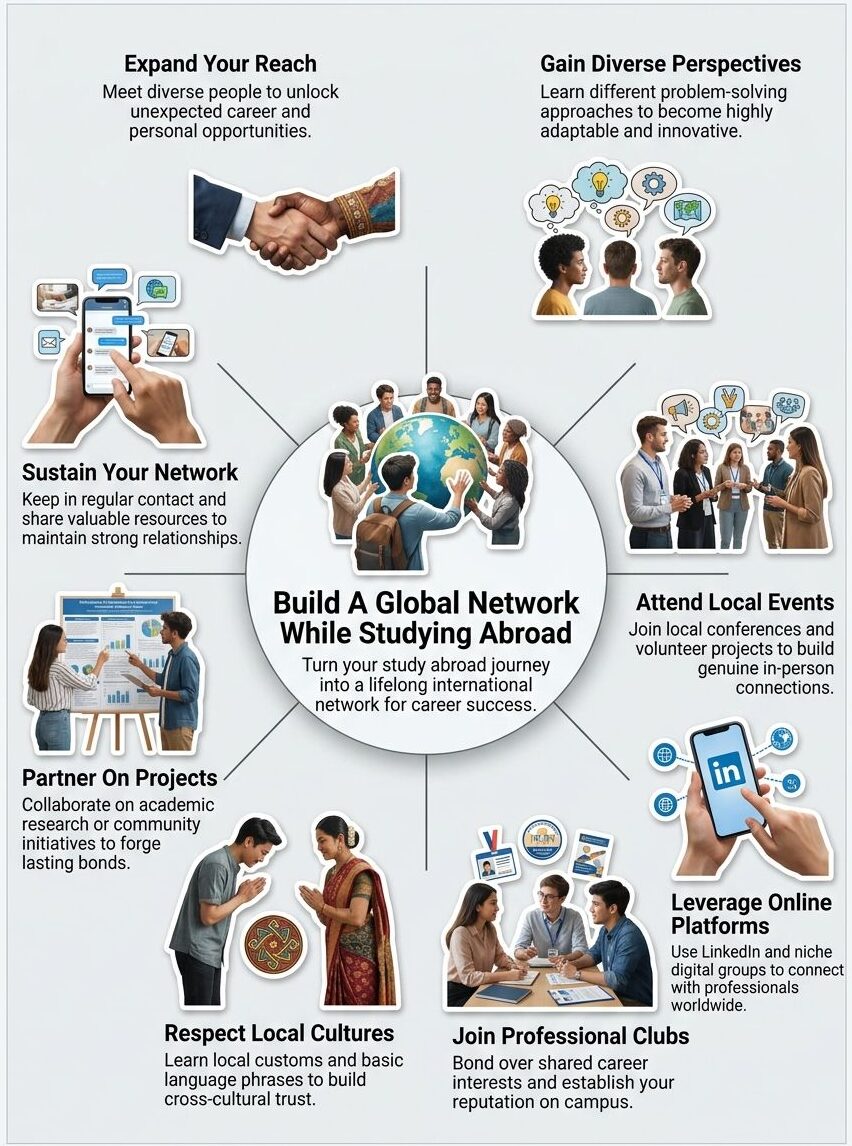
Attend Local and International Events
Events open doors to real people and real opportunities. Your study abroad experience becomes infinitely richer when you step into rooms full of fellow students and innovators.
- Search for conferences hosted by your university or organizations like AFS Intercultural Programs.
- Sign up for cultural exchange festivals that celebrate different traditions.
- Attend professional mixers organized by industry groups or chambers of commerce.
- Join volunteer events and community service projects that align with your values.
- Engage with academic lectures and guest speaker events, then approach the speakers afterward.
Leverage Online Networking Platforms
Digital platforms have become your best friends for building global connections. You can reach thousands of professionals without leaving your dorm room.
- Use LinkedIn to highlight your international experiences. Use the platform’s Alumni Tool to find graduates from your home university who work in your target country.
- Download apps like Interstride, which is specifically built to support international student success and global career opportunities.
- Join Facebook groups dedicated to your host country or university to ask questions about local internships.
- Use Instagram to showcase your international journey and connect with peers using location tags.
- Join Slack communities focused on your industry to participate in virtual coffee chats.
- Use Meetup.com, an app that uses smart filters to connect you with local interest groups and professional gatherings in your host city.
Join Professional Organizations and Clubs
Joining professional organizations opens doors to meaningful connections with people who share your interests. These groups create spaces where you can learn from peers and strengthen your reputation.
- Search for organizations that match your career goals on campus websites and bulletin boards.
- Attend club meetings regularly so members recognize your face.
- Join groups on platforms like InterNations, an expat networking community that brings together people living abroad.
- Connect with club leaders and ask them about mentorship opportunities.
- Share your skills with club members through workshops or informal discussions.
Engage with Alumni Networks
Alumni networks link you to people who walked the same path you are walking now. They genuinely want to help you succeed.
- Search for alumni groups on LinkedIn to find people from your school who work internationally.
- Attend events hosted by your university’s international office.
- Reach out to alumni mentors directly through email to ask about their experiences.
- Participate in virtual panels that focus on international careers.
- Leverage alumni referrals to connect with professionals, as personal introductions carry weight.
Understanding Cultural Differences in Networking
Different cultures have their own rules for making connections, and you need to learn them fast. Your success abroad depends on respecting local customs while staying true to who you are.
Understanding Local Customs and Etiquette
Every country has its own set of rules about how people should act and talk to each other. Learning these rules helps you build better relationships and avoid awkward moments. In some places, people greet each other with a handshake, while in others, a bow or cheek kiss is standard. You should research what people expect in your host country.
Dress codes matter too. Pay attention to how local students dress for class, social events, and professional settings. Eye contact, personal space, and how close you stand to someone all carry different meanings across cultures. Showing respect for these differences opens doors to genuine professional relationships.
Small gestures like learning basic phrases in the local language go a long way. Locals respect the attempt, even if you are not perfect.
Overcoming Language Barriers
Speaking the local language, even imperfectly, shows respect and builds genuine connections. Start small with basic phrases and greetings, and practice daily conversations at coffee shops or markets. Your classmates will appreciate your effort, mistakes, and all.
Use language exchange apps to practice. For example, HelloTalk connects you with native speakers for casual text and voice exchange, while Duolingo offers gamified daily lessons.
Join clubs and volunteer opportunities where you interact with native speakers regularly. These settings let you learn real vocabulary, not just textbook phrases.
Confidence matters more than perfection. Speak up, stumble, laugh, and try again. This approach builds trust and shows your genuine interest in people.
Building Trust Across Cultures
Trust forms the foundation of any strong relationship, and cross-cultural connections require extra attention. People from different backgrounds have different expectations about what trust means.
Some cultures value directness, while others prefer indirect communication. You show respect by learning about these differences before you meet someone new.
Many users on the r/studyabroad subreddit note that consistency is the secret to building trust. They recommend these three actions to prove your reliability:
- Visit the same local cafe or library every week to become a familiar face in the community.
- Listen more than you talk, and share your own background too.
- Respond to messages promptly and offer help without waiting to be asked.
Your actions show that your character matters more than your accent or background.
Turning Connections into Long-Term Collaborations
You can transform casual encounters into meaningful partnerships that shape your career for years to come. Read on to discover how.
Partnering on Projects or Initiatives
Partnering on projects with international classmates transforms your academic experience. These collaborations build relationships that last well beyond your time abroad.
- Start small by identifying classmates who share your interests, then propose a joint research paper.
- Use tools like Notion to organize your collaborative international projects, track tasks, and share notes in one place.
- Seek out service opportunities where you can volunteer alongside peers from different countries.
- Launch a study group focused on a specific subject.
- Propose a cross-cultural research project to your professors.
- Organize a networking event with other students.
Sharing Knowledge and Resources
Knowledge sharing creates real value for everyone involved. Your classmates and mentors benefit tremendously when you exchange ideas across borders.
- Offer your expertise by tutoring someone in your native language or sharing research findings.
- Create study groups with international students and invite them to collaborate on assignments.
- Share academic resources like notes, articles, or research papers with your network.
- Discuss career advice and share helpful tools like Handshake for finding global internships.
- Connect people in your network who could benefit from knowing each other.
Tips for Sustaining Your Global Network
Keeping your network alive takes effort, but the payoff makes it worth every message you send.
Maintain Regular Communication
Your global connections fade fast without steady contact. Reach out to your professional relationships every few months through email, social media, or video calls.
Share updates about your studies or your career moves. Ask how they are doing and show genuine interest in their projects.

Consistency matters more than perfection when you are reaching out to your network.
You do not need long messages or fancy words; short, friendly notes work great. Send a quick message when you see something related to their work.
Congratulate them on the achievements you spot on social media. These small gestures build trust across cultures and show that you value the relationships you built.
Offer Value to Your Connections
Staying in touch matters, but giving back to your connections matters even more. People remember those who help them solve problems or open doors.
You build real relationships when you offer something of value. Introduce two contacts who could work together on a project, or share an article that relates to someone’s research.
You can also send them a relevant job posting you found on platforms like LinkedIn. Volunteer your skills to help a classmate with their academic collaboration. These actions show that you care about their success, not just your own.
Share resources freely with your global community. The more you contribute to your network, the more people want to stay connected with you.
The Bottom Line
Learning how to build a global network while studying abroad offers a rare chance to shape your entire career. International networking is about forming real relationships with people who share your passions. These connections open doors you didn’t even know existed, leading to job opportunities and collaborative projects that span continents.
The professional relationships you create now become your support system, your mentors, and your future colleagues. Start building your global network today, even if you feel nervous about reaching out to strangers. Attend local events in your host country, join clubs that interest you, and engage with alumni who walked the same path before you.
Use social media to stay connected with people you meet, volunteer for causes you care about, and show genuine interest in the ideas of others. Your global community grows stronger each time you offer value and share knowledge. The investment you make in relationships now pays dividends for years to come, turning your study abroad experience into a launching pad for international success.
Frequently Asked Questions (FAQs) on Building A Global Network
1. How can I start building a global network while studying abroad?
Jump into clubs, sports teams, or student groups at your school, where about 70% of study abroad friendships begin. Don’t be shy about introducing yourself to classmates and teachers, because sometimes sharing a snack or asking for homework help is all it takes to start a friendship.
2. What are some easy ways to meet people from different countries?
Attend campus events like international student nights, where people from all over gather. Try volunteering locally, joining language exchange meetups, or striking up a conversation in the dining hall.
3. Why does having an international network matter for my future?
Friends from other countries can tip you off about jobs, internships, and travel spots you’d never find on your own. Research shows that around 80% of jobs come through networking, so having global connections really matters. Companies today value candidates who understand different cultures and have international friendships.
4. How do I keep these friendships strong after returning home?
Stay in touch through WhatsApp or video calls so distance doesn’t turn friends into strangers. Remember birthdays, share photos, and plan visits when you can to keep those connections alive.