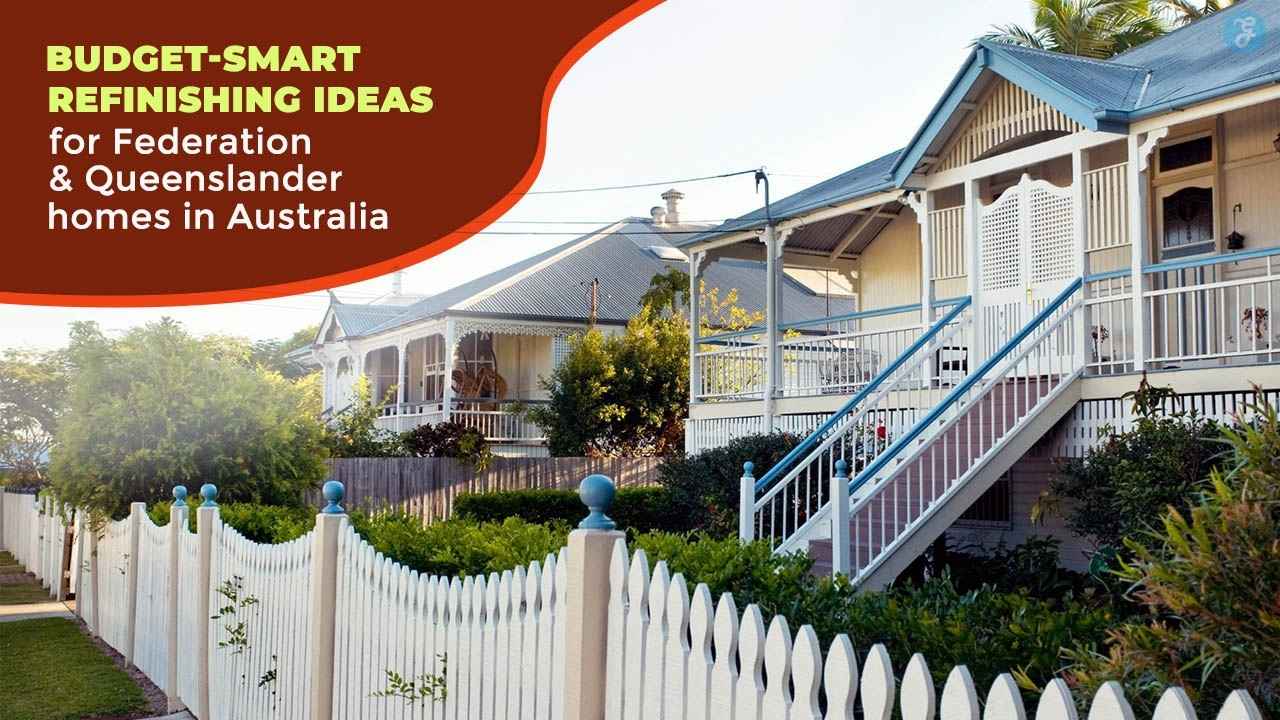
Owning a piece of Australian history is a dream for many, but without a strategy, it can quickly become a financial burden. Budget renovation ideas for Federation and Queenslander homes are not just about cutting corners; they are about making smart, high-impact decisions that respect the architectural integrity of the building while modernizing it for comfortable living.
The “Grand Old Dames” of Australian architecture, with their soaring ceilings, VJ walls, and sprawling verandas, demand a specific approach. Unlike modern builds, these homes “breathe” and move, meaning standard quick-fixes often fail. This guide details how to navigate the unique challenges of heritage renovation, focusing on cost-effective methods to revive charm without the “money pit” reputation.
Key Takeaways
-
Prioritize Structure: Never paint over structural issues. Fix stumps and roof leaks first to protect your investment.
-
Restore, Don’t Replace: Use epoxy fillers for timber rot and “screen and recoat” methods for floors to save thousands.
-
Cosmetic Kitchens: Resurfacing cabinets and updating hardware offers the highest ROI for interior budgets.
-
DIY Where Safe: Painting VJ walls and landscaping are safe DIY wins; leave electrical and asbestos to pros.
-
The “Gap” Rule: Flexible filler is essential for VJ walls—never use rigid fillers that will crack with seasonal movement.
The “Preserve-First” Philosophy: How to Save Thousands
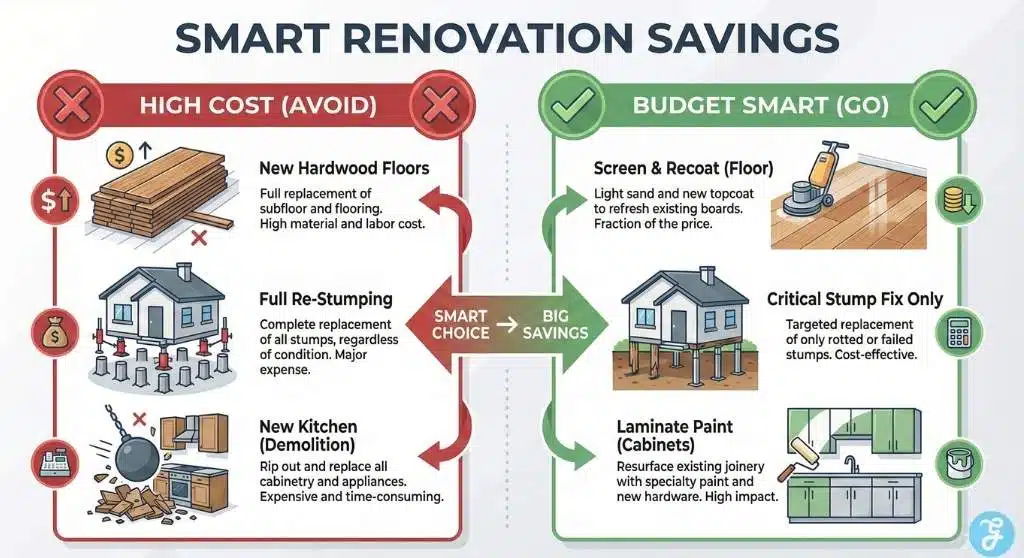
Before diving into specific rooms, it is vital to adopt the right mindset. Many Australian renovators assume that “new” means “better,” but for Federation and Queenslander homes, the opposite is often true.
Replacing original timber windows with aluminium, or covering VJ walls with modern plasterboard, often costs more in labor and materials than restoring the originals. Worse, removing these features can significantly reduce your home’s resale value and capital growth.
The budget-smart approach outlined in this guide prioritizes restoration (bringing original features back to life) over replacement (buying new). This strategy aligns with the current market shift toward sustainable, character-filled living—saving you money while preserving the soul of the home.
The 3 Golden Rules of Heritage Renovation
-
Work With the Architecture: These homes are designed to “breathe.” Avoid sealing them up with non-permeable modern paints or rigid renders that trap moisture and cause rot.
-
Target High-Labor, Low-Skill Tasks: To maximize your budget, use “sweat equity” for time-consuming jobs like sanding, stripping paint, and landscaping, while leaving skilled trades (electrical, plumbing, waterproofing) to the pros.
-
Invest in the “Envelope”: Never sacrifice structural integrity for cosmetic flair. A budget renovation must always prioritize the roof, stumps, and gutters to protect your investment.
The “Invisible” First Steps: Safety & Structure
Before you buy a single tin of paint, you must address the unsexy but critical elements of the home. Ignoring these will inevitably destroy any cosmetic work you do later.
Stumps and Sub-floors: The Foundation of Your Budget
Queenslanders and many Federation homes are built on stumps. If your doors stick or floorboards feel like a trampoline, you likely have restumping issues.
-
The Budget Strategy: You rarely need to restump the entire house immediately. Engage a structural engineer to identify critical fail points. Replacing 5-10 rotted timber stumps with adjustable steel stumps is significantly cheaper than a full house releveling. Focus on the perimeter and load-bearing points first.
-
Ant Caps: Ensure your ant caps (the metal plates on top of stumps) are intact. This is your primary termite barrier. If they are rusted or missing, replacing them during restumping is a non-negotiable insurance policy for your renovation.
The Asbestos Reality
If your home was renovated between 1940 and 1990, it almost certainly contains asbestos. Common hiding spots in heritage homes include bathroom wall sheeting, eaves, and enclosed verandas.
-
The Approach: Do not sand or drill these materials. The most budget-smart and safe option is often encapsulation—painting over the material or sealing it behind a new layer of gyprock—rather than expensive removal, provided the material is undamaged. However, for any demolition, always budget for professional removal. It is illegal and dangerous to DIY.
Exterior Wins: Street Appeal on a Shoestring
The street appeal of a Federation home relies heavily on its timber detailing and colour palette. You can achieve a multi-million dollar look with elbow grease and strategic paint choices.
The “60-30-10” Heritage Colour Rule
Painting an entire exterior is costly, but you can refresh the look by focusing on the trims.
-
The Palette: Move away from stark modern whites, which can look clinical on heritage weatherboards. Opt for “grounded” neutrals like warm stone, greige, or sage green.
-
Application:
-
60% (Walls): If the existing paint is sound, wash it down (sugar soap) and keep it.
-
30% (Trims/Fretwork): This is where you spend your money. Crisp white or cream on the fretwork makes the detail pop.
-
10% (Accents): Paint the front door and window sills a deep contrast colour like charcoal, forest green, or navy. This draws the eye to the entry and creates a “finished” look for under $200 in paint.
-
Reviving the Veranda: Rot Repair vs. Replacement
Rot is the enemy of timber balustrades and fretwork.
-
The “Builder’s Bog” Hack: For non-structural decorative timber (like fretwork brackets), avoid expensive joinery replacement. Dig out the rot, treat the area with a timber hardener (like Earl’s Wood Hardener), and fill with a two-part epoxy filler (often called Builder’s Bog). Once sanded and painted, it is indistinguishable from wood and stops the rot from spreading.
-
Decking Paint: If your veranda floorboards are old, splintered, or stained, a clear oil won’t hide the damage. Use a high-traffic solid colour decking paint (in a heritage grey or red oxide). This acts as a filler, smoothing out splinters and creating a uniform, traditional look that extends the life of the timber by years.
Interior Walls & Ceilings: Mastering the “Old House” Quirks
Vertical Joint (VJ) walls and ornate plaster are beautiful but labor-intensive.
The VJ Board Painting Hack
Painting VJ walls is notoriously slow because brushes struggle to cover the grooves.
-
The “Partner Push” Technique: This budget-smart method cuts labor time in half. You need two people.
-
Person A uses a long-nap roller (10-12mm) loaded with paint to roll the wall vertically, pushing paint deep into the grooves.
-
Person B immediately follows with a dry or lightly loaded brush/short-nap roller to “lay off” the paint, smoothing out the texture on the face of the boards.
-
-
The Gap Rule: VJ boards expand and contract with humidity. Never fill the vertical gaps between boards with rigid plaster filler—it will crack within months. If you must fill gaps, use a high-quality flexible acrylic gap filler that can stretch.
Ceiling Roses and Cornices
Ornate plaster ceilings are expensive to replace.
-
Clean, Don’t Paint (Initially): exquisite plaster detail often looks undefined simply because of 50 years of dust. Use a soft brush and sugar soap solution to gently clean roses before deciding to repaint.
-
The Flat White Trick: If your fibrous plaster ceiling has hairline cracks, paint it with “ceiling flat” white. The lack of sheen hides imperfections that low-sheen or satin paints would highlight.
Flooring: Restore or Cover?
Your approach to flooring depends on the condition of the subfloor and the timber species.
Reviving Hoop Pine
Most Queenslanders feature Hoop Pine flooring. It is soft and golden but often hidden under cthe arpet.
-
Screen and Recoat: If your floors are structurally sound but the finish is dull or scratched, you don’t need a full “sand and polish” (which strips 1-2mm off the wood). Ask for a “screen and recoat.” This process lightly scuffs the top layer of old varnish and applies a new topcoat. It costs roughly 50-60% less than a full sand and keeps the “lived-in” character of the home.
The Budget Cover-Up: Hybrid Flooring
If your floorboards are gapped, draughty, or mismatched from old renovations, restoration might be too pricey.
-
Why Hybrid? Hybrid floating floors (a mix of laminate and vinyl) are the ultimate budget renovation idea for 2026. Unlike tiles, they don’t require a perfectly level sub-floor (which old homes never have). They are waterproof, termite-resistant, and come in convincing Australian timber finishes like Spotted Gum or Blackbutt. They also provide a layer of thermal insulation that bare timber boards lack.
Kitchen & Bath: The “Surface Renovation” Strategy
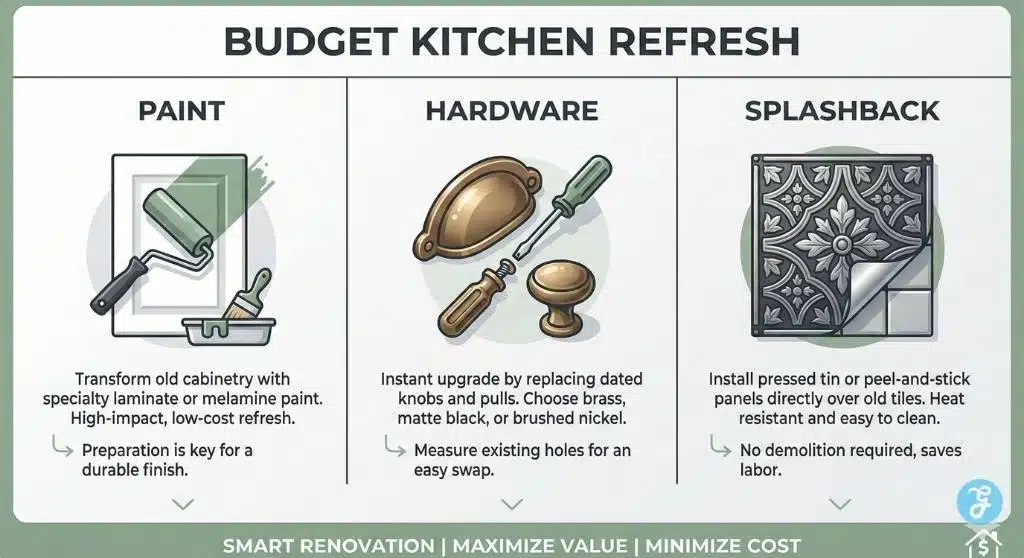
Full kitchen and bathroom rip-outs are the quickest way to blow a budget ($20k-$40k). In heritage homes, layouts were often functional, so you can often get away with cosmetic updates.
Cabinet Resurfacing
Federation kitchens often have solid timber carcasses that are superior to modern flat-packs.
-
Laminate Paint: If you have 90s laminate cabinets, use a specialty primer (like Zinsser Bulls Eye 1-2-3 or Dulux Precision) followed by a melamine paint. This provides a hard-wearing, chip-resistant finish.
-
The Hardware Swap: Replace dated plastic or timber knobs with brass cup pulls or matte black handles. This immediately dates the kitchen to the “heritage” style.
The Pressed Tin Splashback
Tiling is skilled labor. Installing a splashback doesn’t have to be.
-
The Solution: Aluminum “pressed tin” panels are historically accurate for Australian homes. They can be glued directly over existing ugly tiles using construction adhesive. They are heat-resistant (safe for behind cooktops), easy to clean, and cost a fraction of the price of removing old tiles and re-tiling.
The Salvage Economy: Sourcing Authentic Parts for Less
One of the biggest secrets to a budget heritage renovation is avoiding the hardware store for architectural details. New “reproduction” timber windows or doors can cost upwards of $1,200 each. However, the exact same items—often with better craftsmanship and seasoned timber—can be found in salvage yards for a fraction of the price.
-
The “Demo” Yard Goldmine: Australia has a robust network of architectural salvage and demolition yards (especially in Brisbane, Sydney, and Melbourne). These are treasure troves for:
-
Casement Windows & French Doors: Often sold for $50-$150 per leaf. Even if they need stripping and re-glazing, the savings compared to custom joinery are massive.
-
Rim Locks & Brassware: Original heavy brass door handles and locks can often be soaked in vinegar or Brasso to look brand new.
-
Floorboards for Patching: If you remove a wall, you’ll need to patch the floor. Buying new hoop pine boards will look glaringly obvious because they haven’t aged/darkened. Sourcing old boards from a salvage yard ensures a seamless colour match.
-
-
Online Marketplaces: Facebook Marketplace and Gumtree are essential tools. Search for terms like “house demolition,” “Queenslander window,” or “hardwood door.” You can often find sellers giving away items for free if you are willing to come and remove them yourself.
-
The “Tape Measure” Rule: Nothing in a 1920s home is standard size. Unlike modern builds, door frames and window openings vary wildly. Always carry a tape measure and a “wish list” of dimensions with you. It is much cheaper to frame an opening to fit a $50 second-hand door than to buy a $1,500 custom door to fit an existing opening.
Insulation: The Comfort Factor
Queenslanders are essentially “tents on stilts”—hot in summer and freezing in winter. Budget renovation ideas must include thermal comfort.
-
Ceiling Batts: This is your best ROI. If you have access to the roof cavity, install the highest R-value batts you can afford (R3.5 or higher).
-
Underfloor Insulation: Since heat is lost through the floorboards in winter, stapling polyester batts or foilboard between the floor joists from underneath is a cheap, DIY-friendly job that creates an immediate difference in comfort.
-
Whirlybirds and Vents: Ensure your roof space is ventilated. Passive vents (whirlybirds) are cheap to install and help pump hot air out of the roof cavity, protecting your ornate plaster ceilings from heat damage.
Common Pitfalls to Avoid
-
Over-Restoring: Not every dint needs to be fixed. The “wabi-sabi” (beauty in imperfection) aesthetic suits these homes. A perfectly flat, square wall in a 1920s home looks artificial.
-
Ignoring Water: Ensure the ground around your home slopes away from the stumps. Pooling water leads to shifting stumps and termites—both budget destroyers.
-
Cheap Tapware: In a bathroom, cheap taps fail quickly. Spend a little more on branded tapware (even if second-hand or on sale) rather than the cheapest generic option, as plumbing call-outs are expensive.
Summary: Where to Spend vs. Where to Save
| Feature | High Cost (Avoid) | Budget-Smart Alternative | Estimated Savings |
| Kitchen Cabinets | Full Demolition & New Joinery | Laminate Paint + New Handles | 70-80% |
| Flooring | Full Sand & Polish | Screen & Recoat | 50% |
| Splashback | Re-tiling | Pressed Tin Panels over Tiles | 60% |
| Rotten Timber | Replacing Joinery | Epoxy Wood Filler (Builder’s Bog) | 90% |
| Wall Linings | Re-sheeting with Gyprock | Flexible Gap Filler + Spray Paint | 75% |
Frequently Asked Questions (FAQ)
1. Can I paint over VJ walls that have been previously painted with oil-based paint?
Yes, but preparation is key. You cannot apply water-based acrylic directly over glossy oil paint as it will peel. You must clean the walls with sugar soap, sand them to remove the gloss, and apply a high-quality “universal” primer/sealer/undercoat (PSU) that is designed to bond to oil-based surfaces. Once primed, you can topcoat with standard acrylic wall paint.
2. How do I know if my stumps need replacing or just packing?
If a stump has sunk but the timber is solid (not rotted or eaten by termites), it can often be “packed” (wedged with non-compressible material like slate or fiber cement) to level the floor. However, if the timber sounds hollow when tapped, is visibly crumbling, or has significant rot at the base, it must be replaced. Concrete stumps that have cracked (‘spalling’) also need replacement.
3. Is it cheaper to restore old windows or replace them with aluminium?
Restoring original timber casement or double-hung windows is almost always cheaper than replacing them with quality new timber windows. While cheap aluminium windows might seem cost-effective, they destroy the heritage value (and resale potential) of the home. A budget-smart compromise is to repair the rot in existing frames and have a glazier replace just the broken glass, rather than the whole unit.
4. What is the best white paint for heritage homes?
Stark, cool whites (like “Vivid White”) can look too modern and harsh against aged timber floors and warm brass fittings. For Federation and Queenslander homes, opt for “warm” whites. Popular Australian choices include Dulux Natural White, Stoweller, or Whisper White. These have a slight cream or yellow undertone that complements the natural warmth of hoop pine and heritage architecture.
5. How much should I budget for a “cosmetic” renovation of a Queenslander?
For a 3-bedroom home, if you are doing DIY painting, floor refreshing, and kitchen resurfacing (not replacement), a healthy budget range is between $15,000 and $25,000. This covers paint, equipment, hybrid flooring (if needed), hardware, and minor carpentry repairs. Major structural work (roofing, restumping) would be additional to this figure.
Final Thoughts: Modern Comfort in a Historic Frame
Refinishing a Federation or Queenslander home doesn’t require a bottomless bank account; it requires respect for the building’s age and a clever use of modern materials. By focusing on “surface” renovations like paint, hardware updates, and floor refreshing, while reserving your serious budget for structural integrity (stumps and waterproofing), you can create a stunning, comfortable home that honors its history.
The goal is stewardship: passing the home to the next generation in better shape than you found it, without bankrupting yourself in the process.