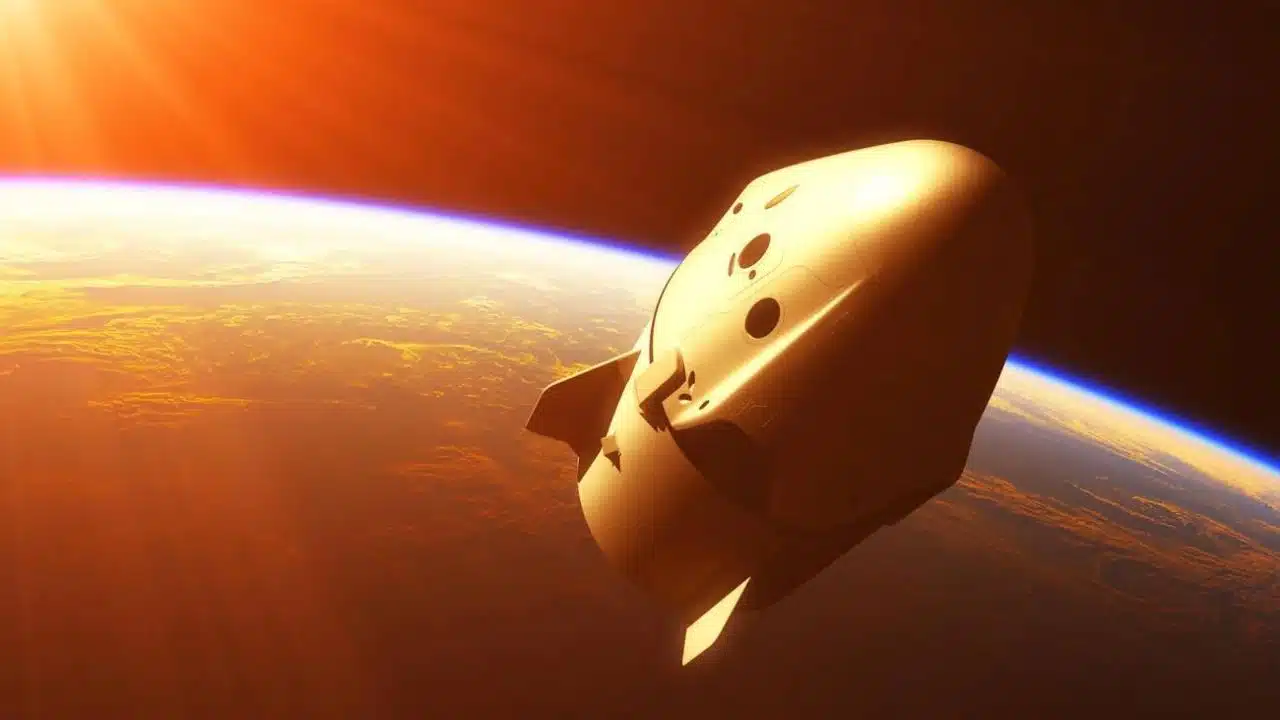
After what feels like forever and a ton of setbacks during test flights, Boeing’s Starliner spacecraft is finally ready to launch its first crew into space.
If all goes according to plan, the mission will blast off from Florida as early as May 6. NASA astronauts Suni Williams and Butch Wilmore will be on board, heading to the International Space Station. This could be a huge moment for the Starliner program, which has faced its fair share of challenges.
As Mark Nappi, Boeing’s vice president and Starliner program manager, put it during a recent news briefing, “Design and development is hard—eespecially when you’re dealing with a human space vehicle. We’ve had a bunch of surprises along the way that we had to tackle.” But Nappi is super proud of his team for overcoming every obstacle and getting to this point. It’s made them stronger and more resilient.
On Thursday, Boeing and NASA gave the green light to move forward with the launch attempt in less than two weeks. However, NASA’s Space Operations Mission Directorate chief, Ken Bowersox, clarified that May 6 remains flexible. “We’ll launch when we’re ready,” he said.
If the Starliner mission succeeds, it’ll join forces with SpaceX’s Crew Dragon spacecraft to make regular trips to the space station. This will help keep the orbiting outpost fully staffed with astronauts from NASA and its partner space agencies.
Having both Crew Dragon and Starliner up and running is something NASA has been looking forward to for a long time. As NASA Administrator Bill Nelson said during a press conference in March, “This is history in the making. We’re now in the golden era of space exploration.”
SpaceX and Boeing have been working on their spacecraft as part of NASA’s Commercial Crew Program, which partners with private companies. From the beginning, NASA wanted both companies to be operational at the same time. The idea was for Crew Dragon and Starliner to serve as backups for each other, so astronauts could keep flying even if one spacecraft had technical issues or setbacks.
However, NASA didn’t expect that SpaceX’s Crew Dragon would be flying solo for nearly four years before Boeing’s Starliner got its first crew on board.
Back when the program started in 2014 and SpaceX and Boeing got their contracts, NASA actually favored Boeing. They had been close partners since the mid-20th century, while SpaceX was seen as a relatively young and unpredictable newcomer.
The Vision of NASA, SpaceX, and Boeing
Back in 2016, NASA was pretty convinced that Boeing’s Starliner would beat SpaceX’s Crew Dragon to the launchpad. They planned their entire schedule around it.
But by 2020, the situation had drastically changed! The previous year’s test flight of Boeing’s Starliner was rife with errors. NASA and Boeing struggled to understand what went wrong. The Starliner didn’t even make it to the space station because of software issues, and get this—its internal clock was off by a whopping 11 hours!
Meanwhile, SpaceX was over here, making history in May 2020. They launched their Demo-2 test flight with astronauts Bob Behnken and Doug Hurley, who spent two months at the International Space Station.
Since then, SpaceX’s Crew Dragon has been flying regular missions, carrying not just NASA astronauts but also paying customers and tourists. They’ve already racked up 13 crewed missions to orbit. Pretty impressive, right?
On the other hand, Boeing has been dealing with a whole bunch of challenges for several years now. In 2022, during their second uncrewed test flight, they uncovered a laundry list of issues. And that’s not even mentioning the drama in their commercial airplane division. From the 737 Max crisis to the recent quality control problems (like when a door plug blew off during an Alaska Airlines flight in January), Boeing’s reputation has taken a hit.
NASA officials actually admitted in 2020 that they had been focusing more on SpaceX and its unconventional approach, while letting some of Boeing’s Starliner issues slip through the cracks.
Steve Stich, NASA’s Commercial Crew Program manager, said in a July 2020 news conference, “Perhaps we didn’t have as many people embedded in that process as we should have. When one provider (SpaceX) has a newer approach than another, it’s often natural for a human being to spend more time on that newer approach, and maybe we didn’t quite take the time we needed with Boeing’s more traditional approach.”
Setbacks for Starliner
What about Boeing’s space division and commercial airline team? Totally separate. NASA and Boeing officials have been emphasizing that point left and right.
NASA has also been very clear about the fact that they’re working more closely with Boeing than ever before. They have their own personnel stationed at Boeing’s facilities, ensuring the proper implementation of all fixes and improvements prior to the major Starliner flight.
Nappi drove this point home on Thursday, saying, “This is an important capability for NASA. We signed up to go do this, and we’re going to go do it and be successful at it. I don’t think of it in terms of what’s important for Boeing as much as I think of it in terms of what’s important for this program.”
Boeing and NASA have a laundry list of problems to tackle.
During the last flight test in 2022, for instance, engineers realized that the suspension lines on the Starliner’s parachute were more likely to fail than they initially thought.
NASA and Boeing put their heads together and tested a fix for that issue earlier this year. But according to Stich, parachutes are still going to be a major focus as they go through those final checkups before launch.
And get this—some of the tape they used to protect the wiring harnesses? It turns out it was flammable. Nappi said Boeing had to go in and replace about a mile’s worth of the stuff.
But wait, there’s more. Boeing might even have to redesign some of the spacecraft’s valves because of corrosion problems. That upgrade probably won’t be ready until the second crewed flight, which isn’t happening until 2025 at the earliest.
For May’s first crewed flight, Boeing is going with what Nappi called a “perfectly acceptable mitigation” in March. Basically, it should keep the valves from sticking.
Safe Starliner
Despite all the hurdles and setbacks on the way to the launchpad, the two astronauts at the heart of the Starliner’s first crewed mission—Williams and Wilmore, both NASA veterans—arrived at the launch site brimming with confidence.
Wilmore didn’t mince words when he spoke to reporters on Thursday after touching down in Florida. “We want the general public to think it’s easy, but it’s not—it’s way hard. We wouldn’t be here if we weren’t ready. We are ready. “The spacecraft’s ready, and the teams are ready.”
Back in March, during a news conference, Wilmore made it clear that he doesn’t expect the Starliner to encounter any “failure modes.”
But he also acknowledged that humans aren’t perfect and that things can sometimes go wrong. “If something were to occur—because we’re all humans, we can’t build things perfectly—if something were to occur, we have several downgrade modes,” he explained. These modes basically allow the astronauts to take more manual control over the spacecraft if things don’t go according to plan.
Williams echoed Wilmore’s confidence during a March news event. “We wouldn’t be sitting here if we didn’t feel—and tell our families that we feel—confident in this spacecraft and our capabilities to control it.”
And during Thursday’s news briefing in Florida, she doubled down on that sentiment. “I have all the confidence in not only our capabilities and the spacecraft’s capabilities, but also our mission control team, who’s ready for the challenge.”
It’s clear that these two astronauts have complete faith in the Starliner, their own abilities, and the support of their mission control team. They’re ready to take on whatever challenges come their way and make this inaugural crewed flight a resounding success.
The Information is Taken from CTV News and AOL